







Question: Analyze the polynomial function f(x) = using parts (a) through (e). ( X- 4) (a) Determine the end behavior of the graph of the function.
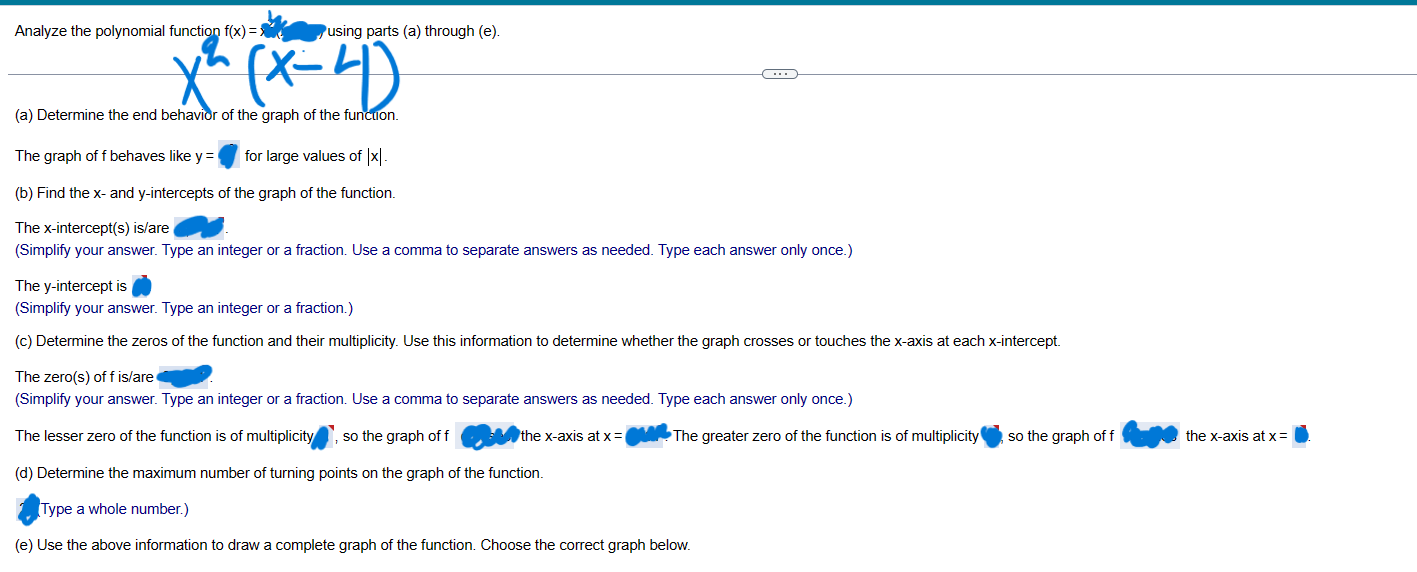
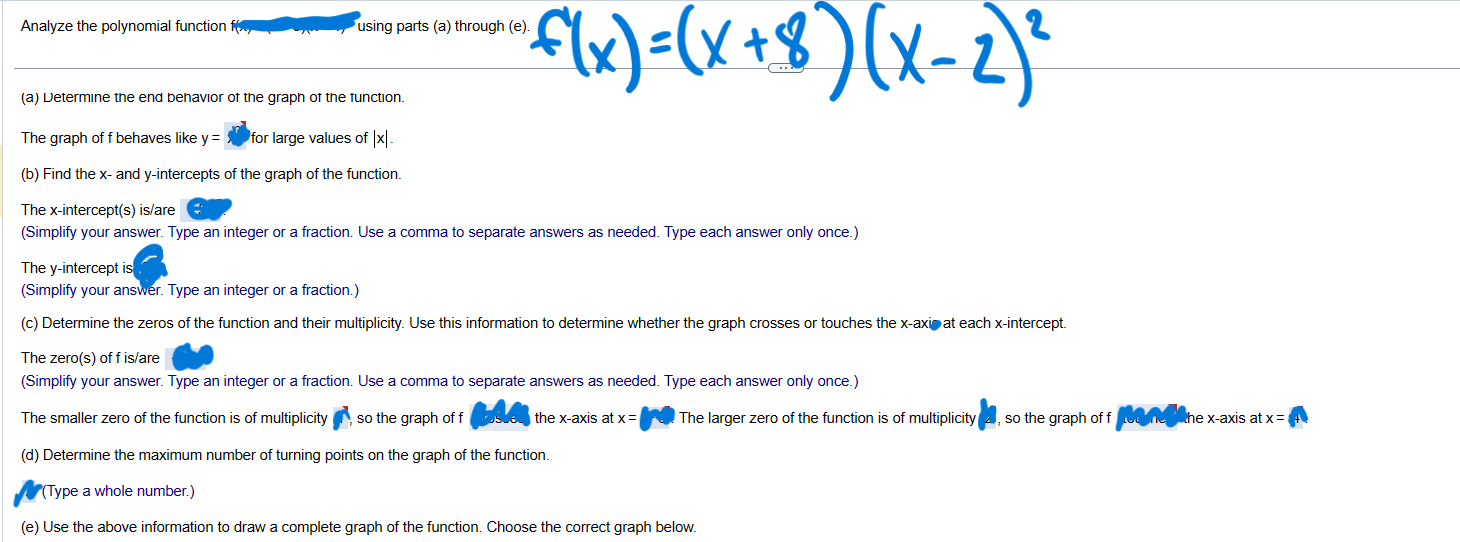
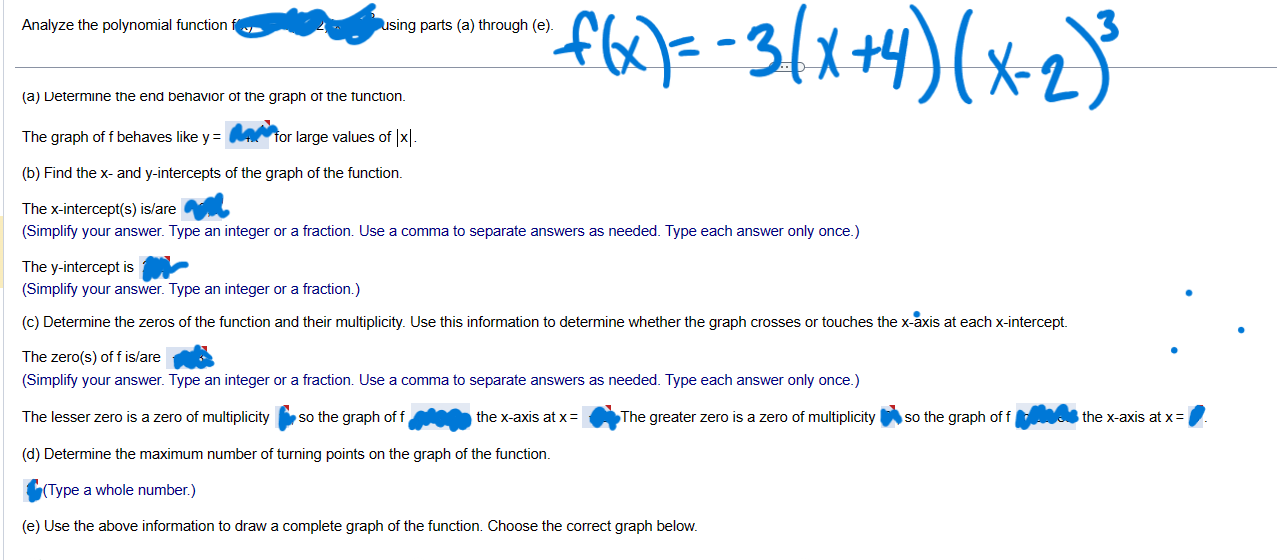
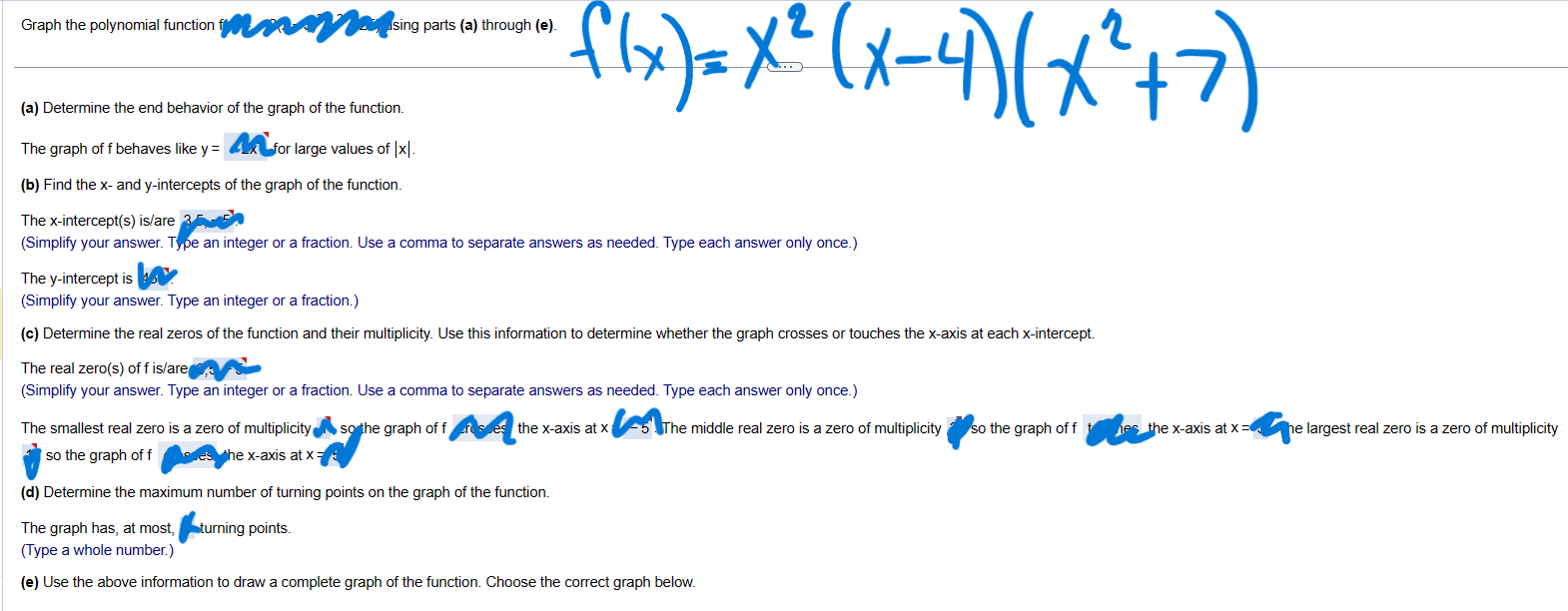
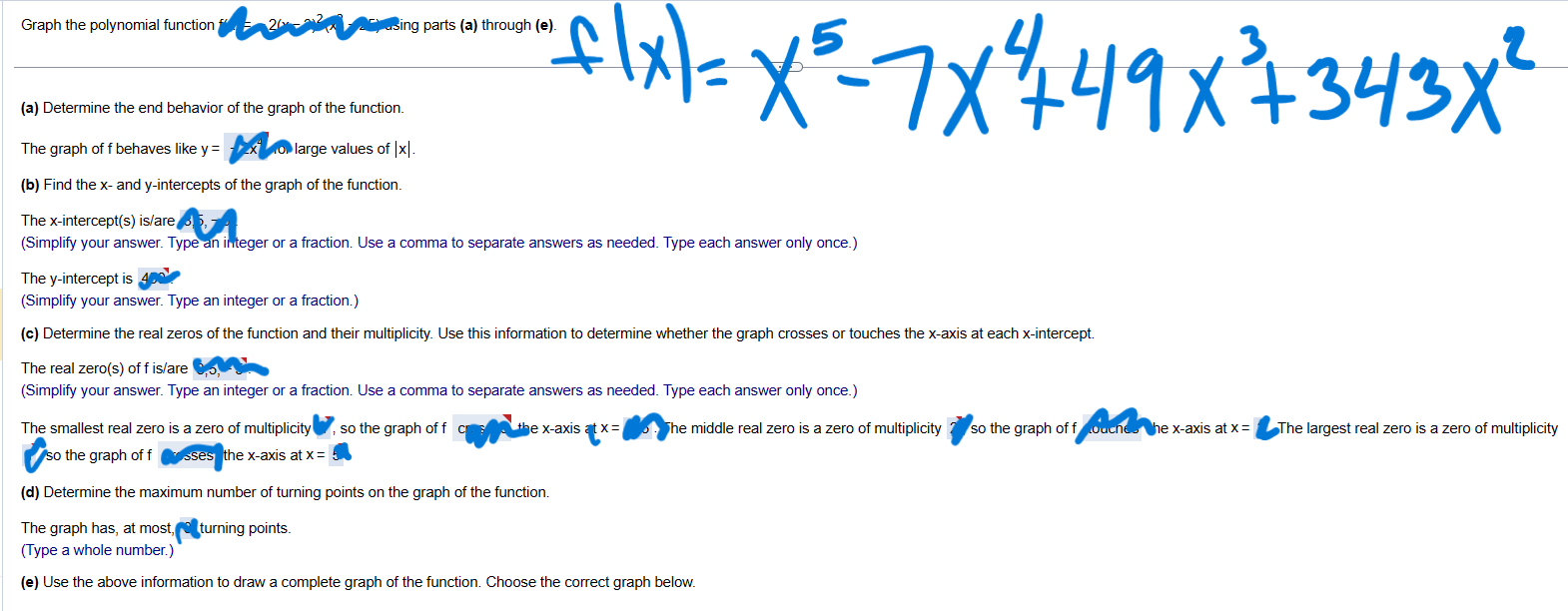
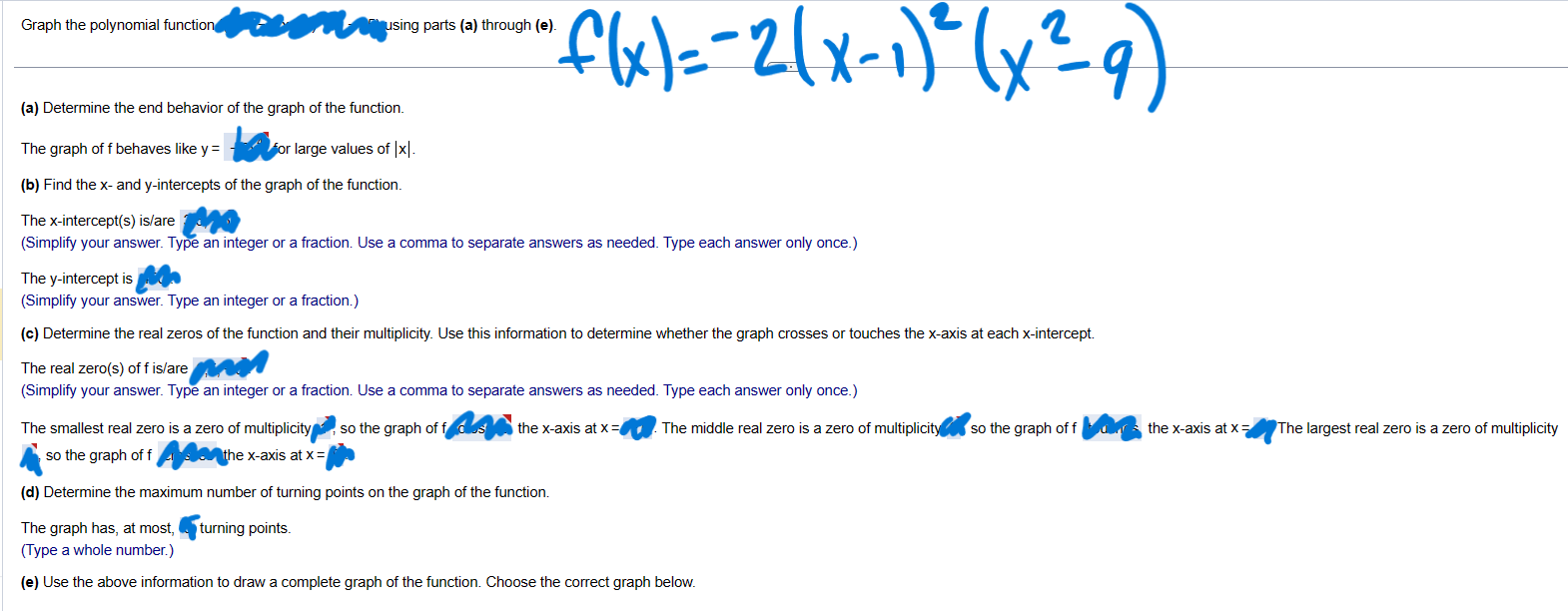
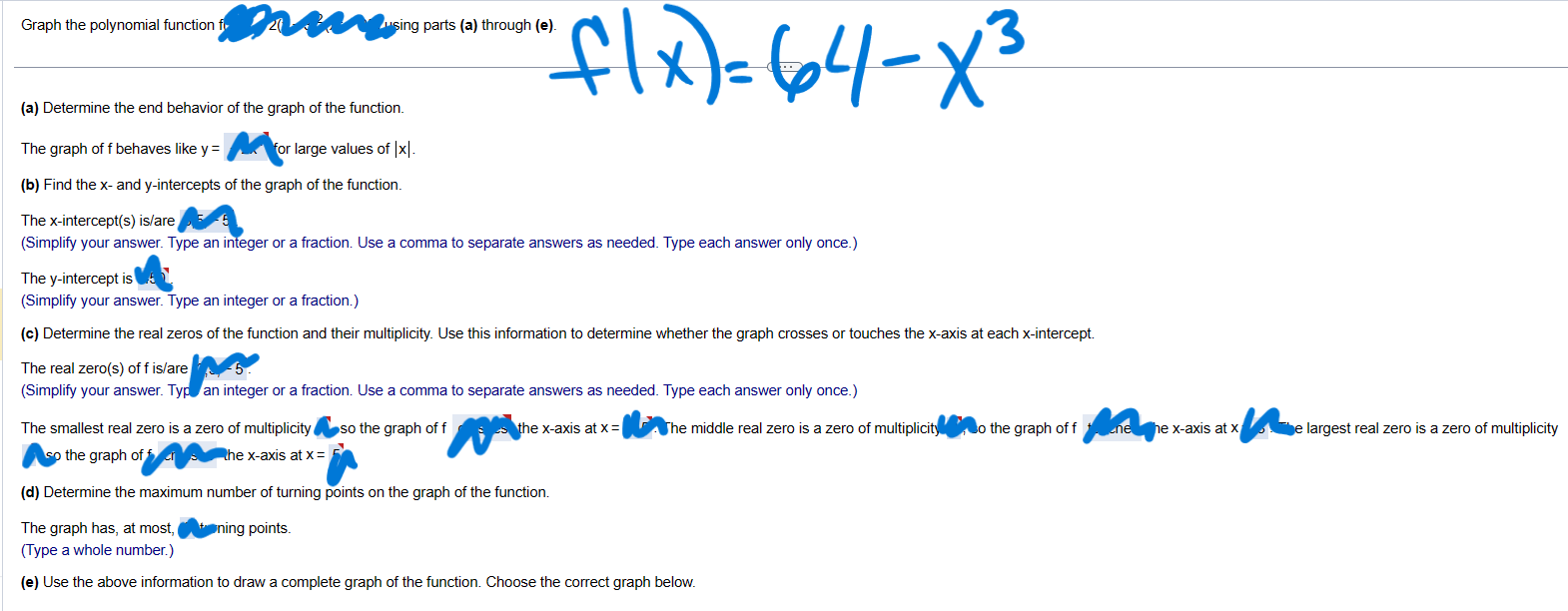
Analyze the polynomial function f(x) = using parts (a) through (e). ( X- 4) (a) Determine the end behavior of the graph of the function. The graph of f behaves like y = for large values of |x|- (b) Find the x- and y-intercepts of the graph of the function. The x-intercept(s) is/are (Simplify your answer. Type an integer or a fraction. Use a comma to separate answers as needed. Type each answer only once.) The y-intercept is (Simplify your answer. Type an integer or a fraction.) (c) Determine the zeros of the function and their multiplicity. Use this information to determine whether the graph crosses or touches the x-axis at each x-intercept. The zero(s) of f is/are (Simplify your answer. Type an integer or a fraction. Use a comma to separate answers as needed. Type each answer only once.) The lesser zero of the function is of multiplicity , so the graph of f the x-axis at x=The greater zero of the function is of multiplicity , so the graph of f the x-axis at x =. (d) Determine the maximum number of turning points on the graph of the function. Type a whole number.) (e) Use the above information to draw a complete graph of the function. Choose the correct graph below.Analyze the polynomial function ft using parts (a) through (e) f (x ) = ( x + 8 ) ( x - 2 ) (a) Determine the end behavior of the graph of the function. The graph of f behaves like y = for large values of |x|- (b) Find the x- and y-intercepts of the graph of the function. The x-intercept(s) is/are (Simplify your answer. Type an integer or a fraction. Use a comma to separate answers as needed. Type each answer only once.) The y-intercept is (Simplify your answer. Type an integer or a fraction.) (c) Determine the zeros of the function and their multiplicity. Use this information to determine whether the graph crosses or touches the x-axio at each x-intercept. The zero(s) of f is/are (Simplify your answer. Type an integer or a fraction. Use a comma to separate answers as needed. Type each answer only once.) The smaller zero of the function is of multiplicity , so the graph of f waste the x-axis at x = The larger zero of the function is of multiplicity , so the graph off On the x-axis at x = (d) Determine the maximum number of turning points on the graph of the function. (Type a whole number.) (e) Use the above information to draw a complete graph of the function. Choose the correct graph below.Analyze the polynomial function Weing pans (a) through [e). 3 l1 '- " X *9 x (a) Uetermme the EPIC DBhaVlOF DT the graph ET the lUI'ICthI'i. The graph of f behaves like y : \"or large values of |x|. (b) Find the x and y-intercepts of the graph of the function. The x-intercept(s) isfare \" (Simplify your answer. Type an integer or a fraction Use a comma to separate answers as needed. Type each answer only once.) The y-intercept is (Simplify your answer. Type an integer or a fraction ) . (c) Determine the zeros of the function and their multiplicity. Use this information to determine whether the graph crosses or touches the xaxis at each x-intercept. The zero(s) of f isfare A (Simplify your answer. Type an integer or a fraction Use a comma to separate answers as needed. Type each answer only once.) The lesser zero is a zero of multiplicity 'so the graph off\" the x-axis at x: \"The greater zero is a zero of multiplicity \"so the graph off\" the xaxis at x: '. (d) Determine the maximum number of turning points on the graph of the function. '(Type a whole number) (e) Use the above information to draw a complete graph of the function. Choose the correct graph below. Graph the polynomial function Wsing parts (a) through [e]. t 1 (a) Determine the end behavior ofthe graph of the function. ' The graph of f behave; like 54 = \"or large values of lxl (In) Find the x and y-intercepts of the graph of the function. The x-intercept(5) nearer (Simplify your answer. T an nteger or a fraction. Use a comma to separate answers as needed. Type each answer only once.) The yiintercept is w (Simplify your answer. Type an integer or a fraction ) (6) Determine the real zeros of the function and their multiplicity. Use this information to determine whether the graph crosses or touches the xeaxis at each xiintercept. The real zero(5) off islareM (Simplify your answer. Type an integer or a fraction. Use a comma to separate answers as needed. Type each answer only once.) The smallest real zero is a zero of multiplicity' s he graph offMlhe xiaxis at x \"The middle real zero is a zero of multiplicity '50 the graph off We xeaxis at x e largest real zero is a zero of multiplicity i so the graph off We x-axis at X ((1) Determine the maximum number of turning pornts on the graph of the function The graph has, at most, Fuming points. (Type a whole number) [2] Use the above information to draw a complete graph of the fundrpn Choose the Donect graph below. Graph the polynomial function 20ezza chasing parts (a) through (e). (a) Determine the end behavior of the graph of the function. f (x)= =- 7x + 49 x + 343X The graph of f behaves like y = xiko large values of |x|. (b) Find the x- and y-intercepts of the graph of the function. The x-intercept(s) is/are (Simplify your answer. Type an integer or a fraction. Use a comma to separate answers as needed. Type each answer only once.) The y-intercept is 4pop (Simplify your answer. Type an integer or a fraction.) (c) Determine the real zeros of the function and their multiplicity. Use this information to determine whether the graph crosses or touches the x-axis at each x-intercept. The real zero(s) of f is/are Co, (Simplify your answer. Type an integer or a fraction. Use a comma to separate answers as needed. Type each answer only once.) The smallest real zero is a zero of multiplicity , so the graph of f c the x-axis at x = he middle real zero is a zero of multiplicity so the graph of fouche. he x-axis at x = The largest real zero is a zero of multiplicity so the graph of f Ovoses the x-axis at x = (d) Determine the maximum number of turning points on the graph of the function. The graph has, at most, turning points. (Type a whole number.) (e) Use the above information to draw a complete graph of the function. Choose the correct graph below.Graph the polynomial function using parts (a) through (e). flx ) = -2 ( x-1) ( x29 (a) Determine the end behavior of the graph of the function. The graph of f behaves like y = for large values of |x|. (b) Find the x- and y-intercepts of the graph of the function. The x-intercept(s) is/are (Simplify your answer. Type an integer or a fraction. Use a comma to separate answers as needed. Type each answer only once.) The y-intercept is (Simplify your answer. Type an integer or a fraction.) (c) Determine the real zeros of the function and their multiplicity. Use this information to determine whether the graph crosses or touches the x-axis at each x-intercept. The real zero(s) of f is/are now (Simplify your answer. Type an integer or a fraction. Use a comma to separate answers as needed. Type each answer only once.) The smallest real zero is a zero of multiplicity, so the graph of f d s the x-axis at x=. The middle real zero is a zero of multiplicity so the graph of for the x-axis at x = The largest real zero is a zero of multiplicity so the graph of f don the x-axis at x = (d) Determine the maximum number of turning points on the graph of the function. The graph has, at most, turning points. (Type a whole number.) (e) Use the above information to draw a complete graph of the function. Choose the correct graph below.Graph the polynomial function . 20 using parts (a) through (e). f ( x ) = 64- X's (a) Determine the end behavior of the graph of the function. T he graph of f behaves like y = for large values of |x|. (b) Find the x- and y-intercepts of the graph of the function. The x-intercept(s) is/are (Simplify your answer. Type an integer or a fraction. Use a comma to separate answers as needed. Type each answer only once.) A (Simplify your answer. Type an integer or a fraction.) (c) Determine the real zeros of the function and their multiplicity. Use this information to determine whether the graph crosses or touches the x-axis at each x-intercept. The real zero(s) of f is/are? (Simplify your answer. Typ an integer or a fraction. Use a comma to separate answers as needed. Type each answer only once.) The smallest real zero is a zero of multiplicity so the graph of f the x-axis at x = The middle real zero is a zero of multiplicity " the graph of f one the x-axis at x e largest real zero is a zero of multiplicity Aso the graph of the x-axis at x = (d) Determine the maximum number of turning points on the graph of the function. The graph has, at most, ening points. (Type a whole number.) (e) Use the above information to draw a complete graph of the function. Choose the correct graph below
Step by Step Solution
There are 3 Steps involved in it

Get step-by-step solutions from verified subject matter experts
 Study Help