



Question: (Analyzing common-size financial statements) Use the common-size financial statements found here: to respond to your boss' request that you write up your assessment of the
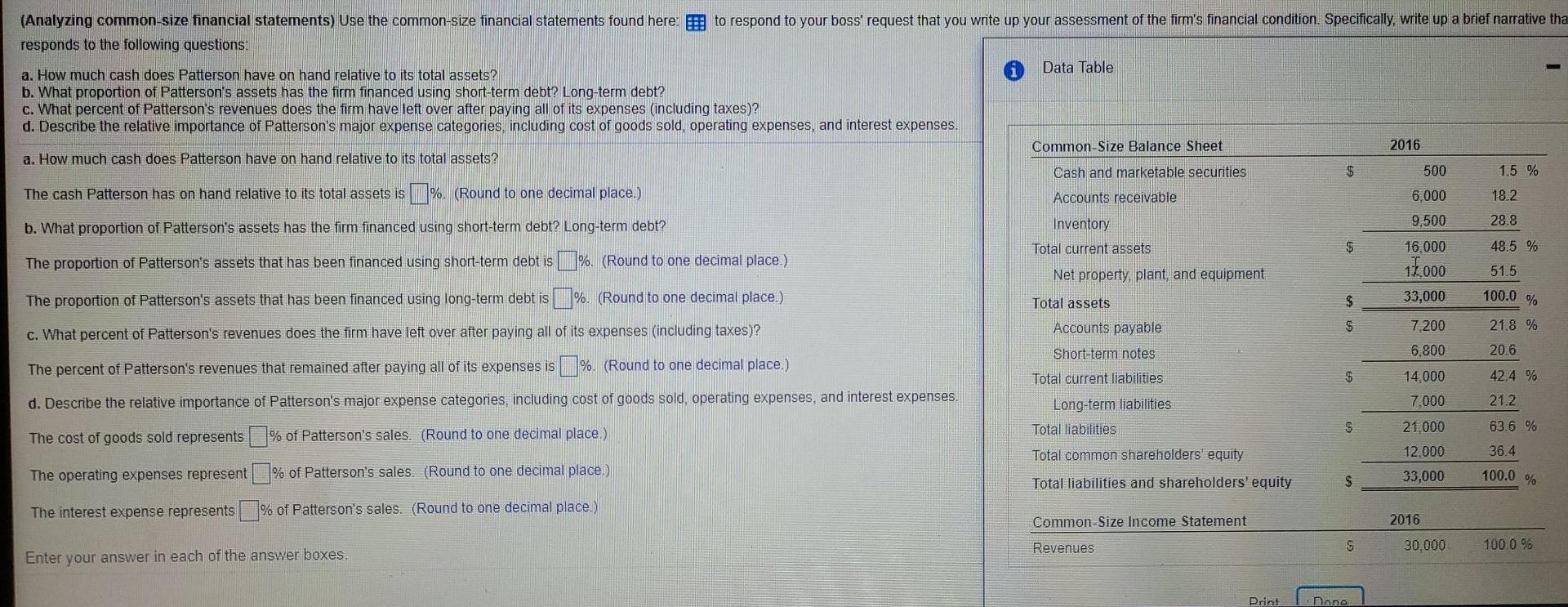
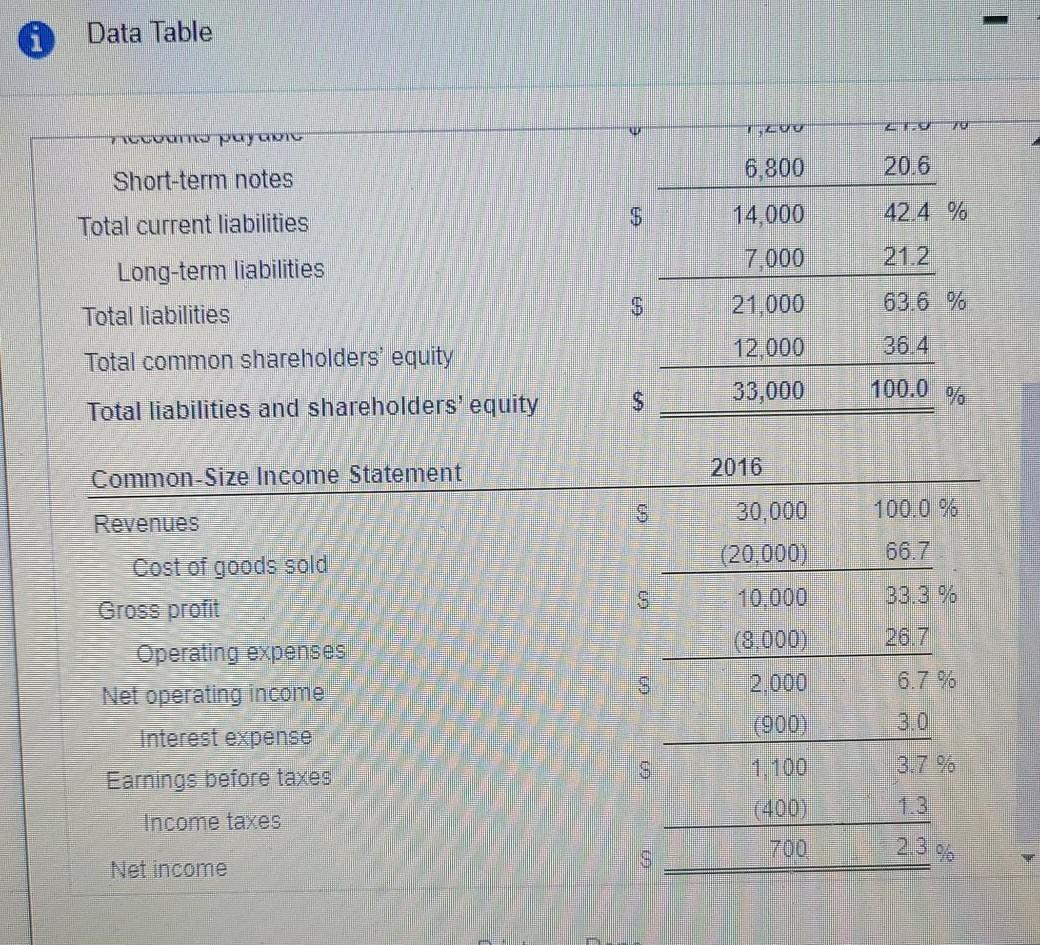
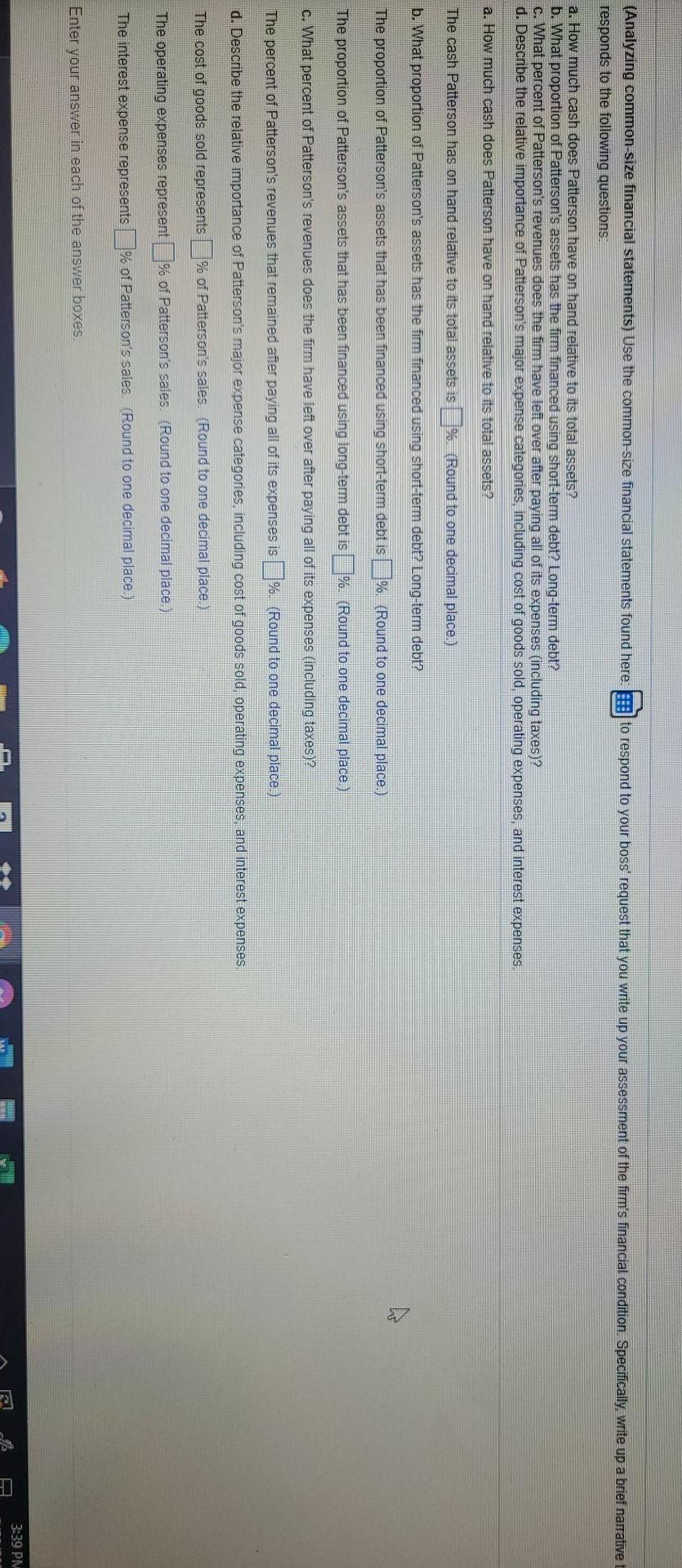
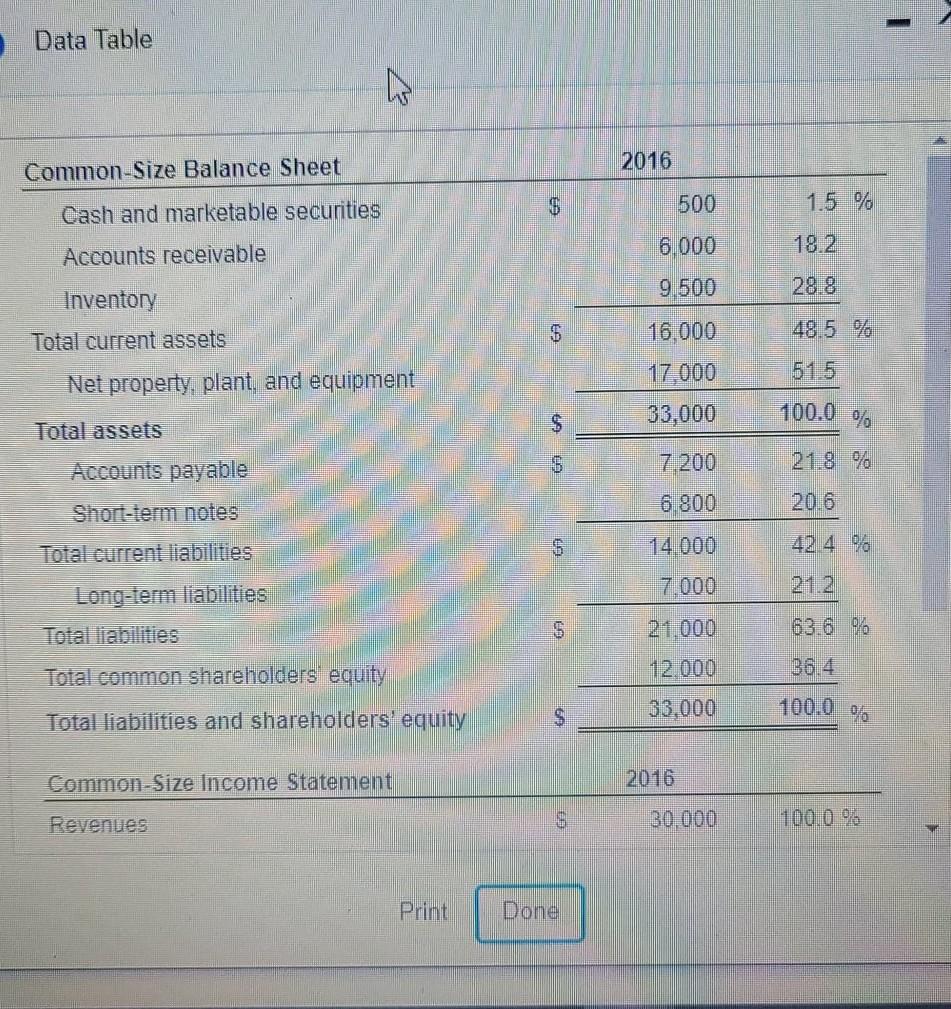
(Analyzing common-size financial statements) Use the common-size financial statements found here: to respond to your boss' request that you write up your assessment of the firm's financial condition. Specifically, write up a brief narrative tha responds to the following questions: a. How much cash does Patterson have on hand relative to its total assets? Data Table b. What proportion of Patterson's assets has the firm financed using short-term debt? Long-term debt? c. What percent of Patterson's revenues does the firm have left over after paying all of its expenses (including taxes)? d. Describe the relative importance of Patterson's major expense categories, including cost of goods sold, operating expenses, and interest expenses. Common-Size Balance Sheet 2016 a. How much cash does Patterson have on hand relative to its total assets? Cash and marketable securities $ 500 1.5 % The cash Patterson has on hand relative to its total assets is 0% (Round to one decimal place.) Accounts receivable 6,000 18.2 b. What proportion of Patterson's assets has the firm financed using short-term debt? Long-term debt? Inventory 9,500 28.8 Total current assets $ 16.000 48.5 % The proportion of Patterson's assets that has been financed using short-term debt is % (Round to one decimal place.) Net property, plant and equipment 12.000 51.5 The proportion of Patterson's assets that has been financed using long-term debt is %. (Round to one decimal place.) Total assets 33,000 c. What percent of Patterson's revenues does the firm have left over after paying all of its expenses (including taxes)? Accounts payable $ 7,200 21.8 % Short-term notes 6.800 20.6 The percent of Patterson's revenues that remained after paying all of its expenses is 1% (Round to one decimal place.) Total current liabilities 14 000 42.4 % d. Describe the relative importance of Patterson's major expense categories, including cost of goods sold, operating expenses, and interest expenses. Long-term liabilities 7.000 21.2 % of Patterson's sales. (Round to one decimal place.) $ Total liabilities 21.000 The cost of goods sold represents 63.6 % Total common shareholders' equity 12.000 36.4 The operating expenses represent% of Patterson's sales. (Round to one decimal place.) Total liabilities and shareholders' equity $ 33,000 The interest expense represents % of Patterson's sales. (Round to one decimal place.) Common-Size Income Statement 2016 Revenues S 30,000 100.0 % Enter your answer in each of the answer boxes 100.0 % 100.0 % Print none Data Table TES Zh TU vom putu 6,800 20.6 Short-term notes 14,000 Total current liabilities 424 % 7,000 21.2 Long-term liabilities Total liabilities $ 21,000 63.6 % 12.000 36.4 Total common shareholders' equity $ 33,000 100.0 % Total liabilities and shareholders' equity 2016 Common-Size Income Statement 30.000 100.0 % Revenues 66.7 (20,000) 10.000 (8.000) Cost of goods sold Gross profit Operating expenses Net operating income 33.3% 20 2.000 6.7 % (900) 3.0 Interest expense Earnings before taxes Income taxes (400) 700 6 Net income (Analyzing common-size financial statements) Use the common-size financial statements found here to respond to your boss' request that you write up your assessment of the firm's financial condition. Specifically, write up a brief narrative responds to the following questions: a. How much cash does Patterson have on hand relative to its total assets? b. What proportion of Patterson's assets has the firm financed using short-term debt? Long-term debt? c. What percent of Patterson's revenues does the firm have left over after paying all of its expenses (including taxes)? d. Describe the relative importance of Patterson's major expense categories, including cost of goods sold, operating expenses, and interest expenses. a. How much cash does Patterson have on hand relative to its total assets? The cash Patterson has on hand relative to its total assets is %. (Round to one decimal place.) b. What proportion of Patterson's assets has the in financed using short-term debt? Long-term debt? The proportion of Patterson's assets that has been financed using short-term debt is %. (Round to one decimal place.) The proportion of Patterson's assets that has been financed using long-term debt is % (Round to one decimal place ) c. What percent of Patterson's revenues does the firm have left over after paying all of its expenses (including taxes)? The percent of Patterson's revenues that remained after paying all of its expenses is % (Round to one decimal place.) d. Describe the relative importance of Patterson's major expense categories, including cost of goods sold, operating expenses, and interest expenses. The cost of goods sold represents % of Patterson's sales. (Round to one decimal place) The operating expenses represent% of Patterson's sales. (Round to one decimal place) The interest expense represents % of Patterson's sales. (Round to one decimal place.) Enter your answer in each of the answer boxes 3:39 PM D Data Table N 2016 Common-Size Balance Sheet 500 1.5 % Cash and marketable securities 18.2 Accounts receivable 6.000 9,500 16,000 Inventory 28.8 Total current assets 5 48.5 % 17.000 Net property, plant, and equipment 33,000 100.0 % Total assets Accounts payable 5 7 200 6.800 20.6 Short-term notes Total current liabilities 14.000 424 06 7,000 Long-term liabilities Total liabilities 63.69 Total common shareholders equity 21.000 12.000 33,000 $ Total liabilities and shareholders' equity 100.0 Common-Size Income Statement 2016 Revenues 30.000 100.0.96 Print Done
Step by Step Solution
There are 3 Steps involved in it

Get step-by-step solutions from verified subject matter experts