







Question: and Weighted Average Cost Method with Perpetual Inventory The beginning inventory for Midnight Supplies and data on purchases and sales for a three-month period are
 and
and
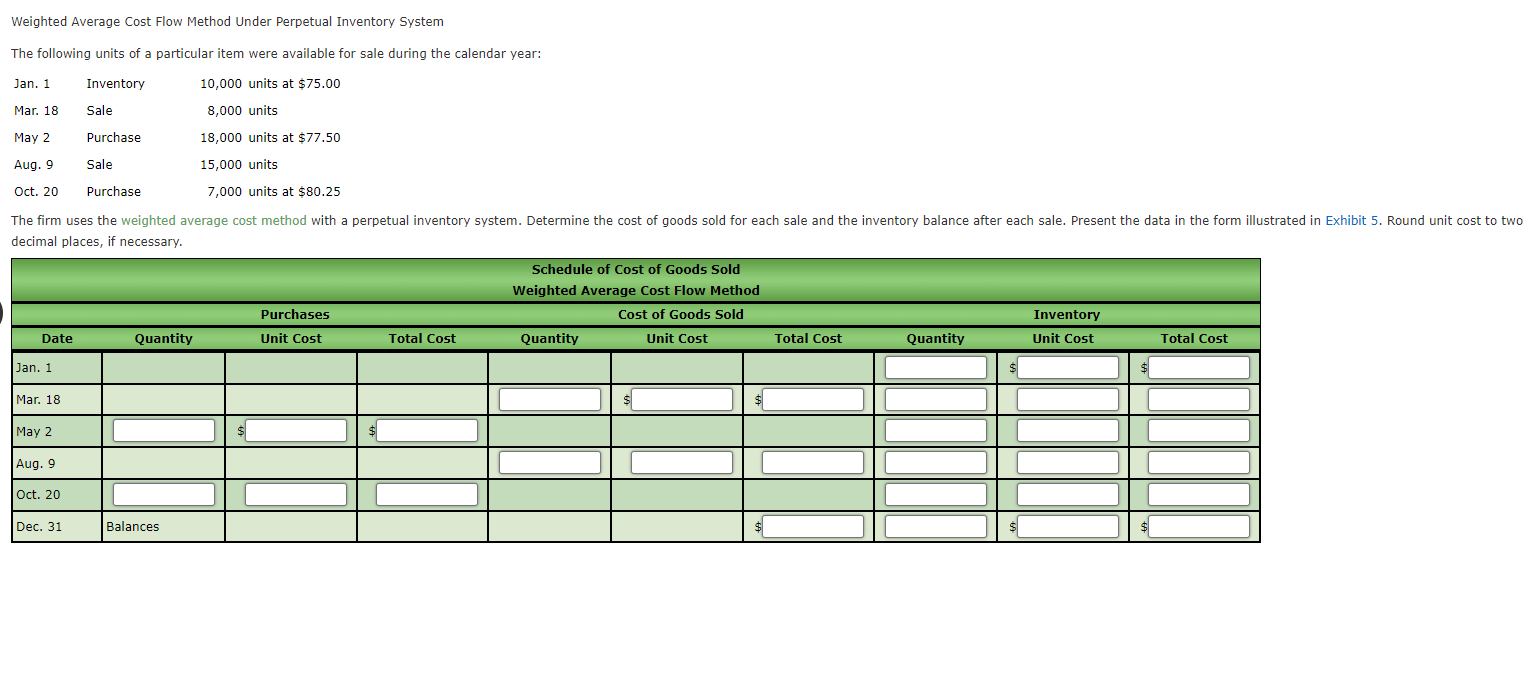
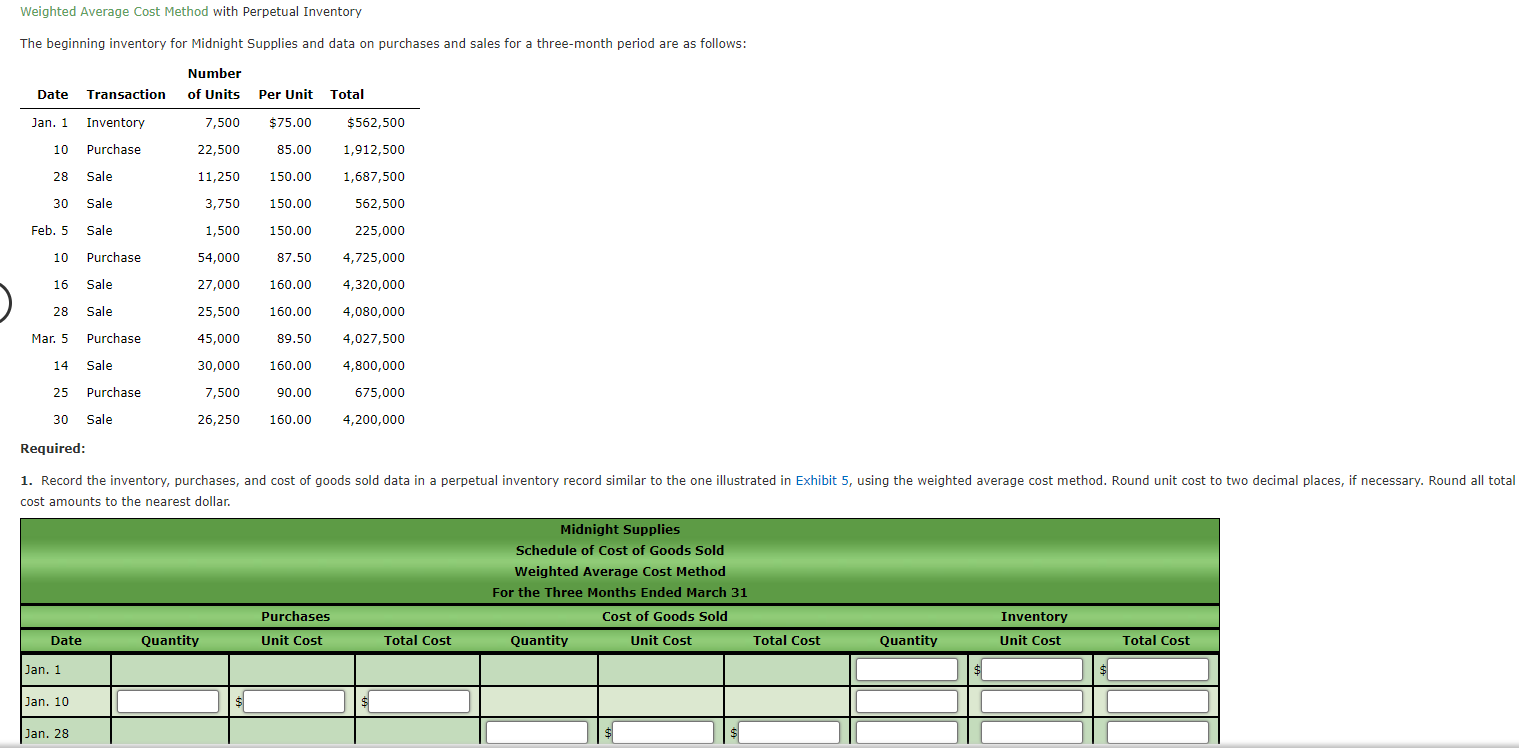
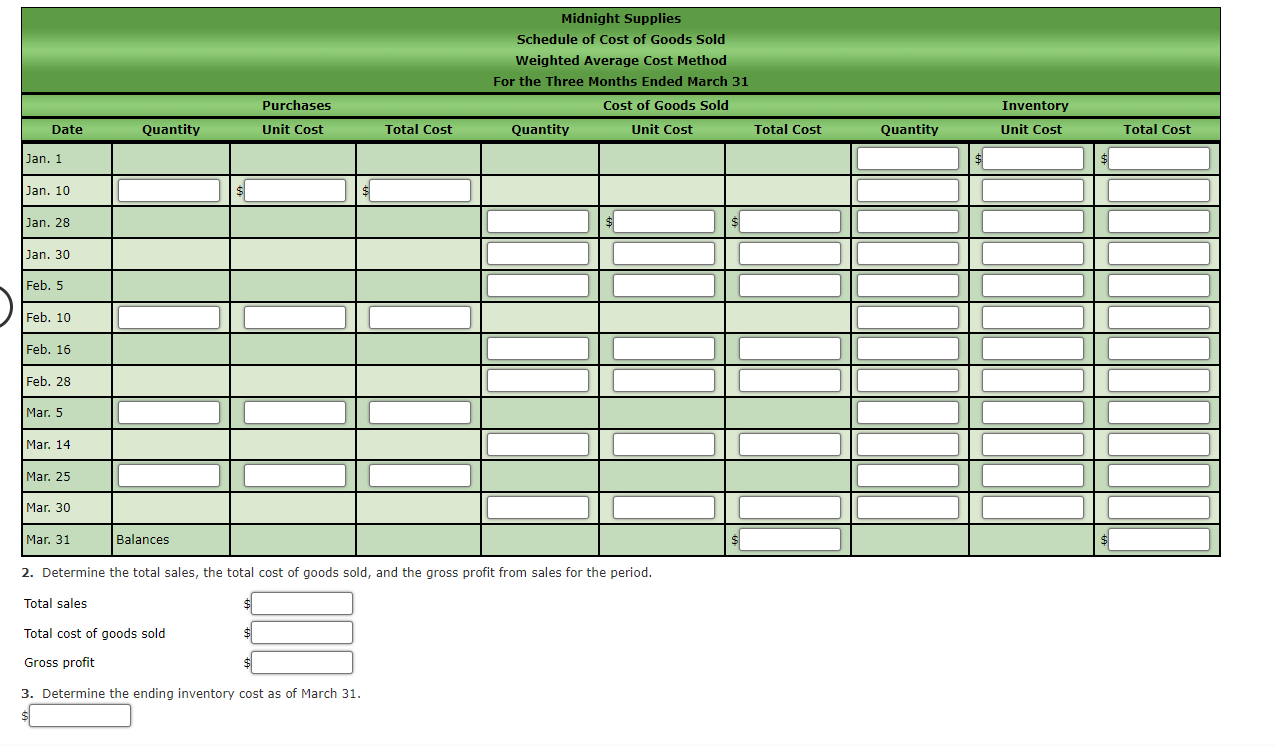
Weighted Average Cost Method with Perpetual Inventory The beginning inventory for Midnight Supplies and data on purchases and sales for a three-month period are as follows: Number Date Transaction of Units Per Unit Total 7,500 $75.00 $562,500 Jan. 1 Inventory 10 Purchase 22,500 85.00 1,912,500 28 Sale 11,250 150.00 1,687,500 30 Sale 3,750 150.00 562,500 Feb. 5 Sale 1,500 150.00 225,000 4,725,000 10 Purchase 54,000 87.50 16 Sale 27,000 160.00 4,320,000 28 Sale 25,500 160.00 4,080,000 Mar. 5 Purchase 45,000 89.50 4,027,500 14 Sale 30,000 160.00 4,800,000 25 Purchase 7,500 90.00 675,000 30 Sale 26,250 160.00 4,200,000 Required: 1. Record the inventory, purchases, and cost of goods sold data in a perpetual inventory record similar to the one illustrated in Exhibit 5, using the weighted average cost method. Round unit cost to two decimal places, if necessary. Round all total cost amounts to the nearest dollar. Midnight Supplies Schedule of Cost of Goods Sold Weighted Average Cost Method For the Three Months Ended March 31 Cost of Goods Sold Quantity Unit Cost Total Cost Purchases Inventory Unit Cost Date Quantity Unit Cost Total Cost Quantity Total Cost Jan. 1 Jan. 10 s $ Jan. 28 Midnight Supplies Schedule of Cost of Goods Sold Weighted Average Cost Method For the Three Months Ended March 31 Cost of Goods Sold Quantity Unit Cost Total Cost Purchases Inventory Unit Cost Date Quantity Unit Cost Total Cost Quantity Total Cost Jan. 1 Jan. 10 $ Jan. 28 $ s Jan. 30 Feb. 5 Feb. 10 Feb. 16 Feb. 28 Mar. 5 Mar. 14 Mar. 25 Mar. 30 Mar. 31 Balances 2. Determine the total sales, the total cost of goods sold, and the gross profit from sales for the period. Total sales Total cost of goods sold Gross profit 3. Determine the ending inventory cost as of March 31. Weighted Average Cost Flow Method Under Perpetual Inventory System The following units of a particular item were available for sale during the calendar year: Jan. 1 Inventory 10,000 units at $75.00 Mar. 18 Sale 8,000 units May 2 Purchase 18,000 units at $77.50 Aug. 9 Sale 15,000 units Oct. 20 Purchase 7,000 units at $80.25 The firm uses the weighted average cost method with a perpetual inventory system. Determine the cost of goods sold for each sale and the inventory balance after each sale. Present the data in the form illustrated in Exhibit 5. Round unit cost to two decimal places, if necessary. Schedule of Cost of Goods Sold Weighted Average Cost Flow Method Purchases Cost of Goods Sold Inventory Date Quantity Unit Cost Total Cost Quantity Unit Cost Total Cost Quantity Unit Cost Total Cost Jan. 1 $ Mar. 18 $ May 2 Aug. 9 Oct. 20 Dec. 31 Balances $ $
Step by Step Solution
There are 3 Steps involved in it

Get step-by-step solutions from verified subject matter experts
 Study Help