Question: Annotate by adding two comments to any aspect of the research paper that raises questions, worries you, answers questions, reassures you -- anything. Oh, of
Annotate by adding two comments to any aspect of the research paper that raises questions, worries you, answers questions, reassures you -- anything.
Oh, of course only focus on format issues -- obviously, the topic (something about "19th-century family handbooks," or whatever) is not important. I just want you to get your eyes on a finished research paper so you can see what it looks like and how straightforward it really is.
Please answer which passage you annotate cut and paste with an explanation.
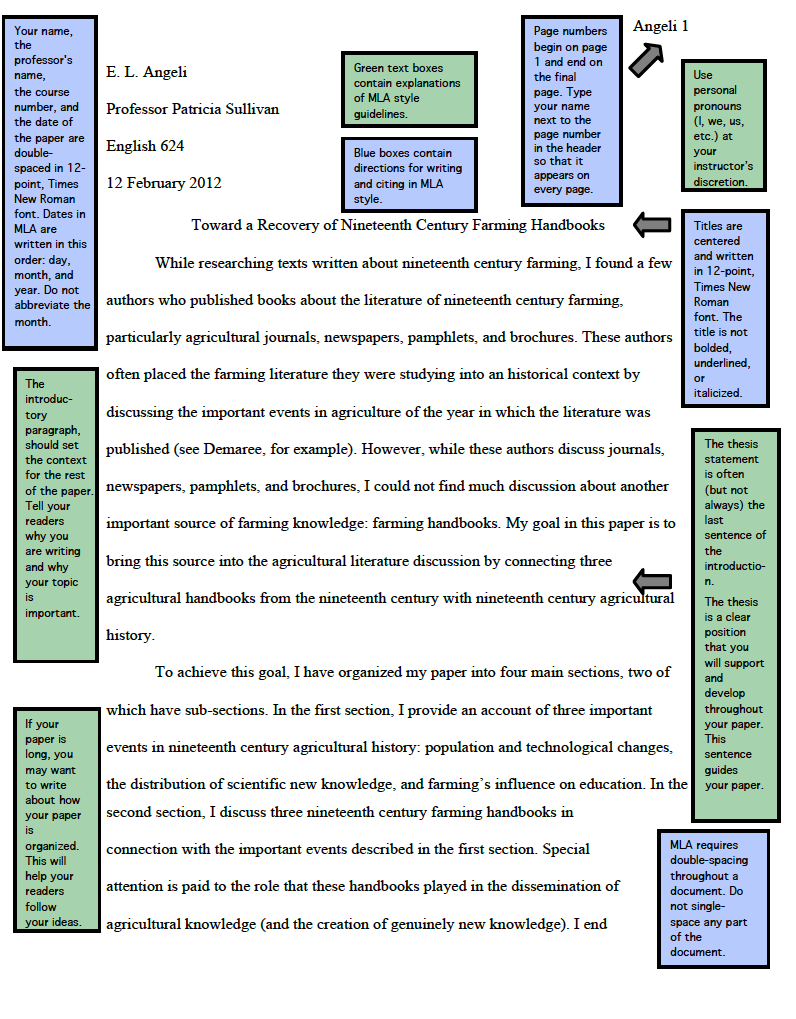
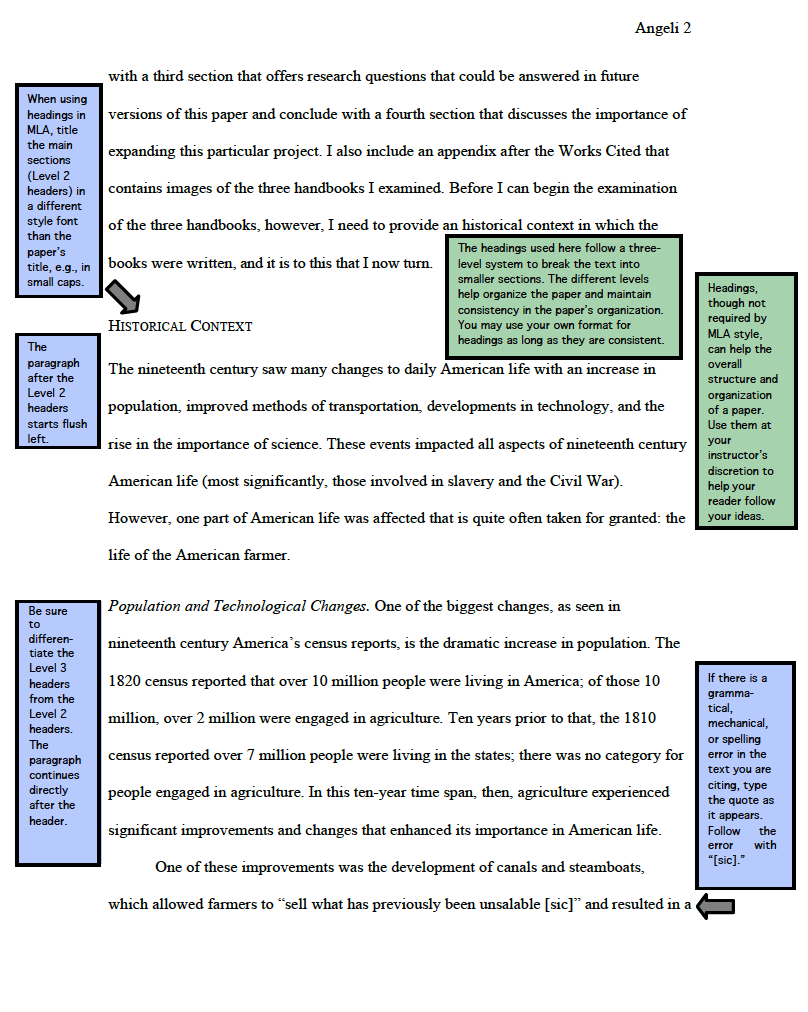
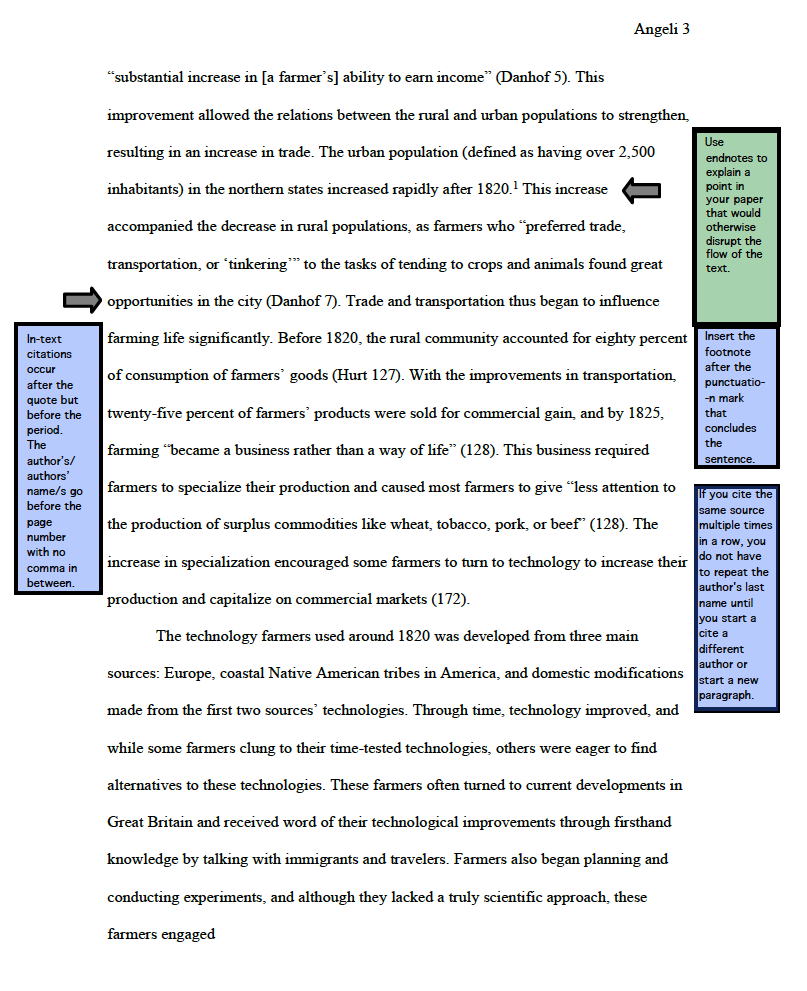
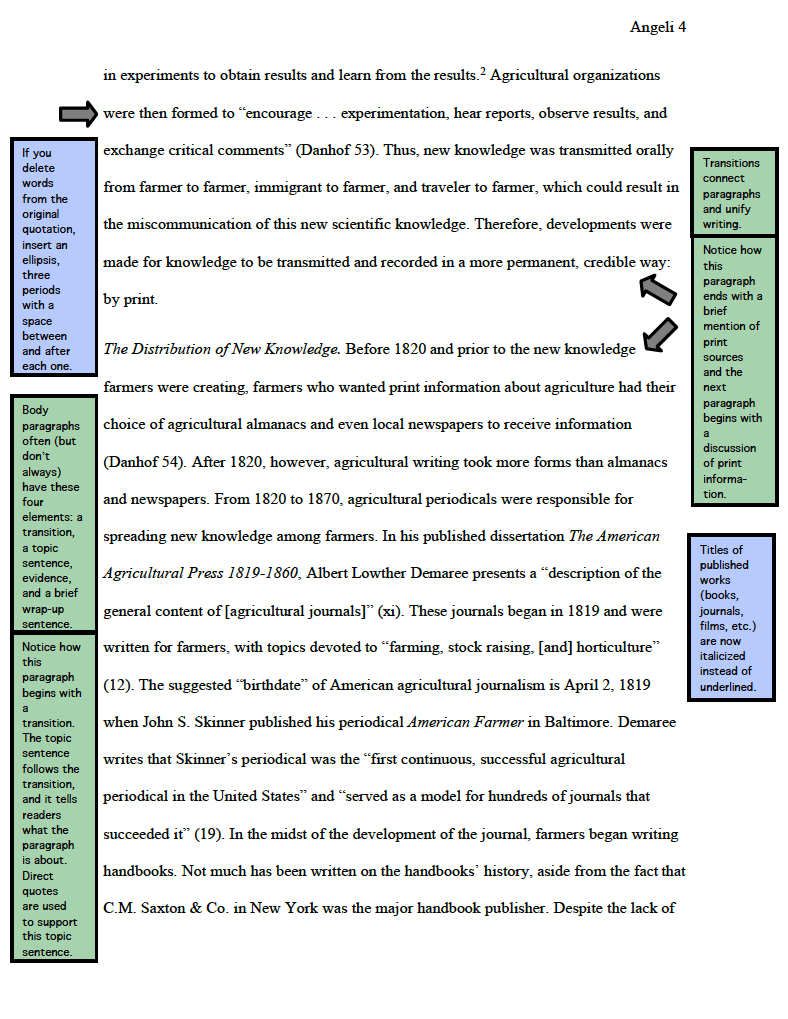
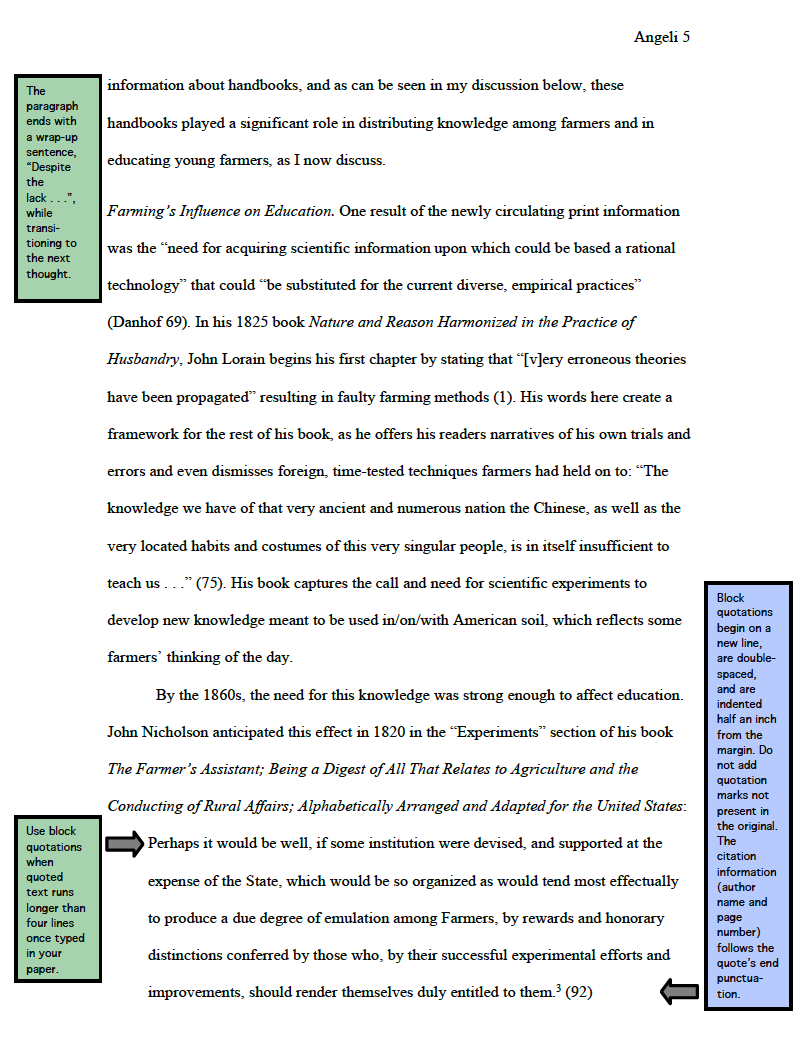
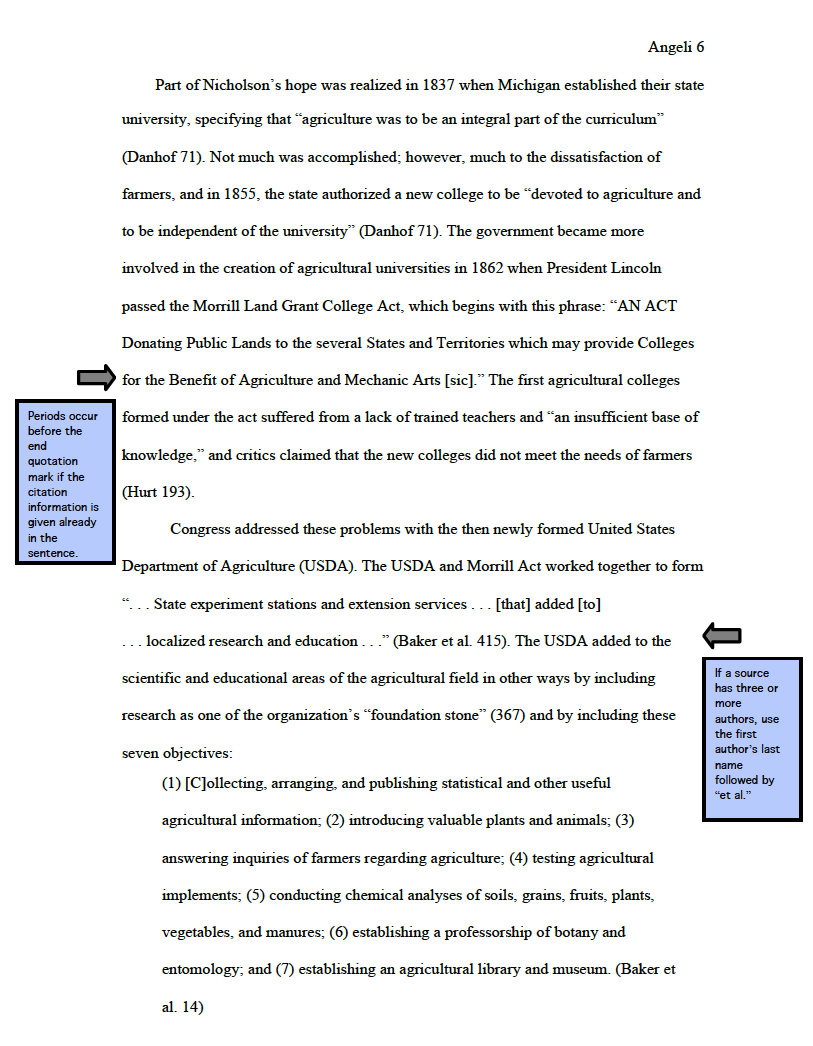
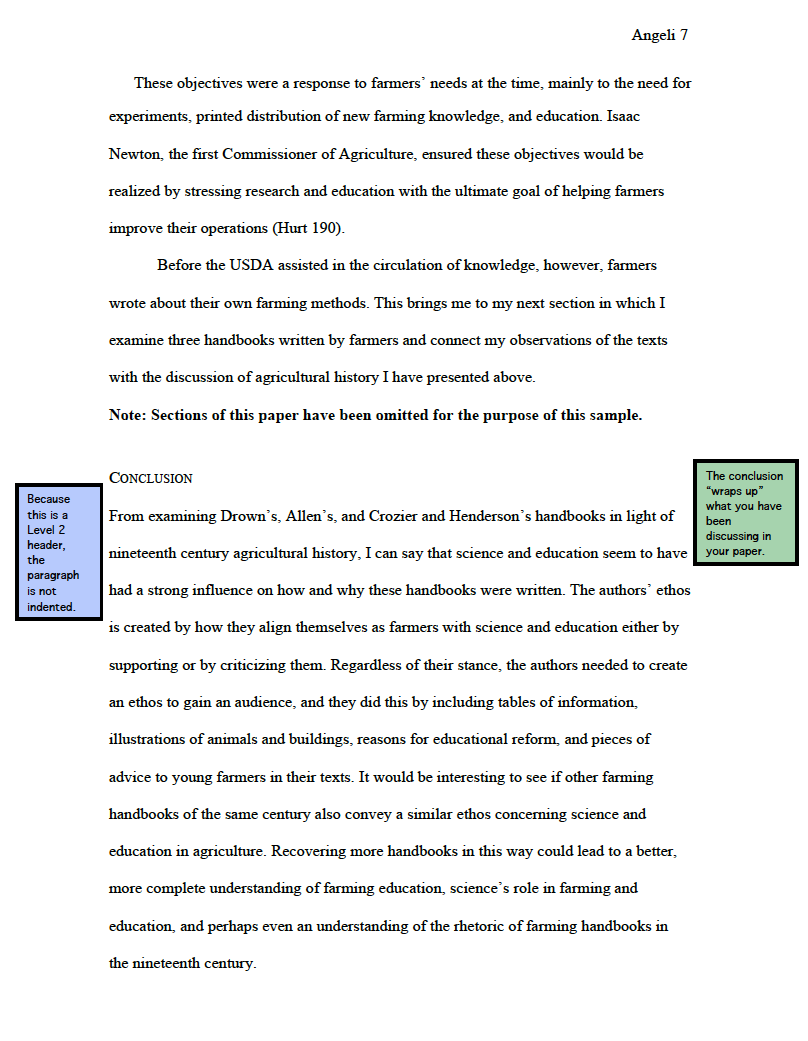
Page numbers Angeli 1 Your name, the begin on page professor's 1 and end on name, E. L. Angeli Green text boxes the final Use contain explanations the course page. Type personal of MLA style number, and Professor Patricia Sullivan your name pronouns guidelines. the date of next to the (I, we, us, page number the paper are etc.) at double- English 624 Blue boxes contain in the header your so that it spaced in 12- directions for writing instructor's appears on point, Times 12 February 2012 and citing in MLA discretion. every page. New Roman style. font. Dates in MLA are Toward a Recovery of Nineteenth Century Farming Handbooks Titles are centered written in this order: day, While researching texts written about nineteenth century farming, I found a few and written in 12-point, month, and Times New year. Do not abbreviate the authors who published books about the literature of nineteenth century farming, Roman font. The month particularly agricultural journals, newspapers, pamphlets, and brochures. These authors title is not bolded, underlined, often placed the farming literature they were studying into an historical context by or The italicized. introduc- tory discussing the important events in agriculture of the year in which the literature was paragraph, should set published (see Demaree, for example). However, while these authors discuss journals, The thesis the context statement for the rest is often of the paper. newspapers, pamphlets, and brochures, I could not find much discussion about another (but not Tell your always) the readers important source of farming knowledge: farming handbooks. My goal in this paper is to last why you sentence of are writing the and why bring this source into the agricultural literature discussion by connecting three introduction your topic n is agricultural handbooks from the nineteenth century with nineteenth century agricultural The thesis important. is a clear history. position that you will support To achieve this goal, I have organized my paper into four main sections, two of and develop which have sub-sections. In the first section, I provide an account of three important throughout If your your paper. paper is This long, you events in nineteenth century agricultural history: population and technological changes, sentence may want guides to write the distribution of scientific new knowledge, and farming's influence on education. In the your paper . about how your paper second section, I discuss three nineteenth century farming handbooks in is organized connection with the important events described in the first section. Special MLA requires This will double-spacing help your throughout a readers attention is paid to the role that these handbooks played in the dissemination of document. Do follow not single your ideas. agricultural knowledge (and the creation of genuinely new knowledge). I end space any part of the documentAngeli 2 with a third section that offers research questions that could be answered in future When using headings in versions of this paper and conclude with a fourth section that discusses the importance of MLA, title the main sections expanding this particular project. I also include an appendix after the Works Cited that (Level 2 headers) in contains images of the three handbooks I examined. Before I can begin the examination a different style font of the three handbooks, however, I need to provide an historical context in which the than the paper's The headings used here follow a three- title, e.g., in books were written, and it is to this that I now turn. level system to break the text into small caps. smaller sections. The different levels help organize the paper and maintain Headings, consistency in the paper's organization. though not HISTORICAL CONTEXT You may use your own format for required by MLA style, The headings as long as they are consistent. can help the paragraph after the The nineteenth century saw many changes to daily American life with an increase in overall structure and Level 2 organization headers population, improved methods of transportation, developments in technology, and the of a paper starts flush Use them at left rise in the importance of science. These events impacted all aspects of nineteenth century your instructor's discretion to American life (most significantly, those involved in slavery and the Civil War). help your reader follow However, one part of American life was affected that is quite often taken for granted: the your ideas life of the American farmer. Be sure Population and Technological Changes. One of the biggest changes, as seen in to differen tiate the nineteenth century America's census reports, is the dramatic increase in population. The Level 3 headers 1820 census reported that over 10 million people were living in America; of those 10 If there is a from the gramma Level 2 tical million, over 2 million were engaged in agriculture. Ten years prior to that, the 1810 headers. mechanical, The or spelling paragraph census reported over 7 million people were living in the states; there was no category for error in the continues text you are directly people engaged in agriculture. In this ten-year time span, then, agriculture experienced citing, type after the the quote as header. it appears. significant improvements and changes that enhanced its importance in American life. Follow the error with One of these improvements was the development of canals and steamboats, " [sic]." which allowed farmers to "sell what has previously been unsalable [sic]" and resulted in aAngeli 3 "substantial increase in [a farmer's] ability to earn income" (Danhof 5). This improvement allowed the relations between the rural and urban populations to strengthen, Use resulting in an increase in trade. The urban population (defined as having over 2,500 endnotes to explain a inhabitants) in the northern states increased rapidly after 1820. This increase point in your paper that would accompanied the decrease in rural populations, as farmers who "preferred trade, otherwise disrupt the flow of the transportation, or "tinkering" to the tasks of tending to crops and animals found great text. opportunities in the city (Danhof 7). Trade and transportation thus began to influence In-text farming life significantly. Before 1820, the rural community accounted for eighty percent Insert the citations footnote occur of consumption of farmers' goods (Hurt 127). With the improvements in transportation, after the after the punctuation- quote but -n mark before the twenty-five percent of farmers' products were sold for commercial gain, and by 1825, that period. concludes The author's/ farming "became a business rather than a way of life" (128). This business required the sentence. authors' name/'s go farmers to specialize their production and caused most farmers to give "less attention to If you cite the before the same source page the production of surplus commodities like wheat, tobacco, pork, or beef" (128). The multiple times number in a row, you with no comma in increase in specialization encouraged some farmers to turn to technology to increase their do not have to repeat the between. author's last production and capitalize on commercial markets (172). name until you start a The technology farmers used around 1820 was developed from three main cite a different author or sources: Europe, coastal Native American tribes in America, and domestic modifications start a new paragraph. made from the first two sources' technologies. Through time, technology improved, and while some farmers clung to their time-tested technologies, others were eager to find alternatives to these technologies. These farmers often turned to current developments in Great Britain and received word of their technological improvements through firsthand knowledge by talking with immigrants and travelers. Farmers also began planning and conducting experiments, and although they lacked a truly scientific approach, these farmers engagedAngeli 4 in experiments to obtain results and learn from the results.2 Agricultural organizations ' were then formed to \"encourage _ _ _ experimentation, hear reports, observe results, and If you delete words from the origin a notation, insert an ellipsis, three periods with a space between and after each one. Body wasranhs often (but don't always) have these four elements: a transition, a topic sentence, evidence, and a brief wrapup sentence. Notice how this wasranh begins with a transition. The topic sentence follows the transition, and it tells readers Mist the wasranh is dxmt. Direct :1 notes are used to stpport this topic sentence. exchange critical comments" (Janhof 53). Thus, new knowledge was transmitted orally from farmer to farmer, immigrant to farmer, and traveler to farmer, which could result in the miscommunication of this new scientic knowledge. Therefore, developments were made for knowledge to be transmitted and recorded in a more permanent, credible way: by print. ~ The Distribution qumv Knowledge. Before 1820 and prior to the new knowledge ' farmers were creating, farmers who wanted print information about agriculture had their choice of agricultural almanacs and even local newspapers to receive information (Janhof 54). Aer 1320, however, agricultural writing took more forms than almanacs and newspapers. From 1820 to 1370, agricultural periodicals were responsible for spreading new knowledge among farmers. In his published dissertation The American Agricultural Press f319J36I9, Albert Lowther Demaree presents a \"description of the general content of [agricultural journals]" (xi). These journals began in 1819 and were written for farmers, with topics devoted to \"farming, stock raising, [and] horticulture" (12). The suggested \"birthdate\" of American agricultural journalism is April 2, 1819 when John S. Skinner published his periodical American Farmer in Baltimore. Demaree writes that Skinner's periodical was the \"first continuous, successful agricultural periodical in the United States" and \"sen-'ed as a model for hundreds of journals that succeeded it\" (19). In the midst of the development of the journal, farmers began writing handbooks. Not much has been written on the handbooks' history, aside from the fact that CM. Saxton & Co. inNew York was the major handbook publisher. Despite the lack of Titles of published works (books, journals, films, etc.) are MW italicized instead of underlined. Angeli 5 The information about handbooks, and as can be seen in my discussion below, these paragraph ends with handbooks played a significant role in distributing knowledge among farmers and in a wrap-up sentence, "Despite educating young farmers, as I now discuss. the lack . . ." while Farming's Influence on Education. One result of the newly circulating print information transi- tioning to the next was the "need for acquiring scientific information upon which could be based a rational thought. technology" that could "be substituted for the current diverse, empirical practices" (Danhof 69). In his 1825 book Nature and Reason Harmonized in the Practice of Husbandry, John Lorain begins his first chapter by stating that "[very erroneous theories have been propagated" resulting in faulty farming methods (1). His words here create a framework for the rest of his book, as he offers his readers narratives of his own trials and errors and even dismisses foreign, time-tested techniques farmers had held on to: "The knowledge we have of that very ancient and numerous nation the Chinese, as well as the very located habits and costumes of this very singular people, is in itself insufficient to teach us . . ." (75). His book captures the call and need for scientific experiments to Block develop new knowledge meant to be used in/on/with American soil, which reflects some quotations begin on a new line, farmers' thinking of the day. are double- spaced By the 1860s, the need for this knowledge was strong enough to affect education. and are indented half an inch John Nicholson anticipated this effect in 1820 in the "Experiments" section of his book from the margin. Do The Farmer's Assistant; Being a Digest of All That Relates to Agriculture and the not add quotation marks not Conducting of Rural Affairs; Alphabetically Arranged and Adapted for the United States: present in Use block the original. quotations Perhaps it would be well, if some institution were devised, and supported at the The when citation quoted expense of the State, which would be so organized as would tend most effectually information text runs (author longer than name and four lines to produce a due degree of emulation among Farmers, by rewards and honorary page once typed number) in your distinctions conferred by those who, by their successful experimental efforts and follows the paper. quote's end punctua- improvements, should render themselves duly entitled to them. (92) tion.Angeli 6 Part ofNicholson's hope was realized in 183? when Michigan established their state university, specifying that \"agriculture was to be an integral part of the curriculum\" (Danhof 71). Not much was accomplished; however, much to the dissatisfaction of farmers, and in 1855, the state authorized a new college to be \"devoted to agriculture and to be independent of the university\" [Danhof T1). The government became more involved in the creation of agricultural universities in 1862 when President Lincoln passed the Morrill Land Grant College Act, which begins with this phrase: \"AN ACT Donating Public Lands to the several States and Territories which may provide Colleges ' for the Benet of Agriculture and Mechanic Arts [sic]_" The first agricultural colleges Periods occur before die and quotation mark if the moon information is given dread}! ill the sentence. formed under the act suffered from a lack of trained teachers and \"an insufcient base of knowledge,\" and critics claimed that the new colleges did not meet the needs of farmers (Hurt 193). Congress addressed these problems with the then newly formed United States Department of Agriculture (USDA). The USDA and Morrill Act worked together to form _ _ State experiment stations and extension services _ _ _ [that] added [to] _ _ _ localized research and education _ _ [Baker et al. 415). The USDA added to the - scientic and educational areas of the agricultural eld in other ways by including research as one of the organization's \"foundation stone\" (36?) and by including these seven objectives: (1) [C]ollecting, arranging, and publishing statistical and other useful agricultural information; [2) introducing valuable plants and animals; (3) answering inquiries of farmers regarding agriculture; (4) testing agricultural implements; (5) conducting chemical analyses of soils, grains, fruits, plants, vegetables, and manures; (6) establishing a professorship of botany and entomology; and (7) establishing an agricultural library and museum. (Baker et al. 14) Angeli 7' These objectives were a response to farmers' needs at the time, mainly to the need for experiments, printed distribution of new farming knowledge, and education. Isaac Newton, the rst Commissioner of Agriculture, ensured these objectives would be realized by stressing research and education with the ultimate goal of helping farmers improve their operations (Hurt 190). Before the USDA assisted in the circulation of knowledge, however, farmers wrote about their own farming methods. This brings me to my next section in which I examine three handbooks written by farmers and connect my observations of the texts with the discussion of agricultural history I have presented above. Note: Sections of this paper have been omitted for the purpose of this sample. CONCLUSION The conclusion From examining Drown's, Allen's, and Crozier and Henderson's handbooks in light of discus-II; in nineteenth century agricultural history, I can say that science and education seem to have WW Wr- had a strong inuence on how and why these handbooks were written. The authors' ethos is created by how they align themselves as farmers with science and education either by supporting or by criticizing them. Regardless of their stance, the authors needed to create an ethos to gain an audience, and they did this by including tables of information, illustrations of animals and buildings, reasons for educational reform, and pieces of advice to young farmers in their texts. It would be interesting to see if other farming handbooks of the same century also convey a similar ethos concerning science and education in agriculture. Recovering more handbooks in this way could lead to a better, more complete understanding of farming education, science's role in farming and education, and perhaps even an understanding of the rhetoric of farming handbooks in the nineteenth century
Step by Step Solution
There are 3 Steps involved in it
1 Expert Approved Answer
Step: 1 Unlock
Question Has Been Solved by an Expert!
Get step-by-step solutions from verified subject matter experts
Step: 2 Unlock
Step: 3 Unlock
Students Have Also Explored These Related Accounting Questions!









 Study Help