



Question: ANOTHER LOOK Tolerance Groups In configuring the SAP system, a company can define toleranee groups, which are specific ranges that define transaction limits . An
ANOTHER LOOK
Tolerance Groups
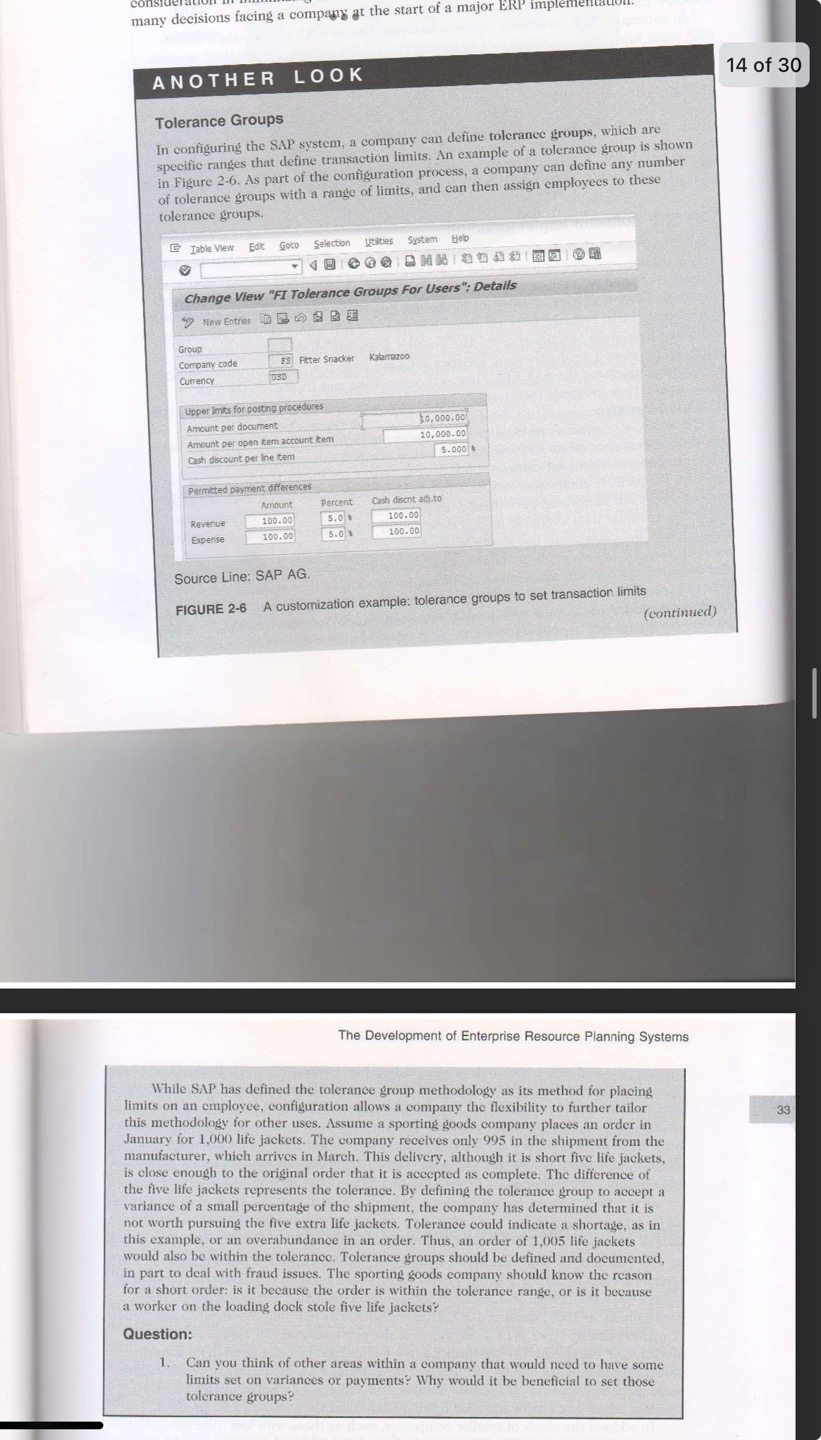
In configuring the SAP system, a company can define toleranee groups, which are
specific ranges that define transaction limits An example of a tolerance group is shown
in Figure As part of the configuration process, a company can define any number
of tolerance groups with a range of limits and can then assign employees to these
tolerance groups.
Source Line: SAP AG
FIGURE A customization example: tolerance groups to set transaction limits
While SAP has defined the tolerance group methodology as its method for placing
limits on an cmployee, configuration allows a company the flexibility to further tailor
this methodology for other uses. Assume a sporting goods company places an order in
January for life jackets. The company receives only in the shipment from the
manufacturer, which arrives in March. This delivery, although it is short five life jackets,
is close enough to the original order that it is aceepted as complete. The difference of
the five life jackets represents the tolerance. By defining the tolerance group to accept a
variance of a small percentage of the shipment, the company has determined that it is
not worth pursuing the five extra life jackets. Tolerance could indicate a shortage, as in
this example, or an overabundance in an order. Thus, an order of life jackets
would also be within the tolerance. Tolerance groups should be defined and documented,
in part to deal with fraud issues. The sporting goods company should know the reason
for a short order: is it because the order is within the tolerance range, or is it because
a worker on the loading dock stole five life jackets?
Question:
Can you think of other areas within a company that would need to have some
limits set on variances or payments: Why would it be beneficial to set those
tolerance groups?
Step by Step Solution
There are 3 Steps involved in it
1 Expert Approved Answer
Step: 1 Unlock

Question Has Been Solved by an Expert!
Get step-by-step solutions from verified subject matter experts
Step: 2 Unlock
Step: 3 Unlock