







Question: Answer A,B and C Part III-Depreciation and Useful Lives Presented below is a portion of Note 7 to Starbucks' 2012 consolidated financial statements. Excerpts from
Answer A,B and C
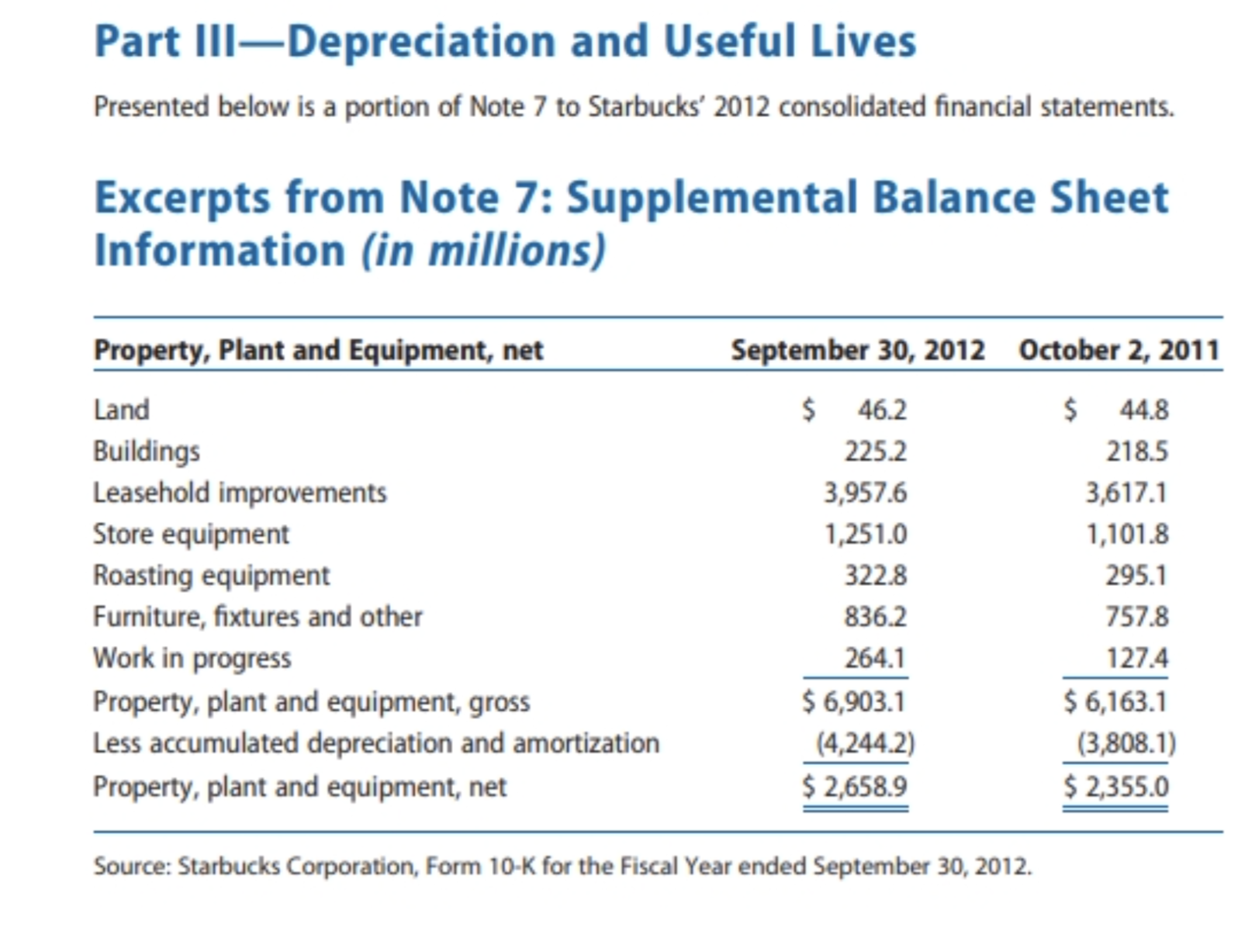
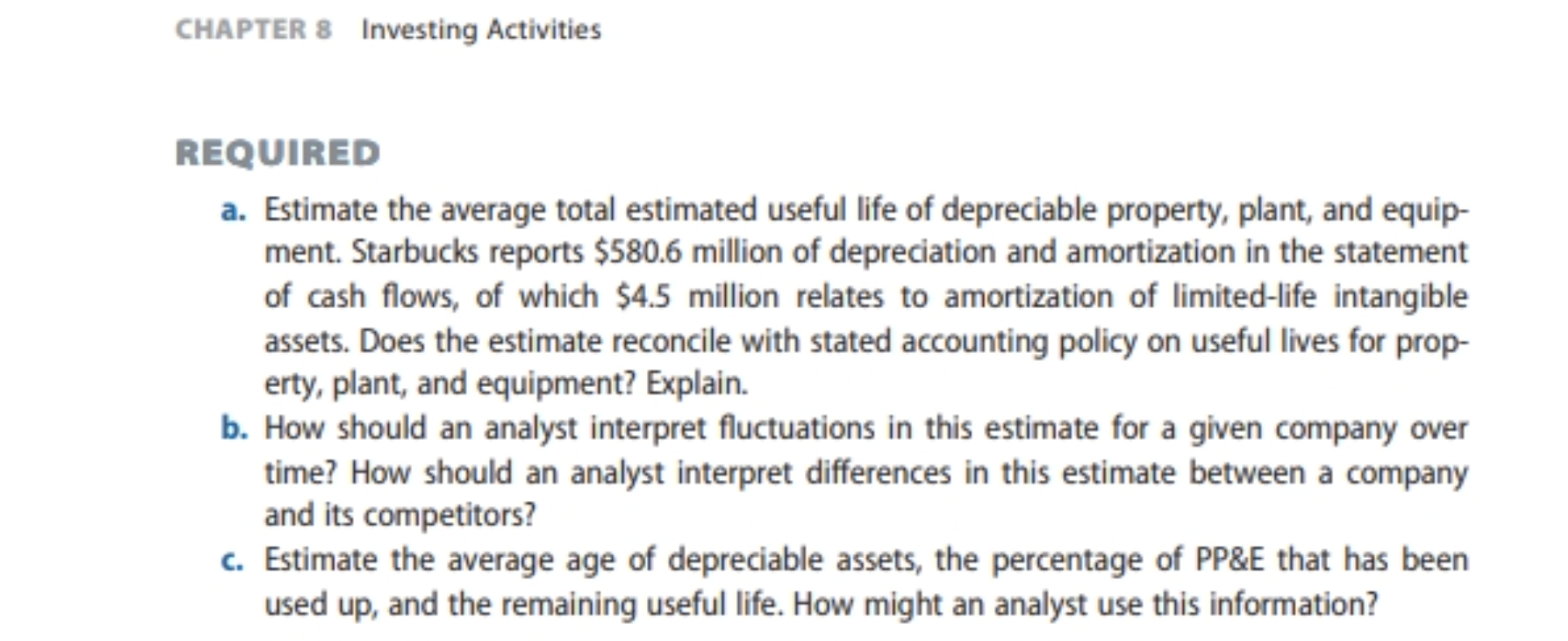
Part III-Depreciation and Useful Lives Presented below is a portion of Note 7 to Starbucks' 2012 consolidated financial statements. Excerpts from Note 7: Supplemental Balance Sheet Information (in millions) Source: Starbucks Corporation, Form 10-K for the Fiscal Year ended September 30, 2012. REQUIRED a. Estimate the average total estimated useful life of depreciable property, plant, and equipment. Starbucks reports $580.6 million of depreciation and amortization in the statement of cash flows, of which $4.5 million relates to amortization of limited-life intangible assets. Does the estimate reconcile with stated accounting policy on useful lives for property, plant, and equipment? Explain. b. How should an analyst interpret fluctuations in this estimate for a given company over time? How should an analyst interpret differences in this estimate between a company and its competitors? c. Estimate the average age of depreciable assets, the percentage of PP\&E that has been used up, and the remaining useful life. How might an analyst use this information? Part III-Depreciation and Useful Lives Presented below is a portion of Note 7 to Starbucks' 2012 consolidated financial statements. Excerpts from Note 7: Supplemental Balance Sheet Information (in millions) Source: Starbucks Corporation, Form 10-K for the Fiscal Year ended September 30, 2012. REQUIRED a. Estimate the average total estimated useful life of depreciable property, plant, and equipment. Starbucks reports $580.6 million of depreciation and amortization in the statement of cash flows, of which $4.5 million relates to amortization of limited-life intangible assets. Does the estimate reconcile with stated accounting policy on useful lives for property, plant, and equipment? Explain. b. How should an analyst interpret fluctuations in this estimate for a given company over time? How should an analyst interpret differences in this estimate between a company and its competitors? c. Estimate the average age of depreciable assets, the percentage of PP\&E that has been used up, and the remaining useful life. How might an analyst use this information
Step by Step Solution
There are 3 Steps involved in it

Get step-by-step solutions from verified subject matter experts
 Study Help