



Question: Answer all questions clearly and succinctly. Provide intermediate derivations where needed, but do not exceed 9 pages, graphs included, in your answers. Consider a small
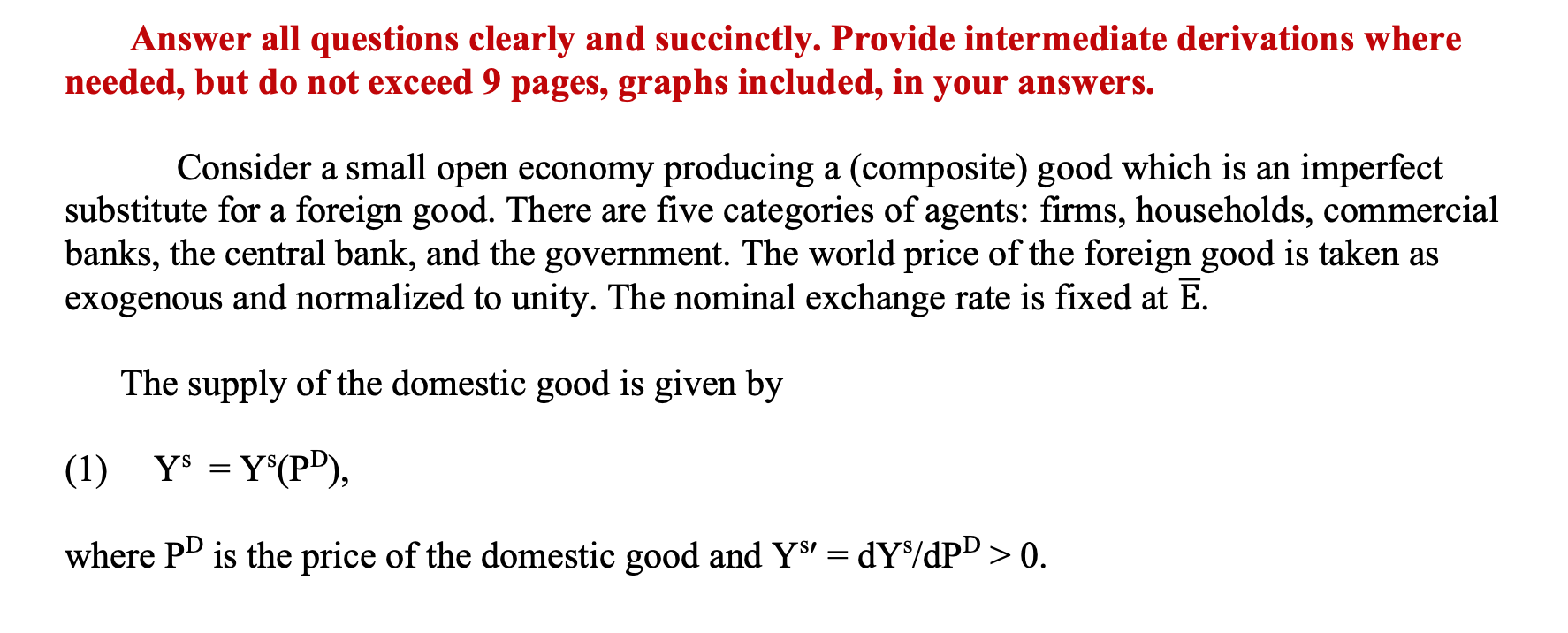
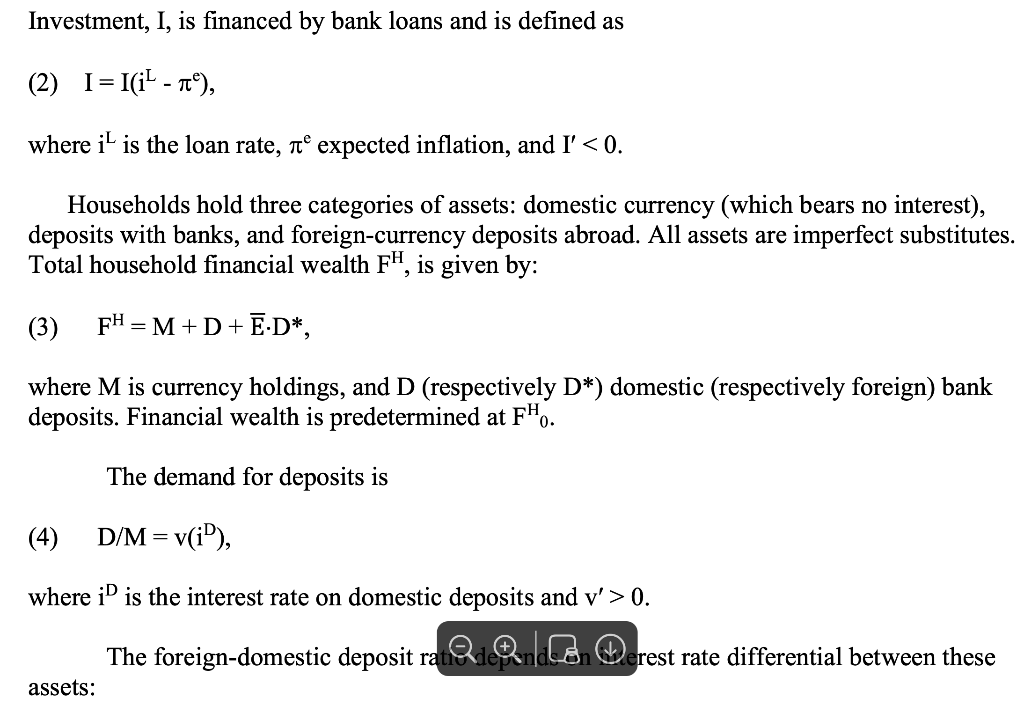
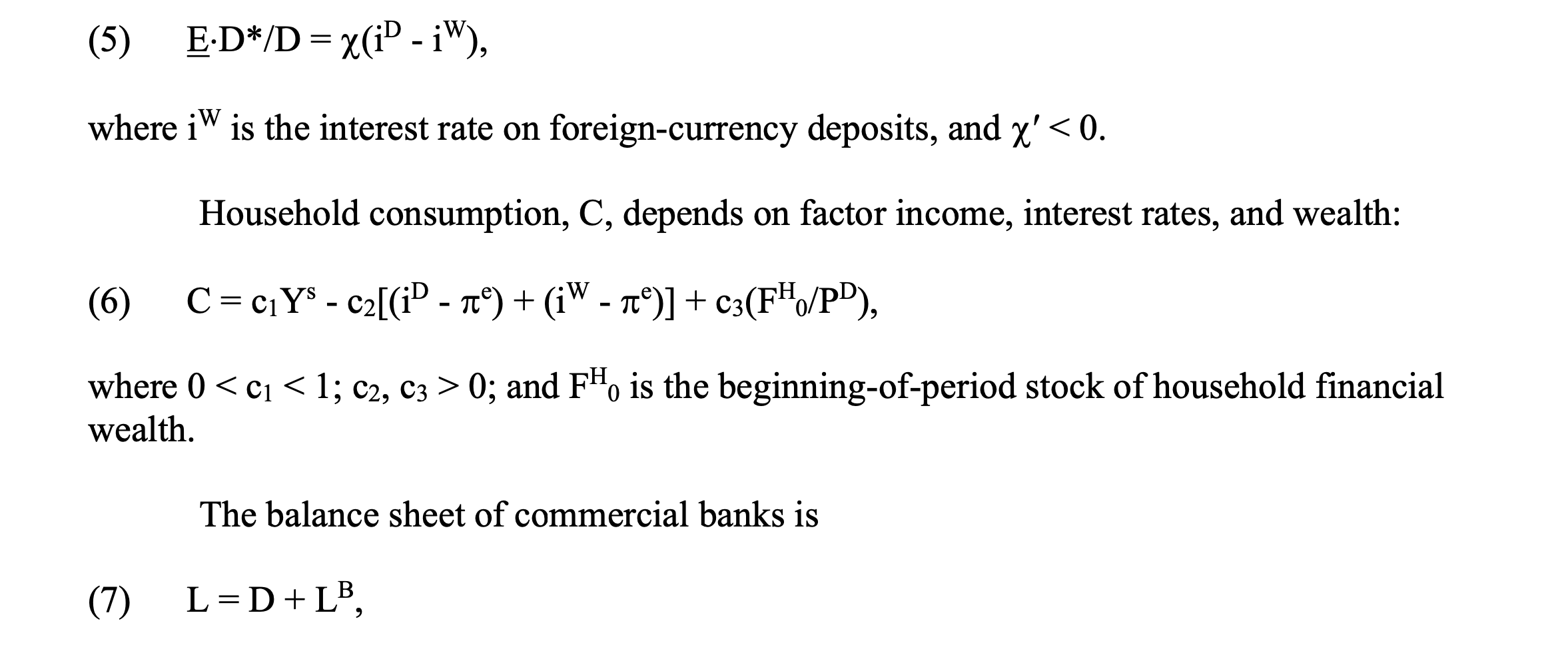
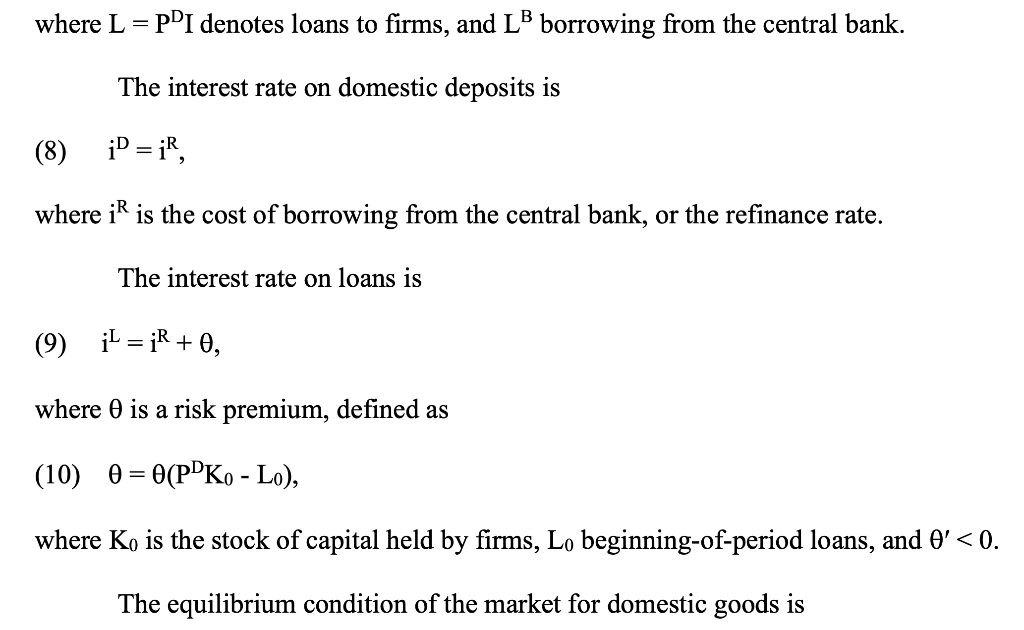
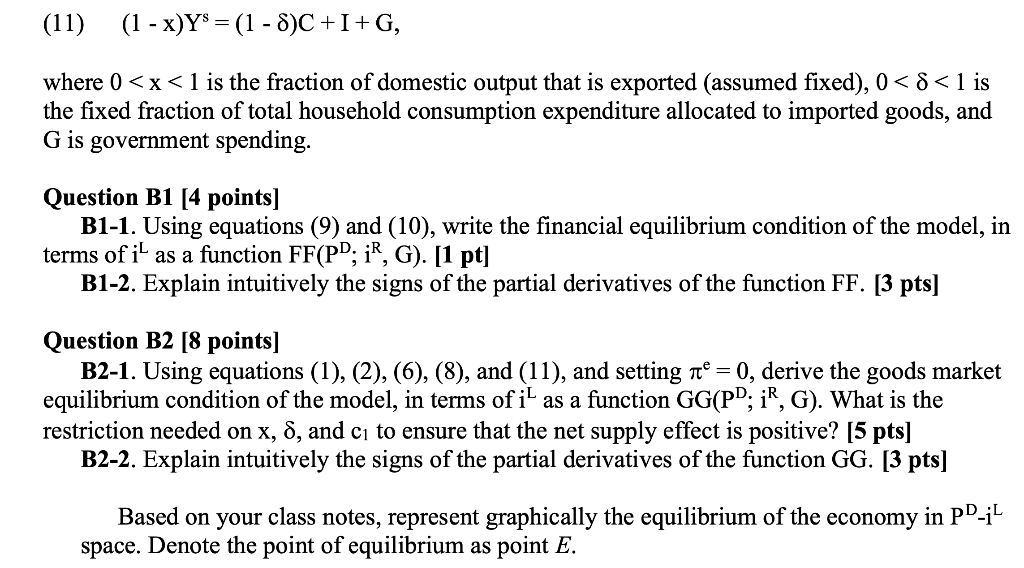
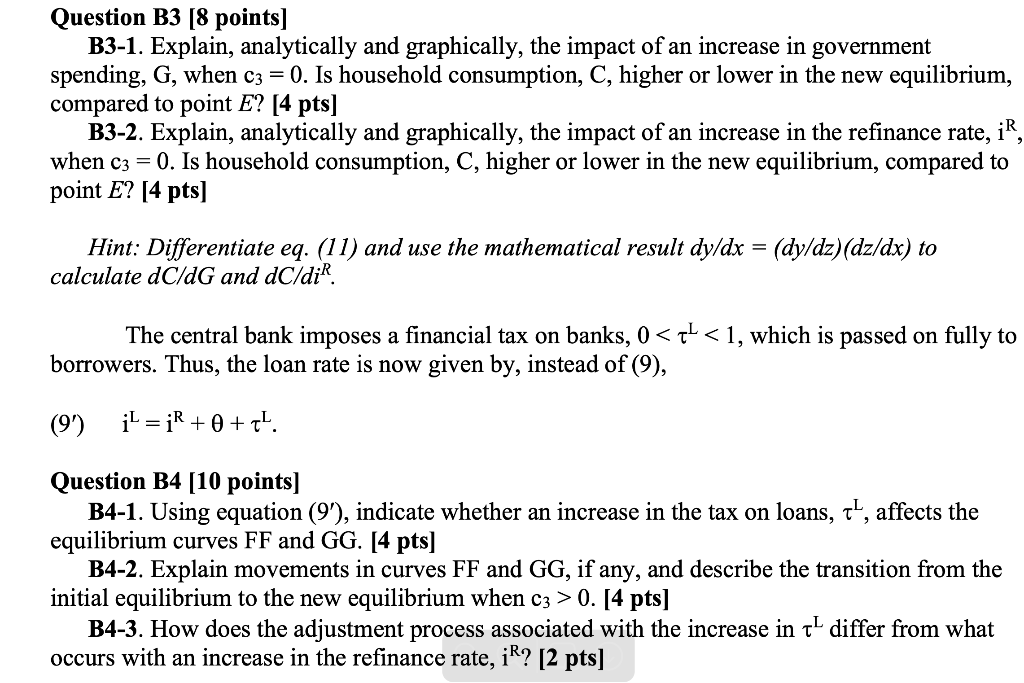
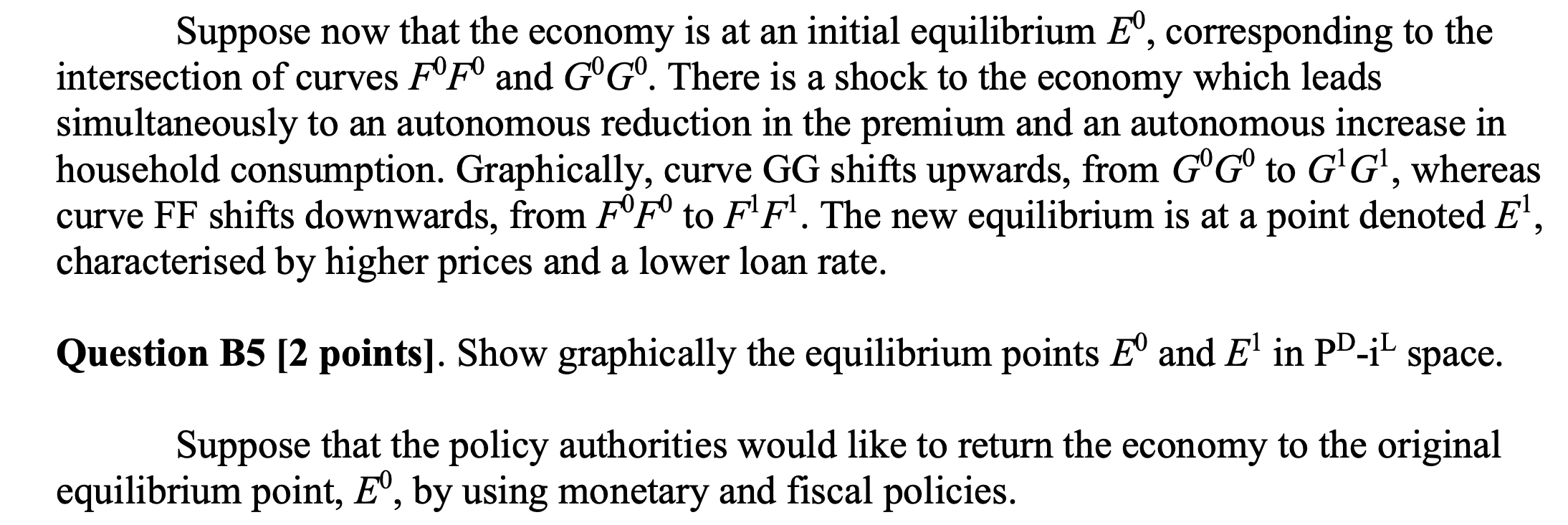
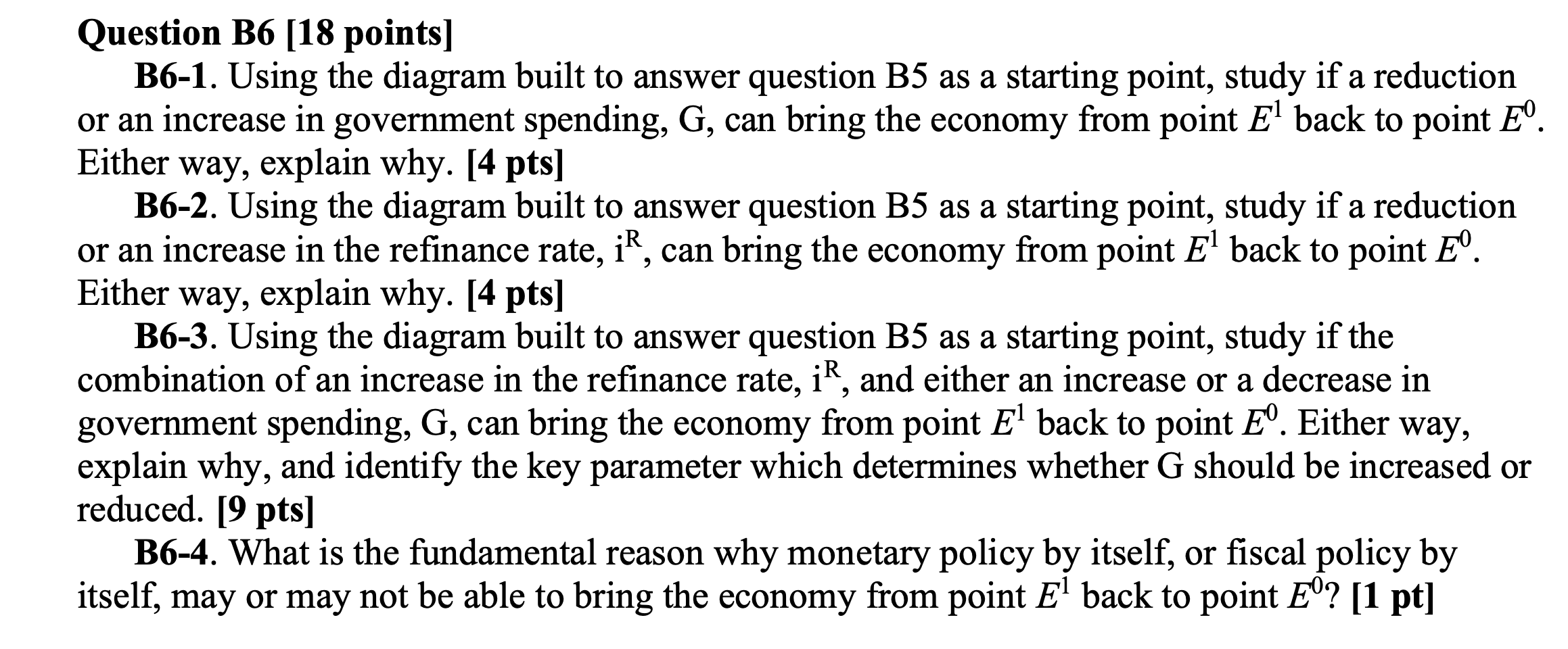
Answer all questions clearly and succinctly. Provide intermediate derivations where needed, but do not exceed 9 pages, graphs included, in your answers. Consider a small open economy producing a (composite) good which is an imperfect substitute for a foreign good. There are five categories of agents: firms, households, commercial banks, the central bank, and the government. The world price of the foreign good is taken as exogenous and normalized to unity. The nominal exchange rate is fixed at E. The supply of the domestic good is given by (1)_Ys = Y$(PD), where PD is the price of the domestic good and Ys = dys/dp > 0. Investment, I, is financed by bank loans and is defined as (2) I=I(i - ), where it is the loan rate, expected inflation, and I' 0. The foreign-domestic deposit ratinden Derest rate differential between these assets: (5) ED*/D = x(iD - iW), where iW is the interest rate on foreign-currency deposits, and x' 0; and FH is the beginning-of-period stock of household financial wealth. 0 The balance sheet of commercial banks is (7)_ L=D+L, where L = PDI denotes loans to firms, and LB borrowing from the central bank. The interest rate on domestic deposits is (8) D = R, where it is the cost of borrowing from the central bank, or the refinance rate. The interest rate on loans is (9) L=iR +0, where is a risk premium, defined as (10) 0 =0(PPKo - Lo), where Ko is the stock of capital held by firms, Lo beginning-of-period loans, and 0' 0. [4 pts] B4-3. How does the adjustment process associated with the increase in TL differ from what occurs with an increase in the refinance rate, i? [2 pts] Suppose now that the economy is at an initial equilibrium E, corresponding to the intersection of curves FF and GG. There is a shock to the economy which leads simultaneously to an autonomous reduction in the premium and an autonomous increase in household consumption. Graphically, curve GG shifts upwards, from GG to GG, whereas curve FF shifts downwards, from FF to FF. The new equilibrium is at a point denoted E, characterised by higher prices and a lower loan rate. Question B5 [2 points]. Show graphically the equilibrium points E and E in PD-iL space. Suppose that the policy authorities would like to return the economy to the original equilibrium point, E, by using monetary and fiscal policies. Question B6 [18 points] B6-1. Using the diagram built to answer question B5 as a starting point, study if a reduction or an increase in government spending, G, can bring the economy from point E back to point E. Either way, explain why. [4 pts] B6-2. Using the diagram built to answer question B5 as a starting point, study if a reduction or an increase in the refinance rate, iR, can bring the economy from point E back to point E. Either way, explain why. [4 pts] B6-3. Using the diagram built to answer question B5 as a starting point, study if the combination of an increase in the refinance rate, iR, and either an increase or a decrease in government spending, G, can bring the economy from point E back to point E. Either way, explain why, and identify the key parameter which determines whether G should be increased or reduced. [9 pts] B6-4. What is the fundamental reason why monetary policy by itself, or fiscal policy by itself, may or may not be able to bring the economy from point E back to point E? [1 pt] Answer all questions clearly and succinctly. Provide intermediate derivations where needed, but do not exceed 9 pages, graphs included, in your answers. Consider a small open economy producing a (composite) good which is an imperfect substitute for a foreign good. There are five categories of agents: firms, households, commercial banks, the central bank, and the government. The world price of the foreign good is taken as exogenous and normalized to unity. The nominal exchange rate is fixed at E. The supply of the domestic good is given by (1)_Ys = Y$(PD), where PD is the price of the domestic good and Ys = dys/dp > 0. Investment, I, is financed by bank loans and is defined as (2) I=I(i - ), where it is the loan rate, expected inflation, and I' 0. The foreign-domestic deposit ratinden Derest rate differential between these assets: (5) ED*/D = x(iD - iW), where iW is the interest rate on foreign-currency deposits, and x' 0; and FH is the beginning-of-period stock of household financial wealth. 0 The balance sheet of commercial banks is (7)_ L=D+L, where L = PDI denotes loans to firms, and LB borrowing from the central bank. The interest rate on domestic deposits is (8) D = R, where it is the cost of borrowing from the central bank, or the refinance rate. The interest rate on loans is (9) L=iR +0, where is a risk premium, defined as (10) 0 =0(PPKo - Lo), where Ko is the stock of capital held by firms, Lo beginning-of-period loans, and 0' 0. [4 pts] B4-3. How does the adjustment process associated with the increase in TL differ from what occurs with an increase in the refinance rate, i? [2 pts] Suppose now that the economy is at an initial equilibrium E, corresponding to the intersection of curves FF and GG. There is a shock to the economy which leads simultaneously to an autonomous reduction in the premium and an autonomous increase in household consumption. Graphically, curve GG shifts upwards, from GG to GG, whereas curve FF shifts downwards, from FF to FF. The new equilibrium is at a point denoted E, characterised by higher prices and a lower loan rate. Question B5 [2 points]. Show graphically the equilibrium points E and E in PD-iL space. Suppose that the policy authorities would like to return the economy to the original equilibrium point, E, by using monetary and fiscal policies. Question B6 [18 points] B6-1. Using the diagram built to answer question B5 as a starting point, study if a reduction or an increase in government spending, G, can bring the economy from point E back to point E. Either way, explain why. [4 pts] B6-2. Using the diagram built to answer question B5 as a starting point, study if a reduction or an increase in the refinance rate, iR, can bring the economy from point E back to point E. Either way, explain why. [4 pts] B6-3. Using the diagram built to answer question B5 as a starting point, study if the combination of an increase in the refinance rate, iR, and either an increase or a decrease in government spending, G, can bring the economy from point E back to point E. Either way, explain why, and identify the key parameter which determines whether G should be increased or reduced. [9 pts] B6-4. What is the fundamental reason why monetary policy by itself, or fiscal policy by itself, may or may not be able to bring the economy from point E back to point E? [1 pt]
Step by Step Solution
There are 3 Steps involved in it

Get step-by-step solutions from verified subject matter experts