







Question: answer analytical questions 1 & 2 based on nose clear and deal or no deal more information: reading is: Nose-Clear Charlie Peters had inherited a
answer analytical questions 1 & 2 based on nose clear and deal or no deal
more information:
reading is:
Nose-Clear
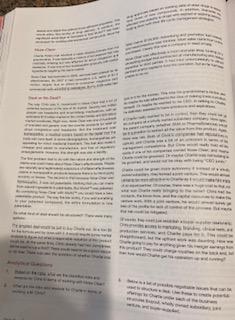
Charlie Peters had inherited a nasal-clearing formula from his grandmother. It was basically a mixture of hot peppers that was minimally irritating but very effective for sinus congestion and headache. It was one of two homeopathic products with similar ingredients targeting the same market.
Nose-Clear had launched in 2005, and had been praised for its effectiveness. By 2007 it had cumulative U.S. sales of $1.3 million, largely due to direct-to-consumer magazine and commercial radio advertising campaigns. But by 2008 sales had fallen below $100,000. Advertising and promotion had ceased, and retail presence was minimal. Most sales came from online purchases. Clearly this was a company in need of help.
Nose-Clear was effectively a mom-and-pop shop running on a shoestring budget that contracted all manufacturing and related expertise to third parties. It had tried unsuccessfully to attract partners and/or capital to fund the operation, but so far had been unable to do so.
Deal or No Deal?
The way Chris saw it, investment in Nose-Clear had a lot of potential because of the size of its market. Seventy-two million people use headache and sinus/allergy medications, with an estimated $13 billion market in the United States and $20 billion market worldwide. Right now, Nose-Clear was one of hundreds of branded and generic over-the-counter products for relief of sinus congestion and headache. But the treatment was homeopathic, a medical system based on the belief that the body can cure itself. In some demographics, homeopathies are appealing for minor medicinal treatment. This trait also made it cheaper and easier to manufacture, and free of regulatory entanglements. However, this strength was also a liability.
The first problem had to do with the nature and strength of the claims one could make about Nose-Clears effectiveness. People are naturally (and legitimately) suspicious of inflated effectiveness claims in homeopathic products because there is no third-party scrutiny or review. The second is that because Nose-Clear was homeopathic, it was not patentable. Nothing that you can make from natural ingredients is patentable. But MuAd was patented. By combining Nose-Clear with MuAd you would have a new, patentable product. The way the law works, if you add something to your patented compound, the entire formulation is now patentable.
So what kind of deal should be structured? There were many options.
The simplest deal would be just to buy Charlie out. Give him $X for the formula and be done with it. It would require some market analysis to figure out what a reasonable valuation of this product could be. At the same time, Chris already had two companies; did he want to run a third? There would need to be a good reason to do that. There was also the question of whether Charlie was just in it for the money. This was his grandmothers recipe, and so maybe he was attached to the idea of making it into a product himself. Or maybe he wanted to be CEO. In talking to Charlie, he definitely seemed to have ambitions and aspirations.
If Charlie really wanted to be in control, then they could set up his company as a wholly owned subsidiary company. Here again, the parent company (whether SMA or PharmaSciences) would be in a position to extract all the value from this product. Again, there was risk. Both of Chriss companies had reputations to uphold, and Charlie was a bit of an unknown in terms of his management competence. But Chris would really hold all the cards if one of his companies owned Nose-Clear; and maybe Charlie could be groomed. Or maybe Charlie was not looking to be groomed, and would not be okay with being CEO junior.
Charlie could be given more autonomy if instead of a wholly owned subsidiary, they formed a joint venture. This would almost certainly be more attractive to Charlie as it would make him more of an equal partner. Of course, there was a huge cost to that, for what was Charlie really bringing to the table? Chris had the contacts, the know-how, and the capital resources to make this venture work. With a joint venture, he would almost surely get less of the profits for lack of control of the process. But maybe that risk could be mitigated.
Of course, they could just establish a buyersupplier relationship. Chris provides access to marketing, branding, clinical tests, and production services, and Charlie pays for it. This could be straightforward, but the upfront work was daunting. How was Charlie going to pay for anything given his meager earnings from this product? They could charge royalties on the back end, but then how would Charlie get his operation up and running?
questions are:
-
Based on the case, what are the identified risks and rewards for Chris in terms of working with Nose-Clear?
-
What are the risks and rewards for Charlie in terms of working with Chris?
Step by Step Solution
There are 3 Steps involved in it

Get step-by-step solutions from verified subject matter experts
 Study Help