







Question: answer each component PLEASE. Kempton Enterprises has bonds outstanding with a $1,000 face value and 10 years left until maturity. They have an 12% annual
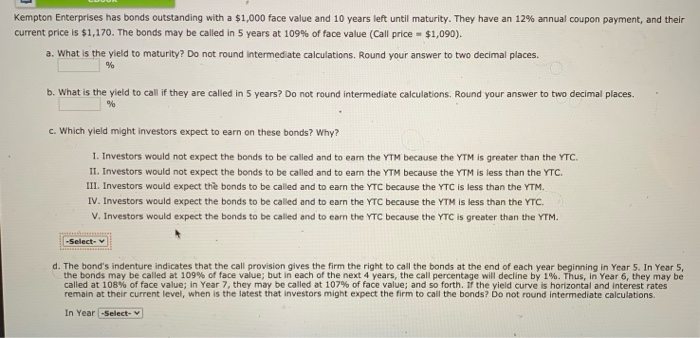
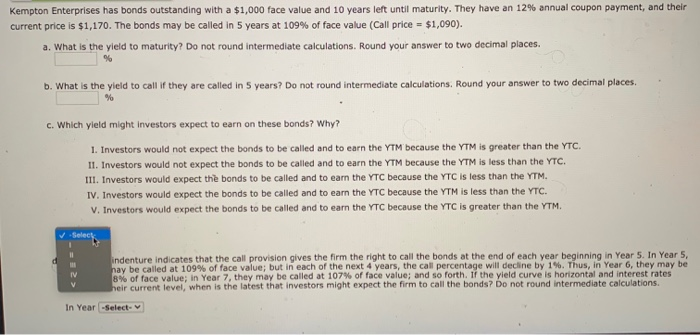
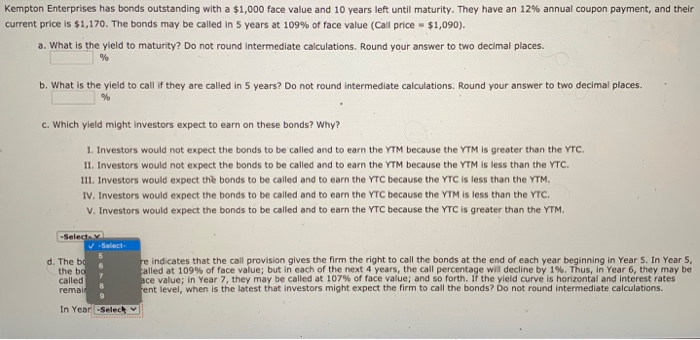
Kempton Enterprises has bonds outstanding with a $1,000 face value and 10 years left until maturity. They have an 12% annual coupon payment, and their current price is $1,170. The bonds may be called in 5 years at 109% of face value (Call price - $1,090). a. What is the yield to maturity? Do not round intermediate calculations. Round your answer to two decimal places. % b. What is the yield to call if they are called in 5 years? Do not round intermediate calculations. Round your answer to two decimal places. % c. Which yield might investors expect to earn on these bonds? Why? 1. Investors would not expect the bonds to be called and to ear the YTM because the YTM is greater than the YTC. II. Investors would not expect the bonds to be called and to earn the YTM because the YTM is less than the YTC. III. Investors would expect the bonds to be called and to earn the YTC because the YTC is less than the YTM. IV. Investors would expect the bonds to be called and to earn the YTC because the YTM is less than the YTC. V. Investors would expect the bonds to be called and to earn the YTC because the YTC is greater than the YTM -Select- d. The bond's indenture indicates that the call provision gives the firm the right to call the bonds at the end of each year beginning in Year 5. In Year 5. the bonds may be called at 109% of face value; but in each of the next 4 years, the call percentage will decline by 1%. Thus, in Year 6, they may be called at 108% of face value; in Year 7, they may be called at 107% of face value; and so forth. If the yield curve is horizontal and interest rates remain at their current level, when is the latest that investors might expect the firm to call the bonds? Do not round intermediate calculations. In Year -Select- Kempton Enterprises has bonds outstanding with a $1,000 face value and 10 years left until maturity. They have an 12% annual coupon payment, and their current price is $1,170. The bonds may be called in 5 years at 109% of face value (Call price = $1,090). a. What is the yield to maturity? Do not round intermediate calculations. Round your answer to two decimal places. % b. What is the yield to call if they are called in 5 years? Do not round intermediate calculations. Round your answer to two decimal places. % C. Which yield might Investors expect to earn on these bonds? Why? 1. Investors would not expect the bonds to be called and to earn the YTM because the YTM is greater than the YTC. 11. Investors would not expect the bonds to be called and to earn the YTM because the YTM is less than the YTC. III. Investors would expect the bonds to be called and to earn the YTC because the YTC is less than the YTM. IV. Investors would expect the bonds to be called and to earn the YTC because the YTM is less than the YTC. V. Investors would expect the bonds to be called and to earn the YTC because the YTC is greater than the YTM, Select IV V indenture indicates that the call provision gives the firm the right to call the bonds at the end of each year beginning in Year 5. In Year 5, nay be called at 109% of face value; but in each of the next 4 years, the call percentage will decline by 1%. Thus, in Year 6, they may be 8% of face value; in Year 7, they may be called at 107% of face value; and so forth. If the yield curve is horizontal and interest rates heir current level, when is the latest that investors might expect the firm to call the bonds? Do not round intermediate calculations In Year -Select- Kempton Enterprises has bonds outstanding with a $1,000 face value and 10 years left until maturity. They have an 12% annual coupon payment, and their current price is $1,170. The bonds may be called in 5 years at 109% of face value (Call price = $1,090). a. What is the yield to maturity? Do not round intermediate calculations. Round your answer to two decimal places. % b. What is the yield to call if they are called in 5 years? Do not round intermediate calculations. Round your answer to two decimal places. % c. Which yield might investors expect to earn on these bonds? Why? 1. Investors would not expect the bonds to be called and to earn the YTM because the YTM is greater than the YTC. II. Investors would not expect the bonds to be called and to earn the YTM because the YTM is less than the YTC. III. Investors would expect the bonds to be called and to earn the YTC because the YTC is less than the YTM IV. Investors would expect the bonds to be called and to earn the YTC because the YTM is less than the YTC. V. Investors would expect the bonds to be called and to earn the YTC because the YTC is greater than the YTM. -Select Select d. The bo the bo called 7 remai 8 9 re indicates that the call provision gives the firm the right to call the bonds at the end of each year beginning in Year 5. In Year 5, called at 109% of face value; but in each of the next 4 years, the call percentage will decline by 1%. Thus, in Year 6, they may be ace value; in Year 7, they may be called at 107% of face value; and so forth. If the yield curve is horizontal and interest rates rent level, when is the latest that investors might expect the firm to call the bonds? Do not round intermediate calculations. In Year Selech
Step by Step Solution
There are 3 Steps involved in it

Get step-by-step solutions from verified subject matter experts
 Study Help