



Question: Answer following questions: 1. Two charged particles are fixed to the x-axis. Particle Q1 = +20.0 /C is located at x = 0.2 m, and
Answer following questions:
1.
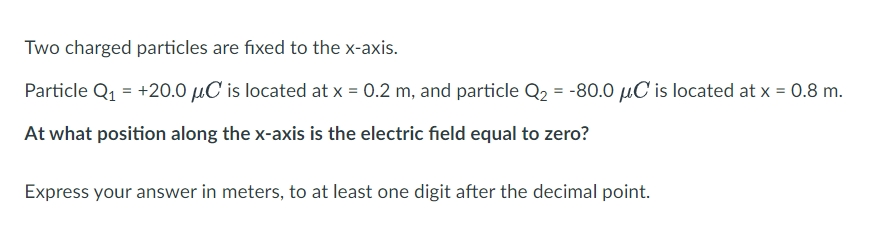
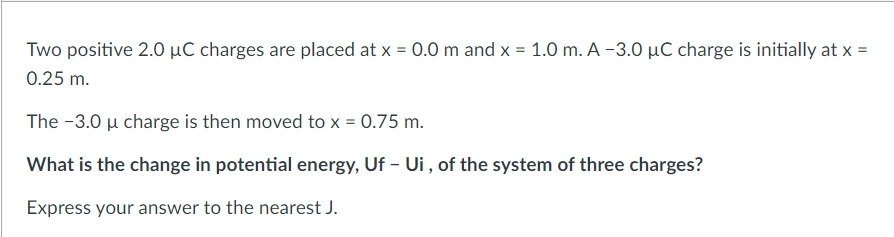
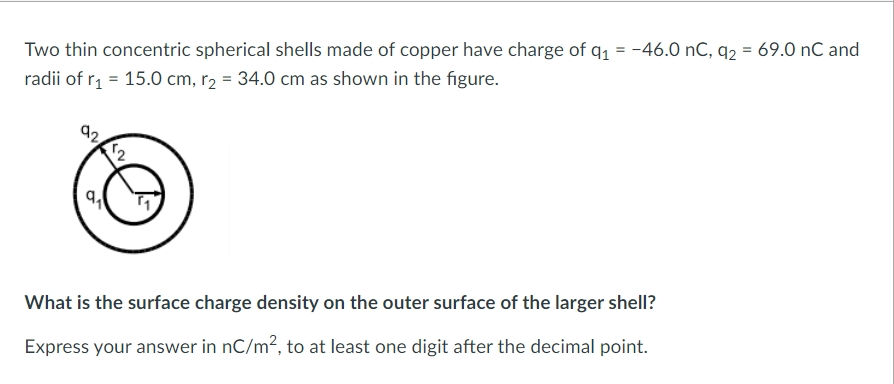
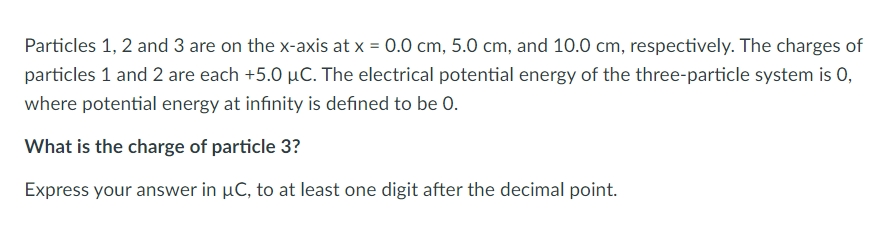
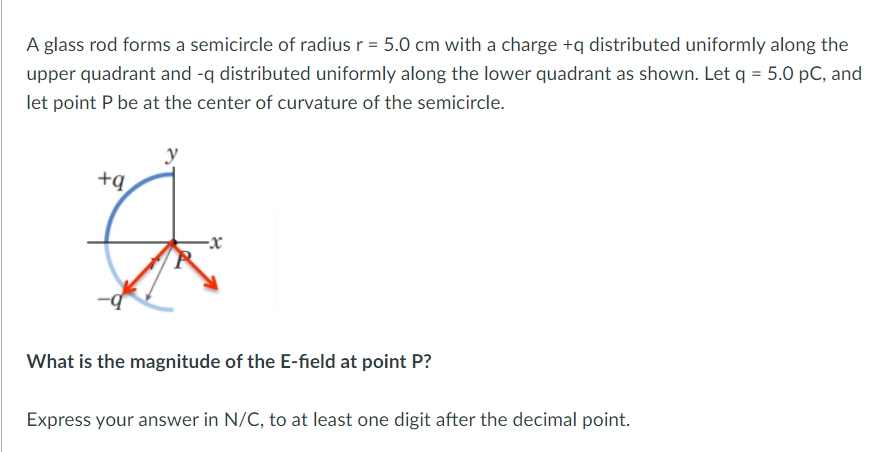
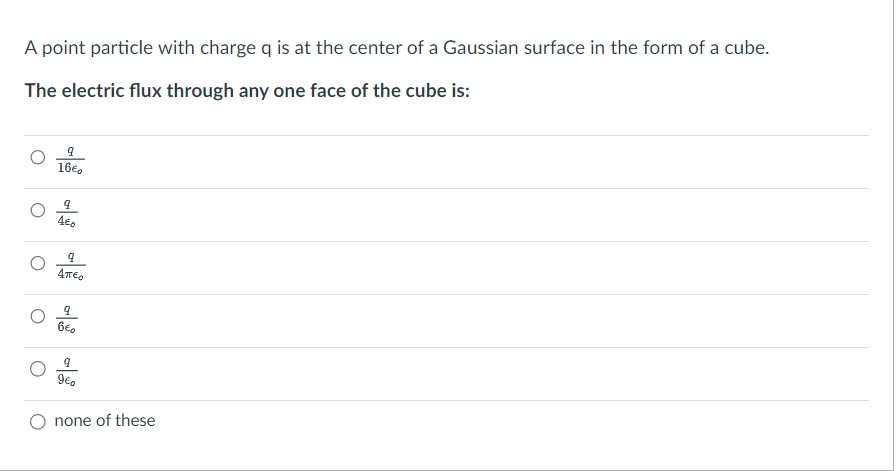
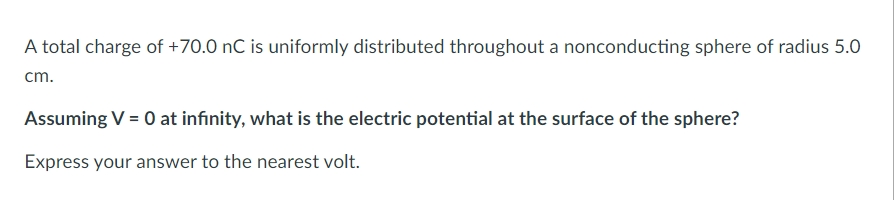
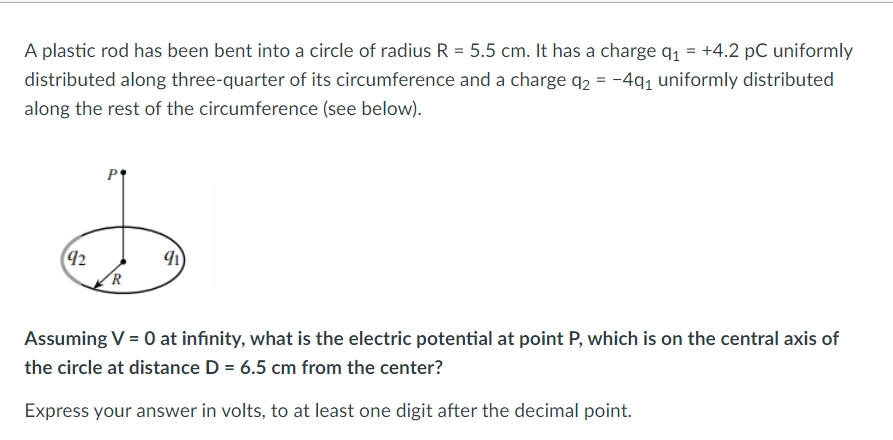
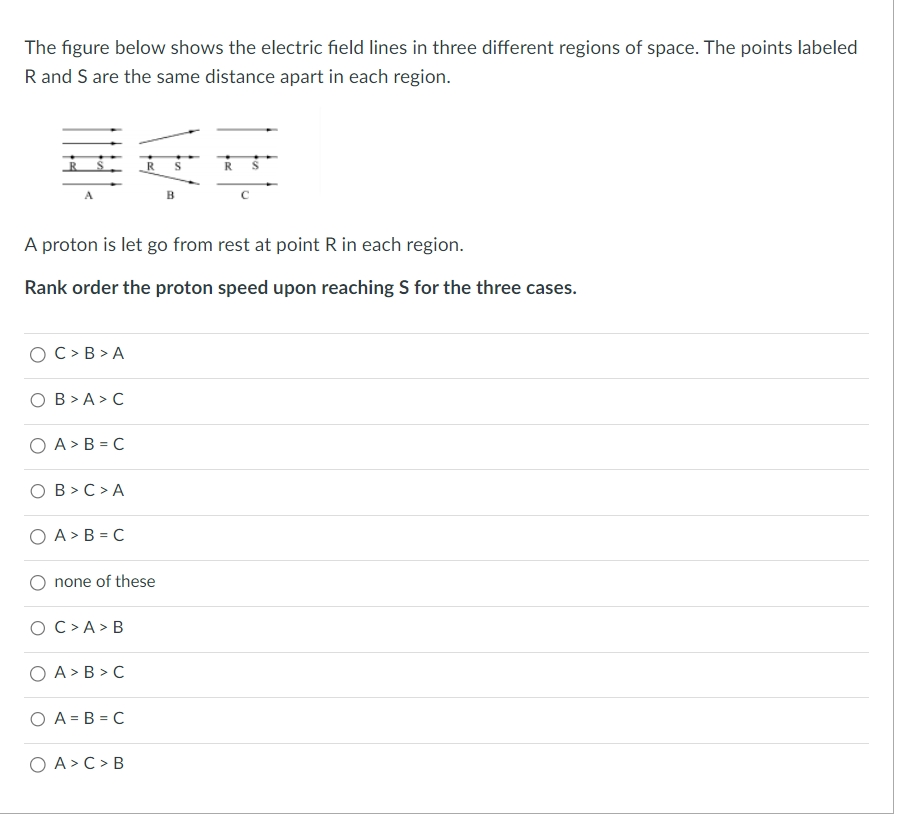
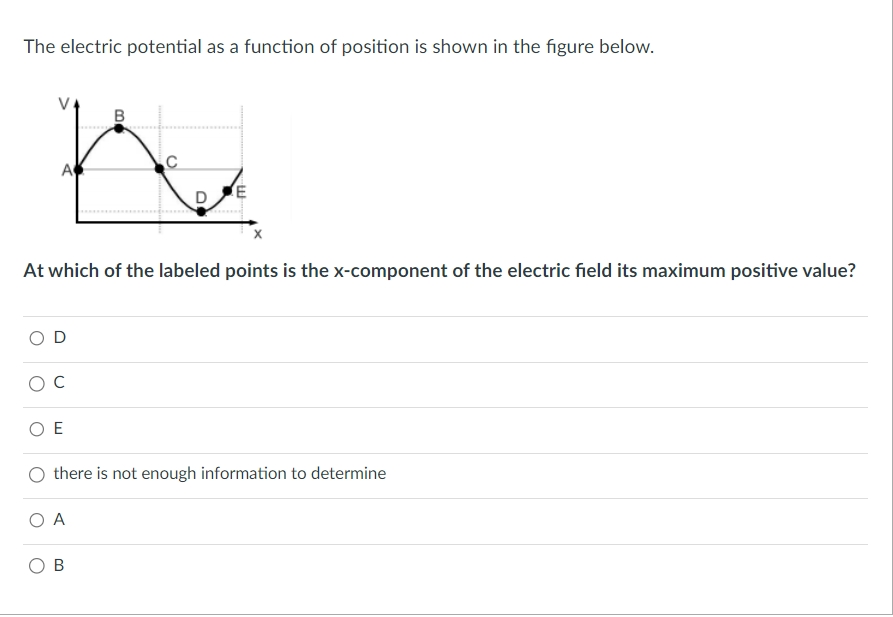
Two charged particles are fixed to the x-axis. Particle Q1 = +20.0 /C is located at x = 0.2 m, and particle Q2 = -80.0 /C is located at x = 0.8 m. At what position along the x-axis is the electric field equal to zero? Express your answer in meters, to at least one digit after the decimal point.Two positive 2.0 JC charges are placed at x = 0.0 m and x = 1.0 m. A -3.0 uC charge is initially at x = 0.25 m. The -3.0 u charge is then moved to x = 0.75 m. What is the change in potential energy, Uf - Ui , of the system of three charges? Express your answer to the nearest J.Two thin concentric spherical shells made of copper have charge of q1 = -46.0 nC, q2 = 69.0 nC and radii of r1 = 15.0 cm, r2 = 34.0 cm as shown in the figure. What is the surface charge density on the outer surface of the larger shell? Express your answer in nC/m , to at least one digit after the decimal point.Particles 1, 2 and 3 are on the x-axis at x = 0.0 cm, 5.0 cm, and 10.0 cm, respectively. The charges of particles 1 and 2 are each +5.0 uC. The electrical potential energy of the three-particle system is 0, where potential energy at infinity is defined to be 0. What is the charge of particle 3? Express your answer in uC, to at least one digit after the decimal point.A glass rod forms a semicircle of radius r = 5.0 cm with a charge +q distributed uniformly along the upper quadrant and -q distributed uniformly along the lower quadrant as shown. Let q = 5.0 pC, and let point P be at the center of curvature of the semicircle. +q X What is the magnitude of the E-field at point P? Express your answer in N/C, to at least one digit after the decimal point.A point particle with charge q is at the center of a Gaussian surface in the form of a cube. The electric ux through any one face of the cube is: O O O i 165., i 4:0 9 0 mg i 559 (1 O E 0 none of these A total charge of +70.0 nC is uniformly distributed throughout a nonconducting sphere of radius 5.0 cm. Assuming V = 0 at infinity, what is the electric potential at the surface of the sphere? Express your answer to the nearest volt.A plastic rod has been bent into a circle of radius R = 5.5 cm. It has a charge q1 = +4.2 pC uniformly distributed along three-quarter of its circumference and a charge q2 = -4q1 uniformly distributed along the rest of the circumference (see below). 92 91 Assuming V = 0 at infinity, what is the electric potential at point P, which is on the central axis of the circle at distance D = 6.5 cm from the center? Express your answer in volts, to at least one digit after the decimal point.The figure below shows the electric field lines in three different regions of space. The points labeled R and S are the same distance apart in each region. A proton is let go from rest at point R in each region. Rank order the proton speed upon reaching S for the three cases. OC > B > A OB > A > C O A > B = C OB > C>A O A > B = C O none of these OC> A > B OA > B > C O A = B = C OA > C > BThe electric potential as a function of position is shown in the gure below. ' 1: At which of the labeled points is the xcomponent of the electric eld its maximum positive value? 0 D O C o E 0 there is not enough information to determine OA OB
Step by Step Solution
There are 3 Steps involved in it

Get step-by-step solutions from verified subject matter experts