







Question: ANSWER IN JAVA THANKS Design and implement a class named Queue (Queue.java) for storing doubles. Like a stack, a queue holds elements. In a stack,
ANSWER IN JAVA THANKS
Design and implement a class named Queue (Queue.java) for storing doubles. Like a stack, a queue holds elements. In a stack, the elements are retrieved in a last-in, first-out (LIFO) fashion. In a queue, the elements are retrieved in a first-in, first-out fashion (FIFO). The class contains:
A double[] data field named elements that stores the double values in the queue.
A data field named size that stores the number of elements in the queue.
A constructor that creates a Queue object with default capacity 10
. The method enqueue(double v) that adds v into the queue
. The method dequeue() that removes and returns the element from the queue.
The method empty() that returns true if the queue is empty
. The method getSize() that returns the size of the queue.
A few notes:
Implement the class with the initial array size set to 10.
The array size will be doubled once the number of the elements exceeds the size
. After an element is removed from the beginning of the array, you need to shift all elements in the array one position to the left.
Write a testing Java application (QueueTest.java) that adds 10 numbers from 1 to 10 into the queue, then removes these numbers and displays them.
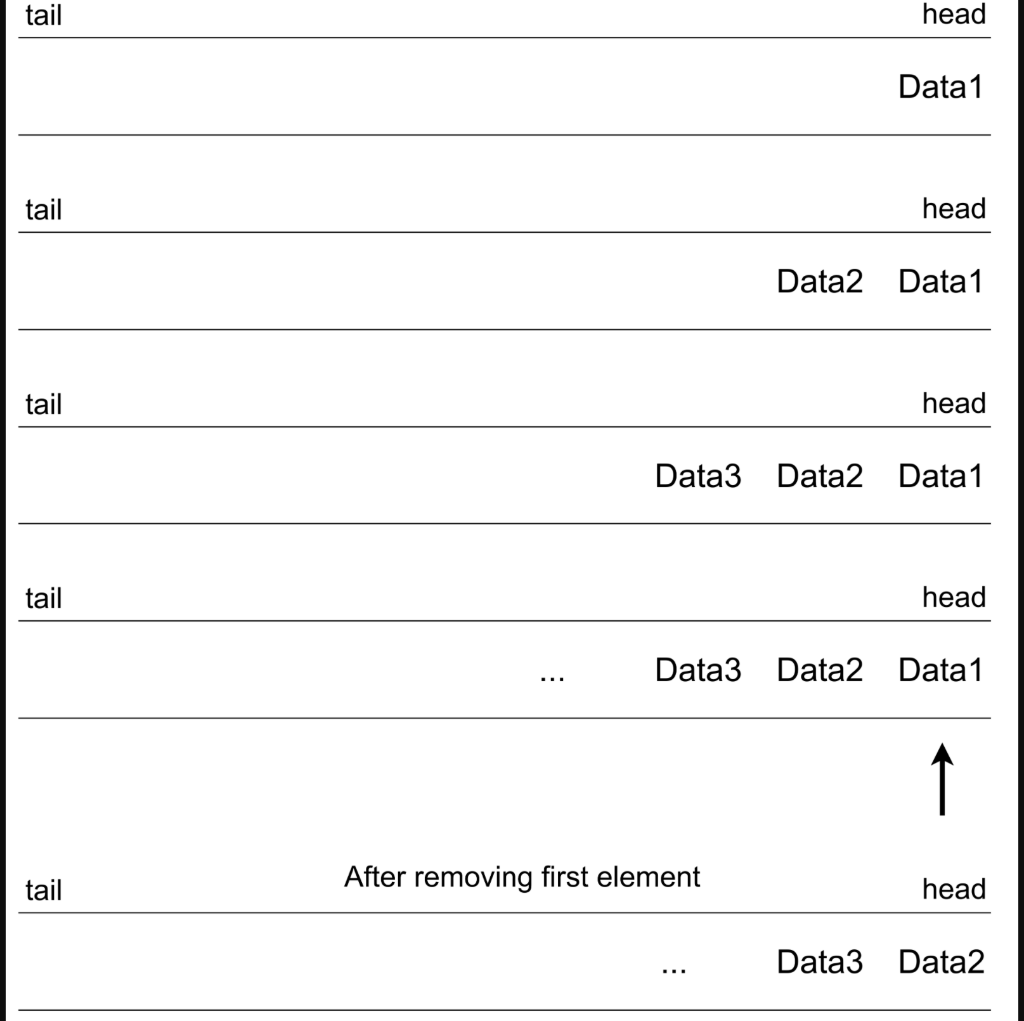
tail head Data 1 tail head Data2 Data 1 tail head Data3 Data2 Data1 tail head Data3 Data2 Data 1 1 tail After removing first element head Data3 Data2
Step by Step Solution
There are 3 Steps involved in it

Get step-by-step solutions from verified subject matter experts
 Study Help