







Question: Answer please Case: (Important Information) Picture/ Illustration: Decision based on law: Effect/Impact on Society: Constitutional principles or rights related to this case:Attachment A Facts: Landmark
Answer please
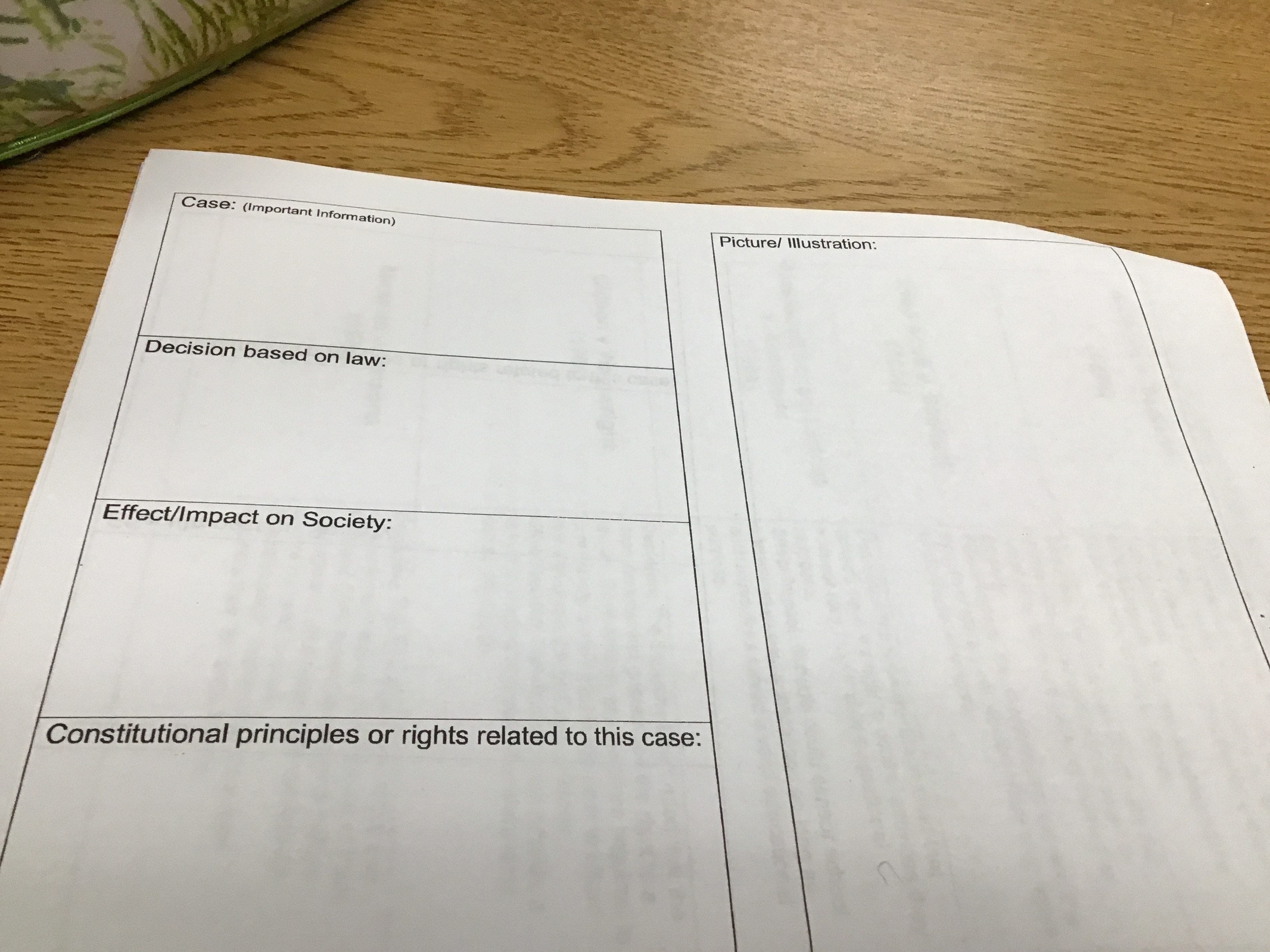
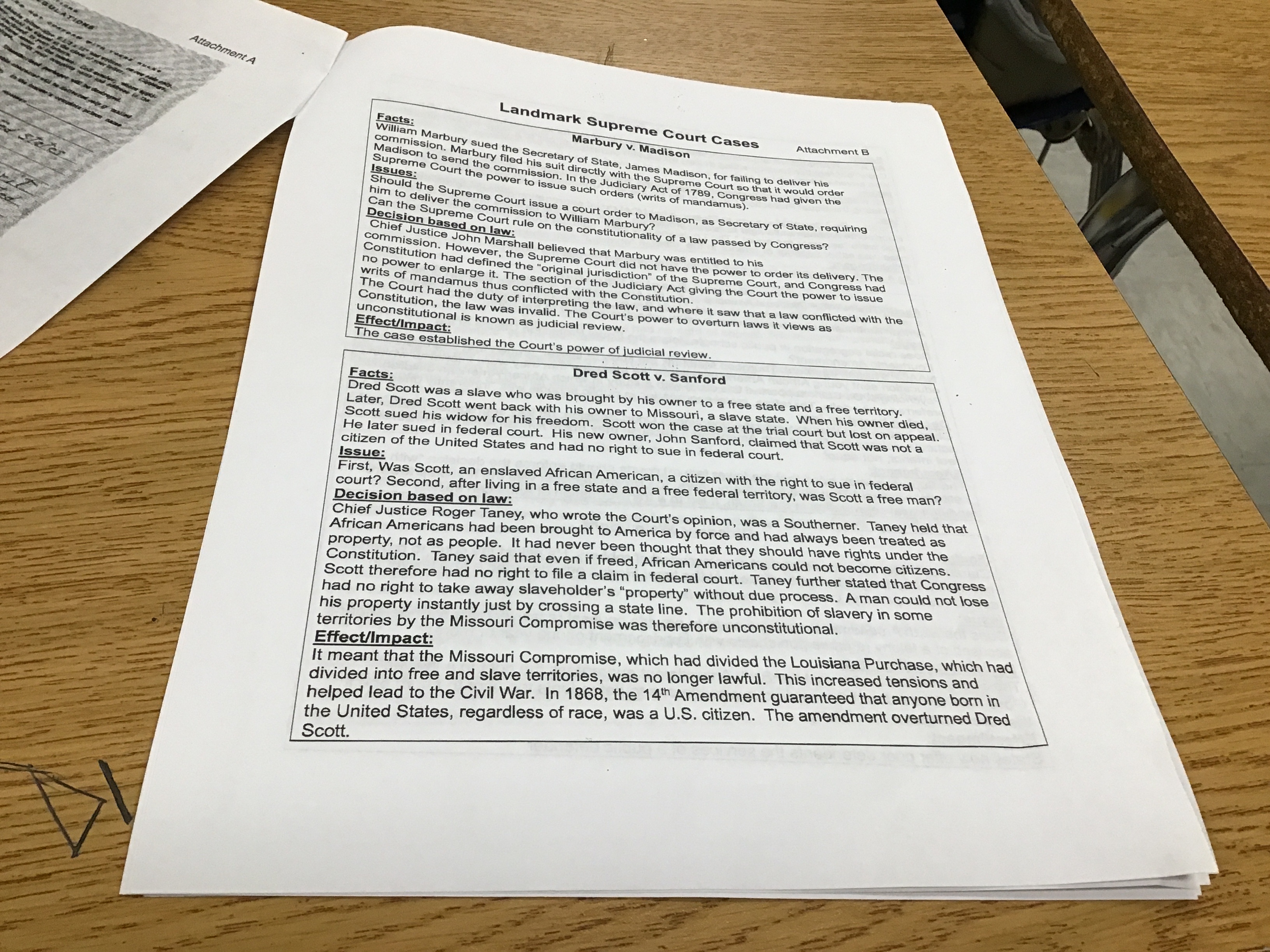 Case: (Important Information) Picture/ Illustration: Decision based on law: Effect/Impact on Society: Constitutional principles or rights related to this case:Attachment A Facts: Landmark Supreme Court Cases Marbury v. Madison Attachment B William Marbury sued the Secretary of State, James Madison, for failing to deliver his States commission. Marbury filed his suit directly with the Supreme Issues: Madison to send the commission. In the Judiciary Act of 1789, Congress had given the Supreme Court so that it would order Supreme Court the power to issue such orders (writs of mandamus). Should the Supreme Court issue a court order to Madison, as Secretary of State, requiring him to deliver the commission to William Marbury? Can the Supreme Court rule on the constitutionality of a law passed by Congress? Decision based on law: Chief Justice John Marshall believed that Marbury was entitled to his commission. However, the Supreme Court did not have the power to order its d Constitution had defined the "original jurisdiction order its delivery. The isdiction" of the Supreme Court, a court, and Congress had no power to enlarge it. The section of the Judiciary Act giving the Court the power to issue writs of mandamus thus conflicted with the Constitution. The Court had the duty of interpreting the law, and where it saw that a law conflicted with the Constitution, the law was invalid. The Court's power to overturn laws it views as unconstitutional is known as judicial review. Effect/Impact: The case established the Court's power of judicial review Dred Scott v. Sanford Facts: Dred Scott was a slave who was brought by his owner to a free state and a free territory. Later, Dred Scott went back with his owner to Missouri, a slave state. When his owner died, Scott sued his widow for his freedom. Scott won the case at the trial court but lost on appeal. He later sued in federal court. His new owner, John Sanford, claimed that Scott was not a citizen of the United States and had no right to sue in federal court. Issue: First, Was Scott, an enslaved African American, a citizen with the right to sue in federal court? Second, after living in a free state and a free federal territory, was Scott a free man? Decision based on law: Chief Justice Roger Taney, who wrote the Court's opinion, was a Southerner. Taney held that African Americans had been brought to America by force and had always been treated as property, not as people. It had never been thought that they should have rights under the Constitution. Taney said that even if freed, African Americans could not become citizens. Scott therefore had no right to file a claim in federal court. Taney further stated that Congress had no right to take away slaveholder's "property" without due process. A man could not lose his property instantly just by crossing a state line. The prohibition of slavery in some territories by the Missouri Compromise was therefore unconstitutional. Effect/Impact: It meant that the Missouri Compromise, which had divided the Louisiana Purchase, which had divided into free and slave territories, was no longer lawful. This increased tensions and helped lead to the Civil War. In 1868, the 14th Amendment guaranteed that anyone born in the United States, regardless of race, was a U.S. citizen. The amendment overturned Dred Scott
Step by Step Solution
There are 3 Steps involved in it
1 Expert Approved Answer
Step: 1 Unlock

Question Has Been Solved by an Expert!
Get step-by-step solutions from verified subject matter experts
Step: 2 Unlock
Step: 3 Unlock
 Study Help