Question: answer please INPUTS USED IN THE MODEL Po $50.00 Net P of $30.00 D pf $3.30 Do $2.10 g 7% B-T Id 10% Skye's beta

answer please
answer please INPUTS USED IN THE MODEL Po $50.00answer please INPUTS USED IN THE MODEL Po $50.00answer please INPUTS USED IN THE MODEL Po $50.00
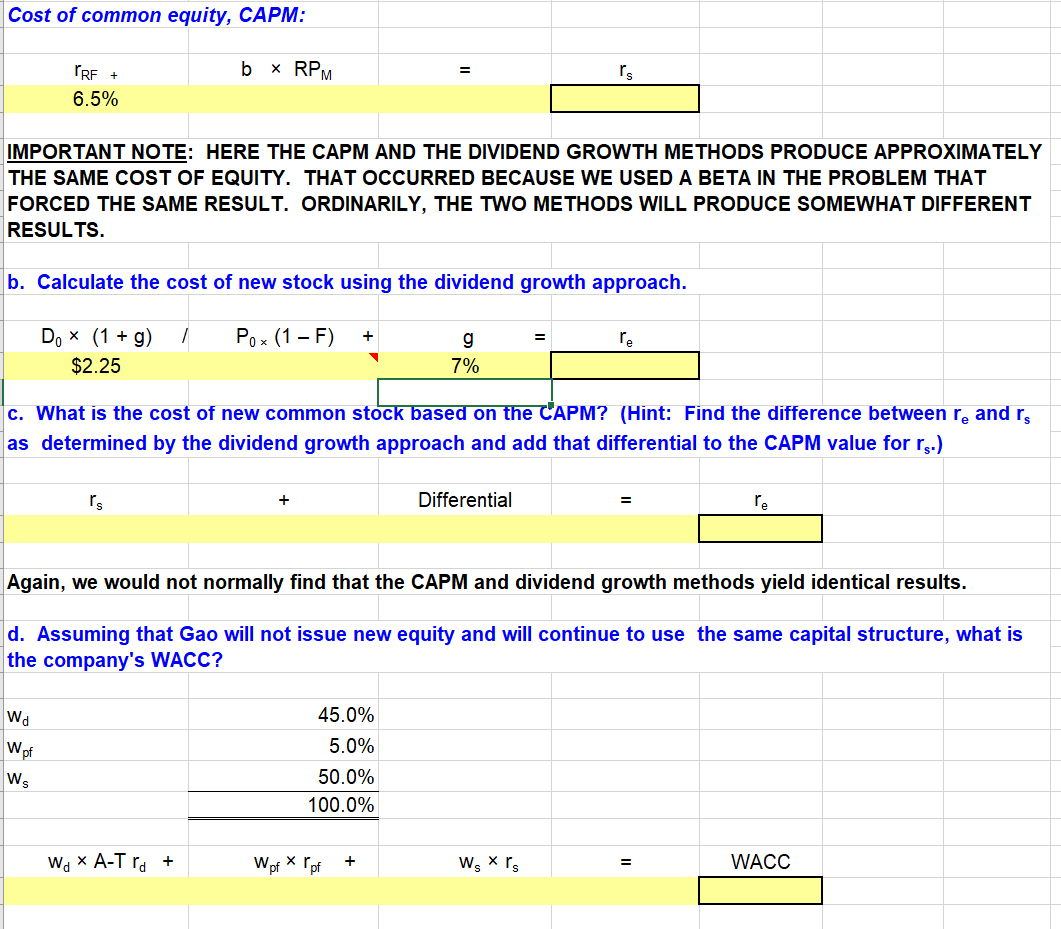
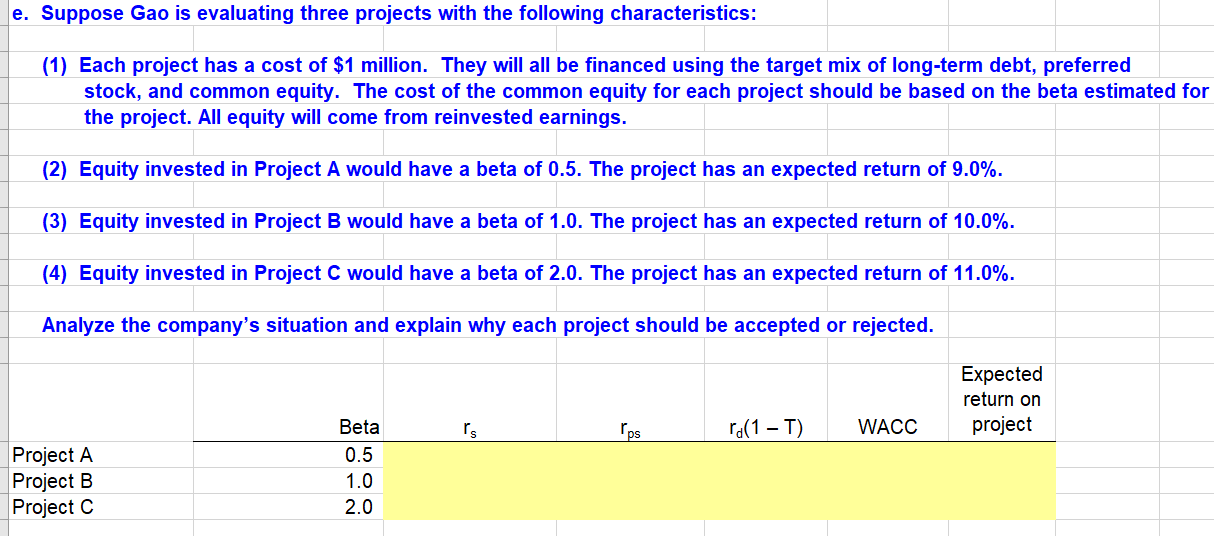
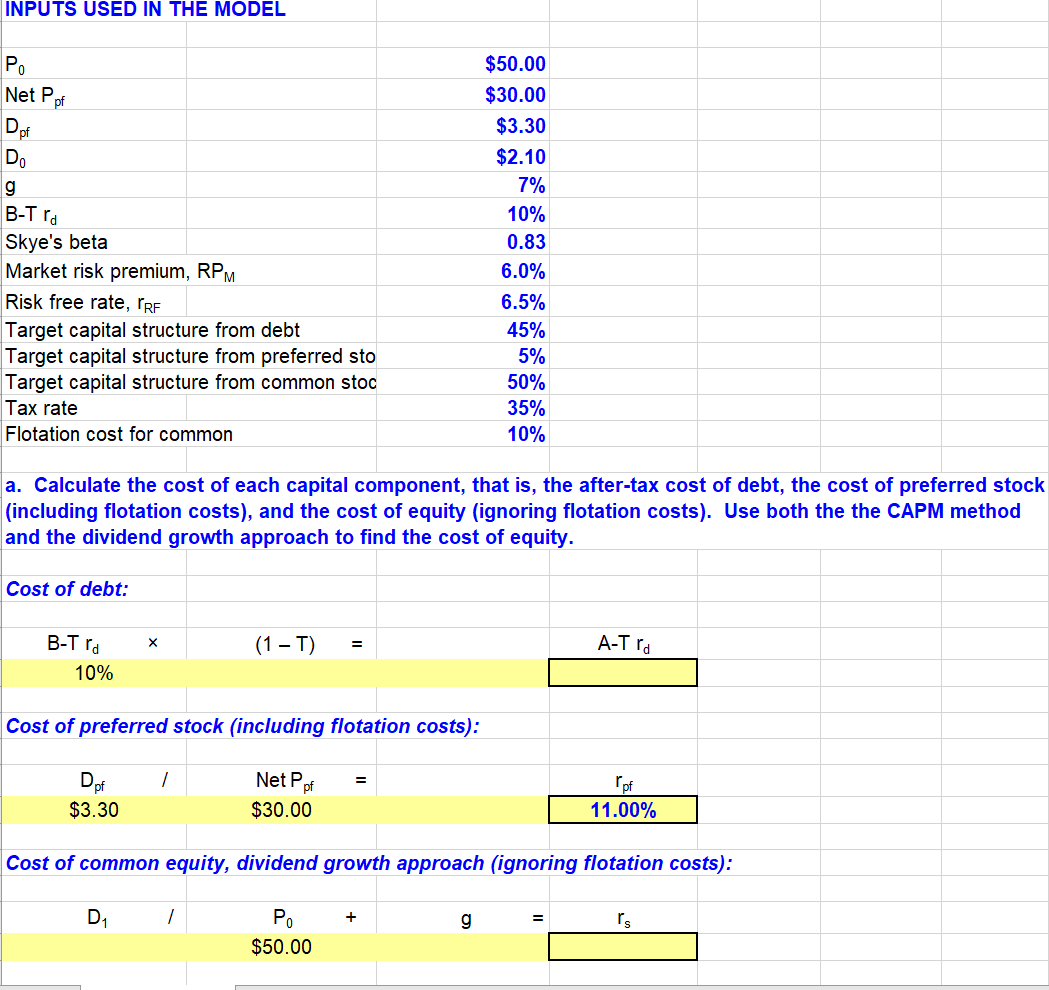
INPUTS USED IN THE MODEL Po $50.00 Net P of $30.00 D pf $3.30 Do $2.10 g 7% B-T Id 10% Skye's beta 0.83 Market risk premium, RPM 6.0% Risk free rate, IRF 6.5% Target capital structure from debt 45% Target capital structure from preferred sto 5% Target capital structure from common stoc 50% Tax rate 35% Flotation cost for common 10% a. Calculate the cost of each capital component, that is, the after-tax cost of debt, the cost of preferred stock (including flotation costs), and the cost of equity (ignoring flotation costs). Use both the the CAPM method and the dividend growth approach to find the cost of equity. Cost of debt: B-Trd X (1 - T) = A-T Id 10% Cost of preferred stock (including flotation costs): Dof Net P of = $3.30 $30.00 11.00% Cost of common equity, dividend growth approach (ignoring flotation costs): D1 Po + g I's $50.00Cost of common equity, CAPM: IRF + b x RPM I's 6.5% IMPORTANT NOTE: HERE THE CAPM AND THE DIVIDEND GROWTH METHODS PRODUCE APPROXIMATELY THE SAME COST OF EQUITY. THAT OCCURRED BECAUSE WE USED A BETA IN THE PROBLEM THAT FORCED THE SAME RESULT. ORDINARILY, THE TWO METHODS WILL PRODUCE SOMEWHAT DIFFERENT RESULTS. b. Calculate the cost of new stock using the dividend growth approach. Do x (1 + g) Pox (1 - F) + 9 re $2.25 7% c. What is the cost of new common stock based on the CAPM? (Hint: Find the difference between r. and Is as determined by the dividend growth approach and add that differential to the CAPM value for Is.) I's + Differential re Again, we would not normally find that the CAPM and dividend growth methods yield identical results. d. Assuming that Gao will not issue new equity and will continue to use the same capital structure, what is the company's WACC? Wd 45.0% W of 5.0% W s 50.0% 100.0% Wa X A-Tid + Wof X of + Ws X I's E WACCe. Suppose Gao is evaluating three projects with the following characteristics: (1) Each project has a cost of $1 million. They will all be nanced using the target mix of long-term debt, preferred stock, and common equity. The cost of the common equity for each project should be based on the beta estimated for the project. All equity will come from reinvested earnings. (2) Equity invested in Project A would have a beta of 0.5. The project has an expected return of 9.0%. (3) Equity invested in Project B would have a beta of 1.0. The project has an expected return of 10.0%. (4) Equity invested in Project C would have a beta of 2.0. The project has an expected return of 11.0%. Analyze the company's situation and explain why each project should be accepted or rejected. Expected return on Beta r3 rps rd(1 T) WACC project Project A 0.5 Project B 1 .0 Project 0 2.0

Step by Step Solution

There are 3 Steps involved in it

1 Expert Approved Answer
Step: 1 Unlock blur-text-image

Question Has Been Solved by an Expert!

Get step-by-step solutions from verified subject matter experts

Step: 2 Unlock
Step: 3 Unlock

Students Have Also Explored These Related Finance Questions!