







Question: Answer the following: Assignment 10.1 Problem10a Assignment 10.2 Section IV, Q. 2, 3 Assignment 101 ' Apply the Restatement formulation of risk-utility, as explained in
Answer the following:
- Assignment 10.1
- Problem10a
- Assignment 10.2
- Section IV, Q. 2, 3
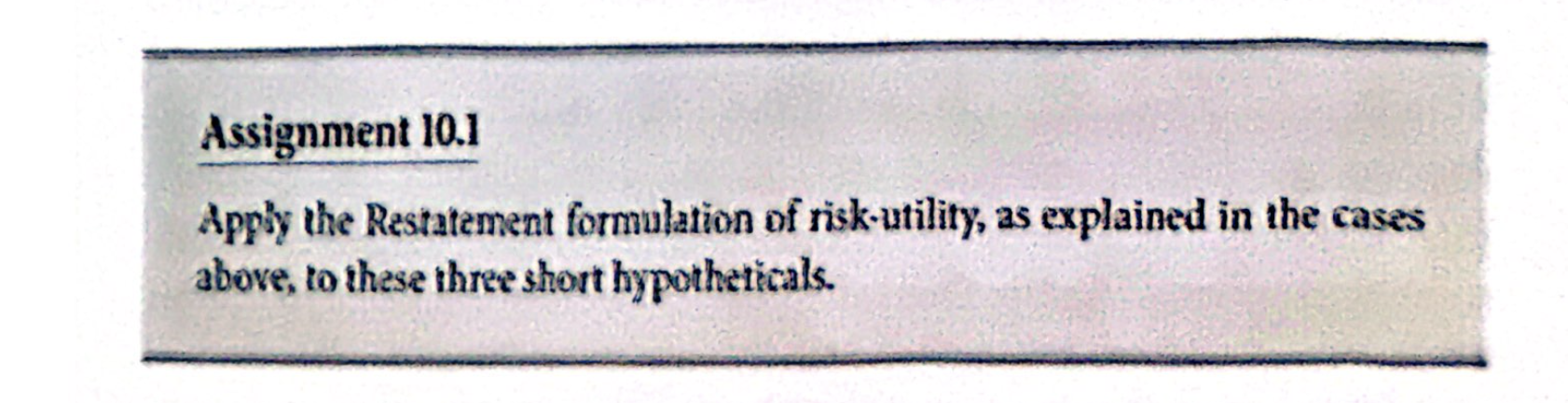
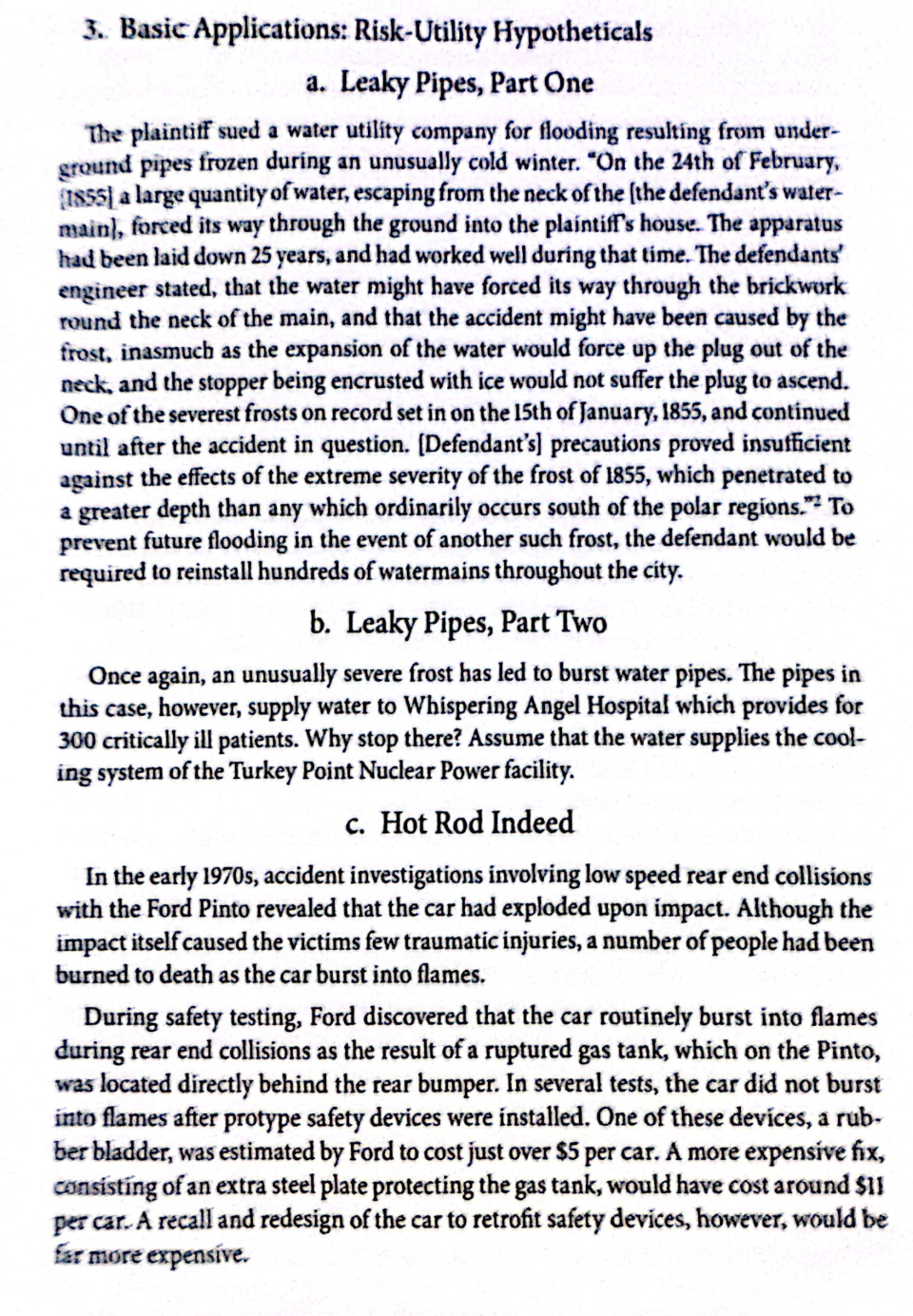
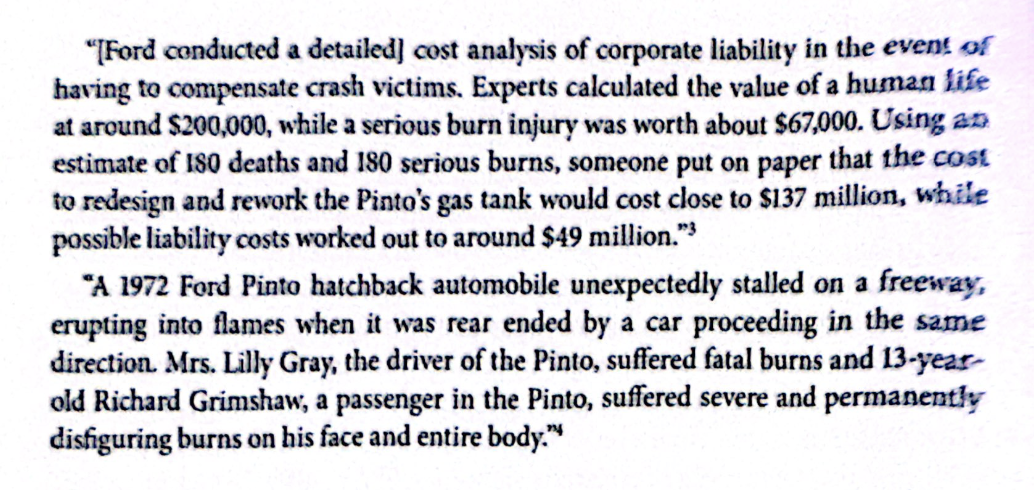
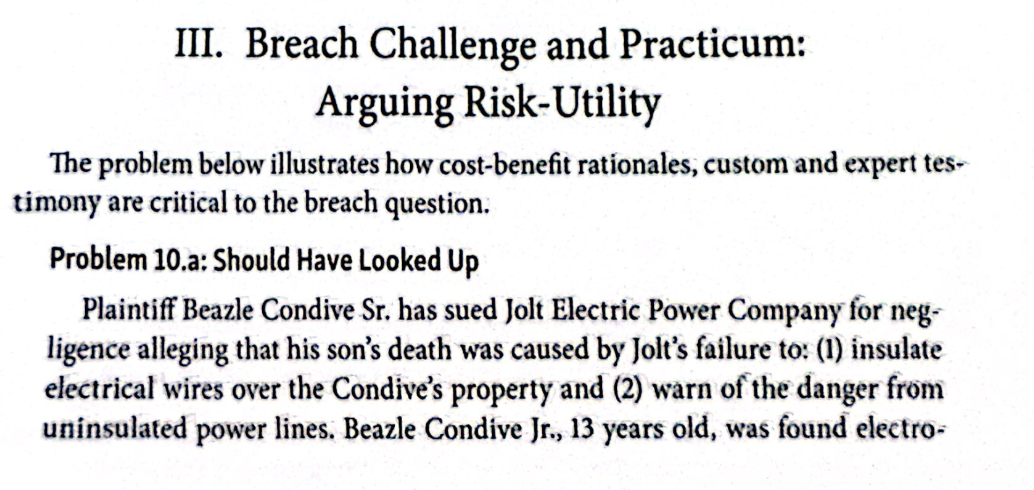
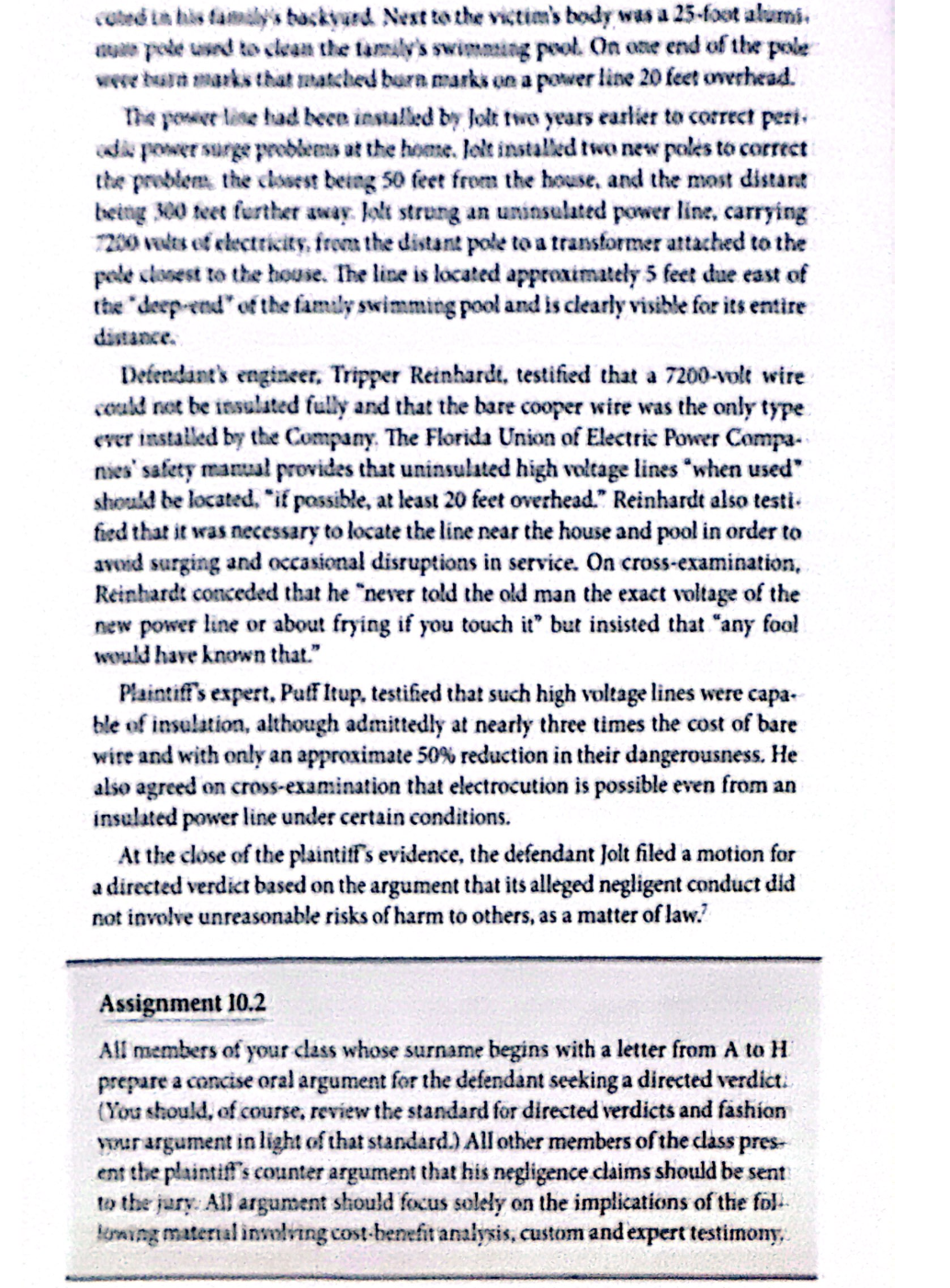
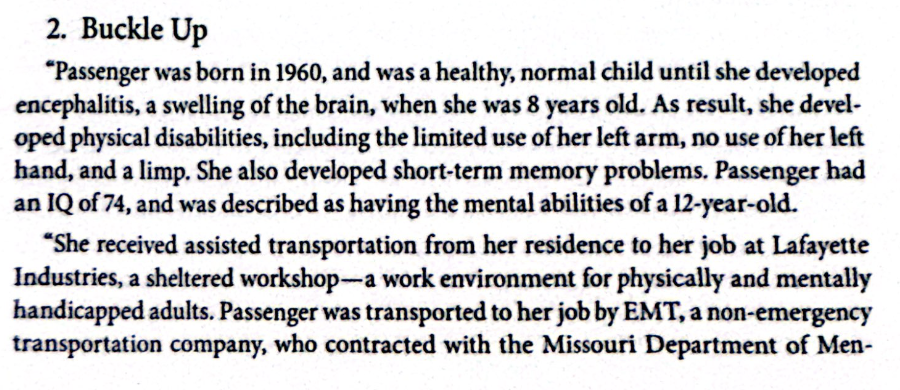
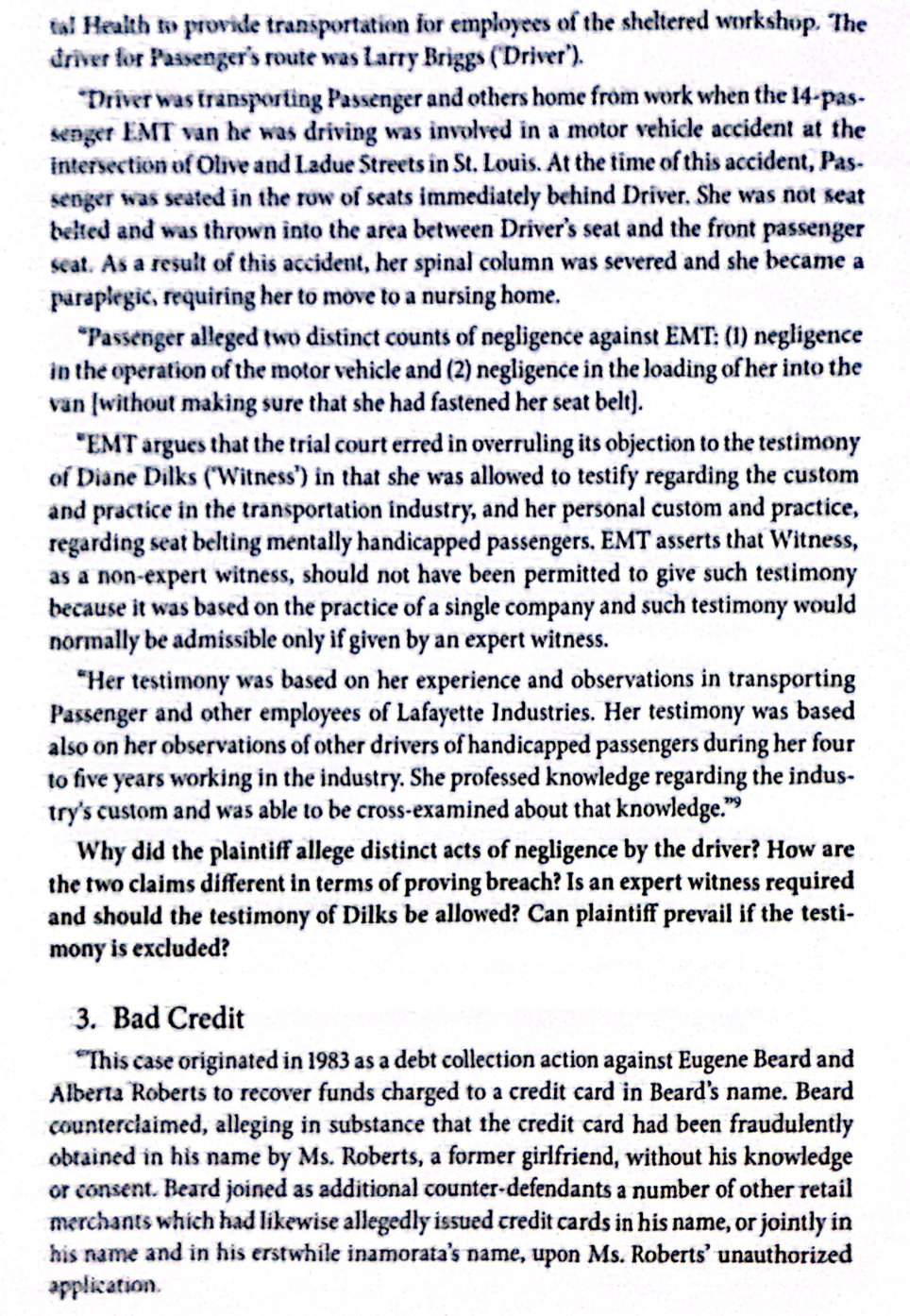
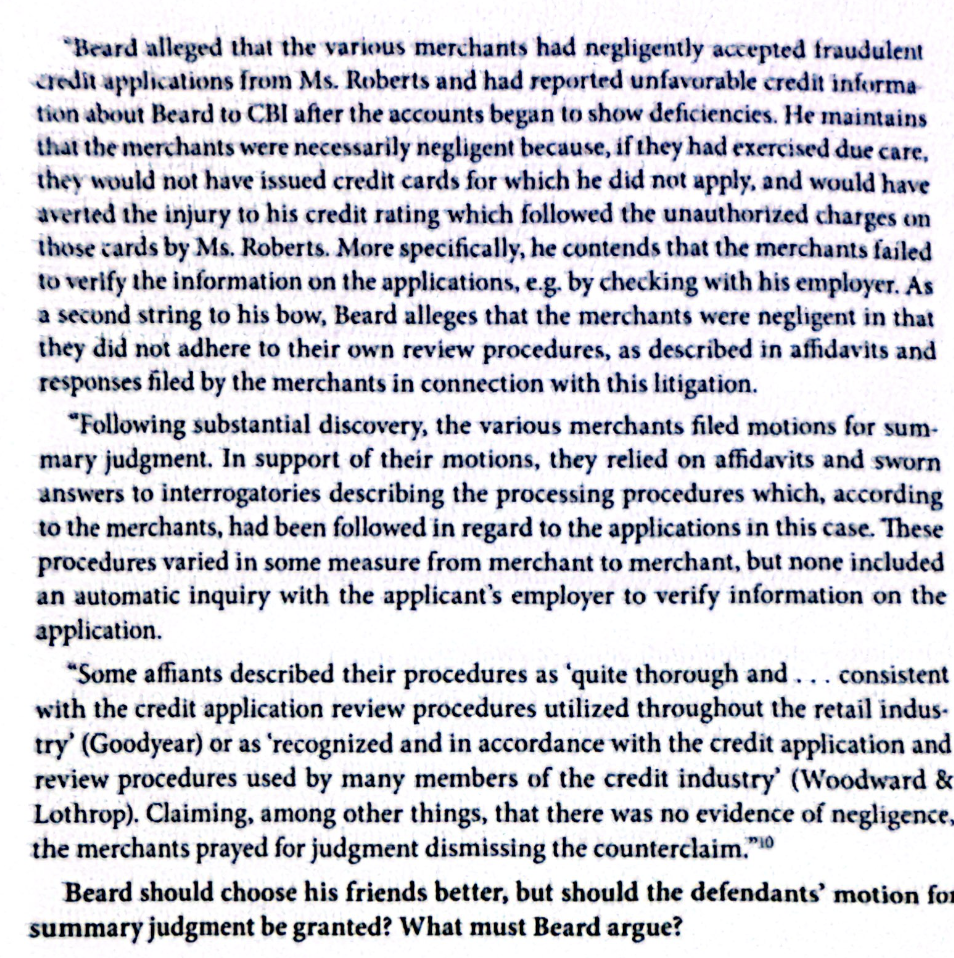
Assignment 101 ' Apply the Restatement formulation of risk-utility, as explained in the cases above, to these three short hypotheticals. 3. Basic Applications: Risk-Utility Hypotheticals a. Leaky Pipes, Part One The plaintiff sued a water utility company for flooding resulting from under- ground pipes frozen during an unusually cold winter. \"On the 24th of February, 318551 a large quantity of water, escaping from the neck of the [the defendant's water- main), forced its way through the ground into the plaintiff's house. The apparatus had been laid down 25 years, and had worked well during that time. The defendanty' engineer stated, that the water might have forced its way through the brickwork round the neck of the main, and that the accident might have been caused by the frost, inasmuch as the expansion of the water would force up the plug out of the neck, and the stopper being encrusted with ice would not suffer the plug to ascend. One of the severest frosts on record set in on the 15th of January, 1835, and continued until after the accident in question. [Defendant's] precautions proved insufficient against the effects of the extreme severity of the frost of 1855, which penetrated to a greater depth than any which ordinarily occurs south of the polar regions. To prevent future flooding in the event of another such frost, the defendant would be required to reinstall hundreds of watermains throughout the city. b. Leaky Pipes, Part Two Once again, an unusually severe frost has led to burst water pipes. The pipes in this case, however, supply water to Whispering Angel Hospital which provides for 300 critically ill patients. Why stop there? Assume that the water supplies the cool- ing system of the Turkey Point Nuclear Power facility. . Hot Rod Indeed In the early 1970s, accident investigations involving low speed rear end collisions with the Ford Pinto revealed that the car had exploded upon impact. Although the impact itself caused the victims few traumatic injuries, a number of people had been burned to death as the car burst into flames. During safety testing, Ford discovered that the car routinely burst into flames during rear end collisions as the result of a ruptured gas tank, which on the Pinto, was located directly behind the rear bumper. In several tests, the car did not burst into flames after protype safety devices were installed. One of these devices, a rub- ber bladder, was estimated by Ford to cost just over $5 per car. A more expensive fix, consisting of an extra steel plate protecting the gas tank, would have cost around $1} per car. A recall and redesign of the car to retrofit safety devices, however, would be far more expensive. \"[Ford conducted a detailed] cost analysis of corporate liability in the event of having to compensate crash victims. Experts calculated the value of 2 humaa Jife at around $200,000, while a serious burn injury was worth about $67,000. Using 25 estimate of 180 deaths and 180 serious burns, someone put on paper that the cost to redesign and rework the Pinta's gas tank would cost close to $137 million, while possible liability costs worked out to around $49 million. \"A 1972 Ford Pinto hatchback automobile unexpectedly stalled on a freeway, erupting into flames when it was rear ended by a car proceeding in the same direction. Mrs. Lilly Gray, the driver of the Pinto, suffered fatal burns and 13-year- old Richard Grimshaw, a passenger in the Pinto, suffered severe and permanently disfiguring burns on his face and entire body. III. Breach Challenge and Practicum: Arguing Risk-Utility The problem below illustrates how cost-benefit rationales, custom and expert tes- timony are critical to the breach question. Problem 10.a: Should Have Looked Up Plaintiff Beazle Condive Sr. has sued Jolt Electric Power Company for neg- ligence alleging that his son's death was caused by Jolt's failure to: (1) insulate electrical wires over the Condive's property and (2) warn of the danger from uninsulated power lines. Beazle Condive Jr., 13 years old, was found electro-coled to his family's backyard Nest to the victim's body was a 25-foot alumi, note pole used to clean the family's swimming pool. On one end of the pole were burn marks that matched burn marks on a power line 20 feet overhead. The posive lise had been installed by Jolt two years earlier to correct peri. edi power surge problems at the home. Jolt installed two new poles to correct the problem the closest being 50 feet from the house. and the most distant being 300 feet further away. Jolt strung an uninsulated power line, carrying 7200 volts of electricity, from the distant pole to a transformer attached to the pole closest to the house. The line is located approximately 5 feet due east of the " deep-end" of the family swimming pool and is clearly visible for its entire distance. Defendant's engineer, Tripper Reinhardt, testified that a 7200-volt wire could not be insulated fully and that the bare cooper wire was the only type ever installed by the Company. The Florida Union of Electric Power Compa- nies' safety manual provides that uninsulated high voltage lines "when used" should be located, "if possible, at least 20 feet overhead." Reinhardt also testi- fied that it was necessary to locate the line near the house and pool in order to avoid surging and occasional disruptions in service. On cross-examination, Reinhardt conceded that he "never told the old man the exact voltage of the new power line or about frying if you touch it" but insisted that "any fool would have known that." Plaintiff's expert. Puff Itup, testified that such high voltage lines were capa- ble of insulation, although admittedly at nearly three times the cost of bare wire and with only an approximate 50% reduction in their dangerousness, He also agreed on cross-examination that electrocution is possible even from an insulated power line under certain conditions. At the close of the plaintiff's evidence, the defendant Jolt filed a motion for a directed verdict based on the argument that its alleged negligent conduct did not involve unreasonable risks of harm to others, as a matter of law. Assignment 10.2 All members of your class whose surname begins with a letter from A to H prepare a concise oral argument for the defendant seeking a directed verdict. (You should, of course, review the standard for directed verdicts and fashion your argument in light of that standard.) All other members of the class pres- ent the plaintiff's counter argument that his negligence claims should be sent to the jury. All argument should focus solely on the implications of the fol kerning material involving cost-benefit analysis, custom and expert testimony,2. Buckle Up \"Passenger was born in 1960, and was a healthy, normal child until she developed encephalitis, a swelling of the brain, when she was 8 years old. As result, she devel- oped physical disabilities, including the limited use of her left arm, no use of her left hand, and a limp. She also developed short-term memory problems. Passenger had an IQ of 74, and was described as having the mental abilities of a 12-year-old. \"She received assisted transportation from her residence to her job at Lafayette Industries, a sheltered workshopa work environment for physically and mentally handicapped adults. Passenger was transported to her job by EMT, a non-emergency transportation company, who contracted with the Missouri Department of Men- tal Health to provide transportation for employees of the sheltered workshop. The driver for Passenger's route was Larry Briggs (Driver'). \"Driver was transporting Passenger and others home from work when the 14-pas- senger EMT van he was driving was involved in a motor vehicle accident at the intersection of Olive and Ladue Streets in St. Louis. At the time of this accident, Pas- senger was seated in the row of seats immediately behind Driver. She was not seat belted and was thrown into the area between Driver's seat and the front passenger scat. As a result of this accident, her spinal column was severed and she became a paraplegic, requiring her to move to a nursing home. \"Passenger alleged two distinct counts of negligence against EMT: (1) negligence in the operation of the motor vehicle and (2) negligence in the Joading of her into the van [without making sure that she had fastened her seat belt). *EMT argues that the trial court erred in overruling its objection to the testimony of Diane Dilks ("Witness') in that she was allowed to testify regarding the custom and practice in the transportation industry, and her personal custom and practice, regarding seat belting mentally handicapped passengers. EMT asserts that Witness, as a non-expert witness, should not have been permitted to give such testimony because it was based on the practice of a single company and such testimony would normally be admissible only if given by an expert witness. \"Her testimony was based on her experience and observations in transporting Passenger and other employees of Lafayette Industries. Her testimony was based also on her observations of other drivers of handicapped passengers during her four to five years working in the industry. She professed knowledge regarding the indus- try's custom and was able to be cross-examined about that knowledge.\" Why did the plaintiff allege distinct acts of negligence by the driver? How are the two claims different in terms of proving breach? Is an expert witness required and should the testimony of Dilks be allowed? Can plaintiff prevail if the testi- mony is excluded? 3. Bad Credit \"This case originated in 1983 as a debt collection action against Eugene Beard and Alberta Roberts to recover funds charged to a credit card in Beard's name. Beard counterclaimed, alleging in substance that the credit card had been fraudulently obtained in his name by Ms. Roberts, a former girlfriend, without his knowledge or consent. Beard joined as additional counter-defendants a number of other retail merchants which had likewise allegedly issued credit cards in his name, or jointly in his name and in his erstwhile inamorata's name, upon Ms. Roberts' unauthorized application. \"Beard alleged that the various merchants had negligently accepted traudulent redit apphications from Ms. Roberts and had reported unfavarable credit informa tion about Beard to CBI after the accounts began to show deficiencies. He maintains that the merchants were necessarily negligent because, if they had exercised due care, they would not have issued credit cards for which he did not apply, and would have averted the injury to his credit rating which followed the unauthorized charges on thuse cards by Ms. Roberts. More specifically, he contends that the merchants failed to verify the information on the applications, e.g. by checking with his employer. As a second string to his bow, Beard alleges that the merchants were negligent in that they did not adhere to their own review procedures, as described in affidavits and responses filed by the merchants in connection with this litigation. \"Following substantial discovery, the various merchants filed motions for sum- mary judgment. In support of their motions, they relied on affidavits and sworn answers 1o interrogatories describing the processing procedures which, according to the merchants, had been followed in regard to the applications in this case. These procedures varied in some measure from merchant to merchant, but none included an automatic inquiry with the applicant's employer to verify information on the application. \"Some affiants described their procedures as 'quite thorough and . . . consistent with the credit application review procedures utilized throughout the retail indus- try' (Goodyear) or as 'recognized and in accordance with the credit application and review procedures used by many members of the credit industry' (Woodward & Lothrop). Claiming, among other things, that there was no evidence of negligence, the merchants prayed for judgment dismissing the counterclaim. Beard should choose his friends better, but should the defendants' motion fo1 summary judgment be granted? What must Beard argue
Step by Step Solution
There are 3 Steps involved in it

Get step-by-step solutions from verified subject matter experts
 Study Help