







Question: Answer the following four questions about each problem. 1. What gradients exist across the cell membrane (center divider)? The answer to this question requires that
Answer the following four questions about each problem.
1. What gradients exist across the cell membrane (center divider)? The answer to this question requires that you do three things. First, state the concentrations in both A and B for each solute and the solvent. Second, specifically note the solutes/solvent that exhibit gradients and state the direction of the gradient. Third, specifically state the solutes/solvent for which no gradient exists. Remember, the only way to identify a water (osmotic) gradient is to state each solute concentration in mosm or osm and then sum the total number of mosm or osm in the solution.
2. To what solutes and solvents is the membrane permeable? The answer to this question requires that you do two things. First, clearly state the solutes/solvent to which the membrane is permeable. Second, clearly state the solutes/solvents to which the membrane is not permeable.
3. Given the gradients and membrane permeability, what solute and solvent particles diffuse across the membrane and in which directions? The answer to this question requires the following information. First, clearly state which solutes/solvent diffuse across the membrane and in which direction. Second, clearly state which solutes/solvents do not diffuse across the membrane. Third, for each solute/solvent that does not diffuse across the membrane, clearly state the reason it does not diffuse: lack of gradient, membrane impermeability, or both.
4. What is the result of solute and/or solvent diffusion? This answer is the most complex.
On the surface, a good answer requires that you first state the immediate effect(s) of solute/solvent diffusion those that occur immediately after a change in the initial solute/solvent conditions. This must be done for each solute/solvent that permeates the membrane. However, continuous diffusion of a solute, or solvent, from one side of a membrane to the other can alter solute and/or solvent concentrations on both sides of the membrane. Such changes in concentration can have secondary implications, which must be addressed in the second part of your answer. On occasion, secondary effects cause yet other (tertiary) effects, which also must be discussed.
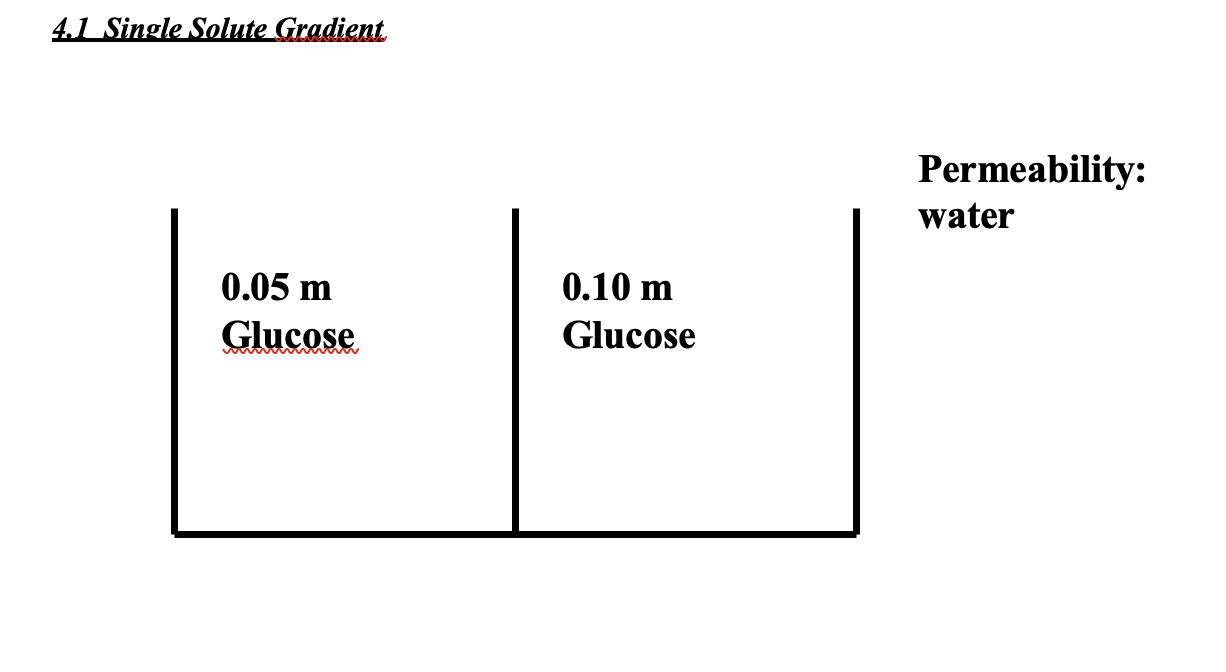
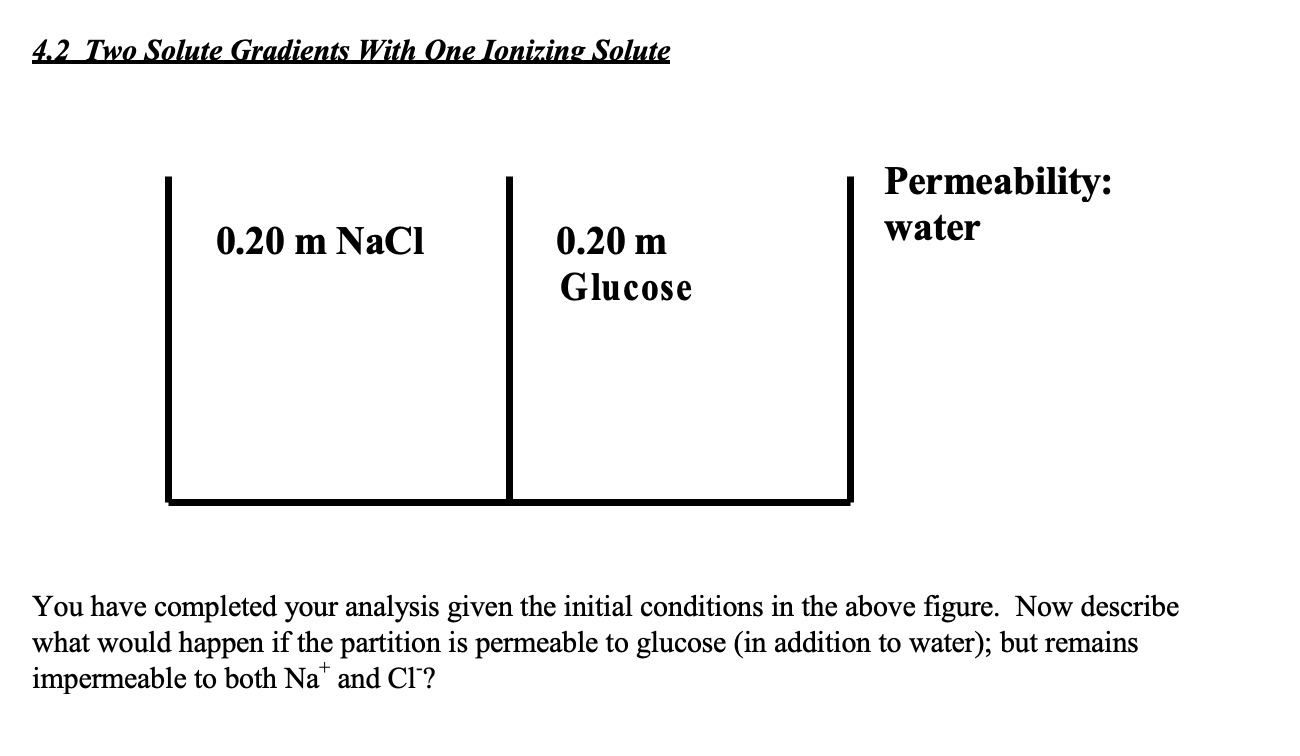
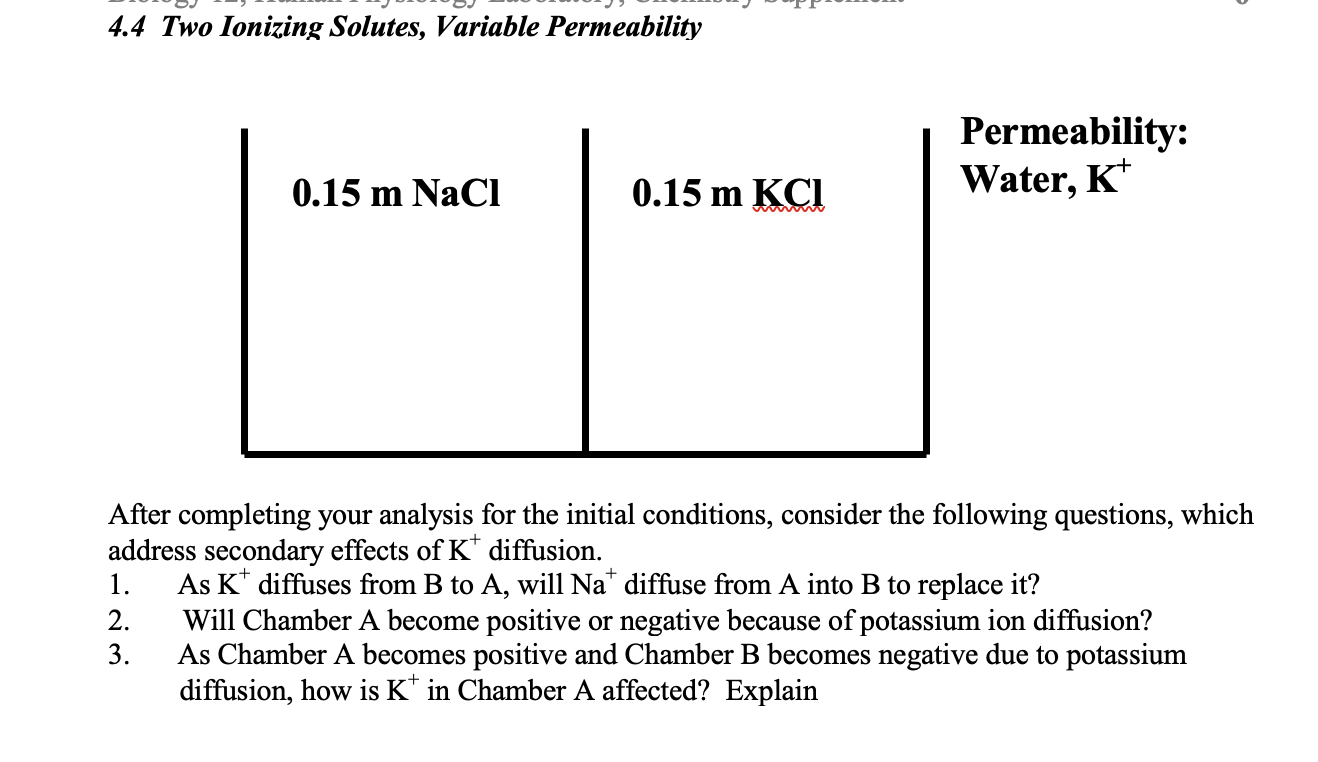
4.1 Single Solute Gradient. Permeability: water 0.05 m Glucose 0.10 m Glucose 4.2. Two Solute Gradients With One lonizing Solute Permeability: water 0.20 m NaCl 0.20 m Glucose You have completed your analysis given the initial conditions in the above figure. Now describe what would happen if the partition is permeable to glucose (in addition to water); but remains impermeable to both Na+ and Cl? 4.4 Two Ionizing Solutes, Variable Permeability Permeability: Water, K 0.15 m NaCl 0.15 m KC 1. After completing your analysis for the initial conditions, consider the following questions, which address secondary effects of K diffusion. As K* diffuses from B to A, will Na* diffuse from A into B to replace it? 2. Will Chamber A become positive or negative because of potassium ion diffusion? 3. As Chamber A becomes positive and Chamber B becomes negative due to potassium diffusion, how is Kt in Chamber A affected? Explain
Step by Step Solution
There are 3 Steps involved in it

Get step-by-step solutions from verified subject matter experts
 Study Help