







Question: Answer the following: Problem 9c Assignment 9.3 Problem 9d Assignment 9.4 Section IVQ 1, 3-4 Assignment 9.3 The standard of care applicable to the legal
Answer the following:
- Problem 9c
- Assignment 9.3
- Problem 9d
- Assignment 9.4
- Section IVQ 1, 3-4
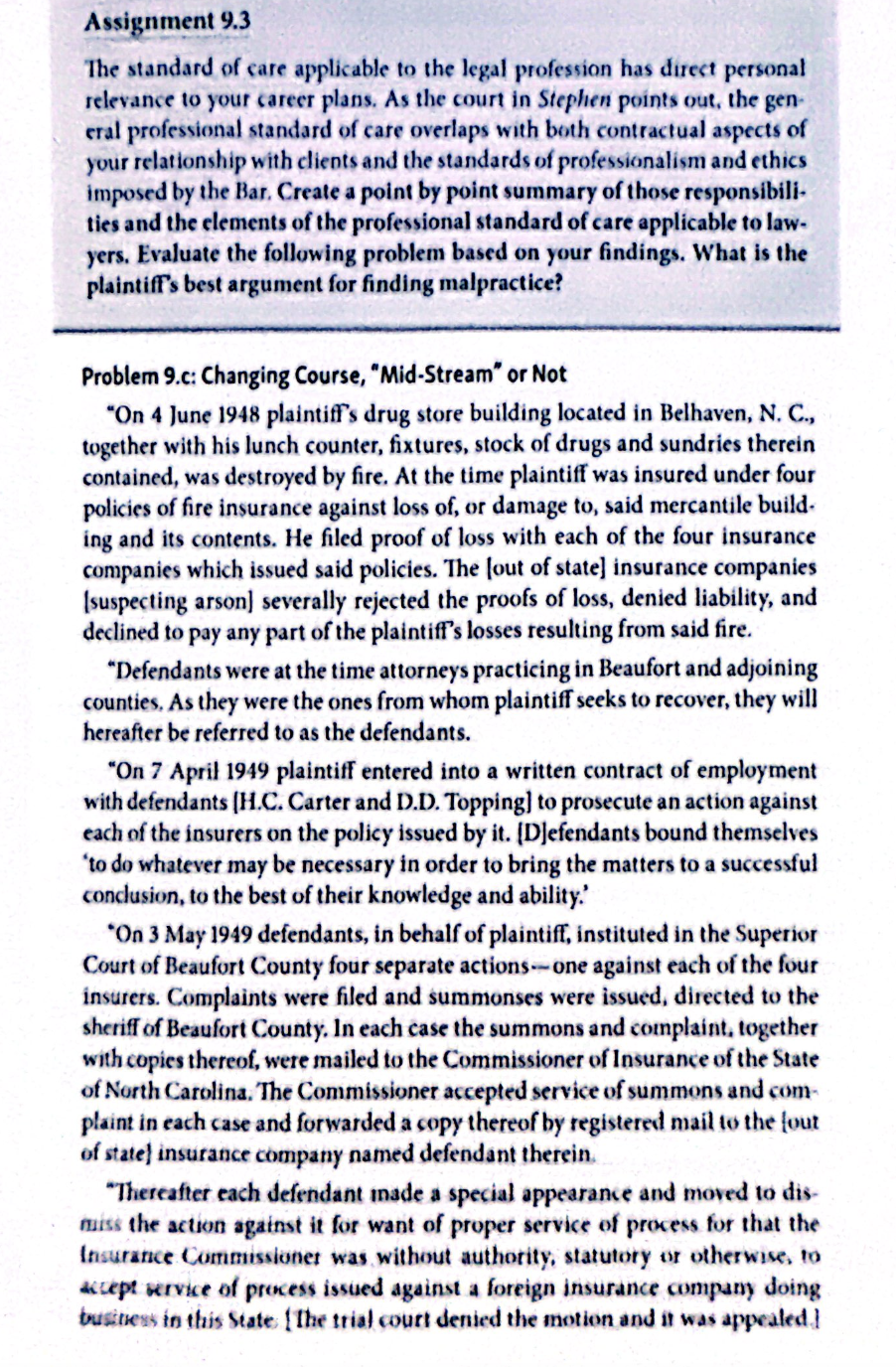
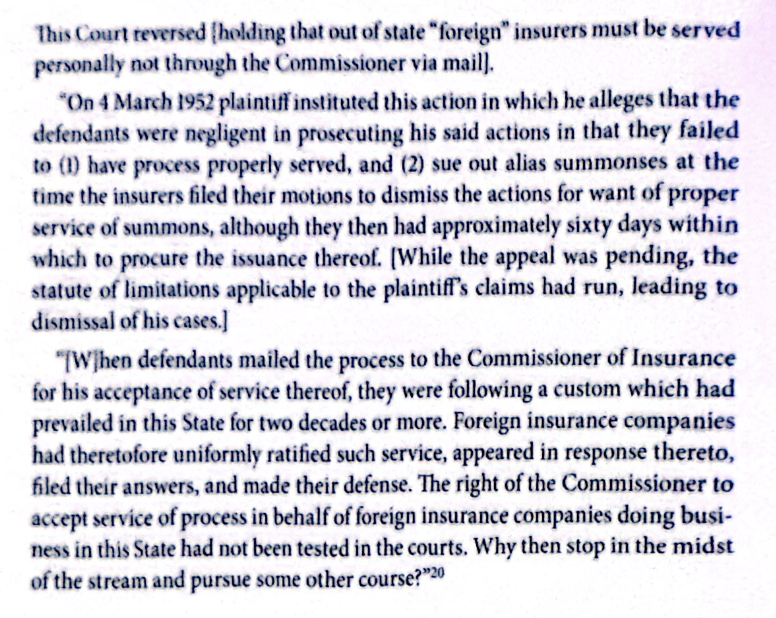
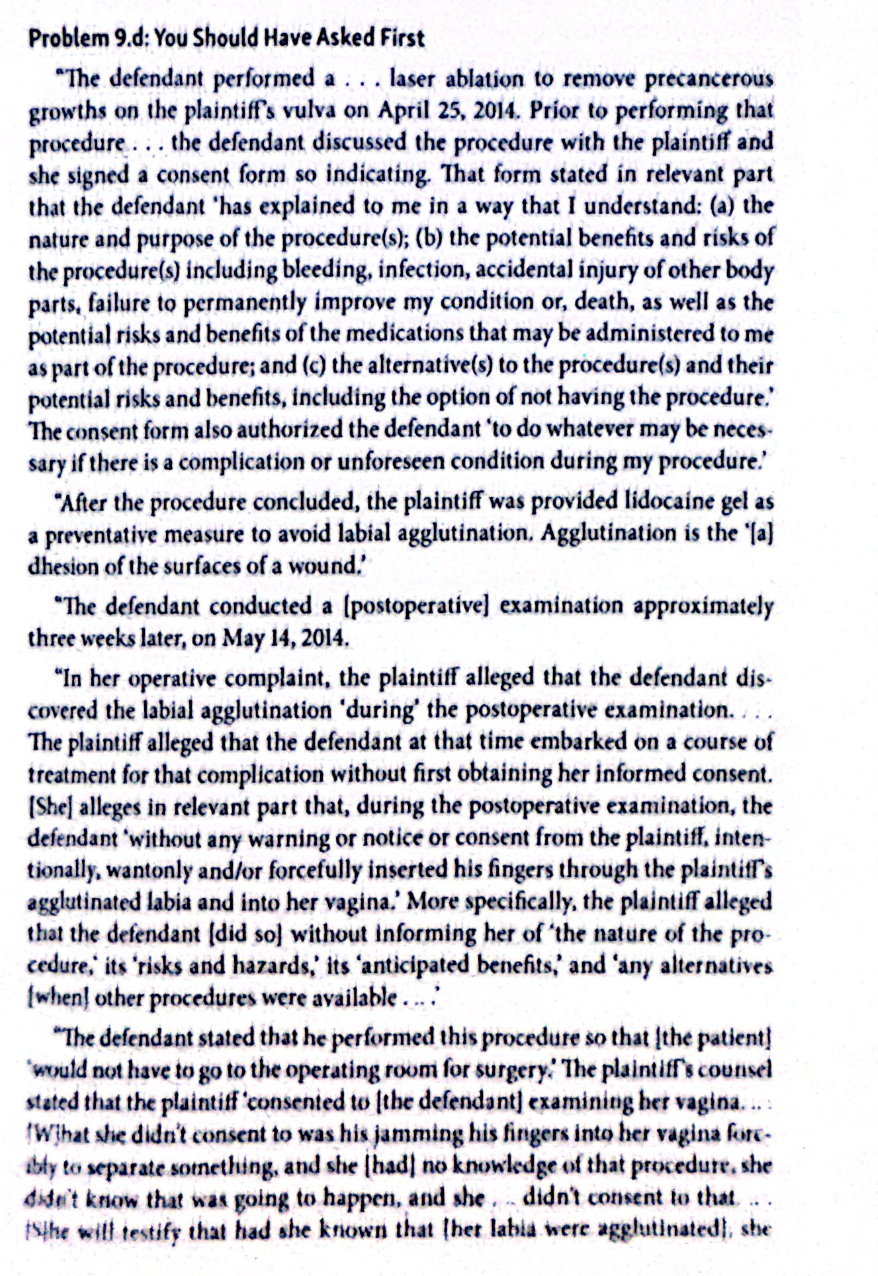
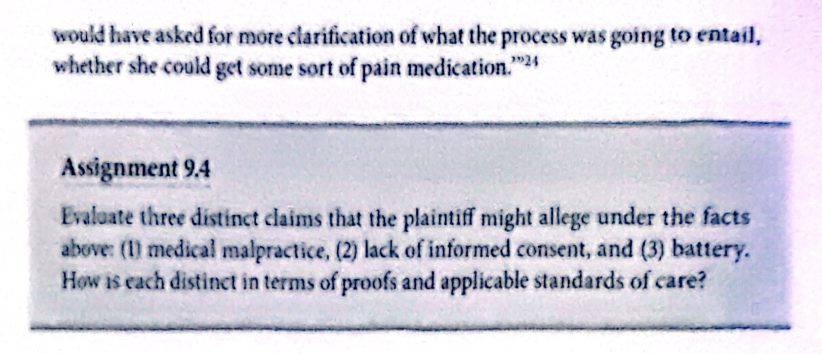
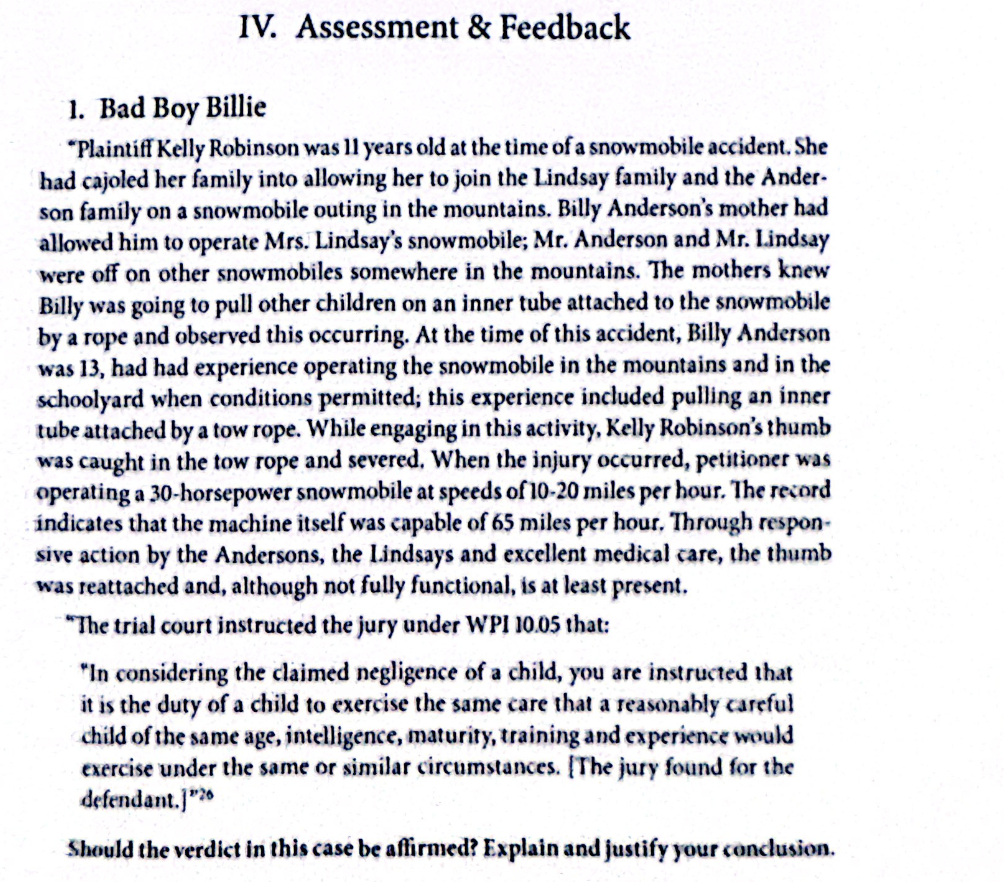
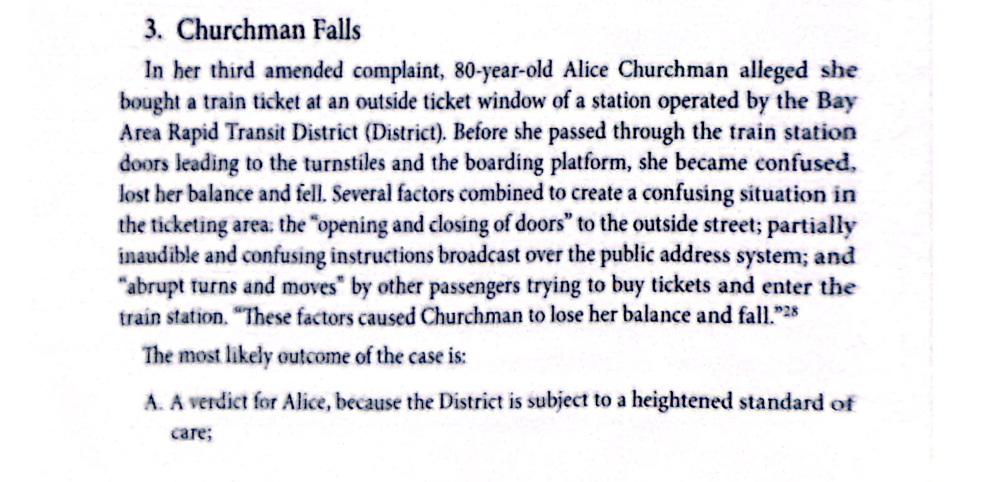
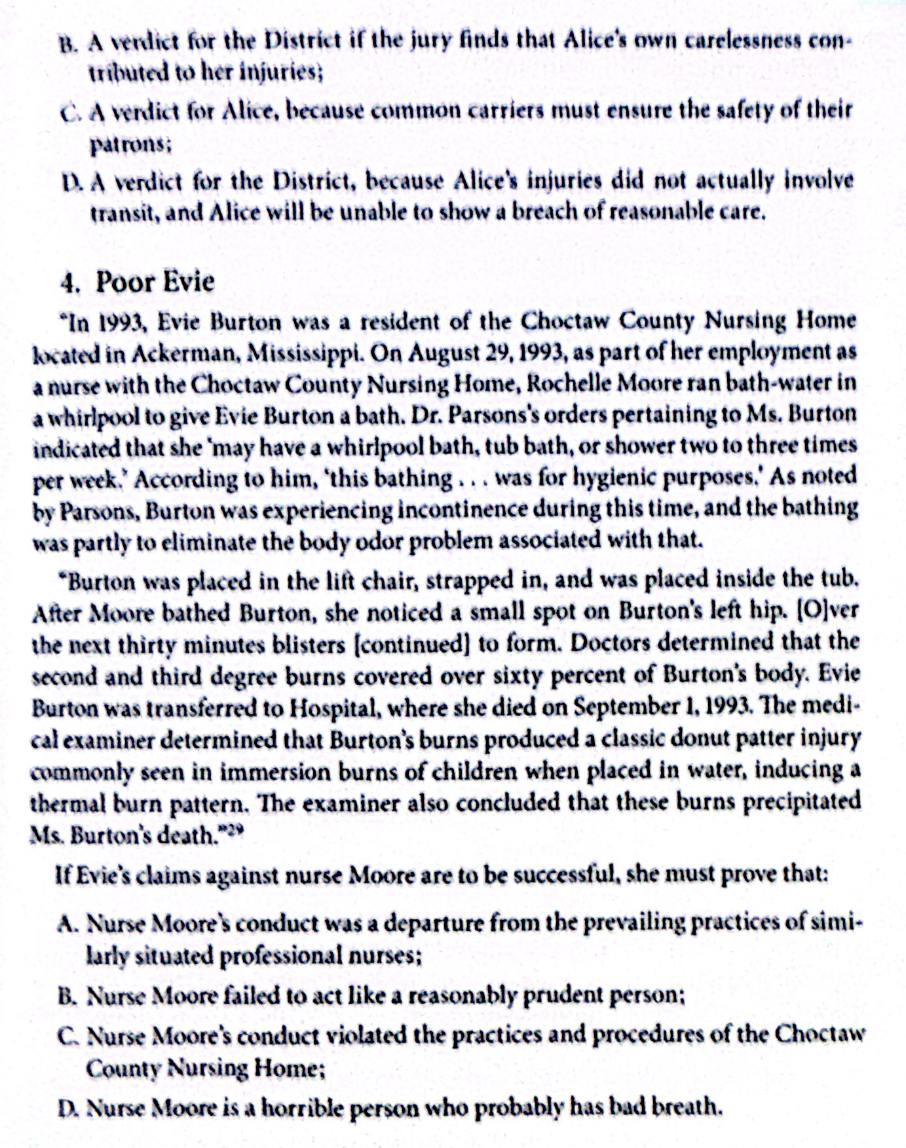
Assignment 9.3 The standard of care applicable to the legal profession has direct personal relevance 10 your career plans. As the court in Stephen points out, the gen- eral professional standard of care overlaps with both contractual aspects of your relationship with clients and the standards of professionalism and ethics imposed by the Bar. Create a point by point summary of those responsibili- ties and the clements of the professional standard of care applicable to law- yers, Evaluate the following problem based on your findings. What is the plaintiff's best argument for finding malpractice? Problem 9.c: Changing Course, \"Mid-Stream\" or Not \"On 4 June 1948 plaintiff's drug store building located in Belhaven, N. C,, together with his lunch counter, fixtures, stock of drugs and sundries therein contained, was destroyed by fire. At the time plaintiff was insured under four policies of fire insurance against loss of, or damage to, said mercantile build- ing and its contents. He filed proof of loss with each of the four insurance companies which issued said policies. The [out of state] insurance companies [suspecting arson] severally rejected the proofs of loss, denied liability, and declined to pay any part of the plaintiff's losses resulting from said fire. \"Defendants were at the time attorneys practicing in Beaufort and adjoining counties, As they were the ones from whom plaintiff seeks to recover, they will hereafter be referred 10 as the defendants. \"On 7 April 1949 plaintiff entered into a written contract of employment with defendants [H.C. Carter and D.D. Topping] to prosecute an action against cach of the insurers on the policy issued by it. [Defendants bound themselves 'to do whatever may be necessary in order to bring the matters to a successful conclusion, to the best of their knowledge and ability.' *On 3 May 1949 defendants, in behalf of plaintiff, instituted in the Superior Court of Beaufort County four separate actions-~one against each of the four insurers. Complaints were filed and summonses were issued, directed to the sheriffl of Beaufort County. In each case the summons and complaint, together with copies thereof, were mailed to the Commissioner of Insurance of the State of North Carolina, The Commissioner accepted service of summons and com- plaint in each case and forwarded a copy thereof by registered mail to the fout of state] insurance company named defendant therein. \"Thereafter each defendant inade a special appearance and moved 1o dis- miss the action against it for want of proper service of process for that the [nsurance Commssioner was without authority, statutory or otherwise, 1o acuept wrvice of process issued against a foreign insurance company doing business in this State. { The trial court denied the motion and it was appealed | This Court reversed {holding that out of state *foreign\" insurers must be served personally not through the Commissioner via mail). \"On 4 March 1952 plaintiff instituted this action in which he alleges that the defendants were negligent in prosecuting his said actions in that they failed to (1) have process properly served, and (2) sue out alias summonses at the time the insurers filed their motions to dismiss the actions for want of proper service of summons, although they then had approximately sixty days within which to procure the issuance thereof. [While the appeal was pending, the statute of limitations applicable to the plaintif's claims had run, leading to dismissal of his cases.] \"[W]hen defendants mailed the process to the Commissioner of Insurance for his acceptance of service thereof, they were following a custom which had prevailed in this State for two decades or more. Foreign insurance companies had theretofore uniformly ratified such service, appeared in response thereto, filed their answers, and made their defense. The right of the Commissioner to accept service of process in behalf of foreign insurance companies doing busi- ness in this State had not been tested in the courts. Why then stop in the midst of the stream and pursue some other course? Problem 9.d: You Should Have Asked First *The defendant performed a . . . laser ablation to remove precancerous growths on the plaintiff's vulva on April 25, 2014. Prior to performing that procedure . . . the defendant discussed the procedure with the plaintiff and she signed a consent form so indicating. That form stated in relevant part that the defendant 'has explained to me in a way that I understand: (a) the nature and purpose of the procedure(s); (b) the potential benefits and risks of the procedure(s) including bleeding, infection, accidental injury of other body parts, failure to permanently improve my condition or, death, as well as the potential risks and benefits of the medications that may be administered to me as part of the procedure; and (c) the alternative(s) to the procedure(s) and their potential risks and benefits, including the option of not having the procedure.' The consent form also authorized the defendant 'to do whatever may be neces- sary if there is a complication or unforeseen condition during my procedure.' \"After the procedure concluded, the plaintiff was provided lidocaine gel as a preventative measure to avoid labial agglutination, Agglutination is the *(a] dhesion of the surfaces of a wound.' \"The defendant conducted a [postoperative] examination approximately three weeks later, on May 14, 2014, \"In her operative complaint, the plaintiff alleged that the defendant dis- covered the labial agglutination 'during' the postoperative examination. . . . The plaintiff alleged that the defendant at that time embarked on a course of treatment for that complication without first obtaining her informed consent. [She] alleges in relevant part that, during the postoperative examination, the defendant 'without any warning or notice or consent from the plaintiff, inten- tionally, wantonly and/or forcefully inserted his fingers through the plaintiff's agglutinated labia and into her vagina. More specifically, the plaintiff alleged that the defendant [did so) without informing her of 'the nature of the pro- cedure,' its 'risks and hazards,' its 'anticipated benefits, and 'any alternatives [when] other procedures were available . ... \"The defendant stated that he performed this procedure so that {the patient] 'would not have to go to the operating room for surgery.\" The plaintiff's counsel stated that the plaintiff 'consented to [the defendant] examining her vagina. .. 'Wihat she didn't consent to was his jamming his fingers into her vagina forc- ily to separate something, and she [had] no knowledge of that procedute, she 4t kniow that was going to happen, and she . . didn't consent to that .. {Sihe will testify that had she known that [het labla were agglutinated], she would have asked for more clarification of what the process was going to entail, whether she could get some sort of pain medication." Assignment 9.4 Evaluate three distinct claims that the plaintiff might allege under the facts above: (1) medical malpractice, (2) lack of informed consent, and (3) battery. How is each distinct in terms of proofs and applicable standards of care?IV. Assessment & Feedback 1. Bad Boy Billie \"Plaintiff Kelly Robinson was 11 years old at the time of a snowmobile accident. She had cajoled her family into allowing her to join the Lindsay family and the Ander- son family on a snowmobile outing in the mountains. Billy Anderson's mother had allowed him to operate Mrs. Lindsay's snowmobile; Mr. Anderson and Mr. Lindsay were off on other snowmobiles somewhere in the mountains. The mothers knew Billy was going to pull other children on an inner tube attached to the snowmobile by a rope and observed this occurring. At the time of this accident, Billy Anderson was 13, had had experience operating the snowmobile in the mountains and in the schoolyard when conditions permitted; this experience included pulling an inner tube attached by a tow rope. While engaging in this activity, Kelly Robinson's thumb was caught in the tow rope and severed. When the injury occurred, petitioner was operating a 30-horsepower snowmobile at speeds of 10-20 miles per hour. The record indicates that the machine itself was capable of 65 miles per hour. Through respon- sive action by the Andersons, the Lindsays and excellent medical care, the thumb was reattached and, although not fully functional, is at least present. \"The trial court instructed the jury under WPI 10.05 that: *In considering the claimed negligence of a child, you are instructed that it is the duty of a child to exercise the same care that a reasonably careful child of the same age, intelligence, maturity, training and experience would exercise under the same or similar circumstances, [The jury found for the defendant, ) Should the verdict in this case be affirmed? Explain and justify your conclusion. 3. Churchman Falls In her third amended complaint, 80-year-old Alice Churchman alleged she bought a train ticket at an outside ticket window of a station operated by the Bay Area Rapid Transit District (District). Before she passed through the train station doors leading to the turnstiles and the boarding platform, she became confused. lost her balance and fell. Several factors combined to create a confusing situation in the ticketing area. the \"opening and closing of doors\" to the outside street; partially inaudible and confusing instructions broadcast over the public address system; and \"abrupt turns and moves\" by other passengers trying 1o buy tickets and enter the train station. \"These factors caused Churchman to lose her balance and fall.\"** The most likely outcome of the case is: A A verdict for Alice, because the District is subject to a heightened standard of ware; B. A verdict for the District if the jury finds that Alice's own carelessness con- tributed to her injuries; C. A verdict for Alice, because common carriers must ensure the safety of their patrons; D. A verdict for the District, because Alice's injuries did not actually involve transit, and Alice will be unable to show a breach of reasonable care. 4. Poor Evie "In 1993, Evie Burton was a resident of the Choctaw County Nursing Home located in Ackerman, Mississippi. On August 29, 1993, as part of her employment as a nurse with the Choctaw County Nursing Home, Rochelle Moore ran bath-water in a whirlpool to give Evie Burton a bath. Dr. Parsons's orders pertaining to Ms. Burton indicated that she 'may have a whirlpool bath, tub bath, or shower two to three times per week." According to him, 'this bathing . . . was for hygienic purposes.' As noted by Parsons, Burton was experiencing incontinence during this time, and the bathing was partly to eliminate the body odor problem associated with that. "Burton was placed in the lift chair, strapped in, and was placed inside the tub. After Moore bathed Burton, she noticed a small spot on Burton's left hip. [O]ver the next thirty minutes blisters [continued] to form. Doctors determined that the second and third degree burns covered over sixty percent of Burton's body. Evie Burton was transferred to Hospital, where she died on September 1, 1993. The medi- cal examiner determined that Burton's burns produced a classic donut patter injury commonly seen in immersion burns of children when placed in water, inducing a thermal burn pattern. The examiner also concluded that these burns precipitated Ms. Burton's death."?" If Evie's claims against nurse Moore are to be successful, she must prove that: A. Nurse Moore's conduct was a departure from the prevailing practices of simi- larly situated professional nurses; B. Nurse Moore failed to act like a reasonably prudent person; C. Nurse Moore's conduct violated the practices and procedures of the Choctaw County Nursing Home; D. Nurse Moore is a horrible person who probably has bad breath
Step by Step Solution
There are 3 Steps involved in it

Get step-by-step solutions from verified subject matter experts
 Study Help