







Question: Answer the series and parallel circuit problem Show your solution to each problem. Series Circuit PTOblem (15pts) 1. Below is a series circuit with a
Answer the series and parallel circuit problem
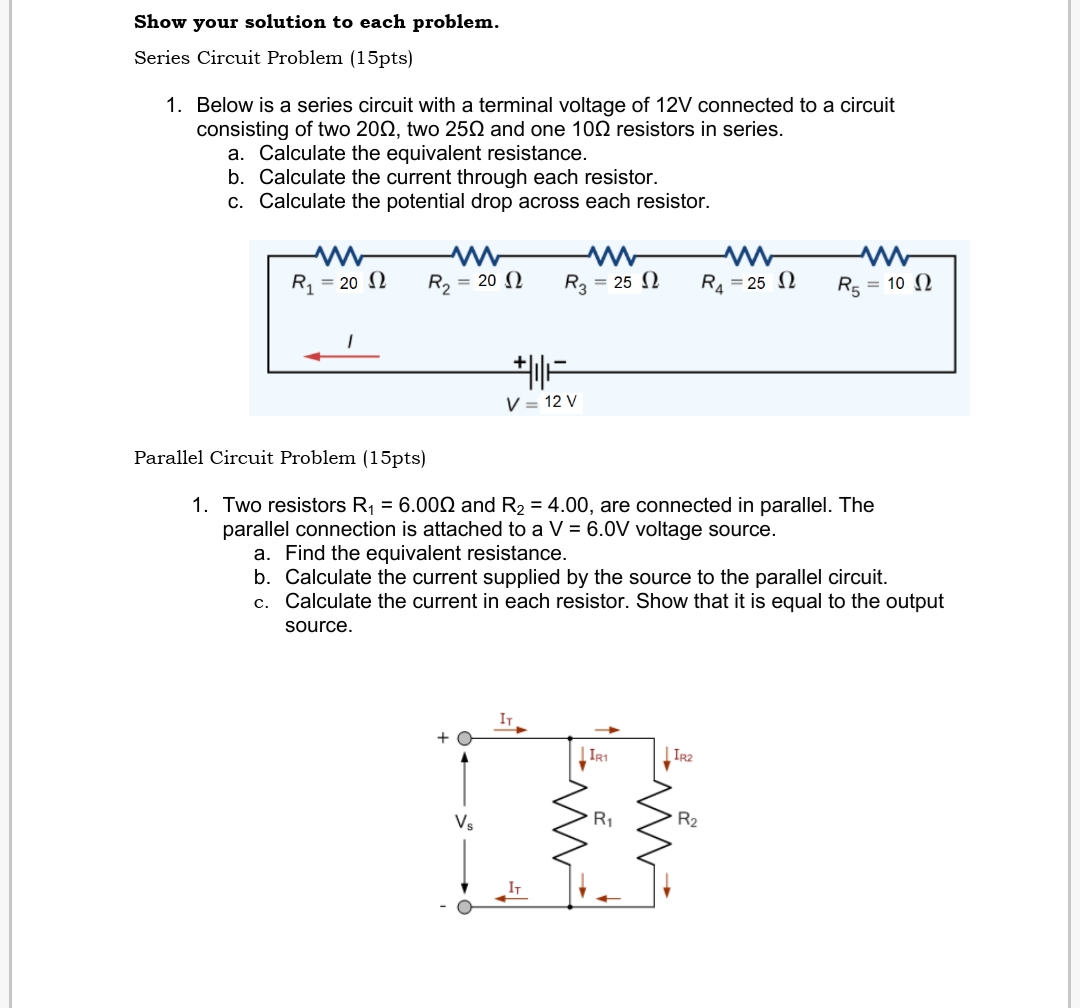
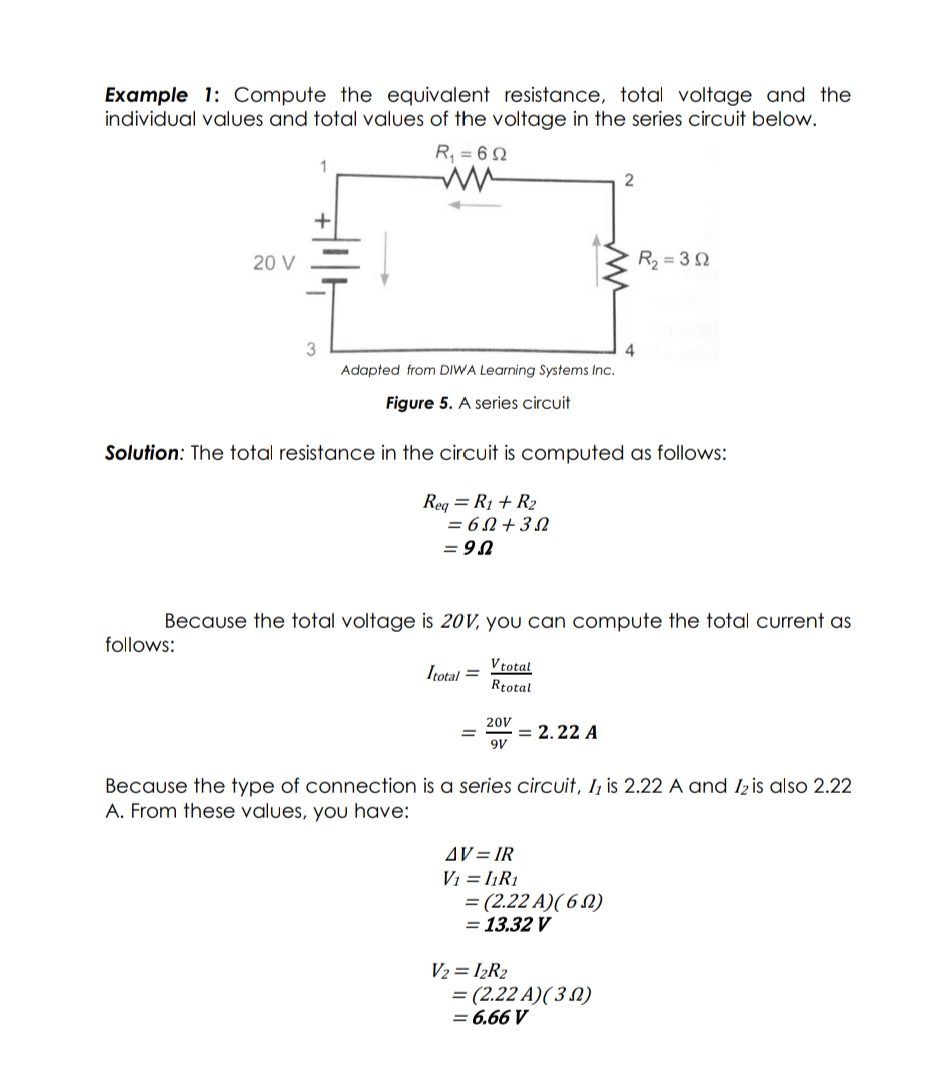
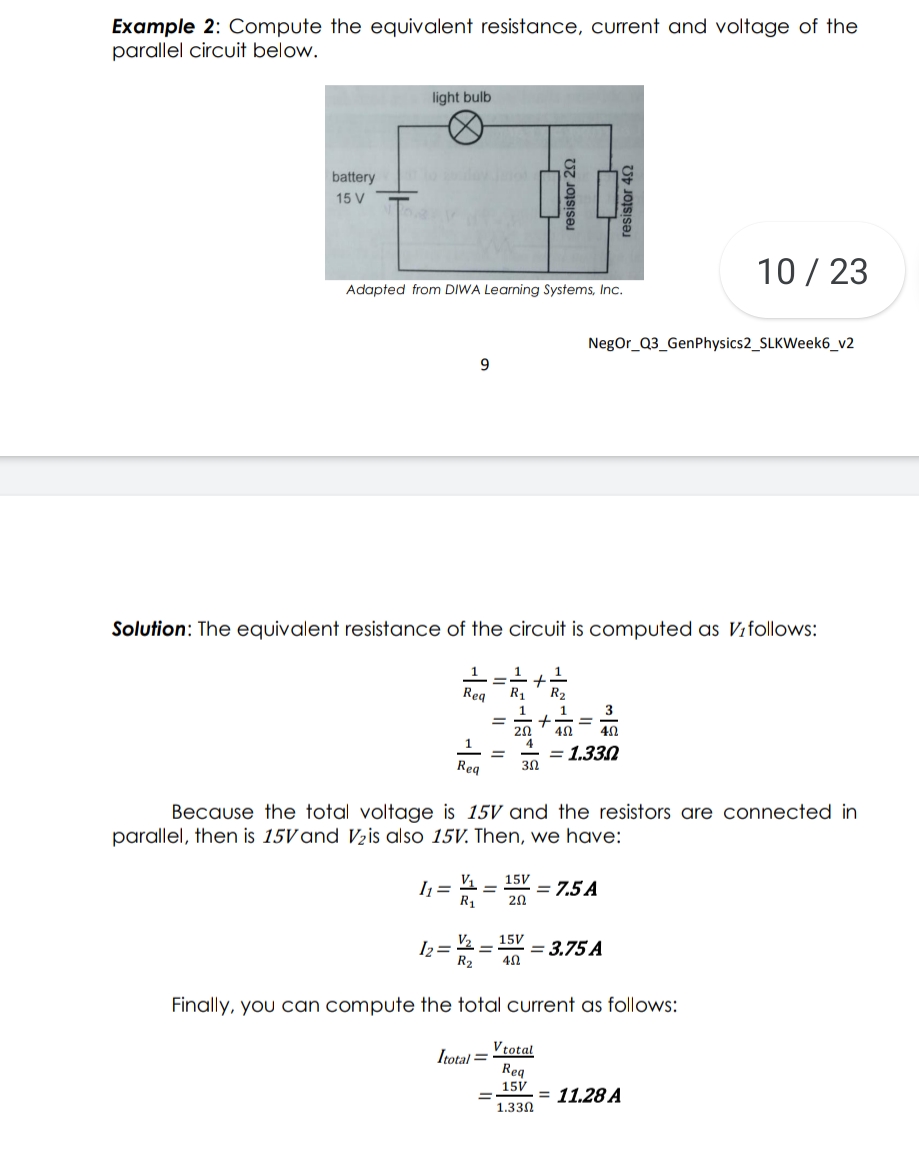
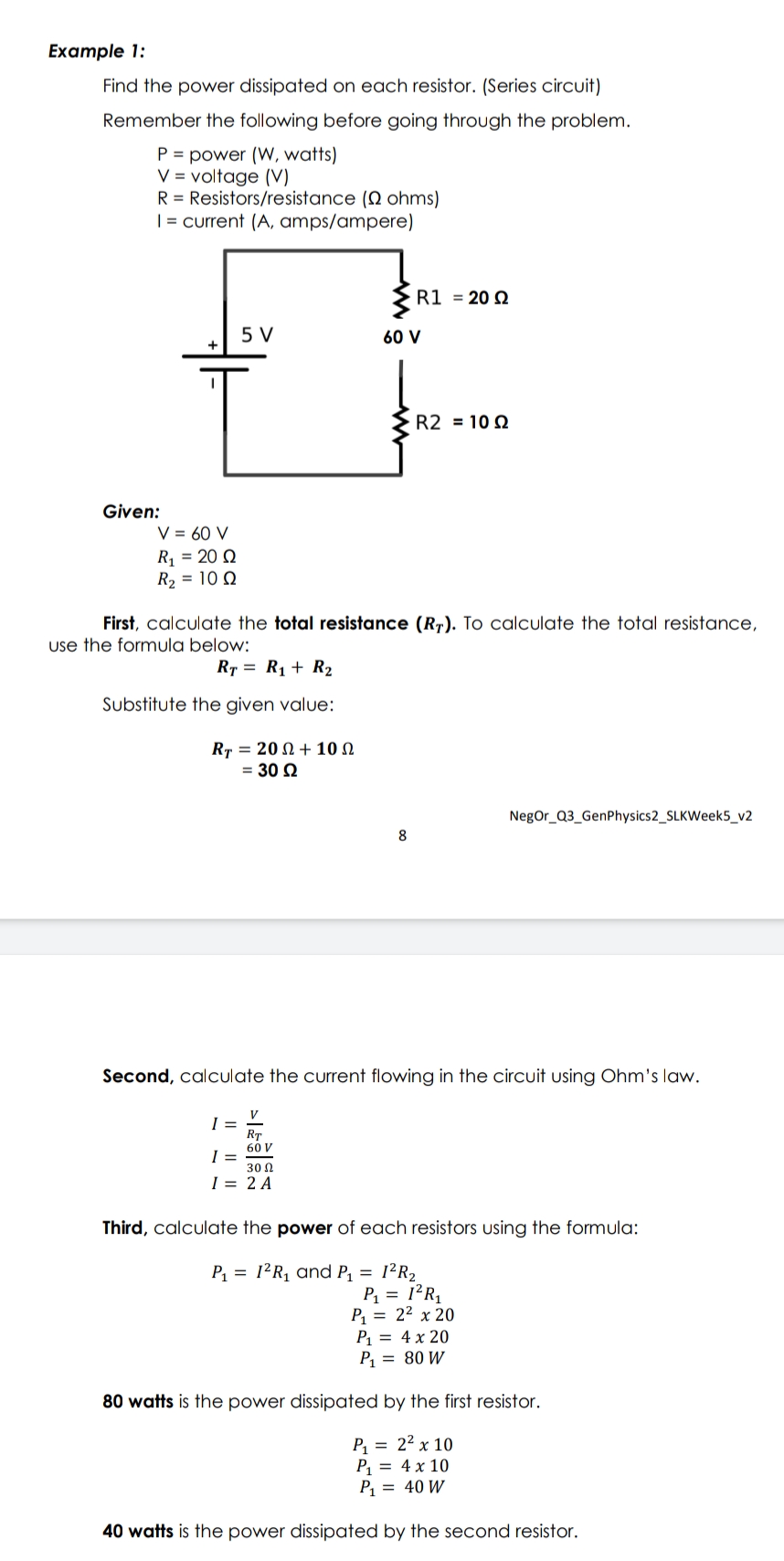
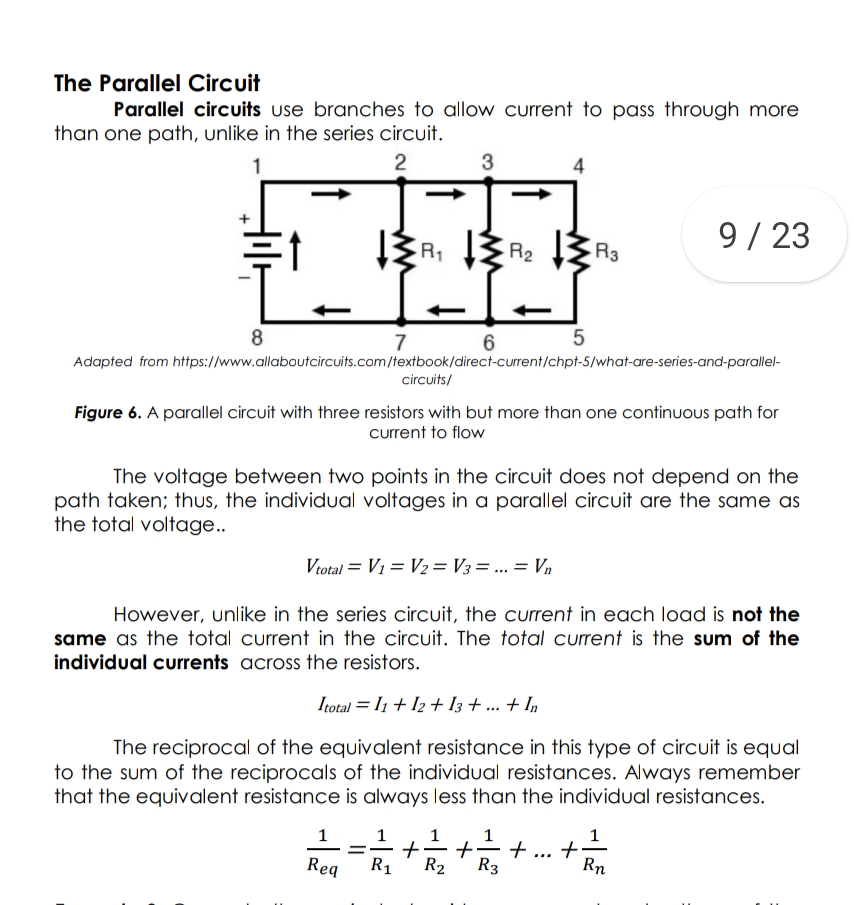
Show your solution to each problem. Series Circuit PTOblem (15pts) 1. Below is a series circuit with a terminal voltage of 12V connected to a circuit consisting of two 200, two 259 and one 10!) resistors in series. a. Calculate the equivalent resistance. b. Calculate the current through each resistor. 0. Calculate the potential drop across each resistor. Parallel Circuit Problem [15pts) 1. Two resistors R1 = 6.000 and R2 = 4.00, are connected in parallel. The parallel connection is attached to a V = 6.0V voltage source. a. Find the equivalent resistance. b. Calculate the current supplied by the source to the parallel circuit. c. Calculate the current in each resistor. Show that it is equal to the output source. Example I: Compute the equivalent resistance. total voltage and the individual values and total values of the voltage in the series circuit below. R1=50 Adapted from DlWA Learning Systems Inc. gure 5. A series circuit Solution: The total resistance in the circuit is computed as follows: Req=Rf+R2 =6+3 =90 Because the total voltage is 20?: you can compute the total current as follows: Vtatal from! = Rtoml 20v 31221! Because the type of connection is a series circoit, I; is 2.22 A and leis also 2.22 A. From these values. you have: A V= IR P} =f1R1 = (ZZZA)(6.I'2) = 1.3.32 V V} = {232 = (2.22A){3) =566V Example 2: Compute the equivalent resistance, current and voltage of the parallel circuit below. light bulb battery resistor 20 15 V resistor 40 10 / 23 Adapted from DIWA Learning Systems, Inc. NegOr_Q3_GenPhysics2_SLKWeek6_v2 9 Solution: The equivalent resistance of the circuit is computed as Vifollows: 1 Req R1 RZ 20 40 40 = 1.330 Req Because the total voltage is 151 and the resistors are connected in parallel, then is 15Vand Vzis also 15V. Then, we have: V1 _ 15V = 7.5 A 20 12 = V2 - 15V = 3.75 A R 2 40 Finally, you can compute the total current as follows: Itotal =- total Req 15V = 11.28 A 1.330Example 1: Find the power dissipated on each resistor. (Series circuit) Remember the following before going through the problem. P = power (W, watts) V = voltage (V) R = Resistors/resistance (Q ohms) 1 = current (A, amps/ampere) R1 = 20 0 5 V 60 V R2 = 10 0 Given: V = 60 V R1 = 20 0 R2 = 10 0 First, calculate the total resistance (RT). To calculate the total resistance, use the formula below: RT = R1 + R2 Substitute the given value: RT = 20 0+ 10 0 = 30 Q NegOr_Q3_GenPhysics2_SLKWeek5_v2 8 Second, calculate the current flowing in the circuit using Ohm's law. 1 = RT I = 60 V 30 0 I = 2A Third, calculate the power of each resistors using the formula: P1 = 12R1 and P1 = 12R2 P1 = 12 R1 P1 = 22 x 20 P1 = 4 x 20 P1 = 80 W 80 watts is the power dissipated by the first resistor. P1 = 22 x 10 P1 = 4 x 10 P1 = 40 W 40 watts is the power dissipated by the second resistor.The Parallel Circuit Parallel circuits use branches to allow current to pass through more than one path, unlike in the series circuit. 9/23 Adapted from https:r',twww.allabauicircuiis.camrtextbaakidirect-cwrenifchptSiwhaiare-sen'esandparaiiei r;:r'rc4.rltsrIr Figure 6. A parallel circuit with three resistors with but more than one continuous path for current to flow The voltage between two points in the circuit does not depend on the path taken: thus, the individual voltages in a parallel circuit are the some as the total voltage. Harai=b= P}: V3=...= P31 However. unlike in the series circuit, the current in each load is not the same as the total current in the circuit. The total current is the sum at the Individual currents across the resistors. Im3r=fr +Iz+f3+... +13: The reciprocal of the equivalent resistance in this type of circuit is equal to the sum of the reciprocals of the individual resistances. Always remember that the equivalent resistance is always less than the individual resistances
Step by Step Solution
There are 3 Steps involved in it

Get step-by-step solutions from verified subject matter experts
 Study Help