





Question: answer these question .only need choice QUESTION 1 Bolman and Deal define it simply as the capacity to make things happen. Pfeffer discusses it as

answer these question .only need choice
answer these question .only need choice QUESTIONanswer these question .only need choice QUESTION
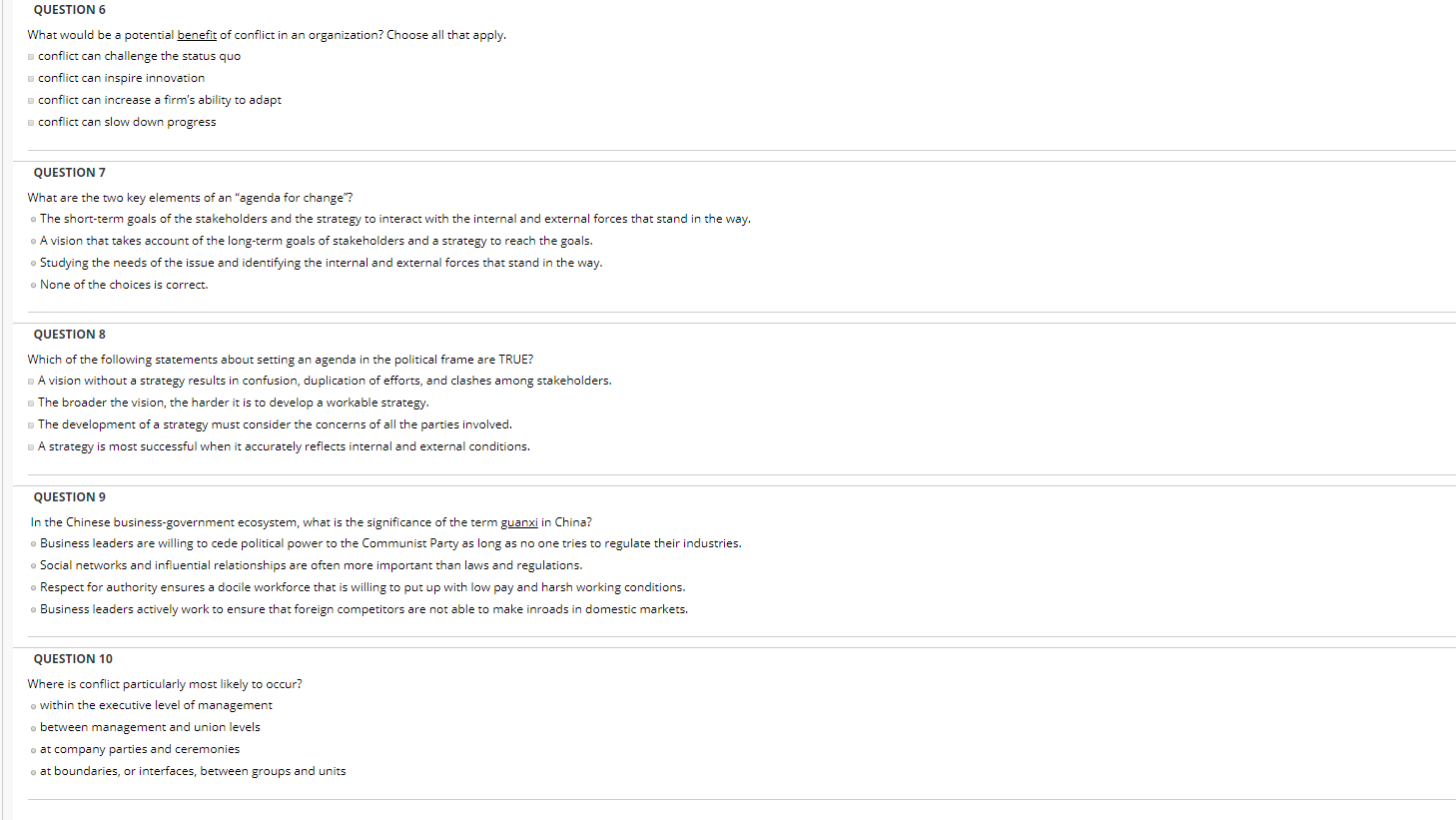
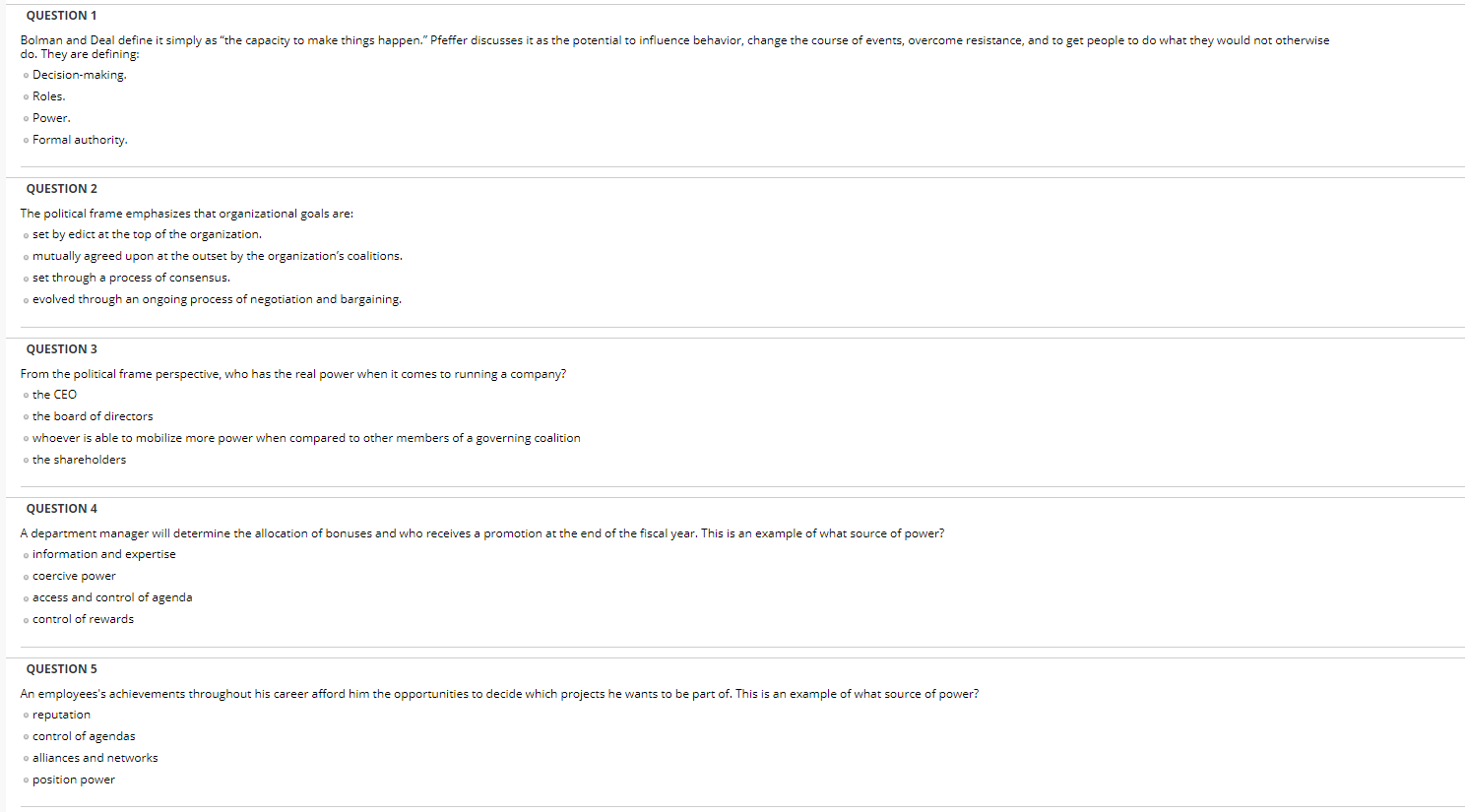
QUESTION 1 Bolman and Deal define it simply as "the capacity to make things happen." Pfeffer discusses it as the potential to influence behavior, change the course of events, overcome resistance, and to get people to do what they would not otherwise do. They are defining: . Decision-making. o Roles. . Power. . Formal authority. QUESTION 2 The political frame emphasizes that organizational goals are: . set by edict at the top of the organization. . mutually agreed upon at the outset by the organization's coalitions. . set through a process of consensus. . evolved through an ongoing process of negotiation and bargaining. QUESTION 3 From the political frame perspective, who has the real power when it comes to running a company? . the CEO o the board of directors . whoever is able to mobilize more power when compared to other members of a governing coalition o the shareholders QUESTION 4 A department manager will determine the allocation of bonuses and who receives a promotion at the end of the fiscal year. This is an example of what source of power? . information and expertise coercive power . access and control of agenda o control of rewards QUESTION 5 An employees's achievements throughout his career afford him the opportunities to decide which projects he wants to be part of. This is an example of what source of power? . reputation o control of agendas . alliances and networks . position powerQUESTION 6 What would be a potential benefit of conflict in an organization? Choose all that apply. conflict can challenge the status quo conflict can inspire innovation conflict can increase a firm's ability to adapt conflict can slow down progress QUESTION 7 What are the two key elements of an "agenda for change"? The short-term goals of the stakeholders and the strategy to interact with the internal and external forces that stand in the way. . A vision that takes account of the long-term goals of stakeholders and a strategy to reach the goals. . Studying the needs of the issue and identifying the internal and external forces that stand in the way. . None of the choices is correct. QUESTION 8 Which of the following statements about setting an agenda in the political frame are TRUE? A vision without a strategy results in confusion, duplication of efforts, and clashes among stakeholders. . The broader the vision, the harder it is to develop a workable strategy. The development of a strategy must consider the concerns of all the parties involved. A strategy is most successful when it accurately reflects internal and external conditions. QUESTION 9 In the Chinese business-government ecosystem, what is the significance of the term guanxi in China? Business leaders are willing to cede political power to the Communist Party as long as no one tries to regulate their industries. Social networks and influential relationships are often more important than laws and regulations. . Respect for authority ensures a docile workforce that is willing to put up with low pay and harsh working conditions. Business leaders actively work to ensure that foreign competitors are not able to make inroads in domestic markets. QUESTION 10 Where is conflict particularly most likely to occur? o within the executive level of management . between management and union levels . at company parties and ceremonies . at boundaries, or interfaces, between groups and units

Step by Step Solution

There are 3 Steps involved in it

1 Expert Approved Answer
Step: 1 Unlock blur-text-image

Question Has Been Solved by an Expert!

Get step-by-step solutions from verified subject matter experts

Step: 2 Unlock
Step: 3 Unlock

Students Have Also Explored These Related General Management Questions!