







Question: Answer these Reconsider the filtration rate-moisture content data introduced in Example 12.6 (see also Example 12.7). 3. Compute a 90%% CI for B, + 1258,
Answer these
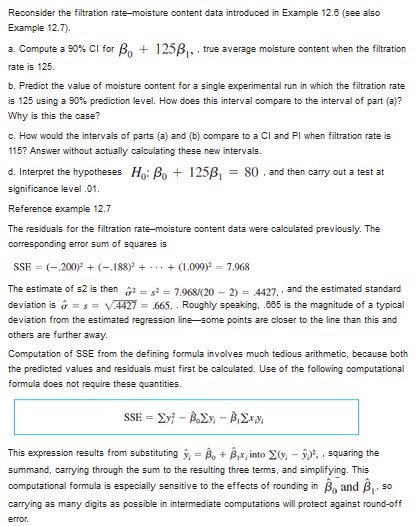
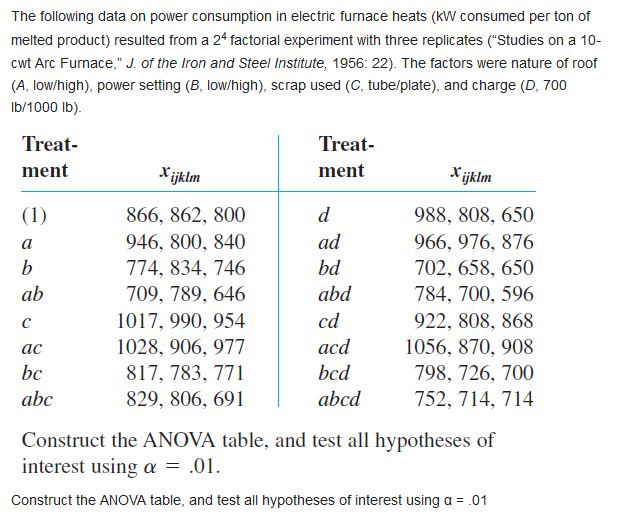

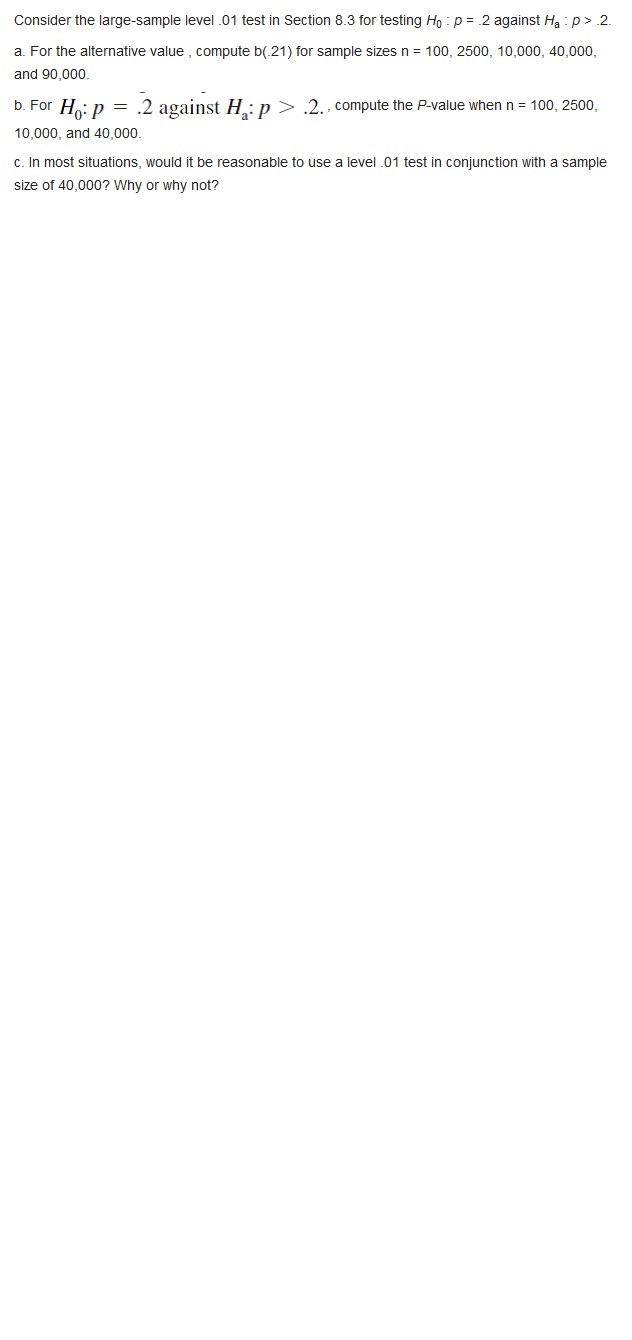
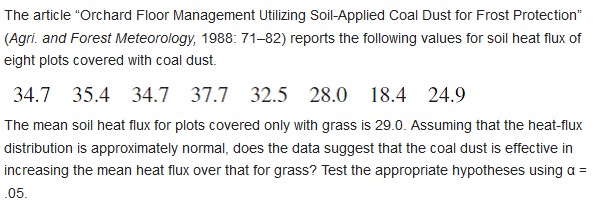
Reconsider the filtration rate-moisture content data introduced in Example 12.6 (see also Example 12.7). 3. Compute a 90%% CI for B, + 1258, . true average moisture content when the filtration rate is 125. b. Predict the value of moisture content for a single experimental run in which the filtration rate is 125 using a 90%% prediction level. How does this interval compare to the interval of part (3)? Why is this the case? c. How would the intervals of parts (s) and (b) compare to a CI and PI when filtration rate is 115? Answer without actually calculating these new intervals. d. Interpret the hypotheses /: B, + 1258, = 80 . and then carry out a test at significance level .01. Reference example 12.7 The residuals for the filtration rate-moisture content data were calculated previously. The corresponding error sum of squares is SSE = (-,200) + (-.188)+ . .. + (1.009) = 7.968 The estimate of =2 is then $1 = s = 7.968/(20 - 2) = 4427. . and the estimated standard deviation is or = > = V.4427 = 665. . Roughly speaking, .685 is the magnitude of a typical deviation from the estimated regression line-some points are closer to the line than this and others are further away. Computation of SSE from the defining formula involves much tedious arithmetic, because both the predicted values and residuals must first be calculated. Use of the following computational formula does not require these quantities. SSH = Ex - B.Ex - P,Exx This expression results from substituting }, = 8, + 8,x, into SO; - 713. . squaring the summand, carrying through the sum to the resulting three terms, and simplifying. This computational formula is especially sensitive to the effects of rounding in B, and B, . so carrying as many digits as possible in intermediate computations will protect against round-off error.\fIdentify the statistical population, sample, and variable of interest in each of the following situations: (a) To learn about starting salaries for engineers graduating from a Midwestern university, twenty graduating seniors are asked to report their starting salary. (b) Fifty computer memory chips were selected from the thousand manufactured that day. The computer memory chips were tested, and 5 were found to be defective. (c) Tensile strength was measured on 20 specimens made of a new plastic material. The intent is to learn about the tensile strengths for all specimens that could conceivably be manufactured with the new plastic material.Consider the largesample level .01 test in Section 8.3 for testing Hp : p = .2 against Ha : p > .2. a. For the arternathre value , compute M21) for sample sizes n = 100, 2500, 10,000, 40,000, and 90,000. b. For H0: P = :2 against H33)\" 3: _2_ , compute the Pvalue when n = 100, 2500, 10,000, and 40,000. c. In most situations, would it be reasonable to use a level .01 test in conjunction with a sample size of 40,000? Why or why not? The article "Orchard Floor Management Utilizing Soil-Applied Coal Dust for Frost Protection" (Agri. and Forest Meteorology, 1988: 71-82) reports the following values for soil heat flux of eight plots covered with coal dust. 34.7 35.4 34.7 37.7 32.5 28.0 18.4 24.9 The mean soil heat flux for plots covered only with grass is 29.0. Assuming that the heat-flux distribution is approximately normal, does the data suggest that the coal dust is effective in increasing the mean heat flux over that for grass? Test the appropriate hypotheses using a = 05
Step by Step Solution
There are 3 Steps involved in it

Get step-by-step solutions from verified subject matter experts
 Study Help