







Question: answer this task according to this this the porposal Task B: You have to use the same information system and business processes identified and used
answer this task according to this 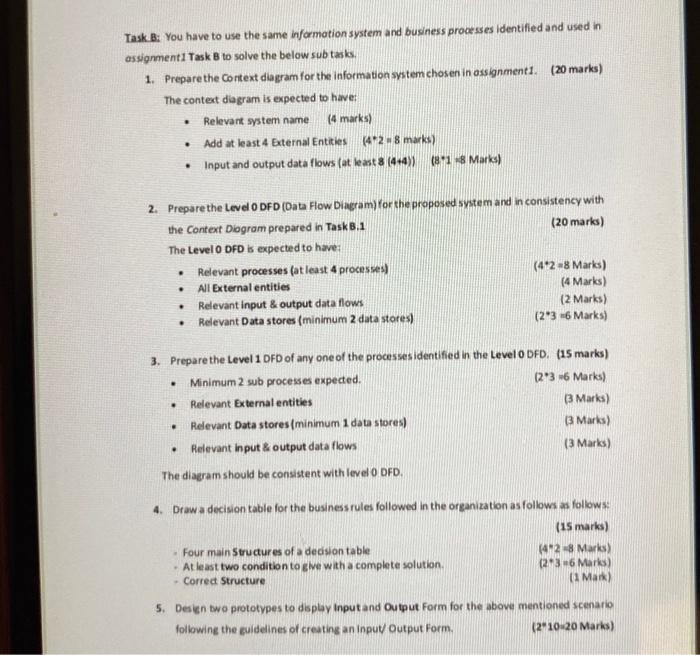
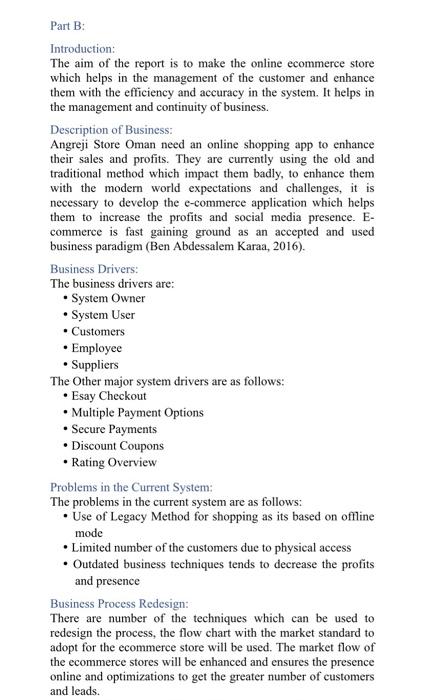
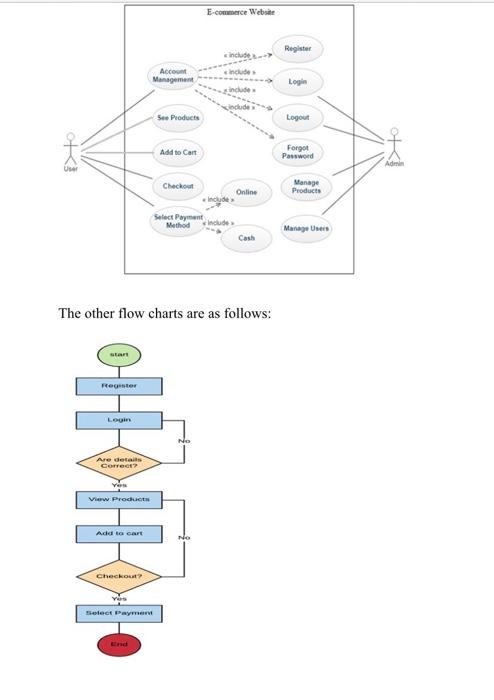
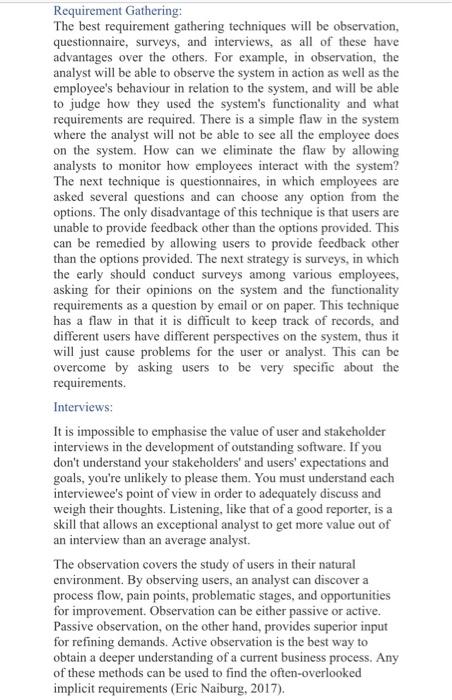
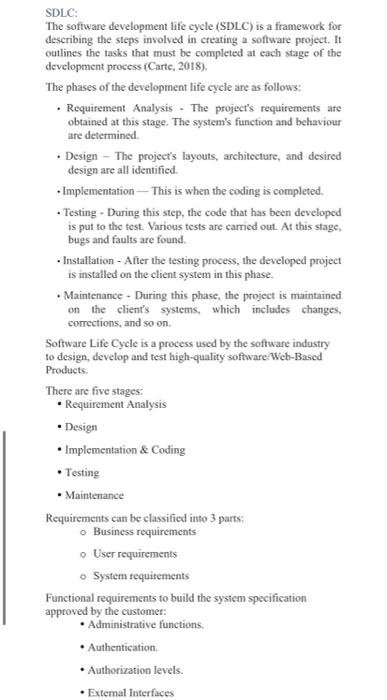
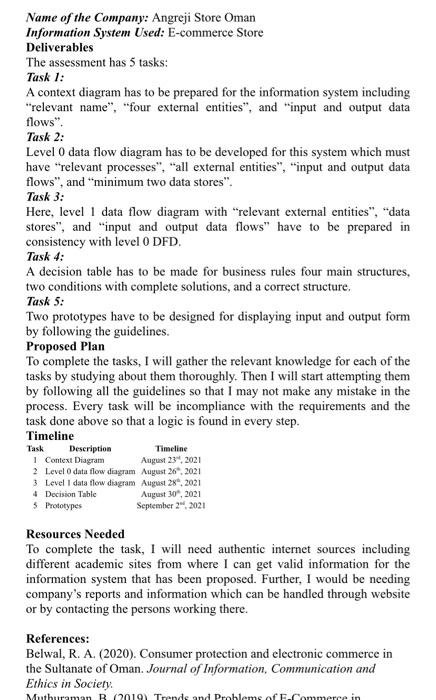
Task B: You have to use the same information system and business processes identified and used in assignment1 Task B to solve the below sub tasks. 1. Prepare the context diagram for the information system chosen in assignments. (20 marks) The context diagram is expected to haver Relevant system name (4 marks) Add at least 4 External Entities (42-8 marks) Input and output data flows (at least 8 (444)) (81-8 Marks) 2. Prepare the level O DFD (Data Flow Diagram for the proposed system and in consistency with the context Diagram prepared in TaskB.1 (20 marks) The Level 0 DFD is expected to have: Relevant processes (at least 4 processes) (42-8 Marks) All External entities (4 Marks) Relevant input & output data flows (2 Marks) Relevant Data stores (minimum 2 data stores) (2*36 Marks) . . . . 3. Prepare the Level 1 DFD of any one of the processes identified in the level o DFD. (15 marks) Minimum 2 sub processes expected. (2936 Marks) Relevant External entities (3 Marks) Relevant Data stores (minimum 1 data stores) 3 Marks) Relevant input & output data flows (3 Marks) The diagram should be consistent with level DFD. . . 4. Draw a decision table for the business rules followed in the organization as follows as follows: (15 marks) - Four main Structures of a decision table (4-2-8 Marks) At least two condition to live with a complete solution (2436 Marks) Correct Structure 1 Maik) 5. Desen two prototypes to display input and Output Form for the above mentioned scenario following the guidelines of creating an input output Form. (2-10-20 Marks) Part B: Introduction: The aim of the report is to make the online ecommerce store which helps in the management of the customer and enhance them with the efficiency and accuracy in the system. It helps in the management and continuity of business. Description of Business: Angreji Store Oman need an online shopping app to enhance their sales and profits. They are currently using the old and traditional method which impact them badly, to enhance them with the modern world expectations and challenges, it is necessary to develop the e-commerce application which helps them to increase the profits and social media presence. E- commerce is fast gaining ground as an accepted and used business paradigm (Ben Abdessalem Karaa, 2016). Business Drivers: The business drivers are: System Owner System User Customers Employee Suppliers The Other major system drivers are as follows: Esay Checkout Multiple Payment Options Secure Payments Discount Coupons Rating Overview Problems in the Current System: The problems in the current system are as follows: Use of Legacy Method for shopping as its based on offline mode Limited number of the customers due to physical access Outdated business techniques tends to decrease the profits and presence Business Process Redesign: There are number of the techniques which can be used to redesign the process, the flow chart with the market standard to adopt for the ecommerce store will be used. The market flow of the ecommerce stores will be enhanced and ensures the presence online and optimizations to get the greater number of customers and leads. E-commerce Website Register include Account Management Login include See Products Logout Add to cart Forgot Password Admin User Checkout Manage Products Online Include Select Payment Method Indude Manage Users Cash The other flow charts are as follows: stan Register Login No Are details Correct? HOITOLO ve View Product Add to cart No Checkout Select Paymen Requirement Gathering: The best requirement gathering techniques will be observation, questionnaire, surveys, and interviews, as all of these have advantages over the others. For example, in observation, the analyst will be able to observe the system in action as well as the employee's behaviour in relation to the system, and will be able to judge how they used the system's functionality and what requirements are required. There is a simple flaw in the system where the analyst will not be able to see all the employee does on the system. How can we eliminate the flaw by allowing analysts to monitor how employees interact with the system? The next technique is questionnaires, in which employees are asked several questions and can choose any option from the options. The only disadvantage of this technique is that users are unable to provide feedback other than the options provided. This can be remedied by allowing users to provide feedback other than the options provided. The next strategy is surveys, in which the early should conduct surveys among various employees, asking for their opinions on the system and the functionality requirements as a question by email or on paper. This technique has a flaw in that it is difficult to keep track of records, and different users have different perspectives on the system, thus it will just cause problems for the user or analyst. This can be overcome by asking users to be very specific about the requirements. Interviews: It is impossible to emphasise the value of user and stakeholder interviews in the development of outstanding software. If you don't understand your stakeholders' and users' expectations and goals, you're unlikely to please them. You must understand each interviewee's point of view in order to adequately discuss and weigh their thoughts. Listening, like that of a good reporter, is a skill that allows an exceptional analyst to get more value out of an interview than an average analyst. The observation covers the study of users in their natural environment. By observing users, an analyst can discover a process flow, pain points, problematic stages, and opportunities for improvement. Observation can be either passive or active. Passive observation, on the other hand, provides superior input for refining demands. Active observation is the best way to obtain a deeper understanding of a current business process. Any of these methods can be used to find the often-overlooked implicit requirements (Eric Naiburg, 2017). SDLC: The software development life cycle (SDLC) is a framework for describing the steps involved in creating a software project. It outlines the tasks that must be completed at each stage of the development process (Carte, 2018) The phases of the development life cycle are as follows: Requirement Analysis - The project's requirements are obtained at this stage. The system's function and behaviour are determined Design - The project's layouts, architecture, and desired design are all identified. Implementation - This is when the coding is completed. Testing - During this step, the code that has been developed is put to the test. Various tests are carried out. At this stage, bugs and faults are found. Installation - After the testing process, the developed project is installed on the client system in this phase. Maintenance - During this phase, the project is maintained on the client's systems, which includes changes, corrections, and so on. Software Life Cycle is a process used by the software industry to design, develop and test high-quality software/Wcb-Based Products There are five stages: Requirement Analysis Design Implementation & Coding Testing Maintenance Requirements can be classified into 3 parts: o Business requirements o User requirements System requirements Functional requirements to build the system specification approved by the customer: Administrative functions. Authentication Authorization levels. ExternalInterfaces Name of the Company: Angreji Store Oman Information System Used: E-commerce Store Deliverables The assessment has 5 tasks: Task 1: A context diagram has to be prepared for the information system including "relevant name", "four external entities", and "input and output data flows". Task 2: Level O data flow diagram has to be developed for this system which must have "relevant processes", "all external entities", "input and output data flows", and "minimum two data stores". Task 3: Here, level 1 data flow diagram with "relevant external entities", "data stores", and "input and output data flows" have to be prepared in consistency with level 0 DFD. Task 4: A decision table has to be made for business rules four main structures, two conditions with complete solutions, and a correct structure. Task 5: Two prototypes have to be designed for displaying input and output form by following the guidelines. Proposed Plan To complete the tasks, I will gather the relevant knowledge for each of the tasks by studying about them thoroughly. Then I will start attempting them by following all the guidelines so that I may not make any mistake in the process. Every task will be incompliance with the requirements and the task done above so that a logic is found in every step. Timeline Description Timeline 1 Context Diagram August 23, 2021 2 Level Odata flow diagram August 26, 2021 3 Level I data flow diagram August 28, 2021 August 30, 2021 5 Prototypes September 2 2021 Task 4 Decision Table Resources Needed To complete the task, I will need authentic internet sources including different academic sites from where I can get valid information for the information system that has been proposed. Further, I would be needing company's reports and information which can be handled through website or by contacting the persons working there. References: Belwal, R. A. (2020). Consumer protection and electronic commerce in the Sultanate of Oman. Journal of Information, Communication and Ethics in Society Muthuraman B (2010) Trends and Problems of Ecommerce in Task B: You have to use the same information system and business processes identified and used in assignment1 Task B to solve the below sub tasks. 1. Prepare the context diagram for the information system chosen in assignments. (20 marks) The context diagram is expected to haver Relevant system name (4 marks) Add at least 4 External Entities (42-8 marks) Input and output data flows (at least 8 (444)) (81-8 Marks) 2. Prepare the level O DFD (Data Flow Diagram for the proposed system and in consistency with the context Diagram prepared in TaskB.1 (20 marks) The Level 0 DFD is expected to have: Relevant processes (at least 4 processes) (42-8 Marks) All External entities (4 Marks) Relevant input & output data flows (2 Marks) Relevant Data stores (minimum 2 data stores) (2*36 Marks) . . . . 3. Prepare the Level 1 DFD of any one of the processes identified in the level o DFD. (15 marks) Minimum 2 sub processes expected. (2936 Marks) Relevant External entities (3 Marks) Relevant Data stores (minimum 1 data stores) 3 Marks) Relevant input & output data flows (3 Marks) The diagram should be consistent with level DFD. . . 4. Draw a decision table for the business rules followed in the organization as follows as follows: (15 marks) - Four main Structures of a decision table (4-2-8 Marks) At least two condition to live with a complete solution (2436 Marks) Correct Structure 1 Maik) 5. Desen two prototypes to display input and Output Form for the above mentioned scenario following the guidelines of creating an input output Form. (2-10-20 Marks) Part B: Introduction: The aim of the report is to make the online ecommerce store which helps in the management of the customer and enhance them with the efficiency and accuracy in the system. It helps in the management and continuity of business. Description of Business: Angreji Store Oman need an online shopping app to enhance their sales and profits. They are currently using the old and traditional method which impact them badly, to enhance them with the modern world expectations and challenges, it is necessary to develop the e-commerce application which helps them to increase the profits and social media presence. E- commerce is fast gaining ground as an accepted and used business paradigm (Ben Abdessalem Karaa, 2016). Business Drivers: The business drivers are: System Owner System User Customers Employee Suppliers The Other major system drivers are as follows: Esay Checkout Multiple Payment Options Secure Payments Discount Coupons Rating Overview Problems in the Current System: The problems in the current system are as follows: Use of Legacy Method for shopping as its based on offline mode Limited number of the customers due to physical access Outdated business techniques tends to decrease the profits and presence Business Process Redesign: There are number of the techniques which can be used to redesign the process, the flow chart with the market standard to adopt for the ecommerce store will be used. The market flow of the ecommerce stores will be enhanced and ensures the presence online and optimizations to get the greater number of customers and leads. E-commerce Website Register include Account Management Login include See Products Logout Add to cart Forgot Password Admin User Checkout Manage Products Online Include Select Payment Method Indude Manage Users Cash The other flow charts are as follows: stan Register Login No Are details Correct? HOITOLO ve View Product Add to cart No Checkout Select Paymen Requirement Gathering: The best requirement gathering techniques will be observation, questionnaire, surveys, and interviews, as all of these have advantages over the others. For example, in observation, the analyst will be able to observe the system in action as well as the employee's behaviour in relation to the system, and will be able to judge how they used the system's functionality and what requirements are required. There is a simple flaw in the system where the analyst will not be able to see all the employee does on the system. How can we eliminate the flaw by allowing analysts to monitor how employees interact with the system? The next technique is questionnaires, in which employees are asked several questions and can choose any option from the options. The only disadvantage of this technique is that users are unable to provide feedback other than the options provided. This can be remedied by allowing users to provide feedback other than the options provided. The next strategy is surveys, in which the early should conduct surveys among various employees, asking for their opinions on the system and the functionality requirements as a question by email or on paper. This technique has a flaw in that it is difficult to keep track of records, and different users have different perspectives on the system, thus it will just cause problems for the user or analyst. This can be overcome by asking users to be very specific about the requirements. Interviews: It is impossible to emphasise the value of user and stakeholder interviews in the development of outstanding software. If you don't understand your stakeholders' and users' expectations and goals, you're unlikely to please them. You must understand each interviewee's point of view in order to adequately discuss and weigh their thoughts. Listening, like that of a good reporter, is a skill that allows an exceptional analyst to get more value out of an interview than an average analyst. The observation covers the study of users in their natural environment. By observing users, an analyst can discover a process flow, pain points, problematic stages, and opportunities for improvement. Observation can be either passive or active. Passive observation, on the other hand, provides superior input for refining demands. Active observation is the best way to obtain a deeper understanding of a current business process. Any of these methods can be used to find the often-overlooked implicit requirements (Eric Naiburg, 2017). SDLC: The software development life cycle (SDLC) is a framework for describing the steps involved in creating a software project. It outlines the tasks that must be completed at each stage of the development process (Carte, 2018) The phases of the development life cycle are as follows: Requirement Analysis - The project's requirements are obtained at this stage. The system's function and behaviour are determined Design - The project's layouts, architecture, and desired design are all identified. Implementation - This is when the coding is completed. Testing - During this step, the code that has been developed is put to the test. Various tests are carried out. At this stage, bugs and faults are found. Installation - After the testing process, the developed project is installed on the client system in this phase. Maintenance - During this phase, the project is maintained on the client's systems, which includes changes, corrections, and so on. Software Life Cycle is a process used by the software industry to design, develop and test high-quality software/Wcb-Based Products There are five stages: Requirement Analysis Design Implementation & Coding Testing Maintenance Requirements can be classified into 3 parts: o Business requirements o User requirements System requirements Functional requirements to build the system specification approved by the customer: Administrative functions. Authentication Authorization levels. ExternalInterfaces Name of the Company: Angreji Store Oman Information System Used: E-commerce Store Deliverables The assessment has 5 tasks: Task 1: A context diagram has to be prepared for the information system including "relevant name", "four external entities", and "input and output data flows". Task 2: Level O data flow diagram has to be developed for this system which must have "relevant processes", "all external entities", "input and output data flows", and "minimum two data stores". Task 3: Here, level 1 data flow diagram with "relevant external entities", "data stores", and "input and output data flows" have to be prepared in consistency with level 0 DFD. Task 4: A decision table has to be made for business rules four main structures, two conditions with complete solutions, and a correct structure. Task 5: Two prototypes have to be designed for displaying input and output form by following the guidelines. Proposed Plan To complete the tasks, I will gather the relevant knowledge for each of the tasks by studying about them thoroughly. Then I will start attempting them by following all the guidelines so that I may not make any mistake in the process. Every task will be incompliance with the requirements and the task done above so that a logic is found in every step. Timeline Description Timeline 1 Context Diagram August 23, 2021 2 Level Odata flow diagram August 26, 2021 3 Level I data flow diagram August 28, 2021 August 30, 2021 5 Prototypes September 2 2021 Task 4 Decision Table Resources Needed To complete the task, I will need authentic internet sources including different academic sites from where I can get valid information for the information system that has been proposed. Further, I would be needing company's reports and information which can be handled through website or by contacting the persons working there. References: Belwal, R. A. (2020). Consumer protection and electronic commerce in the Sultanate of Oman. Journal of Information, Communication and Ethics in Society Muthuraman B (2010) Trends and Problems of Ecommerce in this the porposal
Step by Step Solution
There are 3 Steps involved in it
1 Expert Approved Answer
Step: 1 Unlock

Question Has Been Solved by an Expert!
Get step-by-step solutions from verified subject matter experts
Step: 2 Unlock
Step: 3 Unlock
 Study Help