







Question: Any quote from: Write a 1 paragraph reflection from the chapter in which you Text: Write a quote from the chapter Interpret: What does that
Any quote from:
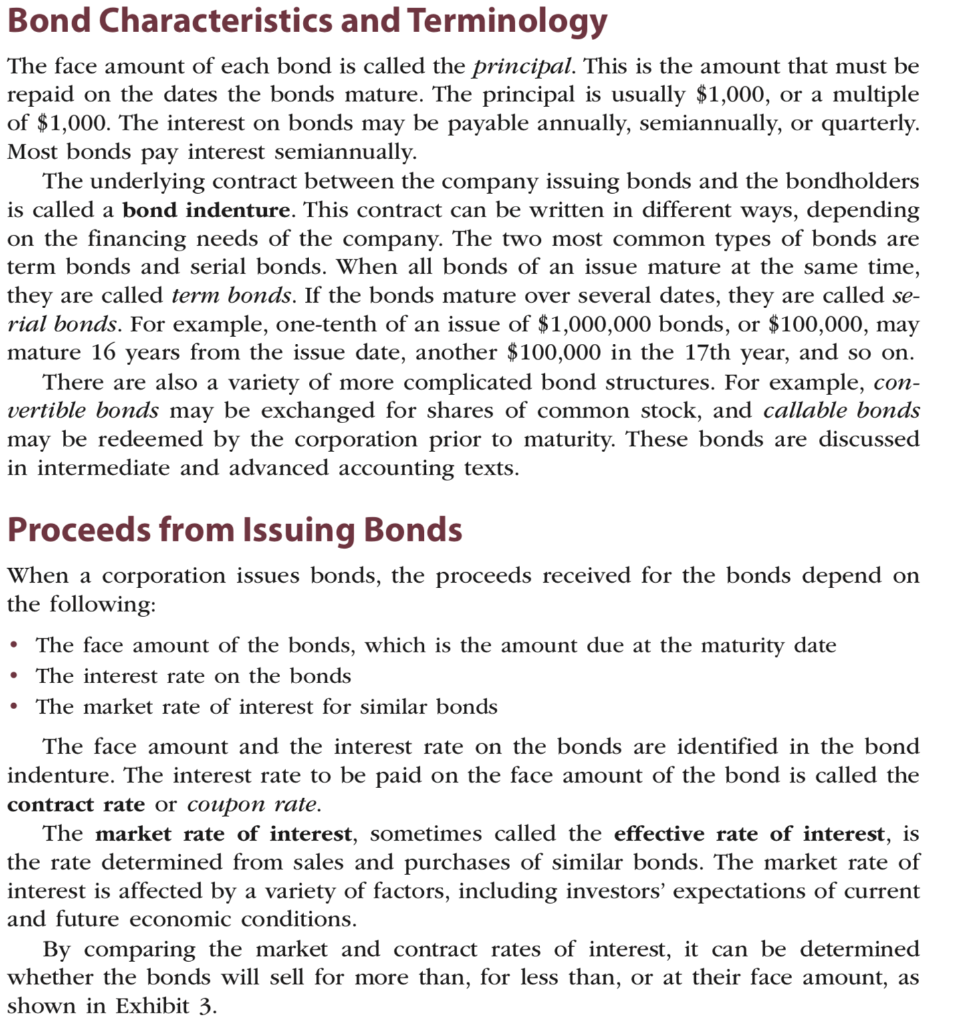
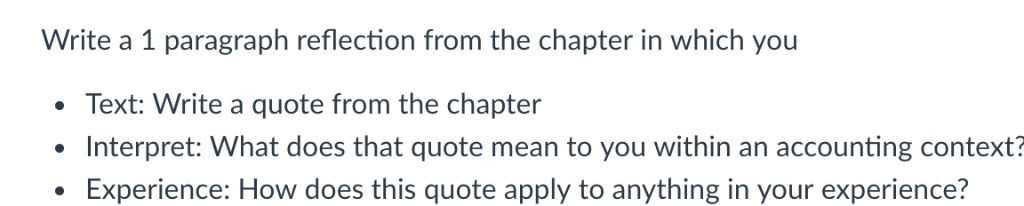
Write a 1 paragraph reflection from the chapter in which you Text: Write a quote from the chapter Interpret: What does that quote mean to you within an accounting context? Experience: How does this quote apply to anything in your experience? Bond Characteristics and Terminology The face amount of each bond is called the principal. This is the amount that must be repaid on the dates the bonds mature. The principal is usually $1,000, or a multiple of $1,000. The interest on bonds may be payable annually, semiannually, or quarterly. Most bonds pay interest semiannually The underlying contract between the company issuing bonds and the bondholders is called a bond indenture. This contract can be written in different ways, depending on the financing needs of the company. The two most common types of bonds are term bonds and serial bonds. When all bonds of an issue mature at the same time, they are called term bonds. If the bonds mature over several dates, they are called se- rial bonds. For example, one-tenth of an issue of $1,000,000 bonds, or $100,000, may mature 16 years from the issue date, another $100,000 in the 17th year, and so on. There are also a variety of more complicated bond structures. For example, con- vertible bonds may be exchanged for shares of common stock, and callable bonds may be redeemed by the corporation prior to maturity. These bonds are discussed in intermediate and advanced accounting texts. Proceeds from Issuing Bonds When a corporation issues bonds, the proceeds received for the bonds depend on the following The face amount of the bonds, which is the amount due at the maturity date .The interest rate on the bonds .The market rate of interest for similar bonds The face amount and the interest rate on the bonds are identified in the bond indenture. The interest rate to be paid on the face amount of the bond is called the contract rate or coubon rate. The market rate of interest, sometimes called the effective rate of interest, is the rate determined from sales and purchases of similar bonds. The market rate of interest is affected by a variety of factors, including investors' expectations of current and future economic conditions By comparing the market and contract rates of interest, it can be determined whether the bonds will sell for more than, for less than, or at their face amount, as shown in Exhibit 3
Step by Step Solution
There are 3 Steps involved in it

Get step-by-step solutions from verified subject matter experts
 Study Help