



Question: Application Problem 2 -Standard Cost Variance Analysis (cont.) Test Data: Motor Division of Acro Company produces a single heavy-duty motorcycle component. Original engineering estimates and
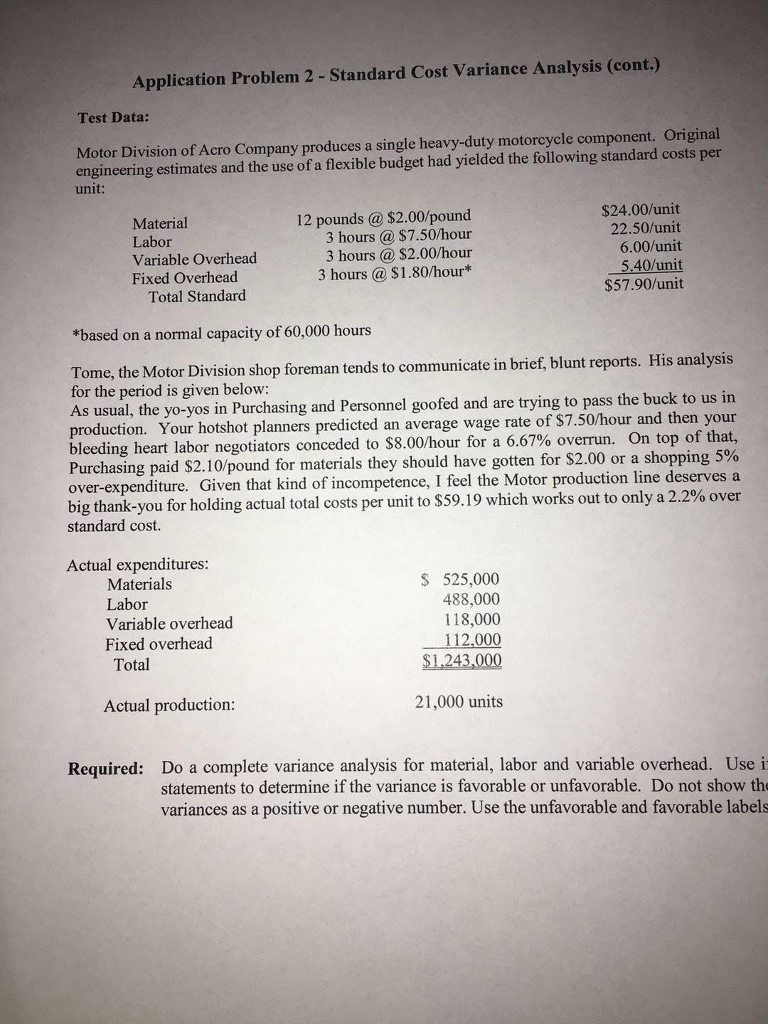
Application Problem 2 -Standard Cost Variance Analysis (cont.) Test Data: Motor Division of Acro Company produces a single heavy-duty motorcycle component. Original engineering estimates and the use of a flexible budget had yielded the following standard costs per unit: Material Labor Variable Overhead Fixed Overhead 12 pounds @ $2.00/pound 3 hours @ $7.50/hour 3 hours @ $2.00/hour 3 hours @ S1.80/hour* $24.00/unit 22.50/unit 6.00/unit 5.40/unit $57.90/unit Total Standard *based on a normal capacity of 60,000 hours reports. His analysis Tome, the Motor Division shop foreman tends to communicate in brief,blunt for the period is given below: As usual, the yo-yos in Purchasing and Personnel goofed and are trying to pass the buck to us in production. Your hotshot planners predicted an average wage rate of $7.50/hour and then your bleeding heart labor negotiators conceded to $8.00 hour for a 6.67% overrun. On top of that, Purchasing paid $2.10 pound for materials they should have gotten for $2.00 or a shopping 5% over-expenditure. Given that kind of incompetence, I feel the Motor production line deserves a big thank-you for holding actual total costs per unit to $59.19 which works out to only a 2.2% over standard cost. Actual expenditures: Materials Labor Variable overhead Fixed overhead Total 525,000 488,000 118,000 112.000 $1,243,000 Actual production: 21,000 units Do a complete variance analysis for material, labor and variable overhead. Use i statements to determine if the variance is favorable or unfavorable. Do not show the Required: variances as a positive or negative number. Use the unfavorable and favorable labels
Step by Step Solution
There are 3 Steps involved in it

Get step-by-step solutions from verified subject matter experts