



Question: APPROACH A: Additional Information It is discovered from the housing authority that it is extremely unlikely that the monthly rental of 3% room lower income
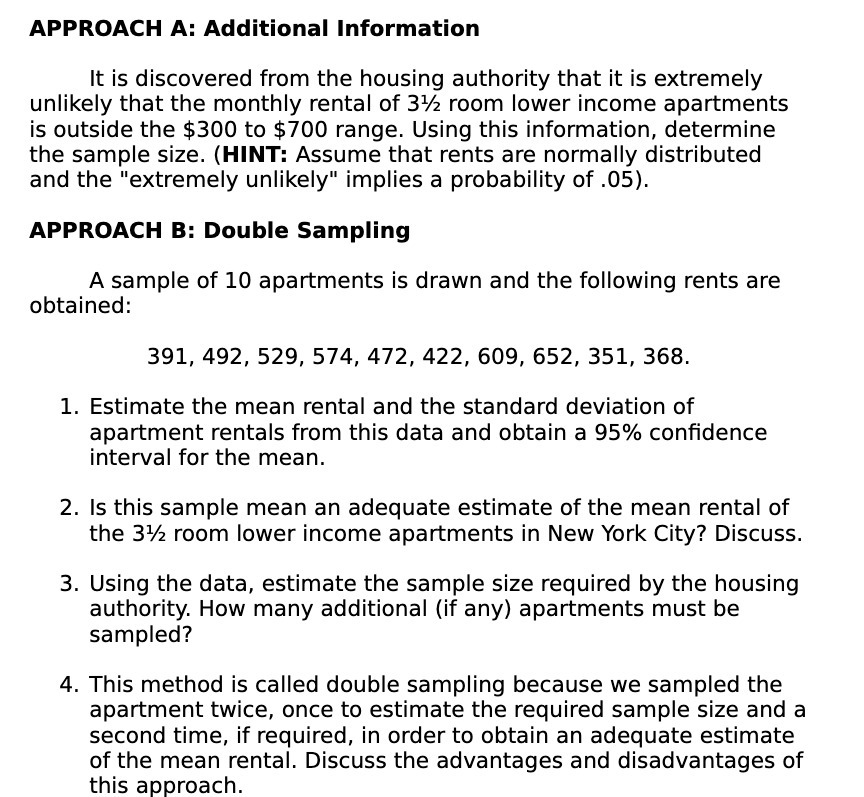
APPROACH A: Additional Information It is discovered from the housing authority that it is extremely unlikely that the monthly rental of 3% room lower income apartments is outside the $300 to $700 range. Using this information, determine the sample size. (HINT: Assume that rents are normally distributed and the "extremely unlikely" implies a probability of .05). APPROACH B: Double Sampling A sample of 10 apartments is drawn and the following rents are obtained: 391, 492, 529, 574, 472, 422, 609, 652, 351, 363. 1. Estimate the mean rental and the standard deviation of apartment rentals from this data and obtain a 95% condence interval for the mean. 2. Is this sample mean an adequate estimate of the mean rental of the 31/2 room lower income apartments in New York City? Discuss. 3. Using the data, estimate the sample size required by the housing authority. How many additional {if any) apartments must be sampled? 4. This method is called double sampling because we sampled the apartment twice, once to estimate the required sample size and a second time, if required, in order to obtain an adequate estimate of the mean rental. Discuss the advantages and disadvantages of this approach
Step by Step Solution
There are 3 Steps involved in it

Get step-by-step solutions from verified subject matter experts