



Question: Are there ways that Ben & Jerrys could have simultaneously pursued their social causes and still maximized shareholder wealth? As Henry Morgan's plane passed over
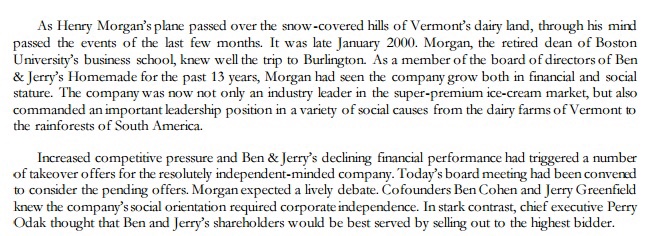
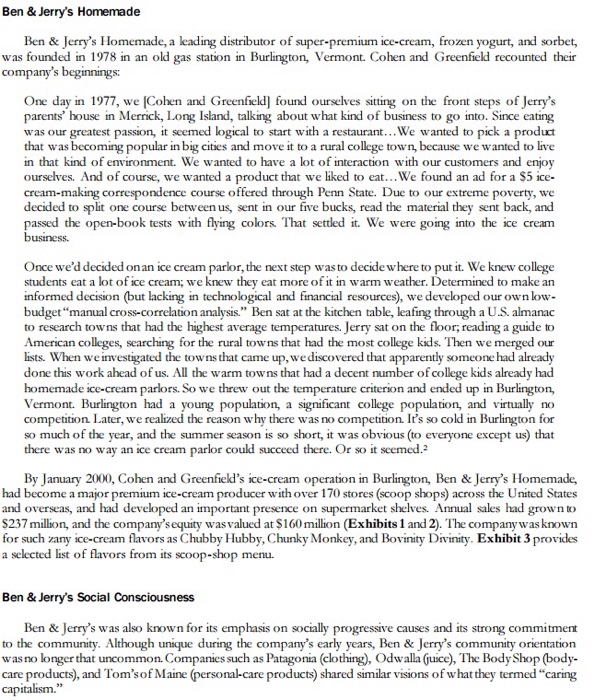
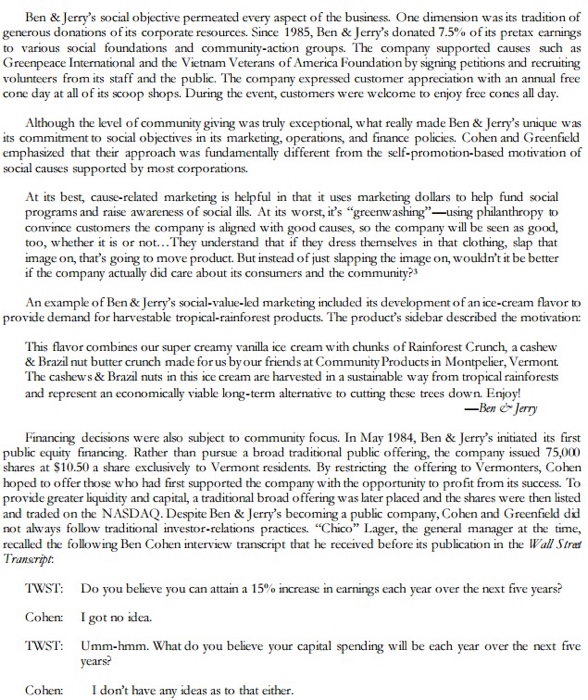
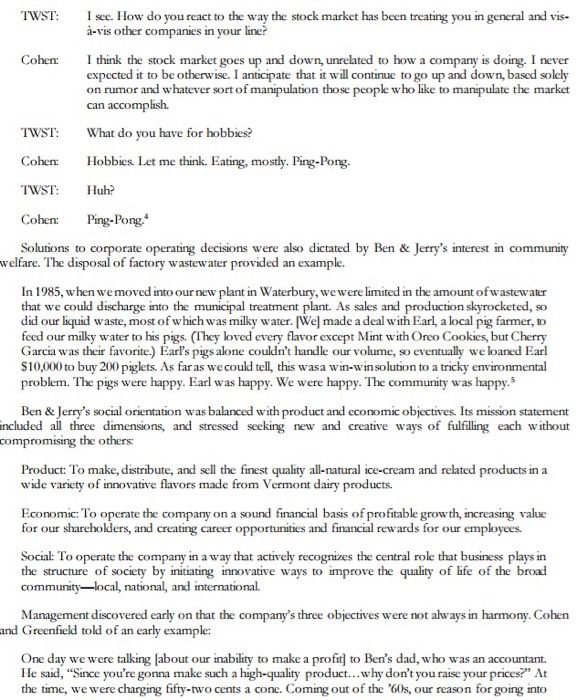
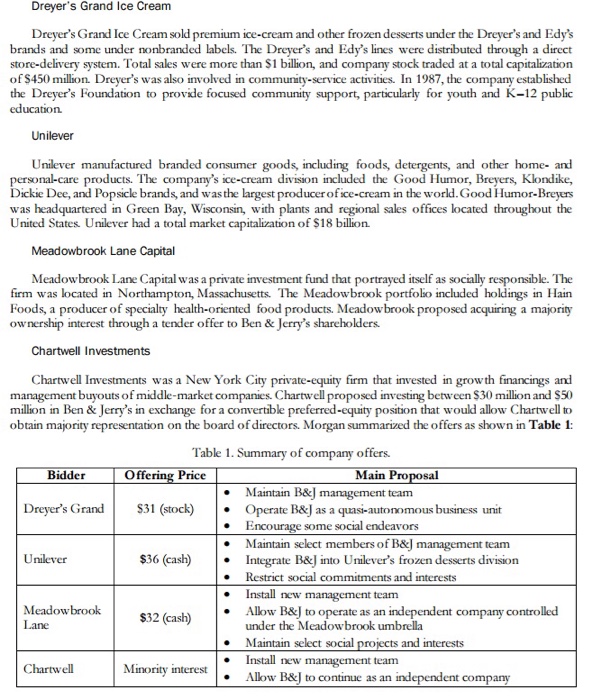
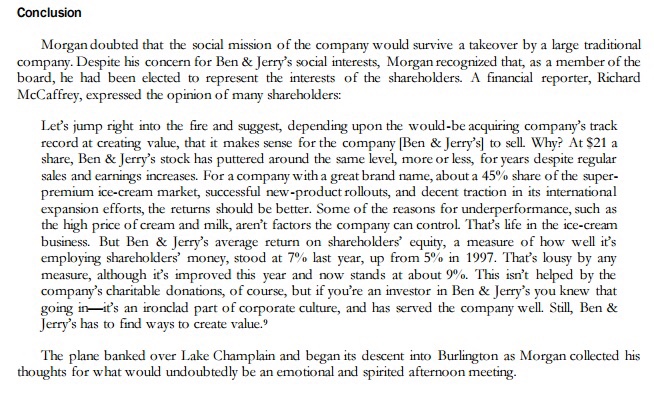
As Henry Morgan's plane passed over the snow-covered hills of Vermont's dairy land, through his mind passed the events of the last few months. It was late January 2000. Morgan, the retired dean of Boston University's business school, knew well the trip to Burlington. As a member of the board of directors of Bern & Jerry's Homemade for the past 13 years, Morgan had seen the company grow both in financial and social stature. The company was now not only an industry leader in the super-premium ice-cream market, but also commanded an important leadership position in a variety of social causes from the dairy farms of Vermont to the rainforests of South America. Increased competitive pressure and Ben & Jerry's declining financial performance had triggered a number of takeover offers for the resolutely independent-minded company. Today's board meeting had been convened to consider the pending offers. Morgan expected a lively debate. Cofounders Ben Cohen and Jerry Greenfield knew the company's social orientation required corporate independence. In stark contrast, chief executive Perry Odak thought that Ben and Jerry's shareholders would be best served by selling out to the highest bidder
Step by Step Solution
There are 3 Steps involved in it

Get step-by-step solutions from verified subject matter experts