







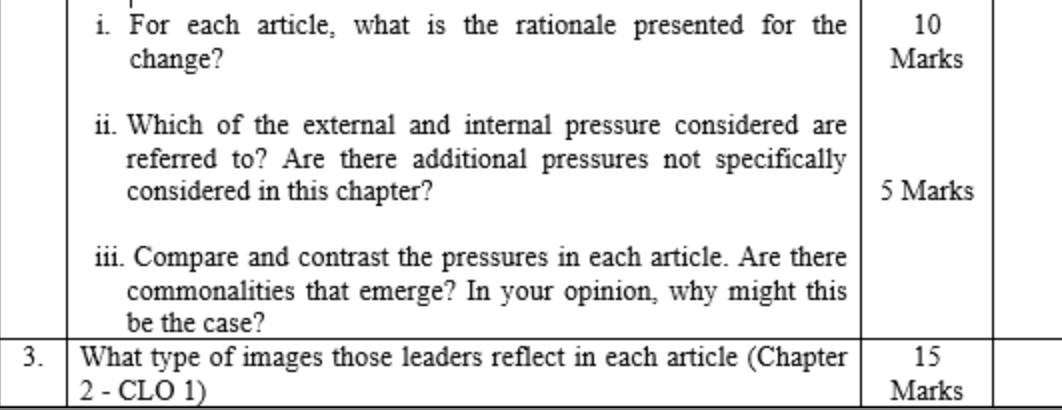
Question: Article 1 Recent development in law concerning real estate developers in Malaysia With the reopening of international borders and MySejahtera check-ins no longer required to
Article 1
Recent development in law concerning real estate developers in Malaysia
With the reopening of international borders and MySejahtera check-ins no longer required to enter premises effective from the second quarter of 2022, which are in line with the Malaysian government's plan of transition from the pandemic to endemic phase, the economy along with the real estate sector is expected to progressively return to normal. In uncertain times, there is one certainty: Real estate developers must quickly adapt to market changes, including legal development, in order to stay nimble. This article gathers and summarises the latest regulatory rulings of the first half of 2022, and shall help keep real estate developers updated on the most recent changes in the legal landscape that are now affecting their businesses.
(a)Introduction of the Housing Integrated Management System (HIMS) and eSPA by the National Housing Department (Jabatan Perumahan Negara, JPN) of the Ministry of Housing and Local Government (Kementerian Perumahan dan Kerajaan Tempatan, KPKT)
What is HIMS all about? HIMS is a single-entry system developed by KPKT to replace BLESS, IDAMAN, and e-Pemaju. It is a one-stop platform for them to regulate, manage, engage, receive, and gather data. There are no variations of the Housing Development (Control And Licensing) Act 1966 or the Housing Development (Control and Licensing) Regulations 1989 (Regulations) that are brought on by HIMS.
What does eSPA mean? The use of the alphabet "e" is a misnomer. The Scheduled Sale and Purchase (SPA) is not in electronic form. Rather, all Schedules G, H, I and J of the Regulations (Scheduled SPAs) now need to be generated using the HIMS platform. There are no amendments or variations of the current form and structure of the Scheduled SPAs. HIMS does not extend to the preparation of Form 14A.
HIMS allows draft SPAs to be generated for verification before the final version is printed. The physical copy will then be handled according to its existing procedure i.e. the copy must be physically signed by the purchaser and stamped. Any errors or typos can be amended within the eSPA module of HIMS. After stamping of the SPA, the stamped copy must be uploaded to HIMS for data collection by KPKT and subsequent management between KPKT and the developer-purchaser (if any). The final uploaded stamped copy of the SPA can be cancelled and the parcel/lot will be then available for a fresh SPA to be generated for a new purchaser subject to the conditions fixed by JPN. This will prevent double sale of the same parcel/unit.
What to expect now? KPKT has advised that HIMS is a work-in-progress intended for new projects. All existing projects will maintain its status quo, which is manual preparation of the SPA by the developer or its appointed solicitors. The only effect of HIMS is that now the Scheduled SPAs can only be generated via the HIMS platform. HIMS does not change the legal landscape of the developers and solicitors.
(b)Significance of Bludream City Development Sdn Bhd v Kong Thye & 184 Ors and other appeals [2022] MLJU 74 (Bludream City Case)
Powers to grant an extension of time (EOT). The Bludream City Case has clarified that the KPKT Minister must not delegate his powers under the HDA to grant an EOT for the completion of a housing development to the Controller, but shall personally exercise such powers to waive/modify a contract of sale himself.
Not obliged to provide the purchasers' the right to be heard before EOT is granted. Such right to be heard is not expressly stated in the statute or regulation. What is required of the KPKT Minister is to act honestly and by honest means: to act justly in the context of natural justice in administrative law.
Can KPKT Minister's decision to grant EOT be challenged? It is well settled law that a decision made by a Minister or by a public body can always be reviewed by an application of judicial review when such decision does not comport with the principles of fairness, reasonableness, proportionality and basically human decency.
(c) The Concept of Environmental, Social and Governance (ESG) in Real Estate Industry
The ESG concept first made headway in a report prepared by the United Nation's Environment Programme Finance Initiative (UNEP FI), which recognises the severe environmental and social impact due to the reluctance of markets to embrace sustainability, promulgated the urgent need to account for and integrate ESG governance into market, investment and board room considerations for long-term value creation.
What is ESG for Malaysia? While ESG is more prevalent in Europe and in the US, and that it is more nascent here in Malaysia, the interest level has been increasing. More real estate developers like SP Setia Bhd, Mah Sing Bhd and UEM Sunrise Bhd have been taking cognisance of the importance of ESG especially after the Covid-19 pandemic. Various stakeholders are also starting to realise that businesses are more than just making money.
What is ESG for real estate? It is a broad acronym which encompasses a variety of factors which can largely be interpreted as follows:
Environmental: This limb incorporates (amongst others) climate change, natural resources, pollution, recycling and waste. In real estate terms, this primarily focuses on the energy efficiency and emissions of buildings which are increasingly determined and assessed against "green" rating system.
Social: This limb incorporates human capital and social opportunities. In real estate terms, this focuses on a project's impact on society, for example, the health and wellbeing of property owners, investors and the local community.
Governance: Governance includes factors that are difficult to quantify such as diversity, culture, and reputation and which are applicable not just to the property owners but also to the tenants, management companies and other on-site staff(s). - Story courtesy of Henry Butcher Malaysia
Article 2
Innovation Agenda to reset Malaysia
Certain quarters are calling on Prime Minister Datuk Seri Anwar Ibrahim to "stop behaving like the opposition leader". These calls are likely triggered by his probing into the alleged squandering of billions of funds by the previous government.
For example, former aides of a past prime minister had criticised Home Minister Datuk Seri Saifuddin Nasution Ismail for saying he would discuss the allegations with the inspector-general of the police.
Other allegations have surfaced, such as a party's questionable sources of funding for the recent general election, and directly awarded flood mitigation projects worth RM7 billion.
If these allegations hold water, the people involved would likely act like the Malay simile "seperti cacing kepanasan" (writhing like worms experiencing heat). It makes them anxious and uncomfortable.
It is a given that such inquiries may leave some quarters feeling the heat. In any case, people are innocent until proven guilty.
So, why the fuss? Firstly, we are not talking about petty crimes. These are serious allegations that involve staggering amounts of money and high-profile people. Secondly, it is wrong to state that Anwar has not been behaving like a "true" prime minister, whatever that means.
If his order of business is setting high standards, sharing the economic burden with the people, looking into cost of living issues while tackling potential mega corruption cases and scandals and balancing tricky cabinet dynamics to ensure stability don't meet their definition of a true prime minister, then I don't know what is.
Anwar set a high bar when he chose not to take a salary despite taking two roles and got ministers to agree to a 20 per cent salary reduction as a sign of sharing the economic burden with the people.
Additionally, within a short time, we see efforts to reduce the prices of eggs and ensure sustainable supply. On top of this, given how gambling has serious impacts on society, Anwar has reduced special lottery draws to just eight per year from 22 under Perikatan Nasional rule.
Investigating potential misappropriation of funds, corruption and scandals are all well within Anwar's role as prime minister and finance minister. If anything, this is a role for all lawmakers.
Moving forward, Anwar's administration should look into the "Innovation Agenda" (IA) aimed at social, institutional and economic challenges that demand immediate attention.
The focus of IA should be:
UNITY AND TOLERANCE:
Forging a common identity to serve the interest of society;
TRANSPARENCY AND GOOD GOVERNANCE: Anwar's Reformasi agenda means implementing institutional reforms towards an impact-oriented use of government resources with quantifiable outcomes and results;
CURBING COSTS: Cutting down intemediaries between producers and consumers and breaking up monopolies should be the administration's top priority. In particular, bloated supply chains with restricted approved permits, such as rice, sugar and other agricultural items;
FOOD SECURITY: The government and agricultural government-linked companies must take the lead in investing in and promoting the use of innovative technologies and sustainable practices in farming, fishing and livestock rearing;
DIGITAL TRANSFORMATION: Complementing local start-ups with internationally protected intellectual property and knowledge transfer from the best sources so that it finds a thriving community and ecosystem in Malaysia and also serves as a launching pad to exciting digital marketplaces in Southeast Asia;
SUNRISE TECHNOLOGIES: Clean technology companies will become the largest enterprises in the world, replacing the tech giants in the future. The existential challenges of climate change are engendering a shift in the way humans balance their consumption with their environment; and
FOREIGN INVESTMENT: Rehabilitate Malaysia's diminishing reputation as an investment destination. Build up its public and private marketplaces and exchanges so that it attracts global funding sources looking for high-quality, high-tech, high-value investment returns.
The IA suggested above and promoted by the new administration should be a holistic movement to replace outdated systems to better serve the needs of the people. Let the process of resetting Malaysia unfold accordingly.
Question:
Step by Step Solution
There are 3 Steps involved in it

Get step-by-step solutions from verified subject matter experts
 Study Help