







Question: As a capstone student in Engineering Management, understanding the elements of leadership competency development are essential for pursuing your future aspirations and, more importantly,leading others
As a capstone student in Engineering Management, understanding the elements of leadership competency development are essential for pursuing your future aspirations and, more importantly,leading others to their aspirations.Read the article provided (George, 2012). Identify the key message(s) in the article and express your thoughts about the author's assessment of the global environment.How is the assessment helpful to you? Do you find your experience in the global environment aligns with the author's assessment? Do you have a different perspective you would like to share? |
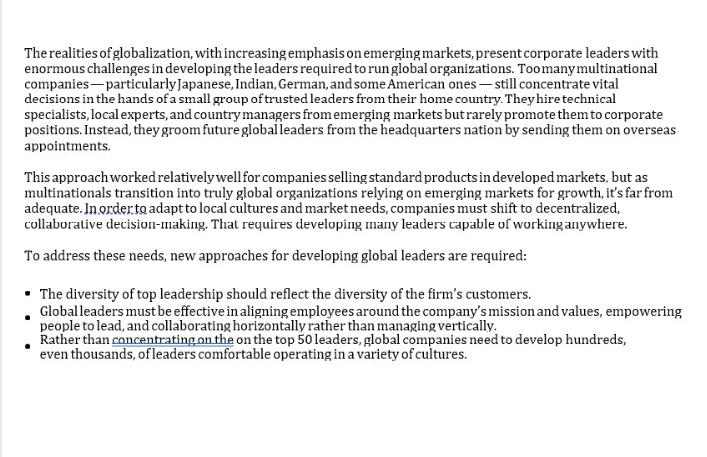
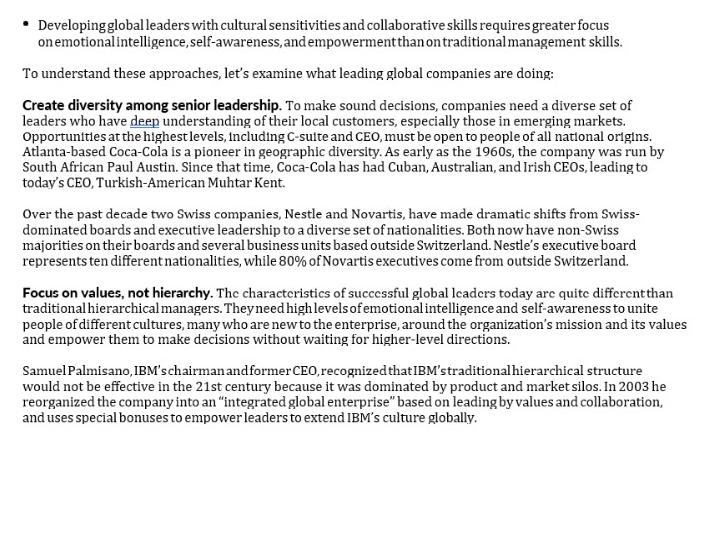
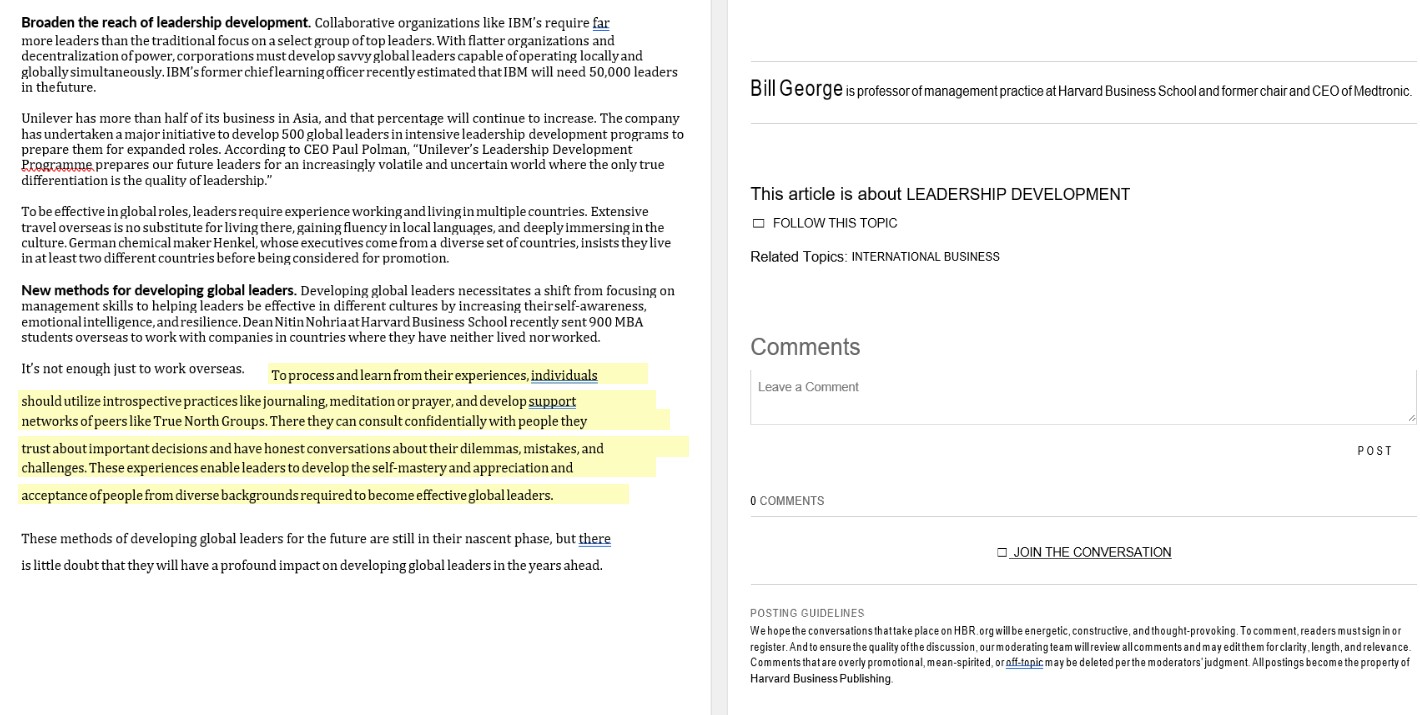
The realities of globalization, with increasing emphasis on emerging markets, present corporate leaders with enormous challenges in developing the leaders required to run global organizations. Too many multinational companies particularly Japanese, Indian, German, and some American ones-still concentrate vital decisions in the hands of a small group of trusted leaders from their home country. They hire technical specialists, local experts, and country managers from emerging markets but rarely promote them to corporate positions. Instead, they groom future global leaders from the headquarters nation by sending them on overseas appointments. This approach worked relatively well for companies selling standard products in developed markets, but as multinationals transition into truly global organizations relying on emerging markets for growth, it's far from adequate. In order to adapt to local cultures and market needs, companies must shift to decentralized, collaborative decision-making. That requires developing many leaders capable of working anywhere. To address these needs, new approaches for developing global leaders are required: The diversity of top leadership should reflect the diversity of the firm's customers. Global leaders must be effective in aligning employees around the company's mission and values, empowering people to lead, and collaborating horizontally rather than managing vertically. Rather than concentrating on the on the top 50 leaders, global companies need to develop hundreds, even thousands, of leaders comfortable operating in a variety of cultures.
Step by Step Solution
There are 3 Steps involved in it

Get step-by-step solutions from verified subject matter experts
 Study Help