



Question: As a financial analyst, you're requested to provide a comprehensive report to the senior leadership of a private equity firm, Raju Technology, Inc. (RTI) which

As a financial analyst, you're requested to provide a comprehensive report to the senior leadership of a private equity firm, Raju Technology, Inc. (RTI) which invests in small size tech companies. Your main responsibilities are to review investment proposals received by the firm and to present recommendations to the firm's investment committee on how to proceed.
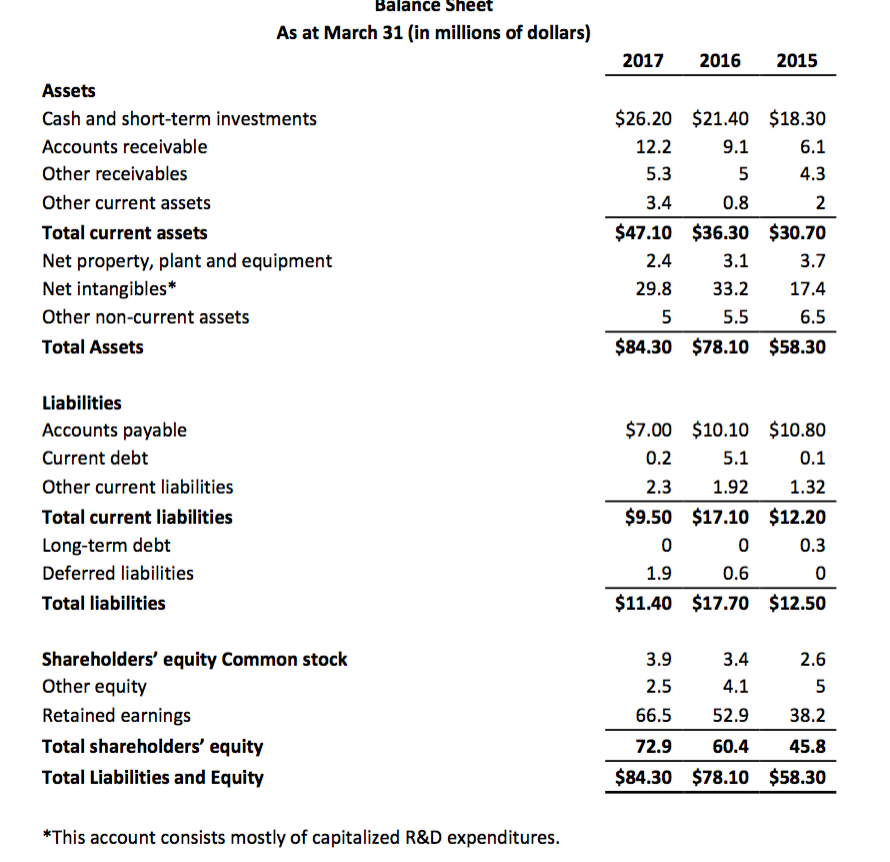
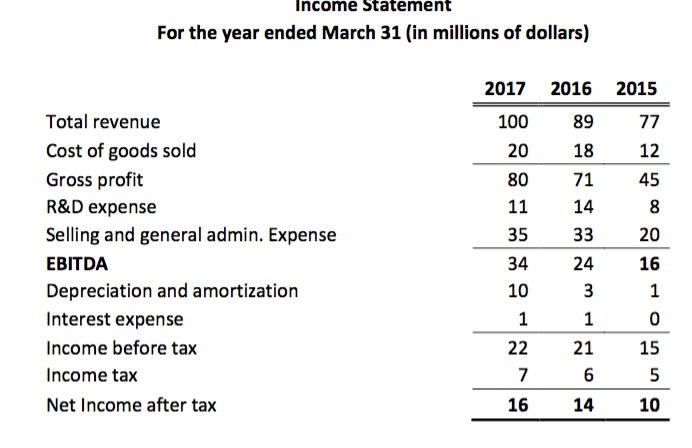
You are currently looking at an opportunity for RTI to invest in xxx, which is owned by entrepreneurs at the xxx. xxx has provided you with the most recent financial statements for xxx (Appendix I).
RTI typically takes an equity stake of between 5% and 30% in its investee firms or subscribes to a subordinated debenture that is convertible into a comparable equity stake. Publicly listed entities can currently raise capital by issuing convertible subordinated debentures at yields ranging from 5% to 9%. RTI's investment goal is to double the value of investment within ten years. RTI uses geometric methods to calculate its returns.
An investment bank has shown great interest in the xxx and believes that an IPO would be successful. The investment bank has provided xxx with a draft plan, as shown in Appendices II and III.
Use of Funds
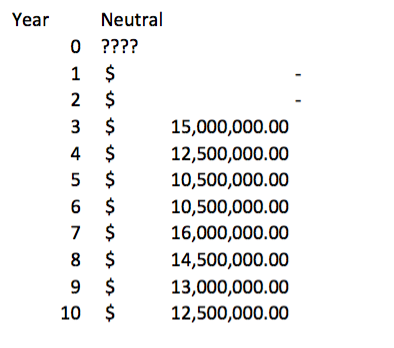
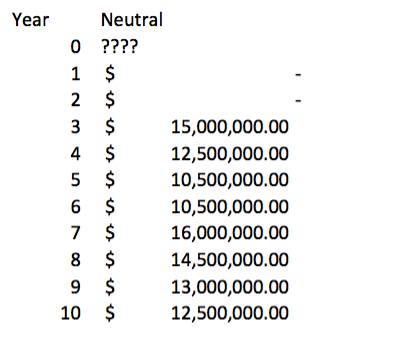
xxx would utilize part of the funds generated to buy GY Apps (GY) for $25 million. There is a lot of potential with this Apps but it has not been tested at the market yet. xxx conducted its own analysis and conclude this App will be obsolete in ten years and there is no value after. xxx has estimated GY's after tax cashflows. Since this is untested in the market, xxx is unsure what is the right purchase price for this App. (See appendix IV)
Required: (Explain and layout all your assumptions on your calculations, this will be part of your score for all questions with calculations. Please do not round your calculations and final answers should be round to second decimal point.)
You have been asked by the head of the investment committee to complete the following:
1- Explain significant advantages and significant disadvantages (provide at least three each) for xxx to seek private equity financing from RTI rather than undertaking an IPO.
2- Develop an operating cash flow forecast for xxx for years 2018 to 2022 (five years) using the projections presented by the investment bank in Appendix III. (Please use avg effective tax rate from given income statement from 2015-2017)
3- Do you think the underlying assumptions used by the investment bank (see Appendix III) are reasonable? Discuss in detail.
4- Calculate the estimated weighted average cost of capital for MGMT assuming an all-equity capital structure. Explain all risk premiums included in your calculations.
5- Calculate the value of xxx using a discounted cash flow (DCF) valuation model using OCF method per the text book for xxx as a stand-alone privately held entity.
6- Should xxx buy GY apps? If no, please justify your reasons with supporting calculations. If yes, please say the maximum amount xxx should pay for GY apps with supporting calculations.
7- Suppose RTI invests in xxx, discuss the advantages and disadvantages of RTI utilizing either equity or a convertible subordinated debenture. Recommend the proper amount and a financing option for MGMT. Back up your recommendations with calculations. (Must use geometric average method for RTI doubling of investment.)
Appendix I
xxx's FINANCIAL STATEMENTS
Income Statement
For the year ended March 31 (in millions of dollars)

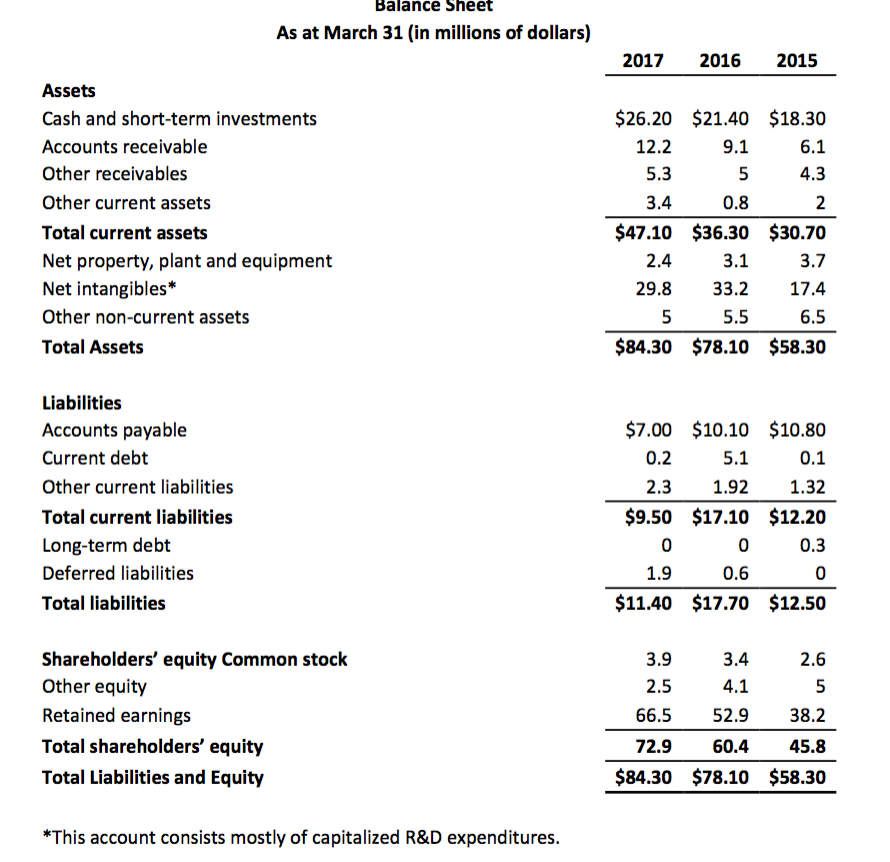
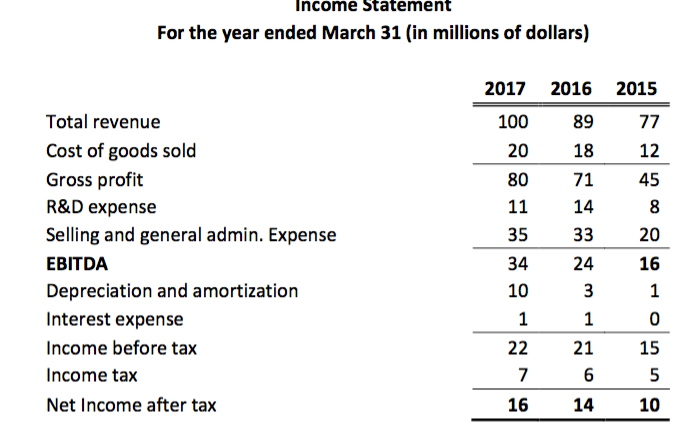
Balance sneer As at March 31(in millions of dollars) Assets Cash and short-term investments Accounts receivable Other receivables Other current assets Total current assets Net property, plant and equipment Net intangibles" Other noncurrent assets Total Assets Liabilities Accounts pavable Current debt Other current liabilities Total current liabilities Long-term debt Deferred liabilities Total liabilities Shareholders' equity Common stock Other equity Retained earnings Total shareholders' equity Total Liabilities and Equity *This account consists mostly of capitalized R810 expenditures. 2011'I $26.20 12.2 5.3 3.4 $42.10 2.4 29.3 5 $04.30 $7.00 0.2 2.3 $9.50 0 1.9 $11.40 3.9 2.5 05.5 22.9 $34.30 2016 $21.40 9.1 5 0.8 $36.30 3.1 33.2 5.5 $70.10 $10.10 5.1 1.92 $12.10 0 0.0 $17.70 3.4 4.1 52.9 60.4 $28.10 2015 $13.30 6.1 4.3 2 $30.70 3.7 17.4 5.5 $50.30 $10.00 0.1 1.32 $12.20 0.3 $12.50 2.0 33.2 45.0 $53.30 II'ICOI'I'IE :itatement For the year ended March 31(in millions of dollars) Total revenue Cost of goods sold Gross profit FIELD expense Selling and general admin. Expense EBITDA Depreciation and amortization Interest expense Income before tax Income tax Net Income after tax 100 20 30 11 35 34 10 1 22 '3' 16 39 18 '31 14 33 24 3 1 21 6 14 2017 2016 $115 3"? 12 45 8 20 15 1 O 15 5 10
Step by Step Solution
There are 3 Steps involved in it

Get step-by-step solutions from verified subject matter experts