







Question: As a potential theory, the elemental resource-based view (RBV) is not currently a theoretical structure. Moreover, RBV proponents have assumed stability in product markets and
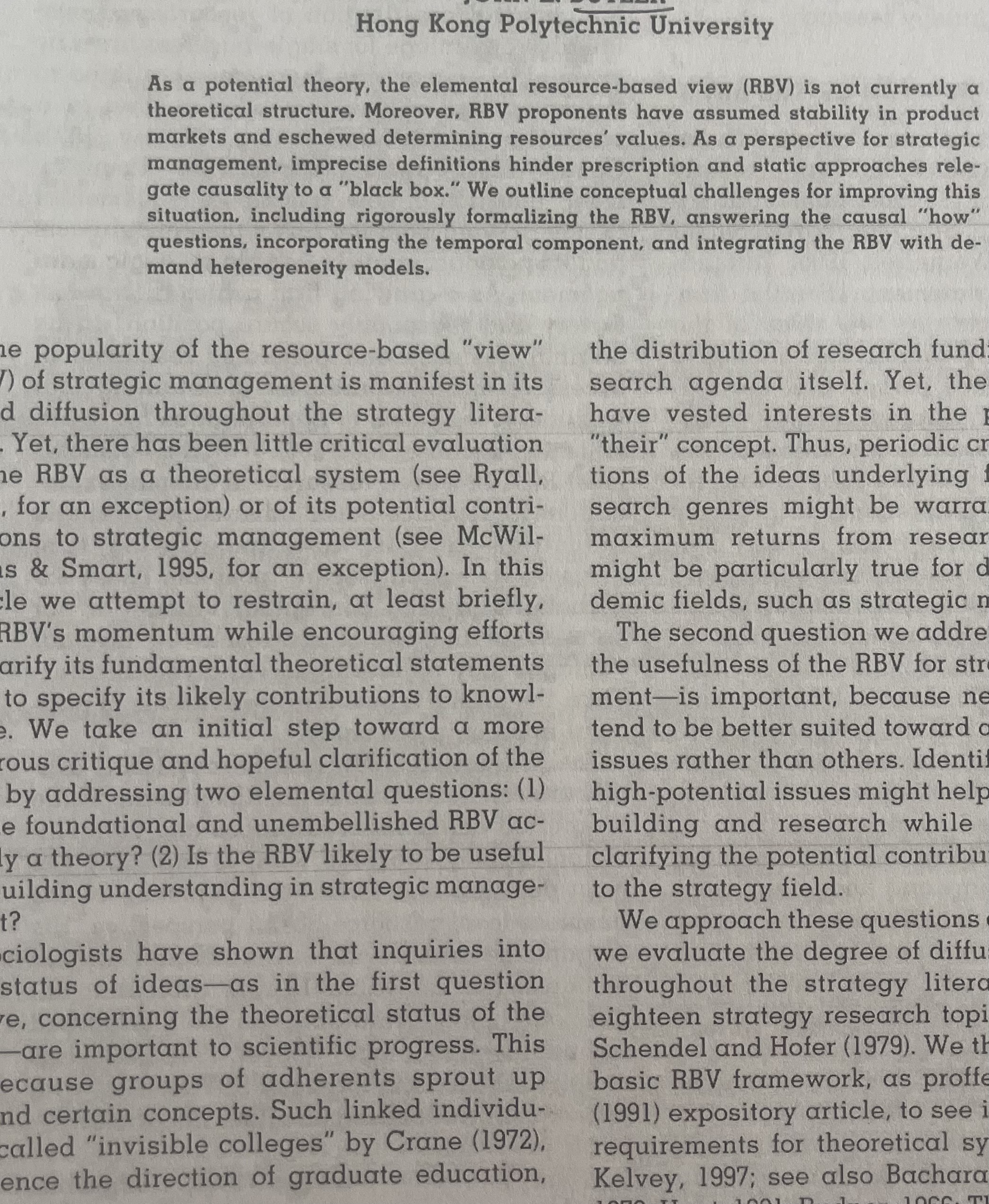
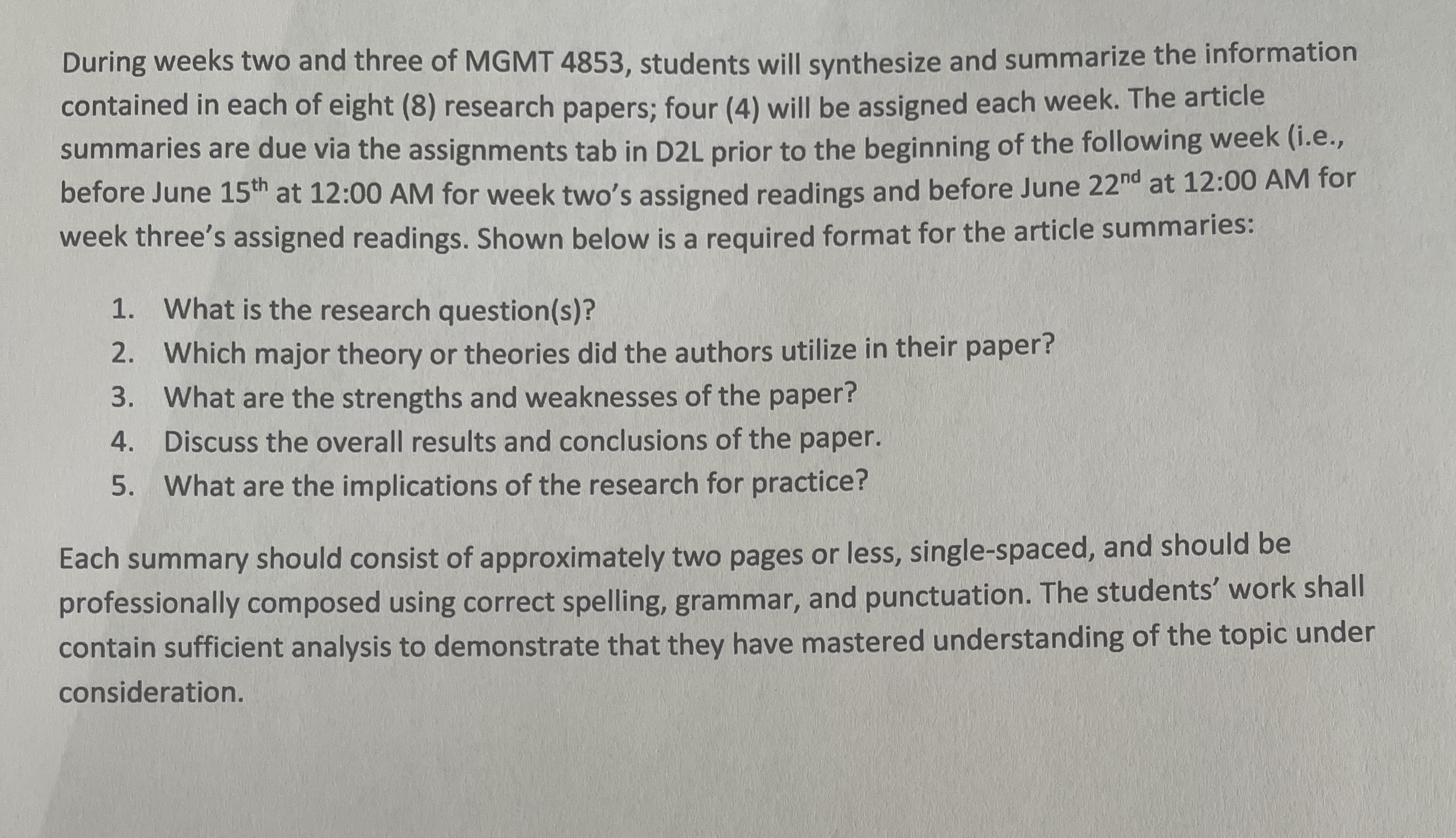
As a potential theory, the elemental resource-based view (RBV) is not currently a theoretical structure. Moreover, RBV proponents have assumed stability in product markets and eschewed determining resources' values. As a perspective for strategic management, imprecise definitions hinder prescription and static approaches relegate causality to a "black box." We outline conceptual challenges for improving this situation, including rigorously formalizing the RBV, answering the causal "how" questions, incorporating the temporal component, and integrating the RBV with demand heterogeneity models. e popularity of the resource-based "view" of strategic management is manifest in its diffusion throughout the strategy literaYet, there has been little critical evaluation e RBV as a theoretical system (see Ryall, for an exception) or of its potential contrito strategic management (see McWil\& Smart, 1995, for an exception). In this e we attempt to restrain, at least briefly, BV's momentum while encouraging efforts rrify its fundamental theoretical statements specify its likely contributions to knowlWe take an initial step toward a more ous critique and hopeful clarification of the by addressing two elemental questions: (1) foundational and unembellished RBV aca theory? (2) Is the RBV likely to be useful ilding understanding in strategic manage- ciologists have shown that inquiries into tatus of ideas-as in the first question e, concerning the theoretical status of the -are important to scientific progress. This cause groups of adherents sprout up d certain concepts. Such linked individualled "invisible colleges" by Crane (1972), nce the direction of graduate education, the distribution of research fund: search agenda itself. Yet, the have vested interests in the "their" concept. Thus, periodic tions of the ideas underlying search genres might be warra maximum returns from resear might be particularly true for demic fields, such as strategic The second question we addre the usefulness of the RBV for str ment-is important, because n tend to be better suited toward issues rather than others. Identit high-potential issues might help building and research while clarifying the potential contribu to the strategy field. We approach these questions we evaluate the degree of diffu throughout the strategy litera eighteen strategy research topi Schendel and Hofer (1979). We th basic RBV framework, as proffe (1991) expository article, to see i requirements for theoretical sy Kelvey, 1997; see also Bachara During weeks two and three of MGMT 4853, students will synthesize and summarize the information contained in each of eight (8) research papers; four (4) will be assigned each week. The article summaries are due via the assignments tab in D2L prior to the beginning of the following week (i.e., before June 15th at 12:00 AM for week two's assigned readings and before June 22nd at 12:00 AM for week three's assigned readings. Shown below is a required format for the article summaries: 1. What is the research question(s)? 2. Which major theory or theories did the authors utilize in their paper? 3. What are the strengths and weaknesses of the paper? 4. Discuss the overall results and conclusions of the paper. 5. What are the implications of the research for practice? Each summary should consist of approximately two pages or less, single-spaced, and should be professionally composed using correct spelling, grammar, and punctuation. The students' work shall contain sufficient analysis to demonstrate that they have mastered understanding of the topic under consideration
Step by Step Solution
There are 3 Steps involved in it

Get step-by-step solutions from verified subject matter experts
 Study Help