







Question: Assignment # 7 : conducting SWOT analysis for a small ecommerce startup that sells handmade jewelry. Due to SUN. Mar. 3 1 s t ,
Assignment # : conducting SWOT analysis for a small ecommerce startup that sells handmade jewelry.
Due to SUN. Mar.
Identify Strengths:
Determine Weaknesses:
Explore Opportunities:
Analyze Threats:
Action Plan:
SWOT analysis in manufacturing company producing medical devices
Strengths:
Advanced Technology and Expertise: The company possesses cuttingedge technology and a team of skilled professionals with expertise in medical device manufacturing.
Regulatory Compliance: It adheres strictly to regulatory standards such as FDA regulations, ensuring highquality and safe products.
Diverse Product Portfolio: The company offers a wide range of medical devices catering to various medical specialties, providing flexibility and market coverage.
Strong Distribution Network: It has established strong partnerships with distributors and healthcare providers, facilitating widespread market reach.
Brand Reputation: The company has built a strong reputation for reliability, quality, and innovation in the medical device industry, enhancing customer trust and loyalty.
Weaknesses:
High Production Costs: Manufacturing medical devices involves high production costs, including raw materials, specialized equipment, and skilled labor.
Dependence on Supply Chain: The company relies on a complex supply chain for sourcing raw materials and components, making it vulnerable to disruptions.
Limited Innovation: There may be a lack of focus on continuous innovation, leading to stagnation in product development and market competitiveness.
Long Development Cycles: The process of designing, testing, and gaining regulatory approval for new medical devices often results in long development cycles, delaying timetomarket.
High Production Costs: Manufacturing medical devices involves high production costs, including raw materials, specialized equipment, and skilled labor.
Dependence on Supply Chain: The company relies on a complex supply chain for sourcing raw materials and components, making it vulnerable to disruptions.
Limited Innovation: There may be a lack of focus on continuous innovation, leading to stagnation in product development and market competitiveness.
Long Development Cycles: The process of designing, testing, and gaining regulatory approval for new medical devices often results in long development cycles, delaying timetomarket.
Limited Market Presence: In certain geographical regions or medical specialties, the company may have limited market penetration compared to competitors.
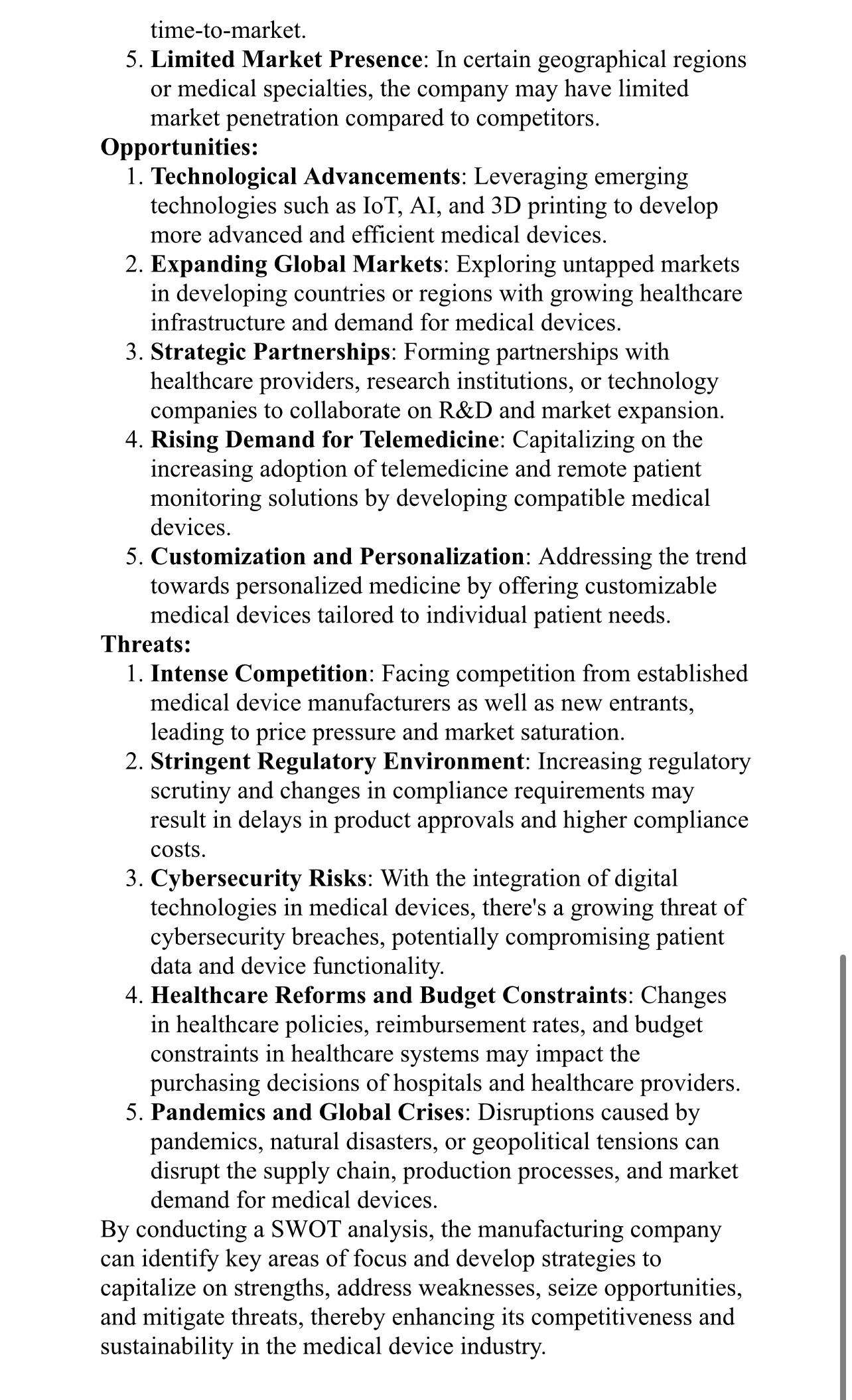
Opportunities:
Technological Advancements: Leveraging emerging technologies such as IoT, AI and D printing to develop more advanced and efficient medical devices.
Expanding Global Markets: Exploring untapped markets in developing countries or regions with growing healthcare infrastructure and demand for medical devices.
Strategic Partnerships: Forming partnerships with healthcare providers, research institutions, or technology companies to collaborate on R&D and market expansion.
Rising Demand for Telemedicine: Capitalizing on the increasing adoption of telemedicine and remote patient monitoring solutions by developing compatible medical devices.
Customization and Personalization: Addressing the trend towards personalized medicine by offering customizable medical devices tailored to individual patient needs.
Threats:
Intense Competition: Facing competition from established medical device manufacturers as well as new entrants, leading to price pressure and market saturation.
Stringent Regulatory Environment: Increasing regulatory scrutiny and changes in compliance requirements may result in delays in product approvals and higher compliance costs.
Cybersecurity Risks: With the integration of digital technologies in medical devices, there's a growing threat of cybersecurity breaches, potentially compromising patient data and device functionality.
Healthcare Reforms and Budget Constraints: Changes in healthcare policies, reimbursement rates, and budget constraints in healthcare systems may impact the purchasing decisions of hospitals and healthcare providers.
Pandemics and Global Crises: Disruptions caused by pandemics, natural disasters, or geopolitical tensions can disrupt the supply chain, production processes, and market demand for medical devices.
By conducting a SWOT analysis, the manufacturing company can identify key areas of focus and develop strategies to capitalize on strengths, address weaknesses, seize opportunities,
timetomarket.
Limited Market Presence: In certain geographical regions or medical specialties, the company may have limited market penetration compared to competitors.
Opportunities:
Technological Advancements: Leveraging emerging technologies such as IoT, AI and D printing to develop more advanced and efficient medical devices.
Expanding Global Markets: Exploring untapped markets in developing countries or regions with growing healthcare infrastructure and demand for med
Step by Step Solution
There are 3 Steps involved in it
1 Expert Approved Answer
Step: 1 Unlock

Question Has Been Solved by an Expert!
Get step-by-step solutions from verified subject matter experts
Step: 2 Unlock
Step: 3 Unlock
 Study Help