







Question: Assignment: Design Structure Matrix ( DSM ) for Interface Management Objective: Use a Design Structure Matrix ( DSM ) to manage interfaces in a simpler
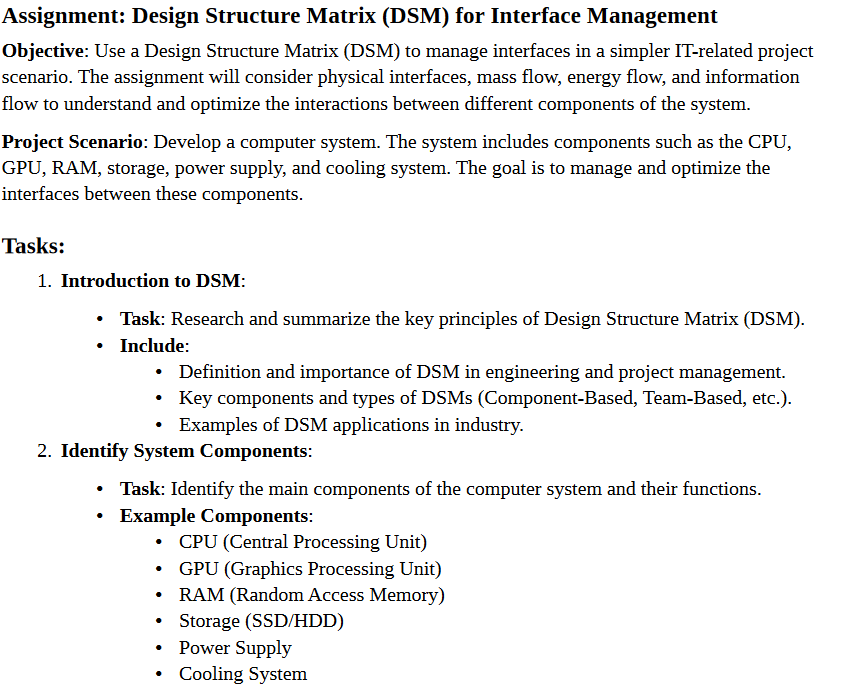
Assignment: Design Structure Matrix DSM for Interface Management
Objective: Use a Design Structure Matrix DSM to manage interfaces in a simpler ITrelated project scenario. The assignment will consider physical interfaces, mass flow, energy flow, and information flow to understand and optimize the interactions between different components of the system.
Project Scenario: Develop a computer system. The system includes components such as the CPU, GPU, RAM, storage, power supply, and cooling system. The goal is to manage and optimize the interfaces between these components.
Tasks:
Introduction to DSM:
Task: Research and summarize the key principles of Design Structure Matrix DSM
Include:
Definition and importance of DSM in engineering and project management.
Key components and types of DSMs ComponentBased, TeamBased, etc.
Examples of DSM applications in industry.
Identify System Components:
Task: Identify the main components of the computer system and their functions.
Example Components:
CPU Central Processing Unit
GPU Graphics Processing Unit
RAM Random Access Memory
Storage SSDHDD
Power Supply
Cooling System
Define Interfaces and Flows:
Task: Define the interfaces and flows between the identified components.
Types of Interfaces:
Physical Interfaces: Physical connections between components eg cables,
sockets
Mass Flow: Movement of materials or thermals eg air flow for cooling, heat
dissipation
Energy Flow: Power supply to components.
Information Flow: Communication protocols and data exchange between
components.
Create the DSM:
Task: Develop a Design Structure Matrix that maps the interactions and dependencies
between the components.
Steps:
List all components along the rows and columns of the matrix,
Mark the interactions between components with appropriate symbols or values to
indicate the type of interface and flow.
Ensure the matrix includes physical interfaces, mass flow, energy flow, and
information flow.
Analyze and Optimize Interfaces:
Task: Analyze the DSM to identify critical interfaces and potential bottlenecks.
Include:
Discussion of how the components interact and depend on each other.
Identification of critical interfaces that require careful management.
Suggestions for optimizing the interfaces to improve system performance and
reliability.
Scenario Analysis:
Task: Analyze a hypothetical scenario where a change in one component affects the
interfaces and flows.
Example:
Scenario: Upgrading the GPU to a more powerful model.
Impact: Assess how this change affects data transfer volumes information flow
power requirements energy flow and heat dissipation mass flow with other
components.
Resolution: Propose adjustments to the DSM to accommodate the change.
Report:
Task: Prepare a comprehensive report documenting the entire DSM process, including:
Summary of DSM principles.
Identified system components and their functions.
Defined interfaces and flows.
Created DSM
Analysis and optimization of interfaces.
Scenario analysis and resolution.
Conclusion and recommendations.
Deliverables:
Summary of DSM principles.
List of identified system components and their functions.
Defined interfaces and flows.
Created DSM
Analysis and optimization of interfaces.
Scenario analysis and resolution.
Comprehensive final report.
Assessment Criteria:
Clarity and accuracy of the DSM principles summary.
Thoroughness in identifying system components and their functions.
Completeness and relevance of defined interfaces and flows.
Accuracy and detail in the created DSM
Insightfulness and practicality of interface analysis and optimization.
Feasibility and comprehensiveness of the scenario analysis and resolution.
Overall quality and thoroughness of the final report.
Example Report Template
Title: Design Structure Matrix DSM for Computer System Interface Manage
Introduction to DSM:
Definition and importance of DSM
Key components and types of DSMs
Examples of DSM applications in industry.
Identified System Components and Their Functions:
CPU: Central processing unit, executes instructions.
GPU: Graphics processing unit, handles graphics rendering.
RAM: Random access memory, temporary storage for quick access.
Storage: SSDHDD longterm data storage.
Power Supply: Provides power to all components.
Cooling System: Maintains optimal temperature for components. i provided everything for the assignment i need with same like example template with unique please
Step by Step Solution
There are 3 Steps involved in it
1 Expert Approved Answer
Step: 1 Unlock

Question Has Been Solved by an Expert!
Get step-by-step solutions from verified subject matter experts
Step: 2 Unlock
Step: 3 Unlock
 Study Help