Question: Assignment This exercise will give you some practice in determining the ideal degree of market exposure for a company. Read each case carefully and then
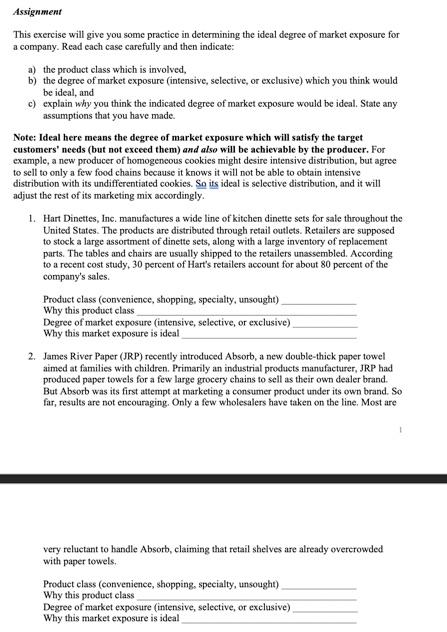
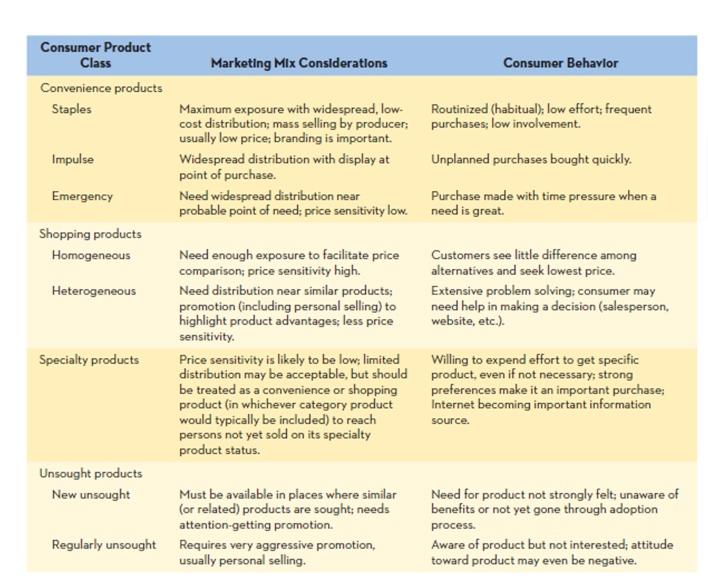
Assignment This exercise will give you some practice in determining the ideal degree of market exposure for a company. Read each case carefully and then indicate: a) the product class which is involved, b) the degree of market exposure (intensive, selective, or exclusive) which you think would be ideal, and c) explain why you think the indicated degree of market exposure would be ideal. State any assumptions that you have made. Note: Ideal here means the degree of market exposure which will satisfy the target customers' needs (but not exceed them) and also will be achievable by the producer. For example, a new producer of homogeneous cookies might desire intensive distribution, but agree to sell to only a few food chains because it knows it will not be able to obtain intensive distribution with its undifferentiated cookies. So its ideal is selective distribution, and it will adjust the rest of its marketing mix accordingly. 1. Hart Dinettes, Inc. manufactures a wide line of kitchen dinette sets for sale throughout the United States. The products are distributed through retail outlets. Retailers are supposed to stock a large assortment of dinette sets, along with a large inventory of replacement parts. The tables and chairs are usually shipped to the retailers unassembled. According to a recent cost study. 30 percent of Hart's retailers account for about 80 percent of the company's sales Product class (convenience, shopping, specialty, unsought) Why this product class Degree of market exposure (intensive, selective, or exclusive) Why this market exposure is ideal 2. James River Paper (JRP) recently introduced Absorb, a new double-thick paper towel aimed at families with children. Primarily an industrial products manufacturer, JRP had produced paper towels for a few large grocery chains to sell as their own dealer brand. But Absorb was its first attempt at marketing a consumer product under its own brand. So for, results are not encouraging. Only a few wholesalers have taken on the line. Most are very reluctant to handle Absorb, claiming that retail shelves are already overcrowded with paper towels. Product class (convenience, shopping, specialty, unsought) Why this product class Degree of market exposure (intensive, selective, or exclusive) Why this market exposure is ideal Consumer Product Class Marketing Mix Considerations Consumer Behavior Convenience products Staples Maximum exposure with widespread, low- Routinized (habitual); low effort; frequent cost distribution; mass selling by producer: purchases; low involvement. usually low price; branding is important. Impulse Widespread distribution with display at Unplanned purchases bought quickly. point of purchase. Emergency Need widespread distribution near Purchase made with time pressure when a probable point of need, price sensitivity low need is great. Shopping products Homogeneous Need enough exposure to facilitate price Customers see little difference among comparison; price sensitivity high. alternatives and seek lowest price. Heterogeneous Need distribution near similar products: Extensive problem solving consumer may promotion (including personal selling) to need help in making a decision (salesperson, highlight product advantages: less price website, etc.). sensitivity. Specialty products Price sensitivity is likely to be low; limited Willing to expend effort to get specific distribution may be acceptable, but should product, even if not necessary; strong be treated as a convenience or shopping preferences make it an important purchase; product (in whichever category product Internet becoming important information would typically be included) to reach source. persons not yet sold on its specialty product status. Unsought products New unsought Must be available in places where similar Need for product not strongly felt; unaware of (or related) products are sought; needs benefits or not yet gone through adoption attention-getting promotion process. Regularly unsought Requires very aggressive promotion, Aware of product but not interested; attitude usually personal selling. toward product may even be negative









 Study Help