Question: AT e Bera tye) 9) Week 3 Discussion - The Bill of Rights and Ratification of the U.S. Constitution [due Thurs] Discussion Topic unfollow DISCUSSION
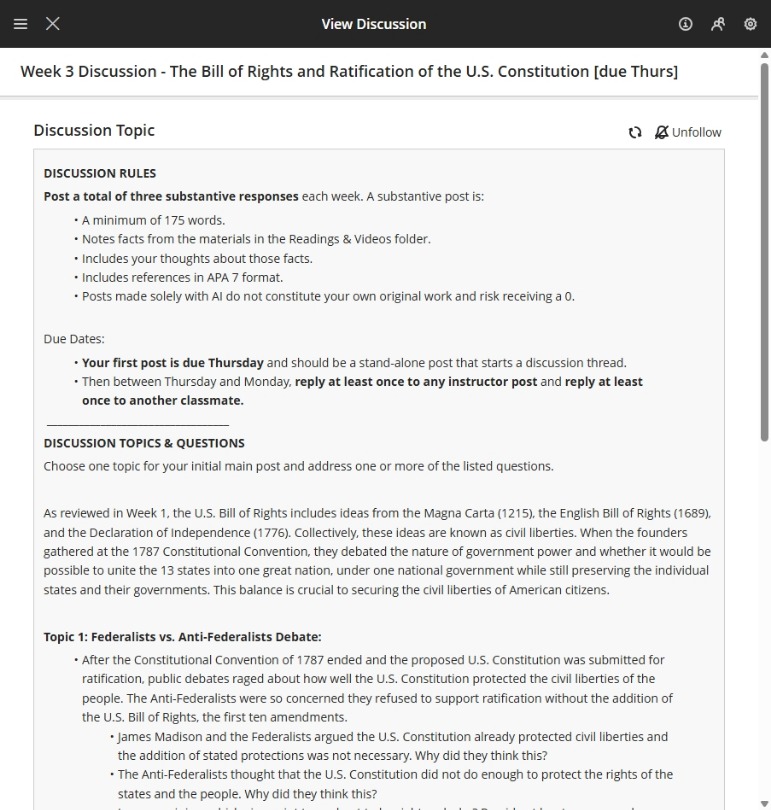
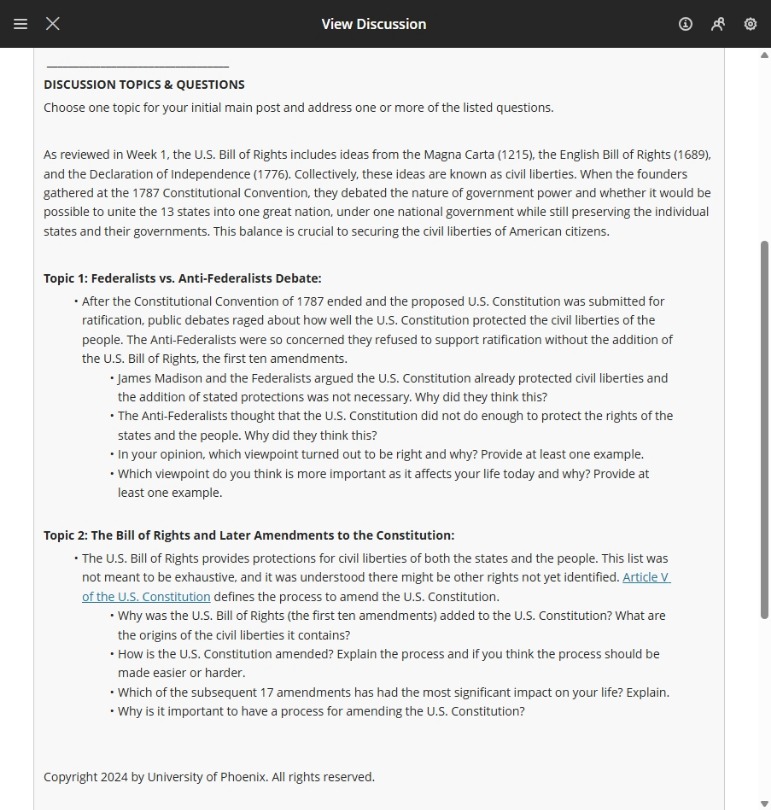
AT e Bera tye) 9) Week 3 Discussion - The Bill of Rights and Ratification of the U.S. Constitution [due Thurs] Discussion Topic unfollow DISCUSSION RULES Post a total of three substantive responses each week. A substantive post is: - Aminimum of 175 words. * Notes facts from the materials in the Readings & Videos folder. Includes your thoughts about those facts. + Includes references in APA 7 format. * Posts made solely with Al do not constitute your own original work and risk receiving a 0. Due Dates: * Your first post is due Thursday and should be a stand-alone post that starts a discussion thread. * Then between Thursday and Monday, reply at least once to any instructor post and reply at least once to another classmate. DISCUSSION TOPICS & QUESTIONS Choose one topic for your initial main post and address one or more of the listed questions. As reviewed in Week 1, the U.S. Bill of Rights includes ideas from the Magna Carta (1215), the English Bill of Rights (1689), and the Declaration of Independence (1776). Collectively, these ideas are known as civil liberties. When the founders gathered at the 1787 Constitutional Convention, they debated the nature of government power and whether it would be possible to unite the 13 states into one great nation, under one national government while still preserving the individual States and their governments. This balance |s crucial to securing the civil liberties of American citizens. Topic 1: Federalists vs. Anti-Federalists Debate: + After the Constitutional Convention of 1787 ended and the proposed U.S. Constitution was submitted for ratification, public debates raged about how well the U.S. Constitution protected the civil liberties of the people. The Anti-Federalists were so concerned they refused to support ratification without the addition of the U.S. Bill of Rights, the first ten amendments. * james Madison and the Federalists argued the U.S. Constitution already protected civil liberties and the addition of stated protections was not necessary. Why did they think this? * The Anti-Federalists thought that the U.S. Constitution did not do enough to protect the rights of the states and the people. Why did they think this? AT e Bera tye) 9) DISCUSSION TOPICS & QUESTIONS Choose one topic for your initial main post and address one or more of the listed questions. As reviewed in Week 1, the U.S. Bill of Rights includes ideas from the Magna Carta (1215), the English Bill of Rights (1689), and the Declaration of Independence (1776). Collectively, these ideas are known as civil liberties. When the founders gathered at the 1787 Constitutional Convention, they debated the nature of government power and whether it would be possible to unite the 13 states into one great nation, under one national government while still preserving the individual states and their governments. This balance is crucial to securing the civil liberties of American citizens. Topic 1: Federalists vs. Anti-Federalists Debate: + After the Constitutional Convention of 1787 ended and the proposed U.S. Constitution was submitted for ratification, public debates raged about how well the U.S. Constitution protected the civil liberties of the people. The Anti-Federalists were so concerned they refused to support ratification without the addition of the U.S. Bill of Rights, the first ten amendments. James Madison and the Federalists argued the U.S. Constitution already protected civil liberties and the addition of stated protections was not necessary. Why did they think this? * The Anti-Federalists thought that the U.S. Constitution did not do enough to protect the rights of the states and the people. Why did they think this? In your opinion, which viewpoint turned out to be right and why? Provide at least one example. * Which viewpoint do you think Is more important as it affects your life today and why? Provide at least one example. Topic 2: The Bill of Rights and Later Amendments to the Constitution: * The U.S. Bill of Rights provides protections for civil liberties of both the states and the people. This list was not meant to be exhaustive, and it was understood there might be other rights not yet identified. Article V_ of the U.S. Constitution defines the process to amend the U.S. Constitution. * Why was the U.S. Bill of Rights (the first ten amendments) added to the U.S. Constitution? What are the origins of the civil liberties it contains? * How is the U.S. Constitution amended? Explain the process and If you think the process should be made easier or harder. - Which of the subsequent 17 amendments has had the most significant impact on your life? Explain. * Why is it important to have a process for amending the U.S. Constitution? Copyright 2024 by University of Phoenix. All rights reserved
Step by Step Solution
There are 3 Steps involved in it
1 Expert Approved Answer
Step: 1 Unlock
Question Has Been Solved by an Expert!
Get step-by-step solutions from verified subject matter experts
Step: 2 Unlock
Step: 3 Unlock
Students Have Also Explored These Related Accounting Questions!









 Study Help