







Question: Attempts Average / 4 7. Leverage and insolvency Consider the following balance sheets of two banks. These two banks have equal amounts of assets but
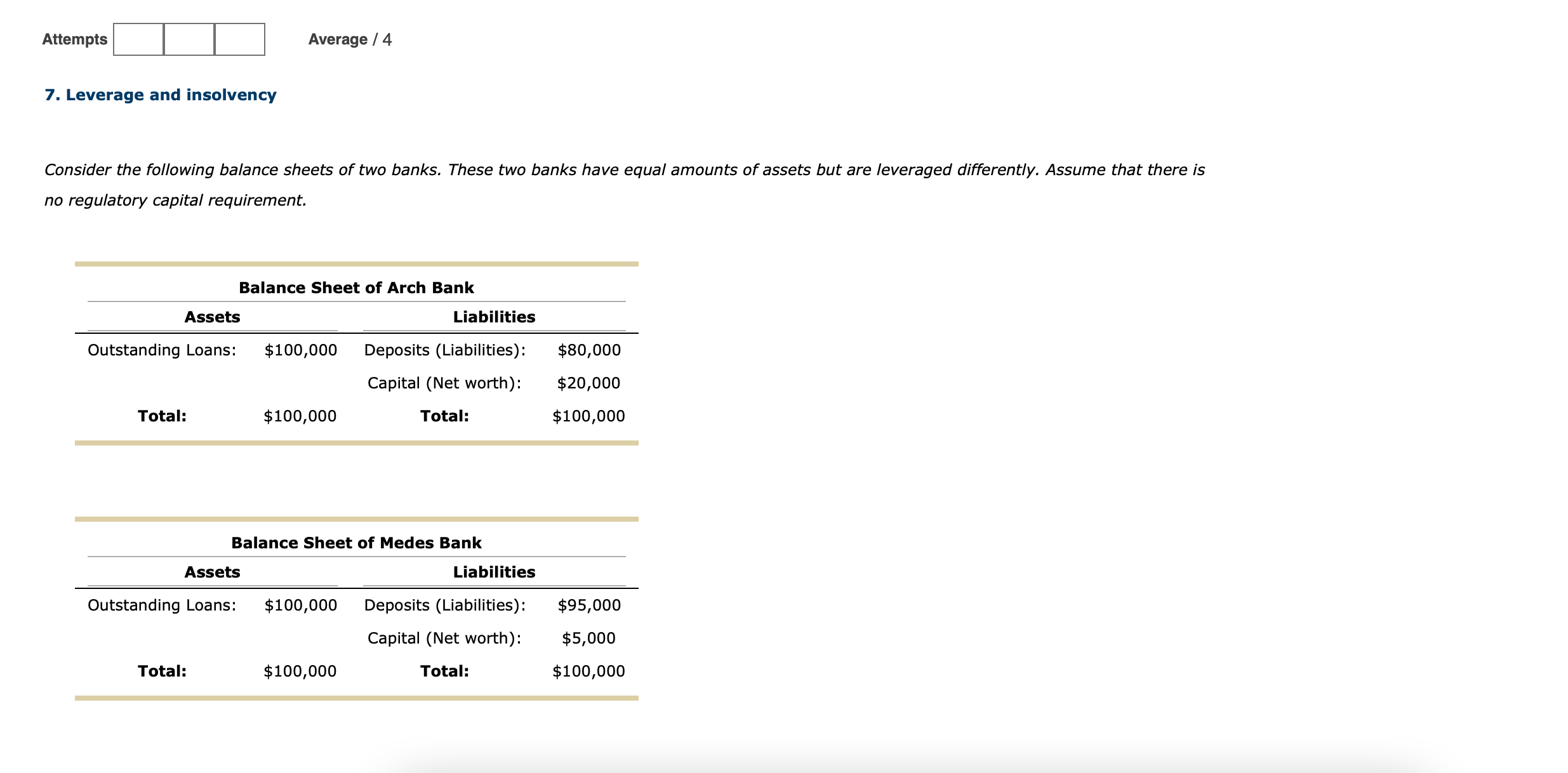
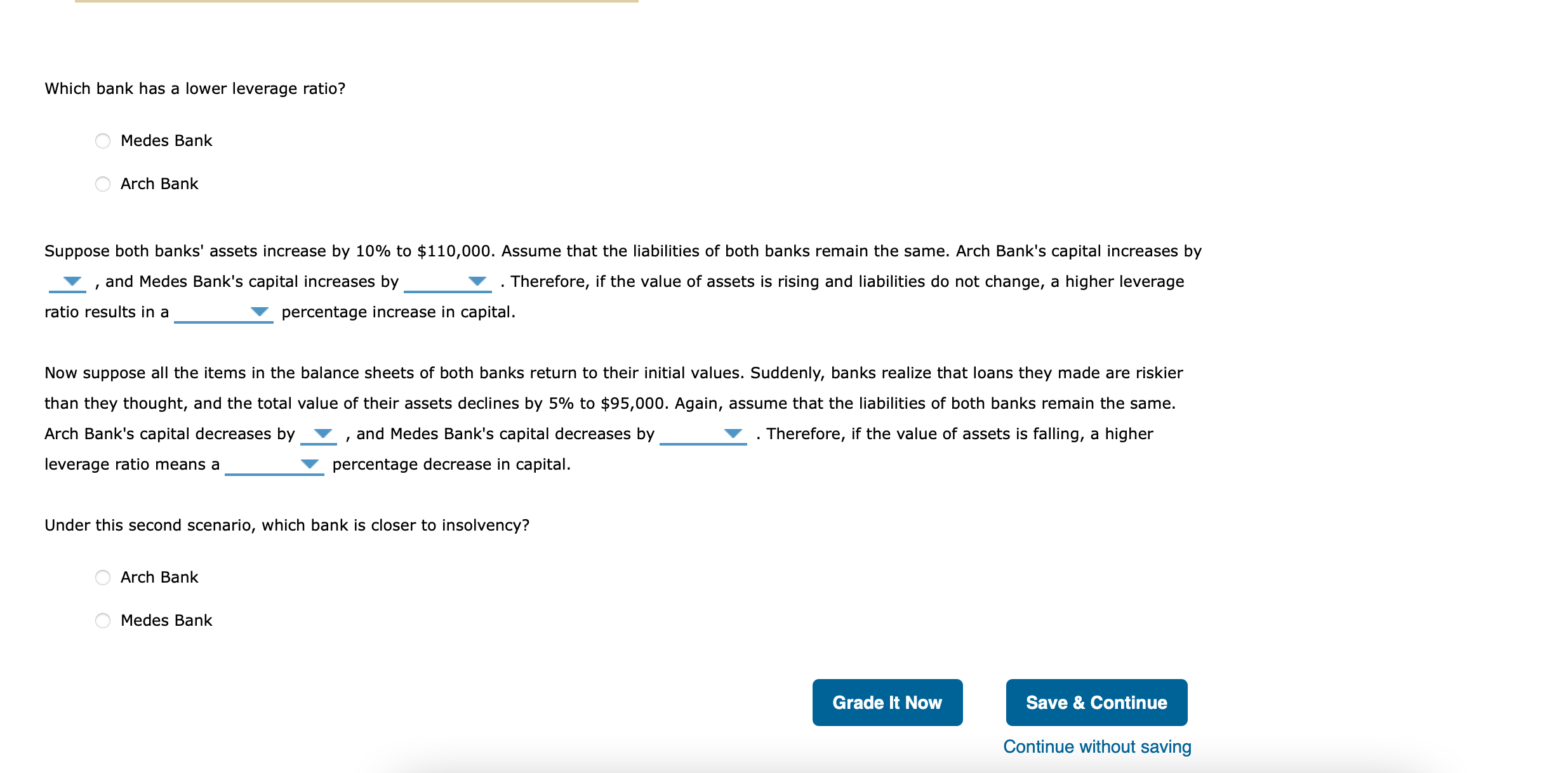
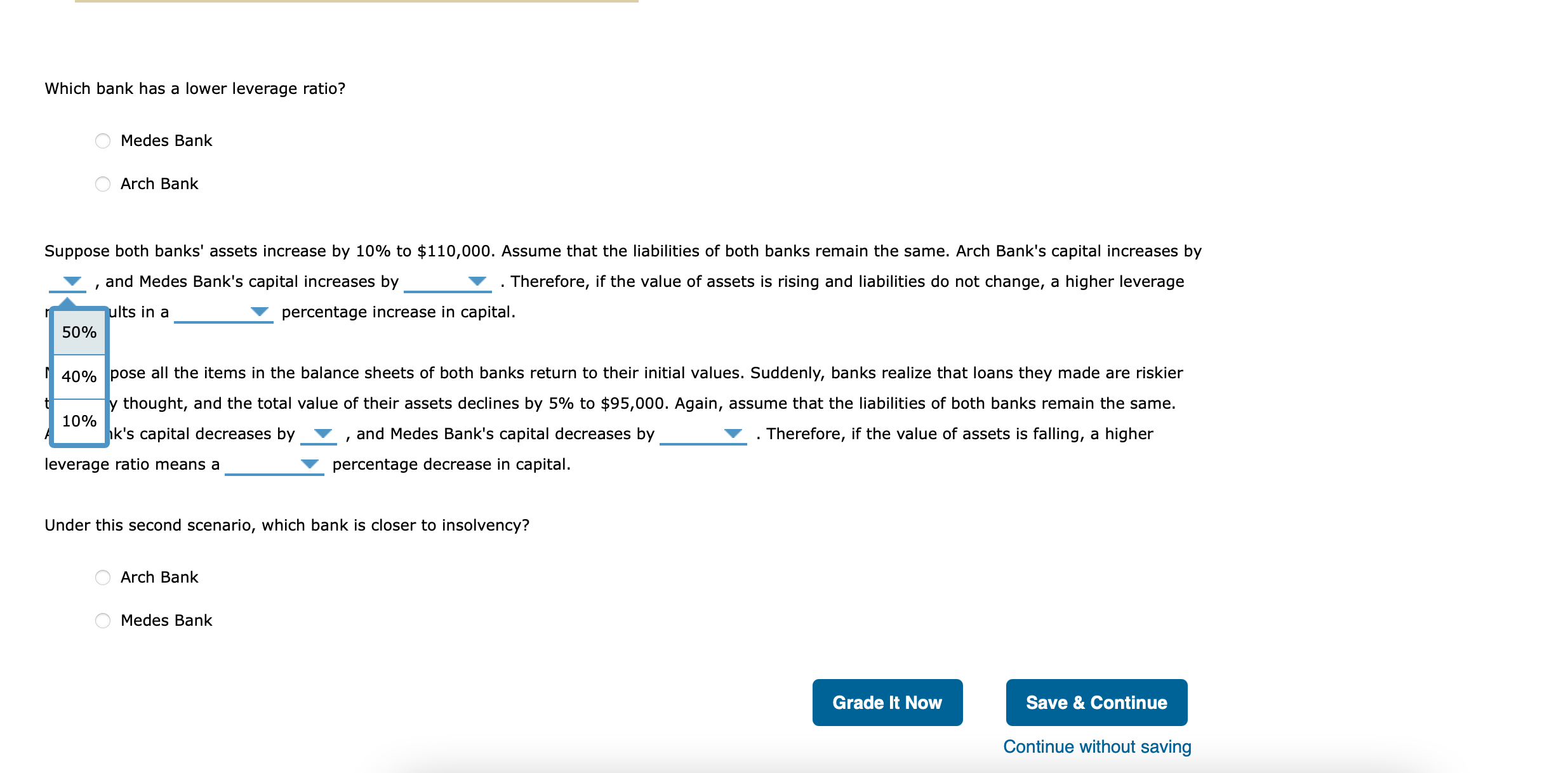
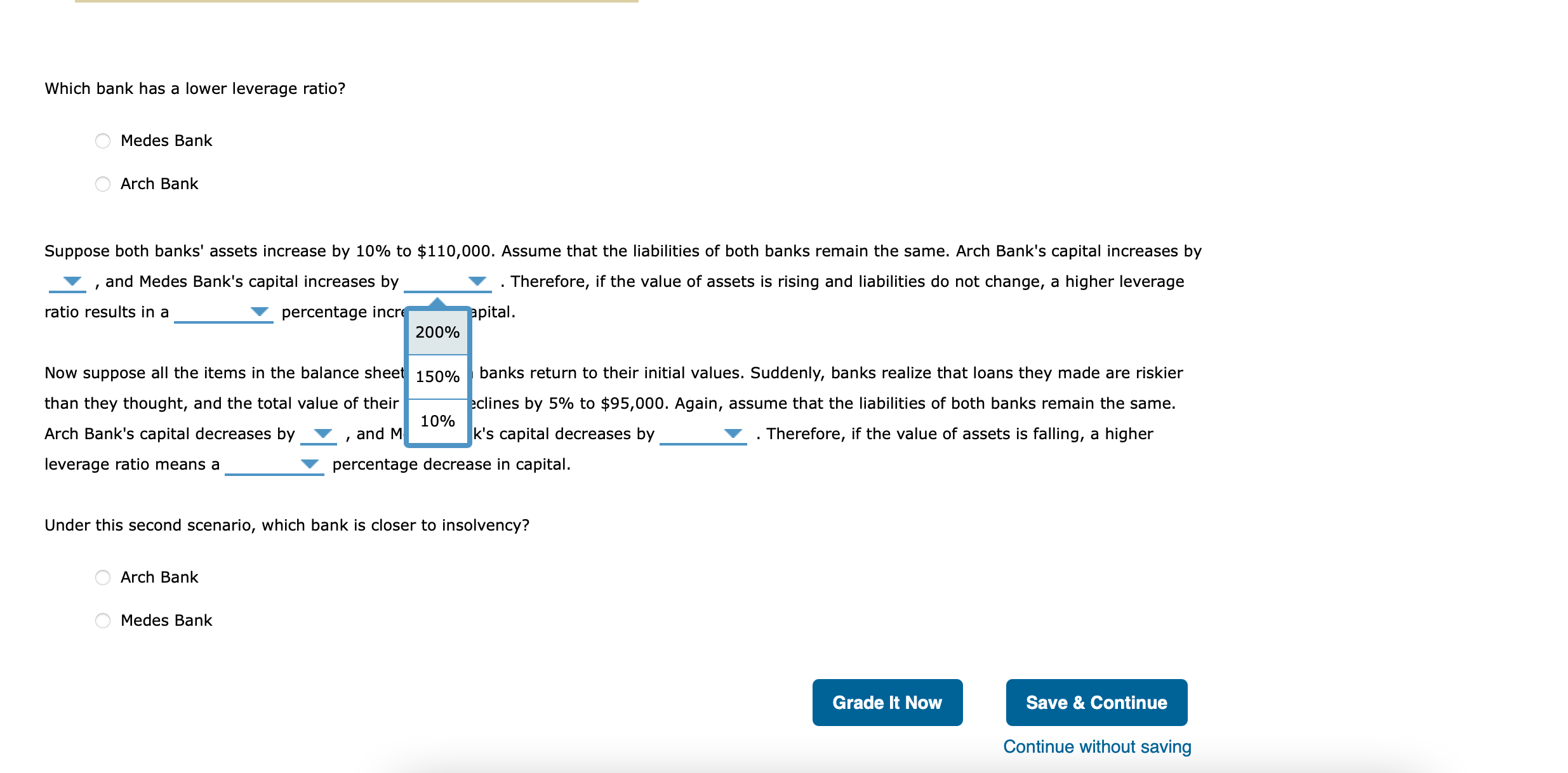
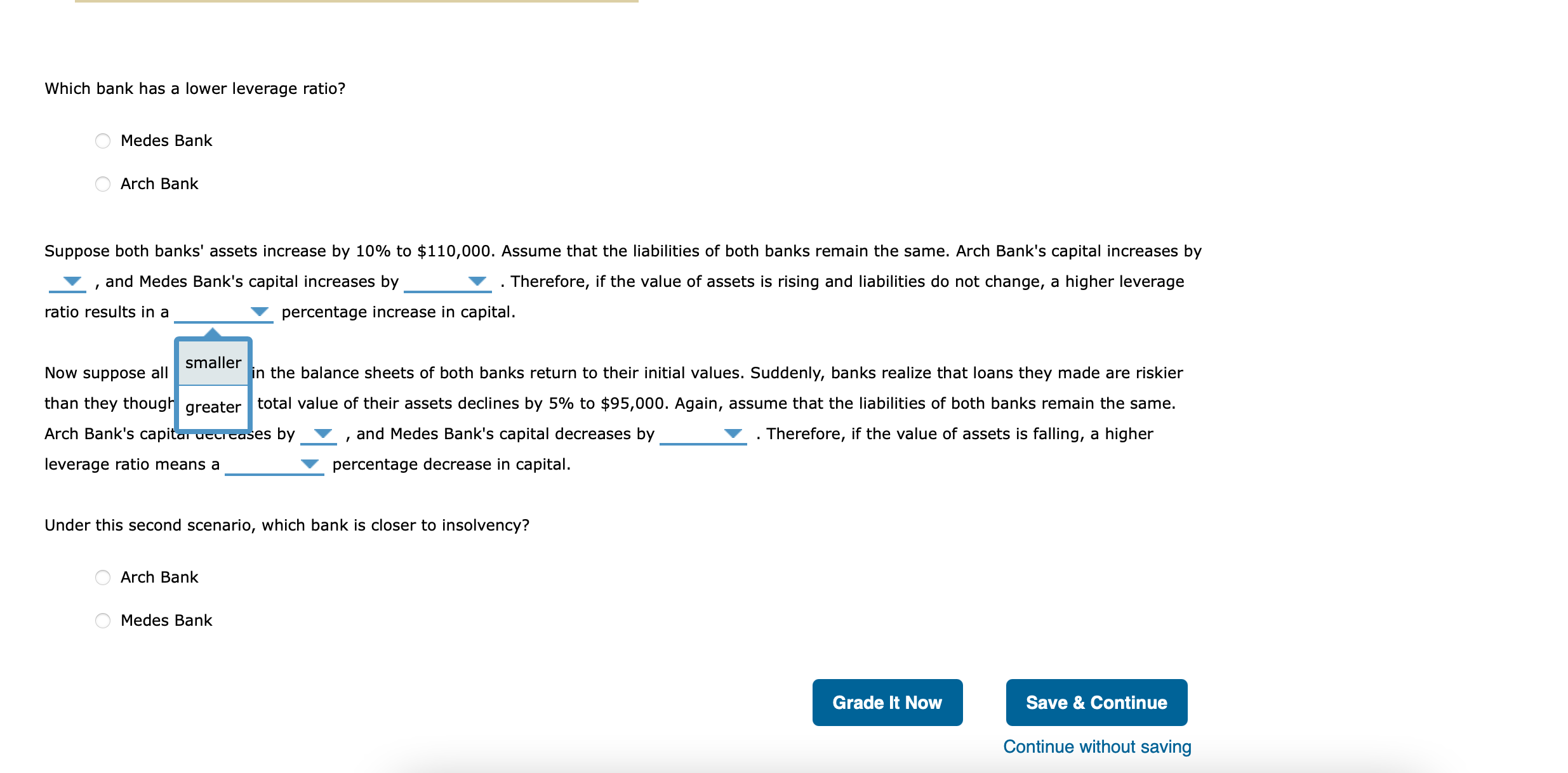
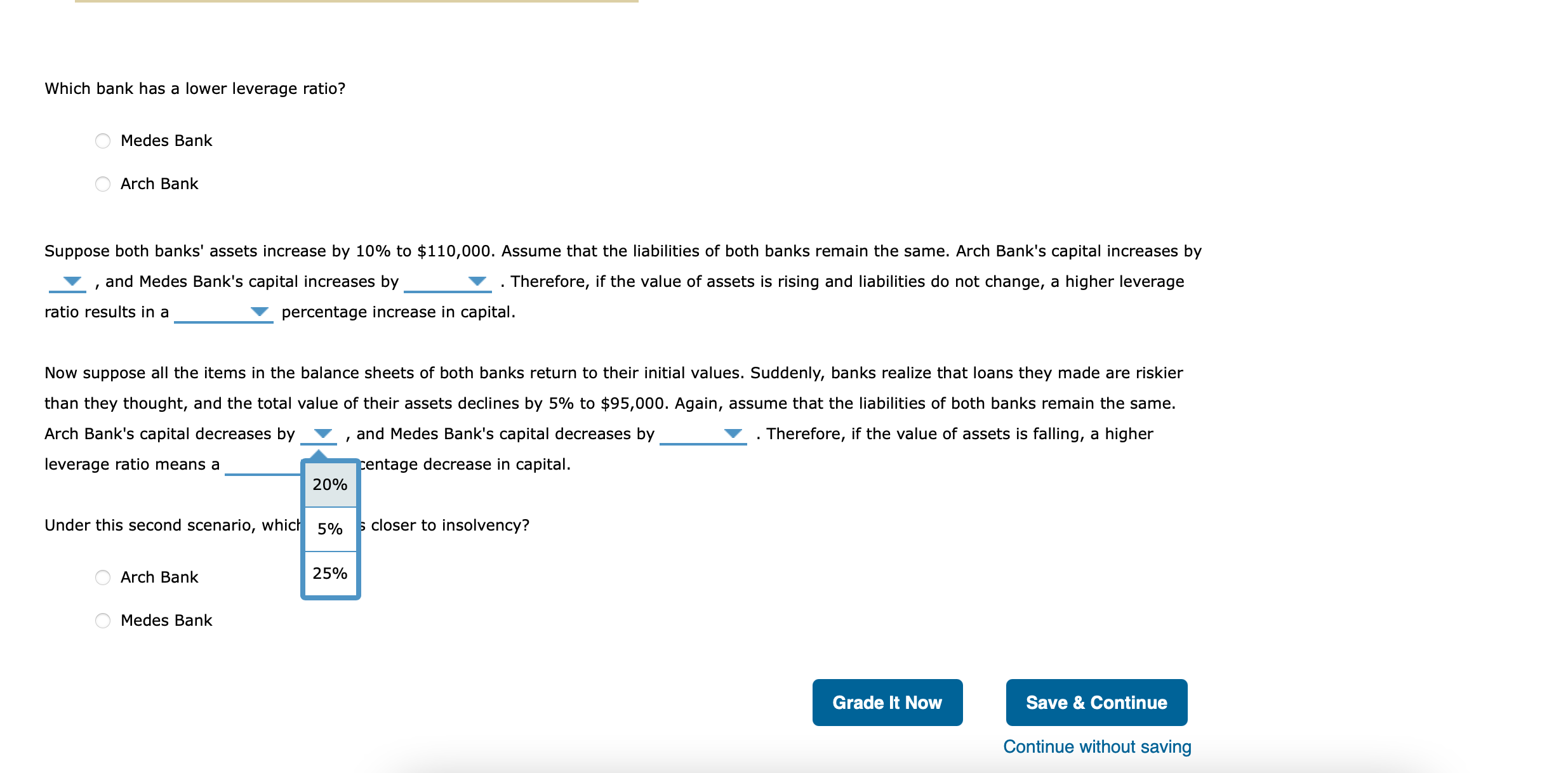
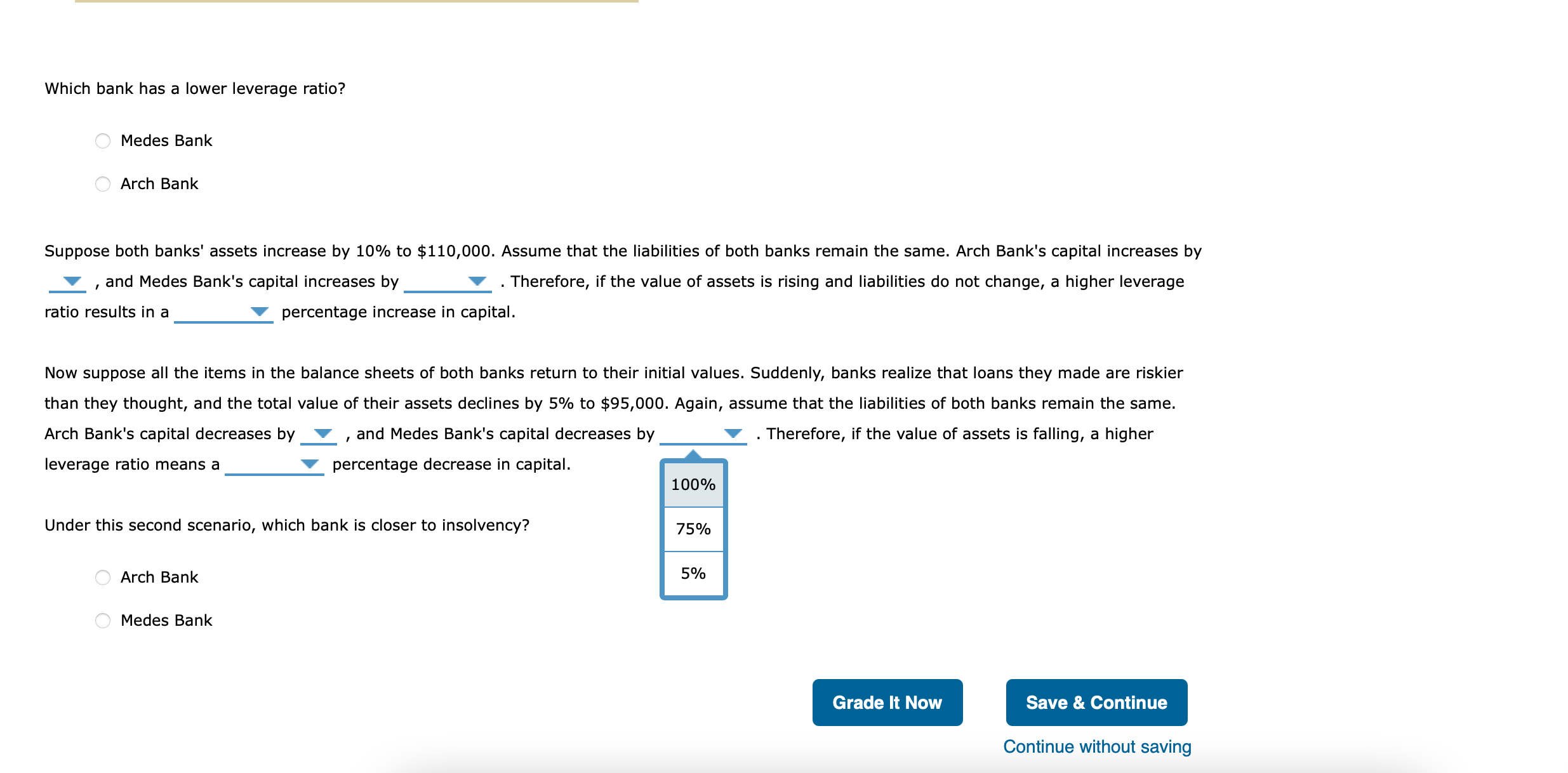
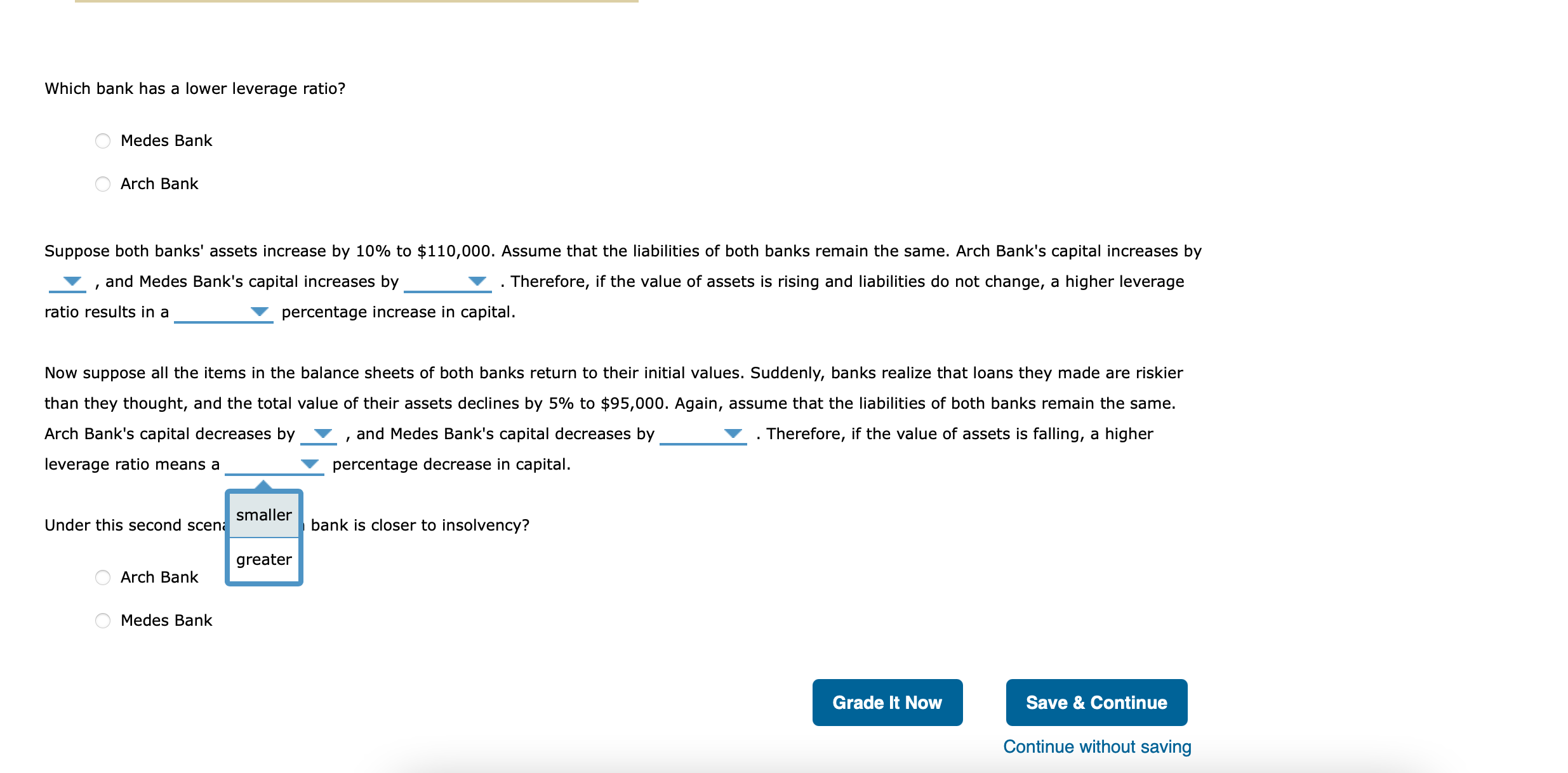
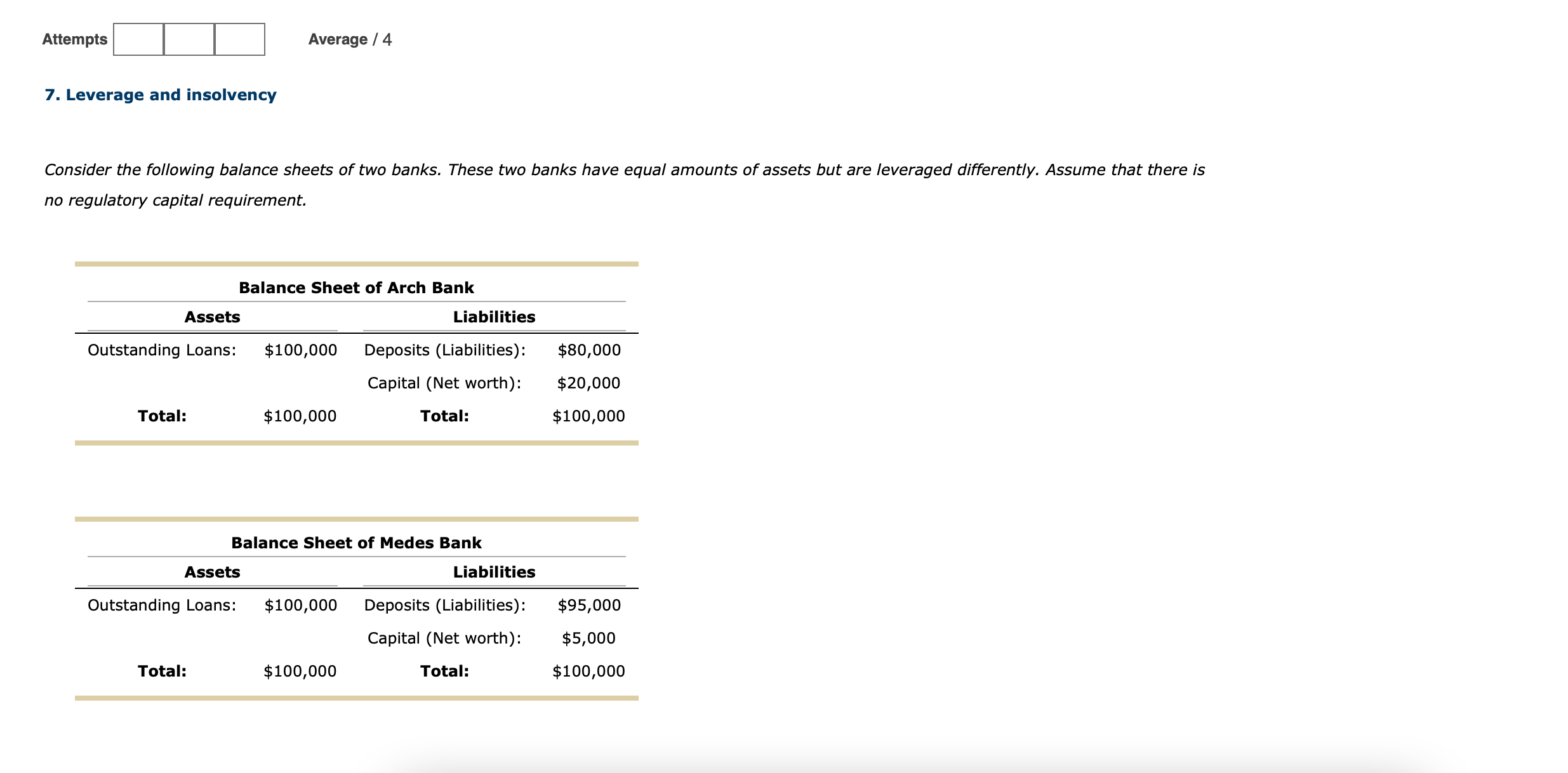
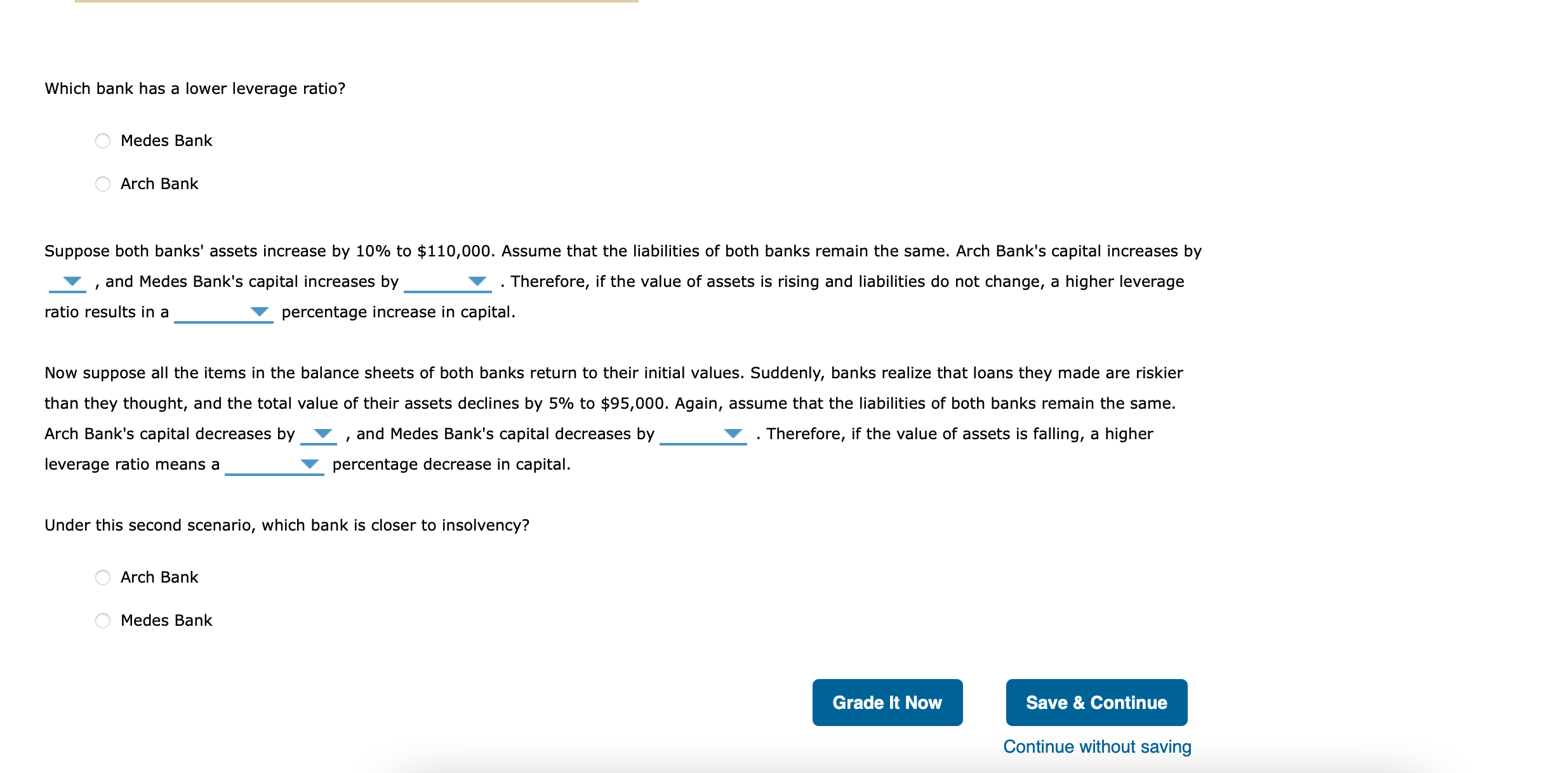
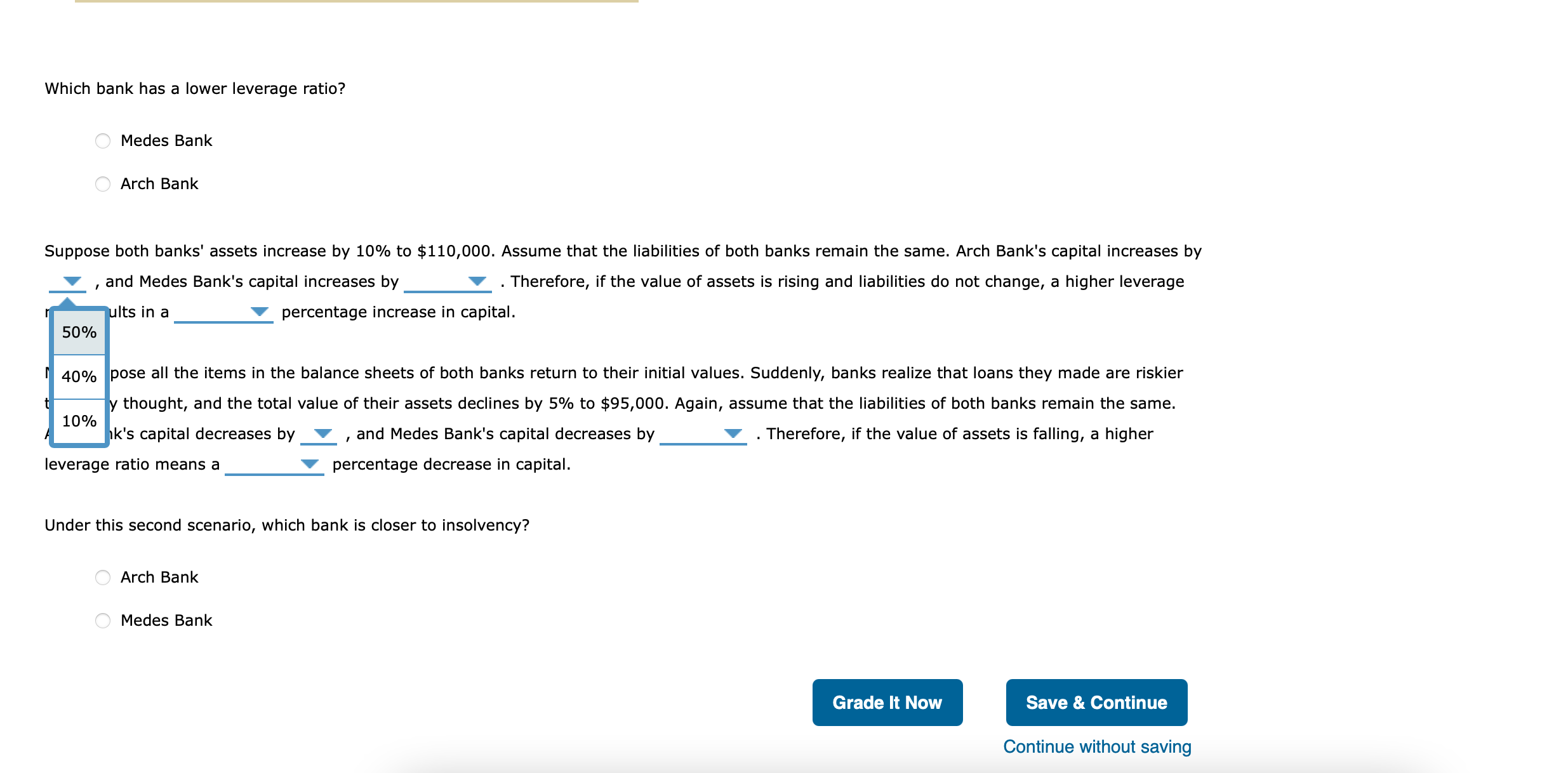
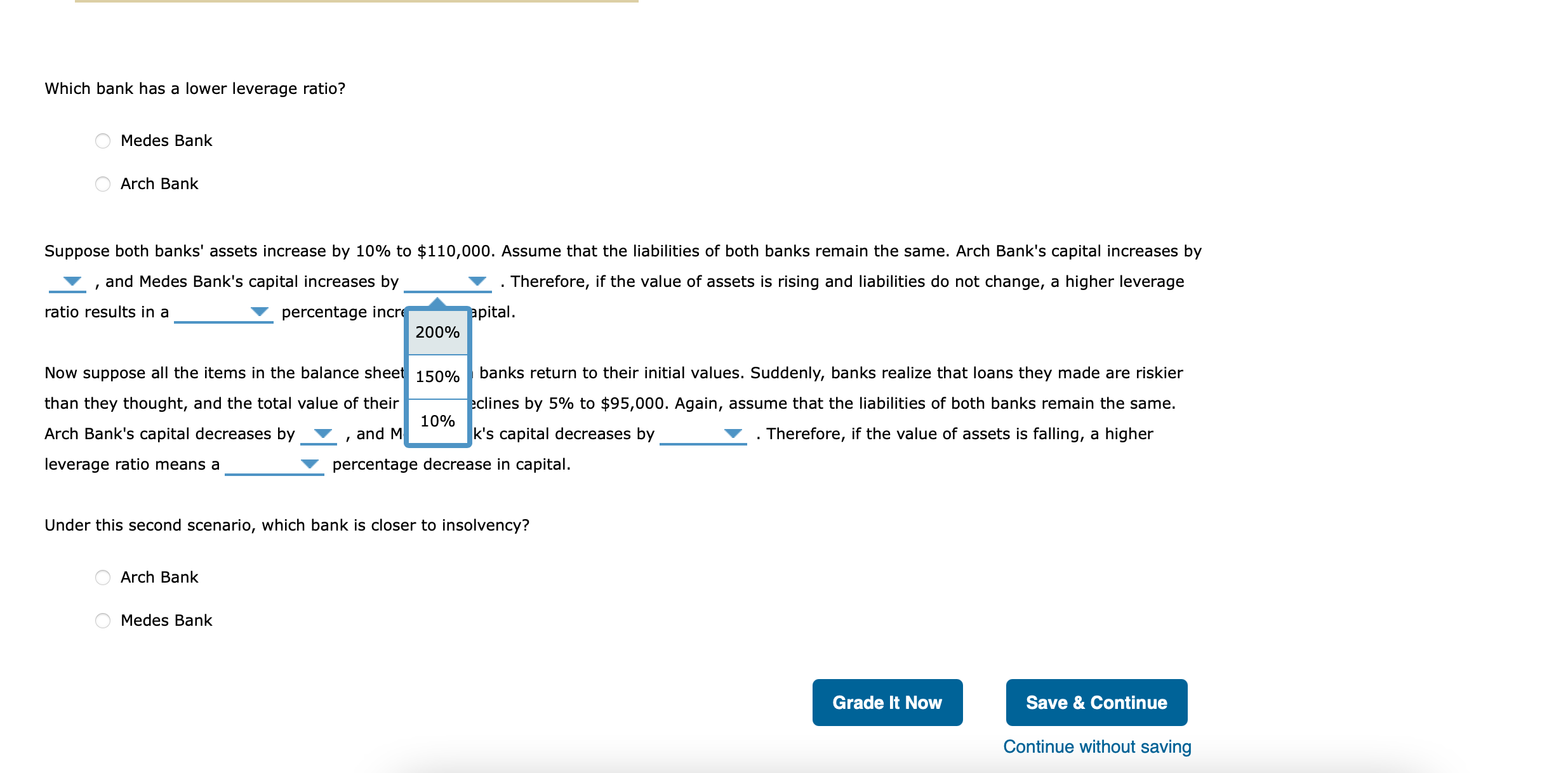
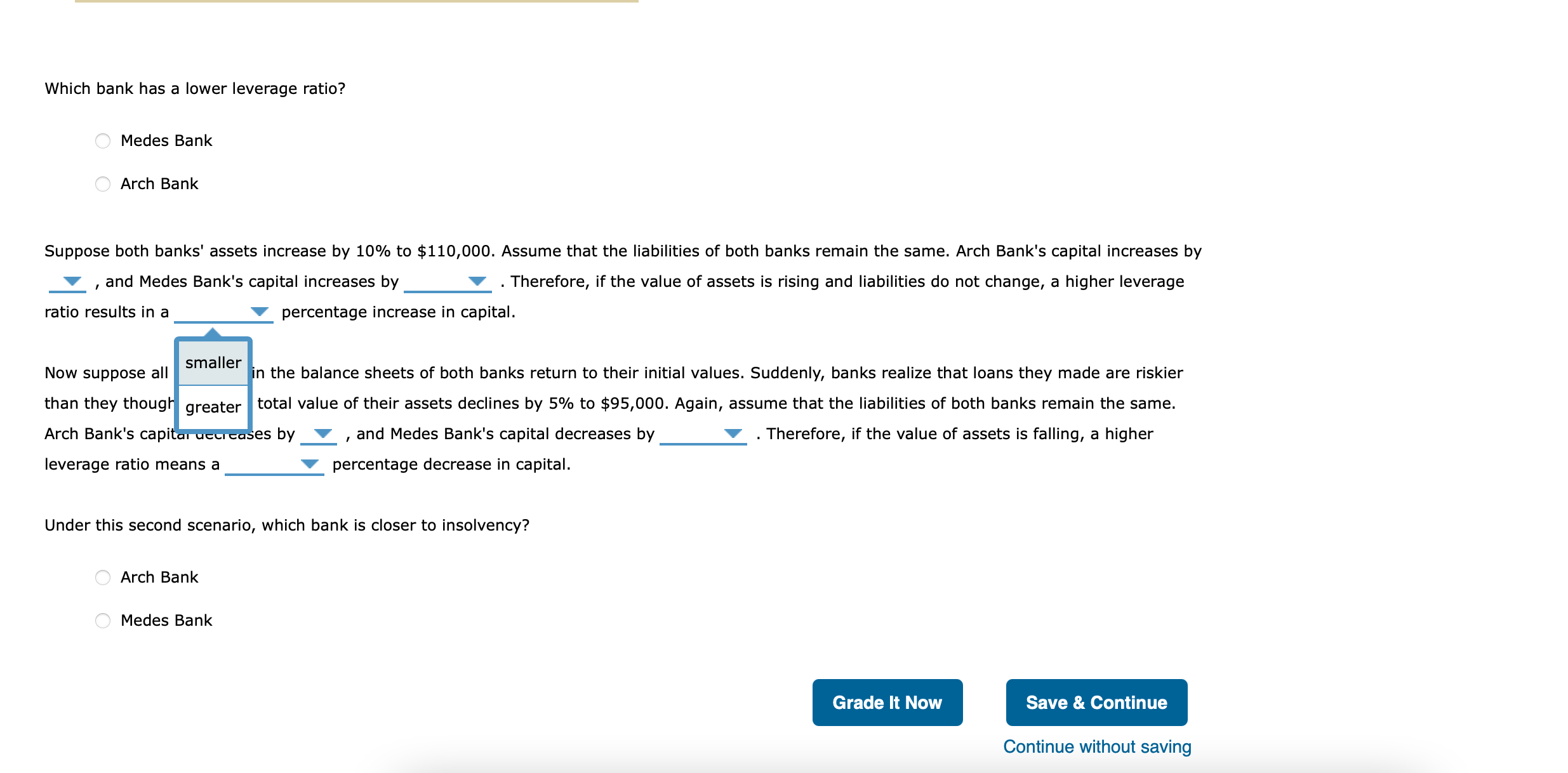
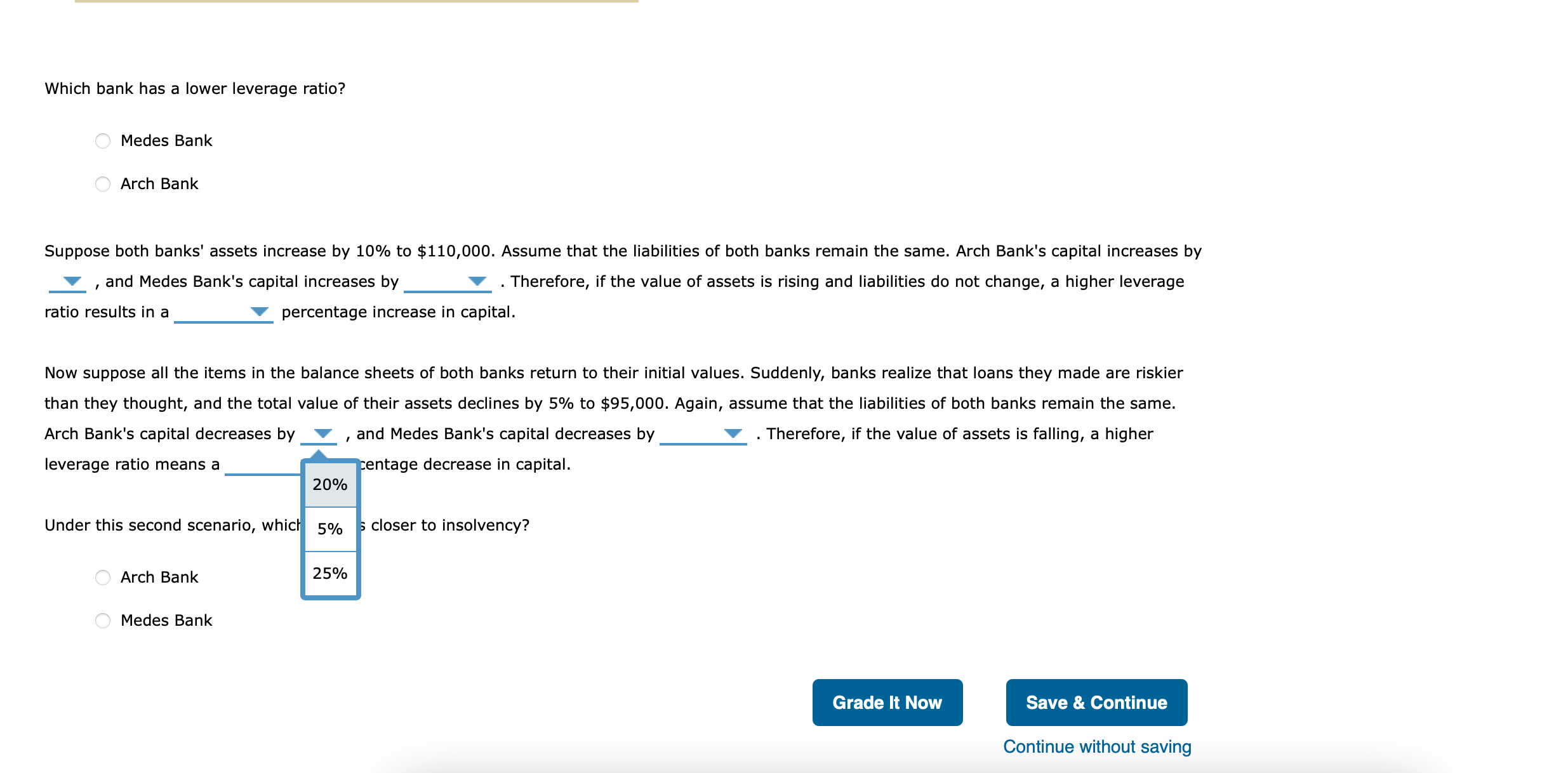
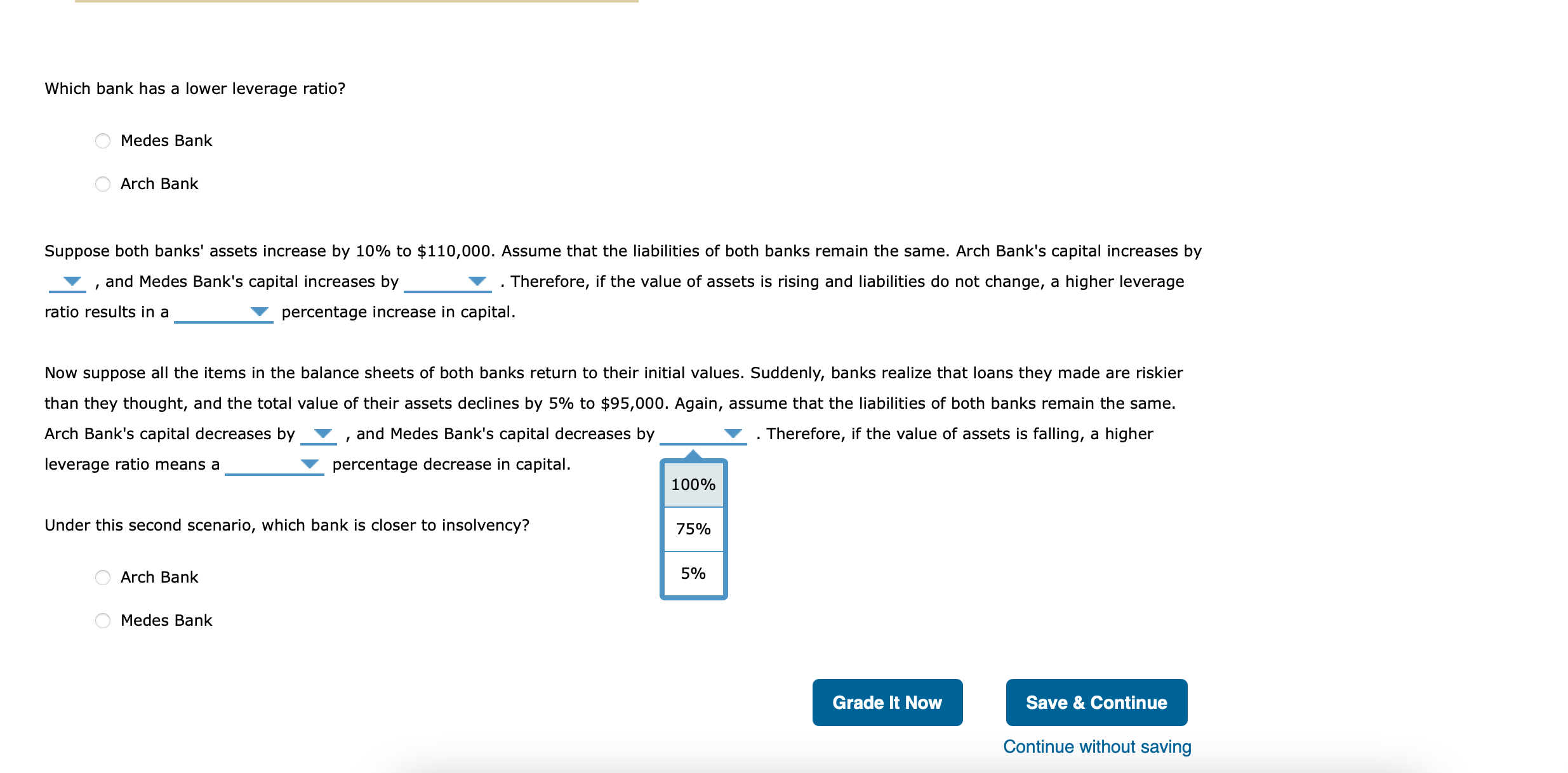
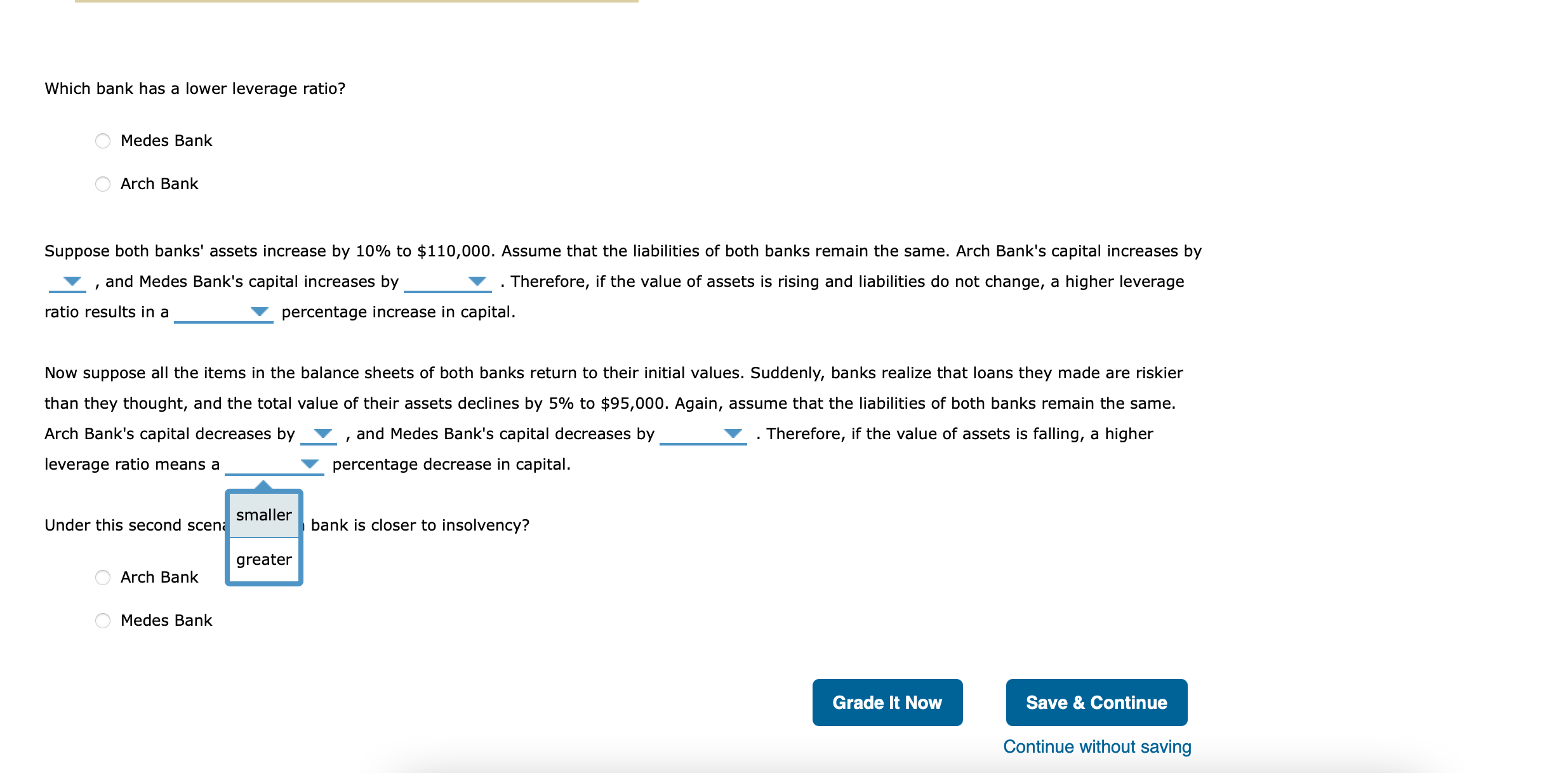
Attempts Average / 4 7. Leverage and insolvency Consider the following balance sheets of two banks. These two banks have equal amounts of assets but are leveraged differently. Assume that there is no regulatory capital requirement. Balance Sheet of Arch Bank Assets Liabilities Outstanding Loans: $100,000 Deposits (Liabilities): $80,000 Capital (Net worth) : $20,000 Total: $100,000 Total: $100,000 Balance Sheet of Medes Bank Assets Liabilities Outstanding Loans: $100,000 Deposits (Liabilities) : $95,000 Capital (Net worth): $5,000 Total: $100,000 Total: $100,000which bank has a lower leverage ratio? ' Medes Bank ' \\ Arch Bank Suppose both banks' assets increase by 10% to $110,000. Assume that the liabilities of both banks remain the same. Arch Bank's capital increases by V , and Medes Bank's capital increases by V . Therefore, if the value of assets is rising and liabilities do not change, a higher leverage ratio results in a V percentage increase in capital. Now suppose all the items in the balance sheets of both banks return to their initial values. Suddenly, banks realize that loans they made are riskier than they thought, and the total value of their assets declines by 5% to $95,000. Again, assume that the liabilities of both banks remain the same. Arch Bank's capital decreases by V , and Medes Bank's capital decreases by V . Therefore, if the value of assets is falling, a higher leverage ratio means a v percentage decrease in capital. Under this second scenario, which bank is closer to insolvency? ' Arch Bank \\ Medes Bank Continue without saving which bank has a lower leverage ratio? ' Medes Bank ' \\ Arch Bank Suppose both banks' assets increase by 10% to $110,000. Assume that the liabilities of both banks remain the same. Arch Bank's capital increases by V , and Medes Bank's capital increases by V . Therefore, if the value of assets is rising and liabilities do not change, a higher leverage Its in a V percentage increase in capital. pose all the items in the balance sheets of both banks return to their initial values. Suddenly, banks realize that loans they made are riskier thought, and the total value of their assets declines by 5% to $95,000. Again, assume that the liabilities of both banks remain the same. k's capital decreases by V , and Medes Bank's capital decreases by V . Therefore, if the value of assets is falling, a higher leverage ratio means a v percentage decrease in capital. Under this second scenario, which bank is closer to insolvency? ' Arch Bank \\ Medes Bank Continue without saving which bank has a lower leverage ratio? ' Medes Bank ' \\ Arch Bank Suppose both banks' assets increase by 10% to $110,000. Assume that the liabilities of both banks remain the same. Arch Bank's capital increases by V , and Medes Bank's capital increases by V . Therefore, if the value of assets is rising and liabilities do not change, a higher leverage ratio results in a V percentage inc pital. Now suppose all the items in the balance shee banks return to their initial values. Suddenly, banks realize that loans they made are riskier than they thought, and the total value of their -c|ines by 5% to $95,000. Again, assume that the liabilities of both banks remain the same. Arch Bank's capital decreases by V , and M k's capital decreases by V . Therefore, if the value of assets is falling, a higher leverage ratio means a v percentage decrease in capital. Under this second scenario, which bank is closer to insolvency? ' Arch Bank \\ Medes Bank Continue without saving which bank has a lower leverage ratio? ' Medes Bank ' \\ Arch Bank Suppose both banks' assets increase by 10% to $110,000. Assume that the liabilities of both banks remain the same. Arch Bank's capital increases by V , and Medes Bank's capital increases by V . Therefore, if the value of assets is rising and liabilities do not change, a higher leverage ratio results in a V percentage increase in capital. smaller Now suppose all - n the balance sheets of both banks return to their initial values. Suddenly, banks realize that loans they made are riskier total value of their assets declines by 5% to $95,000. Again, assume that the liabilities of both banks remain the same. Arch Bank's capi . than they thoug . es by V , and Medes Bank's capital decreases by V . Therefore, if the value of assets is falling, a higher leverage ratio means a v percentage decrease in capital. Under this second scenario, which bank is closer to insolvency? ' Arch Bank \\ Medes Bank Continue without saving which bank has a lower leverage ratio? ' Medes Bank ' \\ Arch Bank Suppose both banks' assets increase by 10% to $110,000. Assume that the liabilities of both banks remain the same. Arch Bank's capital increases by V , and Medes Bank's capital increases by V . Therefore, if the value of assets is rising and liabilities do not change, a higher leverage ratio results in a V percentage increase in capital. Now suppose all the items in the balance sheets of both banks return to their initial values. Suddenly, banks realize that loans they made are riskier than they thought, and the total value of their assets declines by 5% to $95,000. Again, assume that the liabilities of both banks remain the same. Arch Bank's capital decreases by V , and Medes Bank's capital decreases by V . Therefore, if the value of assets is falling, a higher leverage ratio means a entage decrease in capital. Under this second scenario, whic . closer to insolvency? ' Arch Bank \\ Medes Bank Continue without saving which bank has a lower leverage ratio? ' Medes Bank ' \\ Arch Bank Suppose both banks' assets increase by 10% to $110,000. Assume that the liabilities of both banks remain the same. Arch Bank's capital increases by V , and Medes Bank's capital increases by V . Therefore, if the value of assets is rising and liabilities do not change, a higher leverage ratio results in a V percentage increase in capital. Now suppose all the items in the balance sheets of both banks return to their initial values. Suddenly, banks realize that loans they made are riskier than they thought, and the total value of their assets declines by 5% to $95,000. Again, assume that the liabilities of both banks remain the same. Arch Bank's capital decreases by V , and Medes Bank's capital decreases by V . Therefore, if the value of assets is falling, a higher leverage ratio means a v percentage decrease in capital. Under this second scenario, which bank is closer to insolvency? ' Arch Bank \\ Medes Bank Continue without saving which bank has a lower leverage ratio? ' Medes Bank ' \\ Arch Bank Suppose both banks' assets increase by 10% to $110,000. Assume that the liabilities of both banks remain the same. Arch Bank's capital increases by V , and Medes Bank's capital increases by V . Therefore, if the value of assets is rising and liabilities do not change, a higher leverage ratio results in a V percentage increase in capital. Now suppose all the items in the balance sheets of both banks return to their initial values. Suddenly, banks realize that loans they made are riskier than they thought, and the total value of their assets declines by 5% to $95,000. Again, assume that the liabilities of both banks remain the same. Arch Bank's capital decreases by V , and Medes Bank's capital decreases by V . Therefore, if the value of assets is falling, a higher leverage ratio means a v percentage decrease in capital. Under this second scen M bank is closer to insolvency? ' Arch Bank \\ Medes Bank Continue without saving
Step by Step Solution
There are 3 Steps involved in it

Get step-by-step solutions from verified subject matter experts
 Study Help