



Question: Attention: Due to a bug in Google Chrome, this page may not function correctly. Click here to learn more 11. Nonannual compounding period Aa Aa
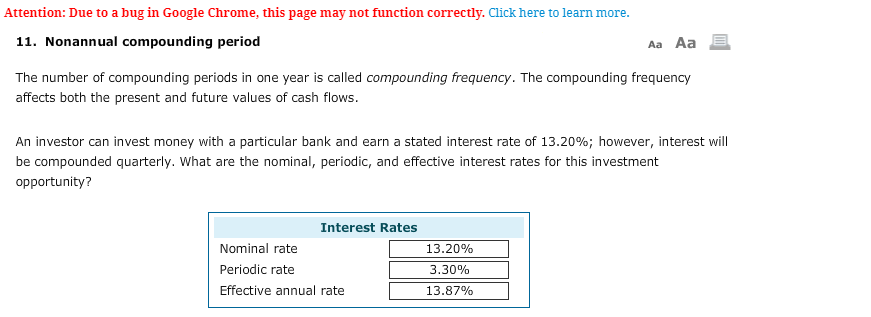
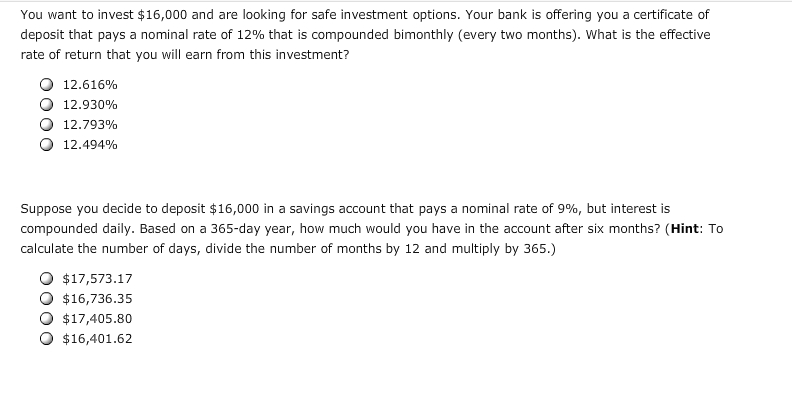
Attention: Due to a bug in Google Chrome, this page may not function correctly. Click here to learn more 11. Nonannual compounding period Aa Aa The number of compounding periods in one year is called compounding frequency. The compounding frequency affects both the present and future values of cash flows. An investor can invest money with a particular bank and earn a stated interest rate of 13.20%; however, interest will be compounded quarterly. What are the nominal, periodic, and effective interest rates for this investment opportunity? Interest Rates Nominal rate Periodic rate Effective annual rate 13.20% 3.30% 13.87% You want to invest $16,000 and are looking for safe investment options. Your bank is offering you a certificate of deposit that pays a nominal rate of 12% that is compounded bimonthly (every two months). what is the effective rate of return that you will earn from this investment? o 12.616% 12.93090 0 12.793% 12.49496 Suppose you decide to deposit $16,000 in a savings account that pays a nominal rate of 9%, but interest is compounded daily. Based on a 365-day year, how much would you have in the account after six months? (Hint: To calculate the number of days, divide the number of months by 12 and multiply by 365.) $17,573.17 o $16,736.35 $17,405.80 o $16,401.62
Step by Step Solution
There are 3 Steps involved in it

Get step-by-step solutions from verified subject matter experts