







Question: Auditing: Acquisition and payment cycle Question below: You are a member of the audit team currently engaged on the 31 March 2022 external audit of
Auditing: Acquisition and payment cycle
Question below:
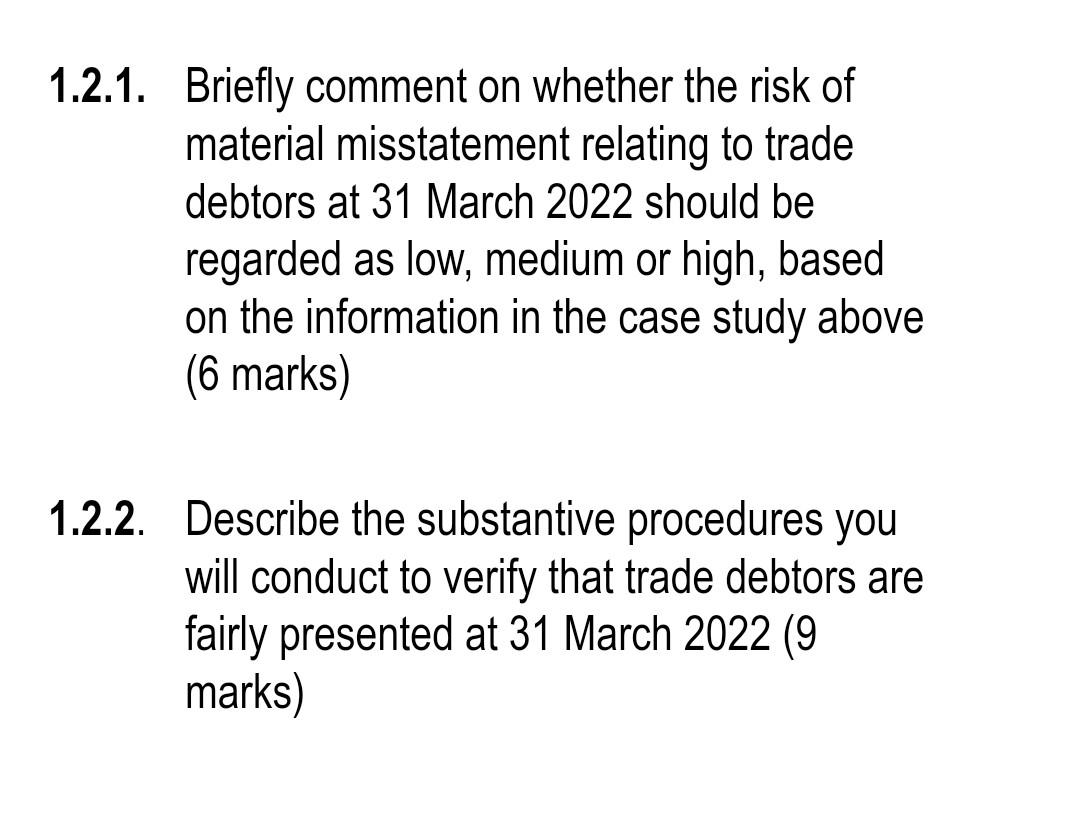
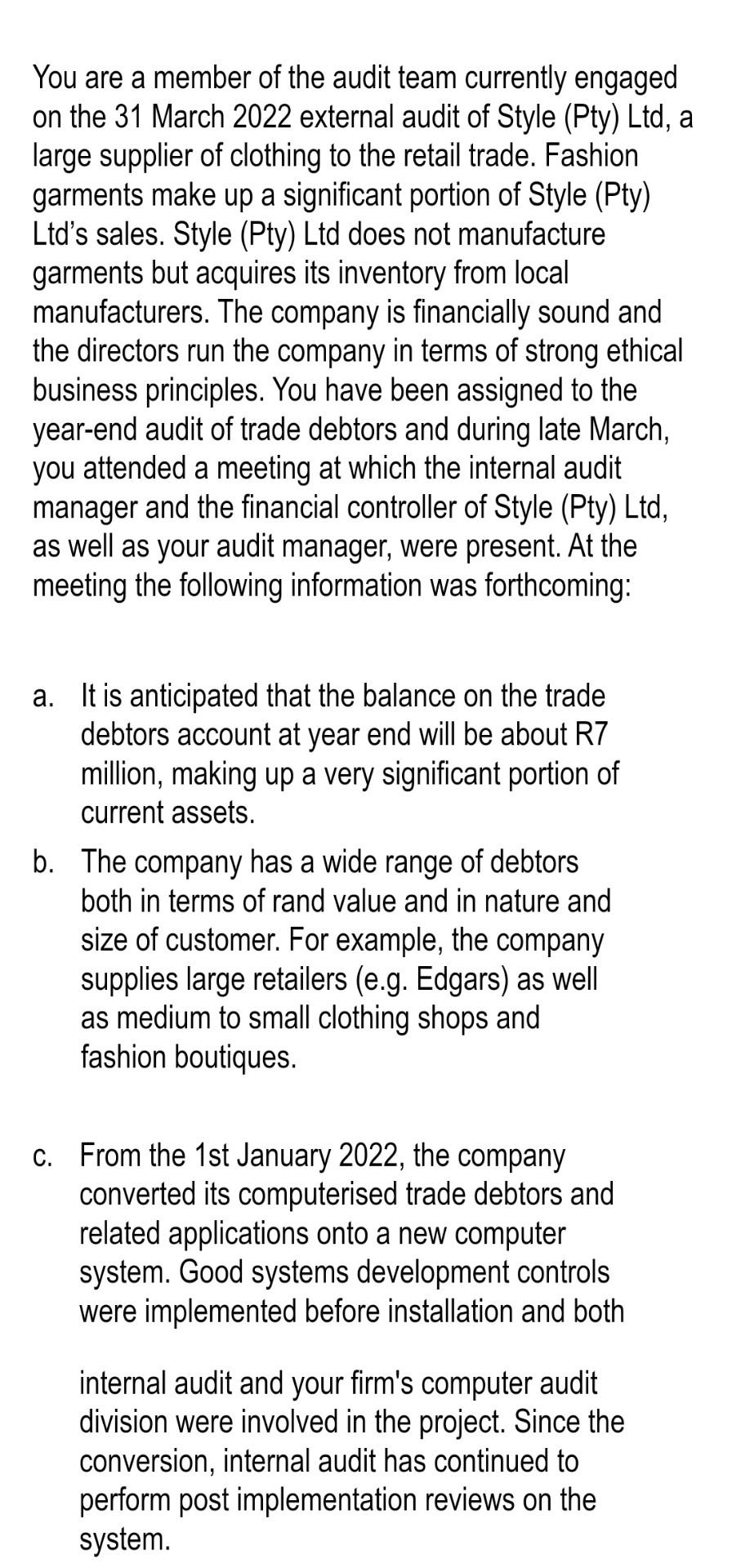
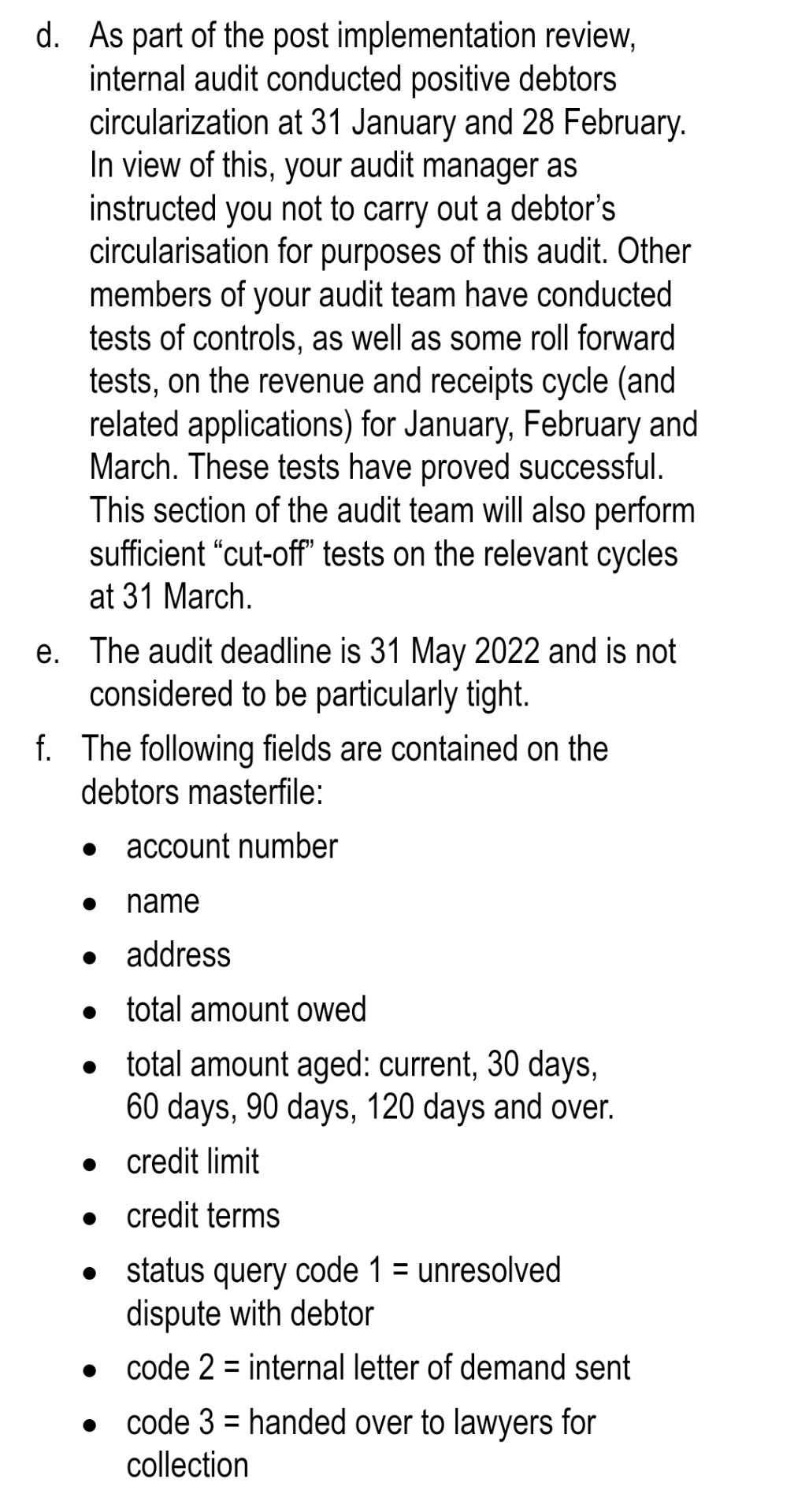
You are a member of the audit team currently engaged on the 31 March 2022 external audit of Style (Pty) Ltd, large supplier of clothing to the retail trade. Fashion garments make up a significant portion of Style (Pty) Ltd's sales. Style (Pty) Ltd does not manufacture garments but acquires its inventory from local manufacturers. The company is financially sound and the directors run the company in terms of strong ethica business principles. You have been assigned to the year-end audit of trade debtors and during late March, you attended a meeting at which the internal audit manager and the financial controller of Style (Pty) Ltd, as well as your audit manager, were present. At the meeting the following information was forthcoming: a. It is anticipated that the balance on the trade debtors account at year end will be about R7 million, making up a very significant portion of current assets. b. The company has a wide range of debtors both in terms of rand value and in nature and size of customer. For example, the company supplies large retailers (e.g. Edgars) as well as medium to small clothing shops and fashion boutiques. c. From the 1st January 2022, the company converted its computerised trade debtors and related applications onto a new computer system. Good systems development controls were implemented before installation and both internal audit and your firm's computer audit division were involved in the project. Since the conversion, internal audit has continued to perform post implementation reviews on the system. d. As part of the post implementation review, internal audit conducted positive debtors circularization at 31 January and 28 February. In view of this, your audit manager as instructed you not to carry out a debtor's circularisation for purposes of this audit. Other members of your audit team have conducted tests of controls, as well as some roll forward tests, on the revenue and receipts cycle (and related applications) for January, February and March. These tests have proved successful. This section of the audit team will also perform sufficient "cut-off" tests on the relevant cycles at 31 March. e. The audit deadline is 31 May 2022 and is not considered to be particularly tight. f. The following fields are contained on the debtors masterfile: - account number - name - address - total amount owed - total amount aged: current, 30 days, 60 days, 90 days, 120 days and over. - credit limit - credit terms - status query code 1= unresolved dispute with debtor - code 2= internal letter of demand sent - code 3= handed over to lawyers for collection 2.1. Briefly comment on whether the risk of material misstatement relating to trade debtors at 31 March 2022 should be regarded as low, medium or high, based on the information in the case study above (6 marks) .2.2. Describe the substantive procedures you will conduct to verify that trade debtors are fairly presented at 31 March 2022 (9 marks)
Step by Step Solution
There are 3 Steps involved in it

Get step-by-step solutions from verified subject matter experts
 Study Help