







Question: b) After completing Exercise 2, what is the correct total for Fixed Costs? See circle. EXERCISE 2: HIGH/LOW METHOD Ace Industries observed the following utility
b) After completing Exercise 2, what is the correct total for Fixed Costs? See circle.
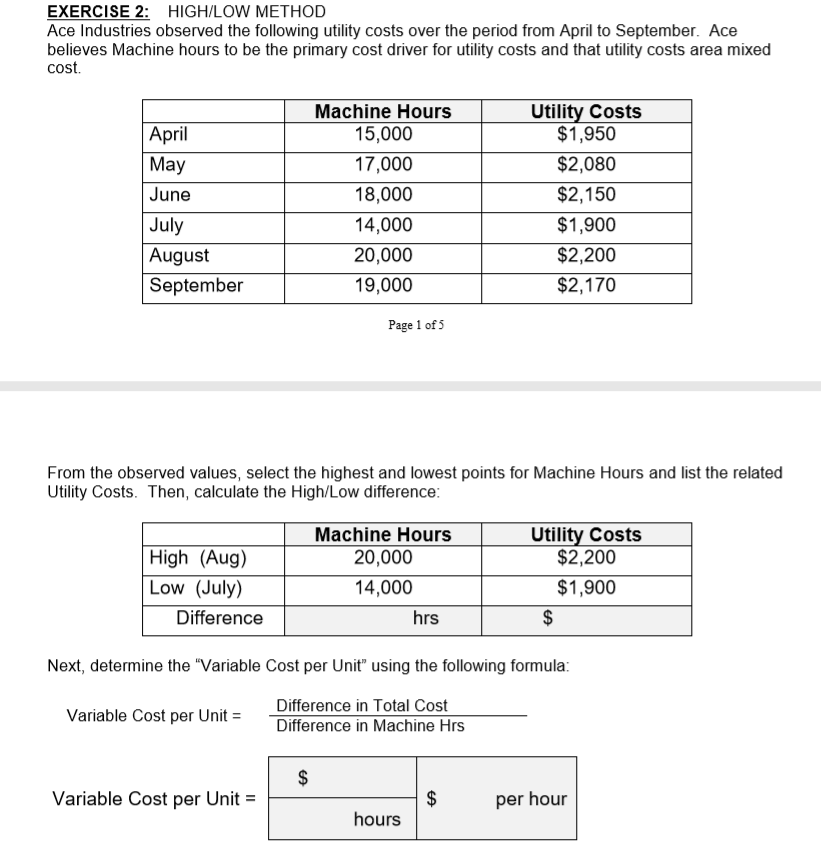
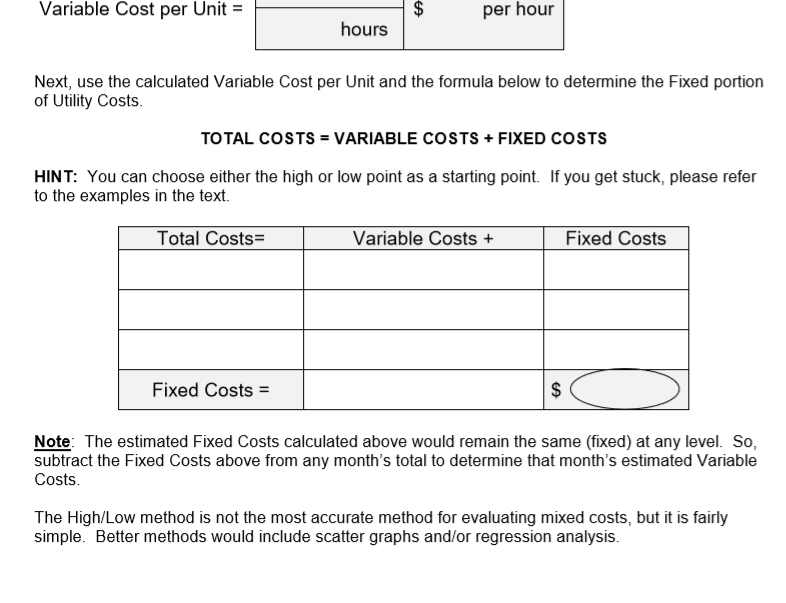
EXERCISE 2: HIGH/LOW METHOD Ace Industries observed the following utility costs over the period from April to September. Ace believes Machine hours to be the primary cost driver for utility costs and that utility costs area mixed cost. Machine Hours 15,000 17,000 18,000 14,000 20,000 19,000 Utility Costs $1,950 $2,080 $2,150 $1,900 $2,200 $2,170 April May June July August September Page 1 of 5 From the observed values, select the highest and lowest points for Machine Hours and list the related Utility Costs. Then, calculate the High/Low difference Machine Hours 20,000 14,000 Utility Costs $2,200 High (Aug) Low (July) $1,900 Difference hrs Next, determine the "Variable Cost per Unit" using the following formula Difference in Total Cost Difference in Machine Hrs Variable Cost per Unit Variable Cost per Unit per hour hours Variable Cost per Unit- per hour hours Next, use the calculated Variable Cost per Unit and the formula below to determine the Fixed portion of Utility Costs. TOTAL COSTS-VARIABLE COSTS FIXED COSTS HINT: You can choose either the high or low point as a starting point. If you get stuck, please refer to the examples in the text. Total Costs Variable Costs + Fixed Costs Fixed Costs- Note: The estimated Fixed Costs calculated above would remain the same (fixed) at any level. So, subtract the Fixed Costs above from any month's total to determine that month's estimated Variable Costs The High/Low method is not the most accurate method for evaluating mixed costs, but it is fairly simple. Better methods would include scatter graphs and/or regression analysis
Step by Step Solution
There are 3 Steps involved in it

Get step-by-step solutions from verified subject matter experts
 Study Help