







Question: b) Determine the terminal temperature difference on both ends of the heat exchanger T and calculate the log mean temperature difference if the heat exchanger
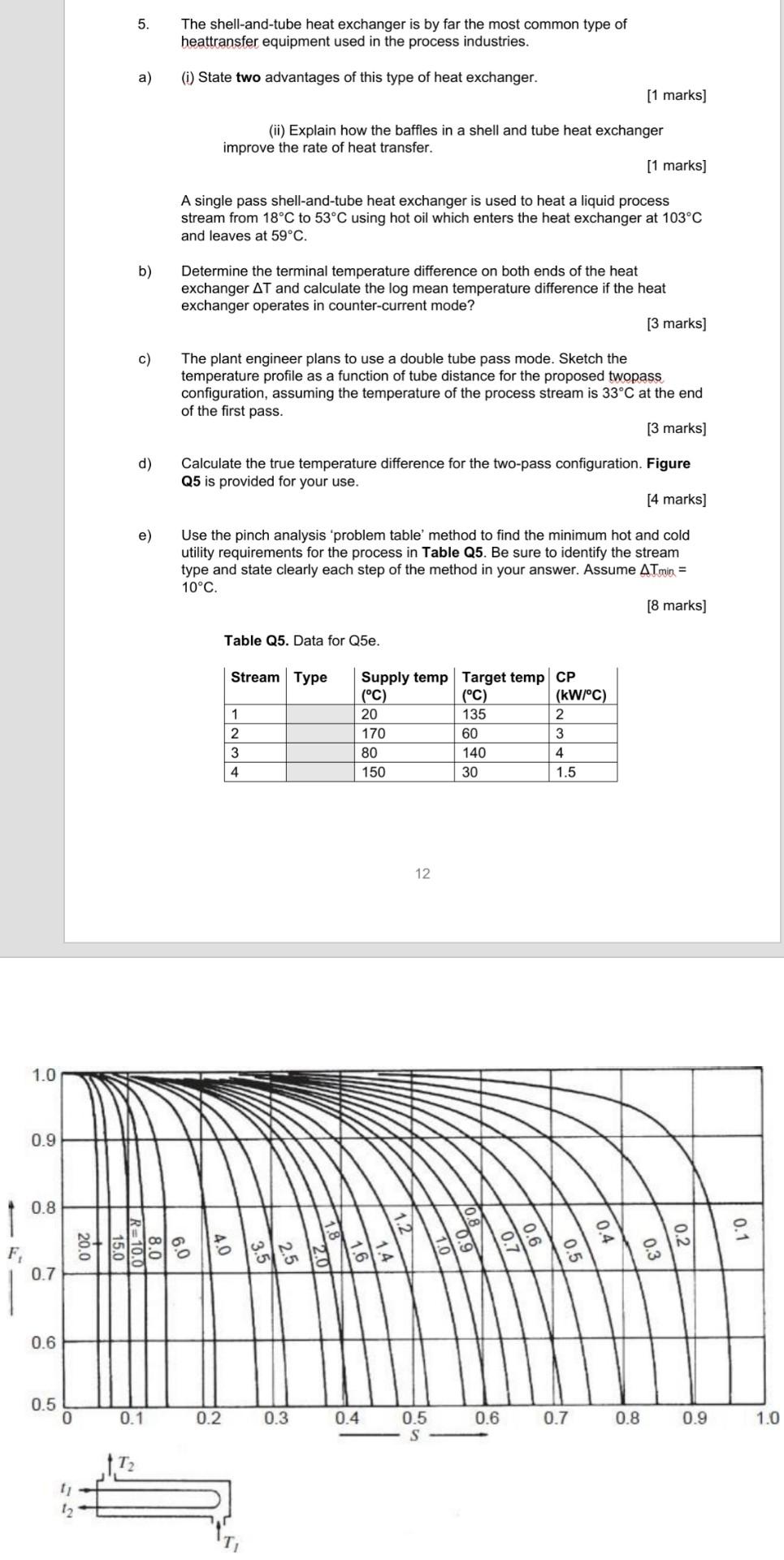
b) Determine the terminal temperature difference on both ends of the heat exchanger T and calculate the log mean temperature difference if the heat exchanger operates in counter-current mode? [3 marks] c) The plant engineer plans to use a double tube pass mode. Sketch the temperature profile as a function of tube distance for the proposed twopass configuration, assuming the temperature of the process stream is 33C at the end of the first pass. [3 marks] d) Calculate the true temperature difference for the two-pass configuration. Figure Q5 is provided for your use. [4 marks] e) Use the pinch analysis problem table method to find the minimum hot and cold utility requirements for the process in Table Q5. Be sure to identify the stream type and state clearly each step of the method in your answer. Assume Tmin = 10C.
5. The shell-and-tube heat exchanger is by far the most common type of heattransfer equipment used in the process industries. a) (i) State two advantages of this type of heat exchanger. [1 marks) (ii) Explain how the baffles in a shell and tube heat exchanger improve the rate of heat transfer. [1 marks] A single pass shell-and-tube heat exchanger is used to heat a liquid process stream from 18C to 53C using hot oil which enters the heat exchanger at 103C and leaves at 59C. b) Determine the terminal temperature difference on both ends of the heat exchanger AT and calculate the log mean temperature difference if the heat exchanger operates in counter-current mode? [3 marks] c) The plant engineer plans to use a double tube pass mode. Sketch the temperature profile as a function of distan for the proposed twopass configuration, assuming the temperature of the process stream is 33C at the end of the first pass. [3 marks] d) Calculate the true temperature difference for the two-pass configuration. Figure Q5 is provided for your use. [4 marks] e) Use the pinch analysis 'problem table method to find the minimum hot and cold utility requirements for the process in Table Q5. Be sure to identify the stream type and state clearly each step of the method in your answer. Assume AT min = 10C. [8 marks] Table Q5. Data for Q5e. Stream Type 1 2 3 4 Supply temp Target temp CP (C) (C) (kW/C) 20 135 2 170 60 3 80 140 4 150 30 1.5 12 1.0 0.9 0.8 1 11.2 1.8 2.0 0.7 0.6 0.4 0.1 Z'O 1.0 F 1.6 1.4 0.5 0.3 0.7 0.6 0.5 0 0.1 0.2 0.3 0.4 0.6 0.7 0.8 0.9 1.0 0.5 S 1, T2 11 12
Step by Step Solution
There are 3 Steps involved in it

Get step-by-step solutions from verified subject matter experts
 Study Help