Question: B I valt x x ADA Paragraph Styles Dictate Sensitivity Case Study-1 Chernobyl, Ukraine: On 25 April 1986, prior to a routine shut-down, the reactor
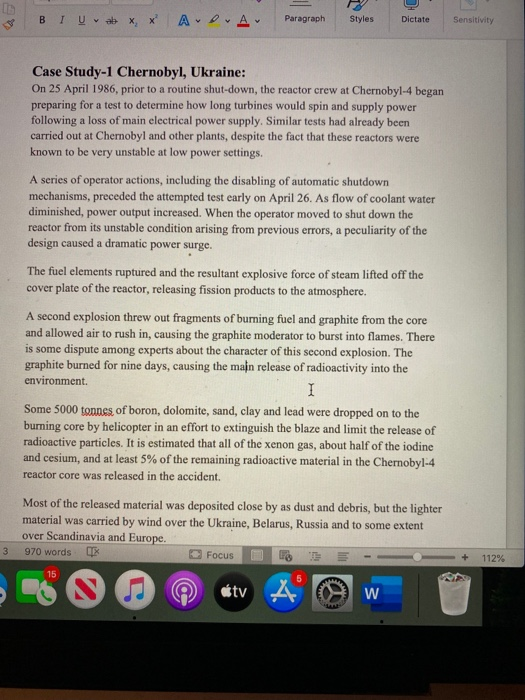
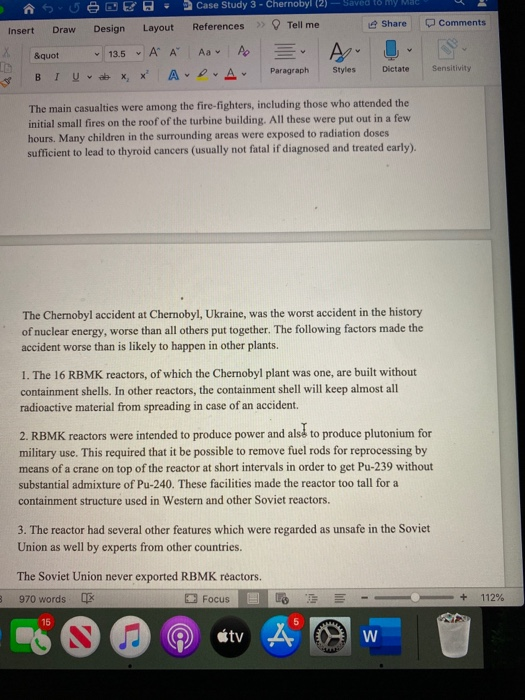
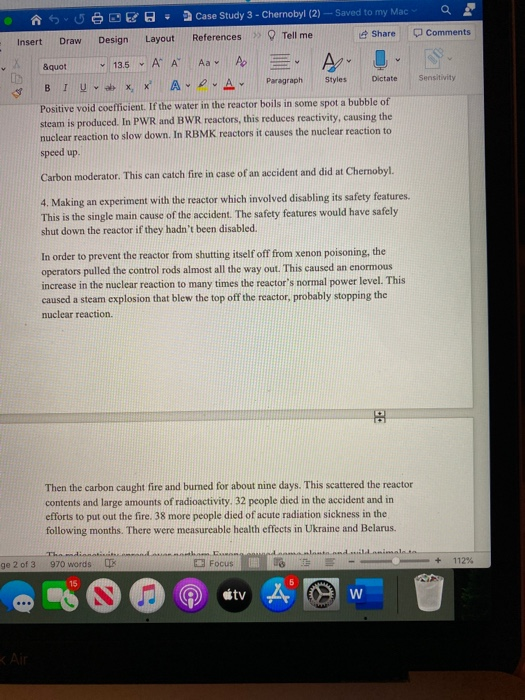
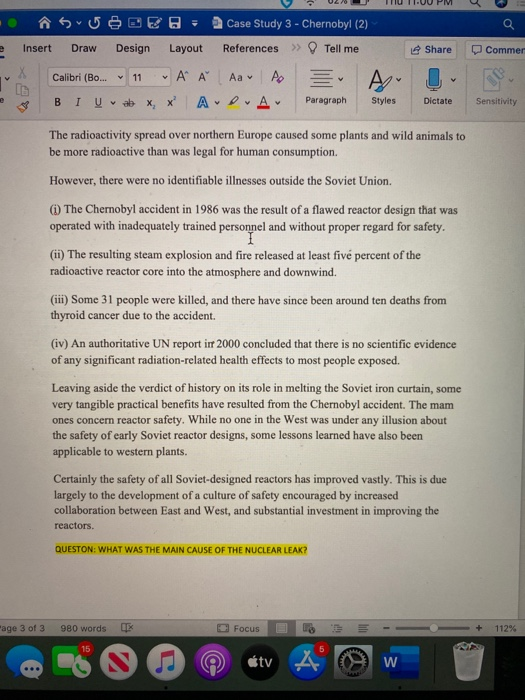
B I valt x x ADA Paragraph Styles Dictate Sensitivity Case Study-1 Chernobyl, Ukraine: On 25 April 1986, prior to a routine shut-down, the reactor crew at Chernobyl-4 began preparing for a test to determine how long turbines would spin and supply power following a loss of main electrical power supply. Similar tests had already been carried out at Chernobyl and other plants, despite the fact that these reactors were known to be very unstable at low power settings. A series of operator actions, including the disabling of automatic shutdown mechanisms, preceded the attempted test early on April 26. As flow of coolant water diminished, power output increased. When the operator moved to shut down the reactor from its unstable condition arising from previous errors, a peculiarity of the design caused a dramatic power surge. The fuel elements ruptured and the resultant explosive force of steam lifted off the cover plate of the reactor, releasing fission products to the atmosphere. A second explosion threw out fragments of burning fuel and graphite from the core and allowed air to rush in, causing the graphite moderator to burst into flames. There is some dispute among experts about the character of this second explosion. The graphite burned for nine days, causing the main release of radioactivity into the environment 1 Some 5000 tonnes of boron, dolomite, sand, clay and lead were dropped on to the burning core by helicopter in an effort to extinguish the blaze and limit the release of radioactive particles. It is estimated that all of the xenon gas, about half of the iodine and cesium, and at least 5% of the remaining radioactive material in the Chernobyl-4 reactor core was released in the accident. Most of the released material was deposited close by as dust and debris, but the lighter material was carried by wind over the Ukraine, Belarus, Russia and to some extent over Scandinavia and Europe. Focus 3 970 words + 112% 15 5 tv A W Case Study 3 - Chernobyl (2) - Saved to my Mac Insert >> Tell me Share Comments Draw Design Layout References X " 13.5 y A ' ' Aav Ao A DA- Paragraph Styles Dictate Sensitivity The main casualties were among the fire-fighters, including those who attended the initial small fires on the roof of the turbine building. All these were put out in a few hours. Many children in the surrounding areas were exposed to radiation doses sufficient to lead to thyroid cancers (usually not fatal if diagnosed and treated early). The Chernobyl accident at Chernobyl, Ukraine, was the worst accident in the history of nuclear energy, worse than all others put together. The following factors made the accident worse than is likely to happen in other plants. 1. The 16 RBMK reactors, of which the Chernobyl plant was one, are built without containment shells. In other reactors, the containment shell will keep almost all radioactive material from spreading in case of an accident. 2. RBMK reactors were intended to produce power and als to produce plutonium for military use. This required that it be possible to remove fuel rods for reprocessing by means of a crane on top of the reactor at short intervals in order to get Pu-239 without substantial admixture of Pu-240. These facilities made the reactor too tall for a containment structure used in Western and other Soviet reactors. 3. The reactor had several other features which were regarded as unsafe in the Soviet Union as well by experts from other countries. The Soviet Union never exported RBMK reactors. Focus ty A W 3 970 words + 112% 15 (od Case Study 3 - Chernobyl (2) - Saved to my Mac Share Draw References Comments Insert Design >> Tell me Layout A. Sensitivity $ " 13.5 - A A Aa A u v w x x ADA Paragraph Styles Dictate Positive void coefficient. If the water in the reactor boils in some spot a bubble of steam is produced. In PWR and BWR reactors, this reduces reactivity, causing the nuclear reaction to slow down. In RBMK reactors it causes the nuclear reaction to speed up Carbon moderator. This can catch fire in case of an accident and did at Chernobyl. 4. Making an experiment with the reactor which involved disabling its safety features. This is the single main cause of the accident. The safety features would have safely shut down the reactor if they hadn't been disabled. In order to prevent the reactor from shutting itself off from xenon poisoning, the operators pulled the control rods almost all the way out. This caused an enormous increase in the nuclear reaction to many times the reactor's normal power level. This caused a steam explosion that blew the top off the reactor, probably stopping the nuclear reaction. Then the carbon caught fire and burned for about nine days. This scattered the reactor contents and large amounts of radioactivity. 32 people died in the accident and in efforts to put out the fire. 38 more people died of acute radiation sickness in the following months. There were measureable health effects in Ukraine and Belarus. and animalia The din 970 words ge 2 of 3 CTX 112% Focus 15 6 tv W > Tell me X Calibri (Bo... 11 ~ A Aav B I Uab X, X Av. Av Paragraph Styles e Dictate Sensitivity The radioactivity spread over northern Europe caused some plants and wild animals to be more radioactive than was legal for human consumption However, there were no identifiable illnesses outside the Soviet Union. The Chernobyl accident in 1986 was the result of a flawed reactor design that was operated with inadequately trained personnel and without proper regard for safety. (ii) The resulting steam explosion and fire released at least five percent of the radioactive reactor core into the atmosphere and downwind. (iii) Some 31 people were killed, and there have since been around ten deaths from thyroid cancer due to the accident. (iv) An authoritative UN report irr 2000 concluded that there is no scientific evidence of any significant radiation-related health effects to most people exposed. Leaving aside the verdict of history on its role in melting the Soviet iron curtain, some very tangible practical benefits have resulted from the Chernobyl accident. The mam ones concern reactor safety. While no one in the West was under any illusion about the safety of early Soviet reactor designs, some lessons learned have also been applicable to western plants. Certainly the safety of all Soviet-designed reactors has improved vastly. This is due largely to the development of a culture of safety encouraged by increased collaboration between East and West, and substantial investment in improving the reactors. QUESTON: WHAT WAS THE MAIN CAUSE OF THE NUCLEAR LEAK? "age 3 of 3 980 words LE Focus + 112% 15 tv A W