Question: (b) IKEA CASE STUDY Love it or hate it, IKEA is the most successful furniture retailer, with 276 stores in 36 countries. Ingvar Kamprad set
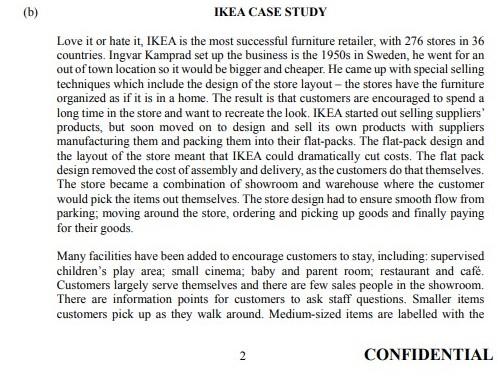
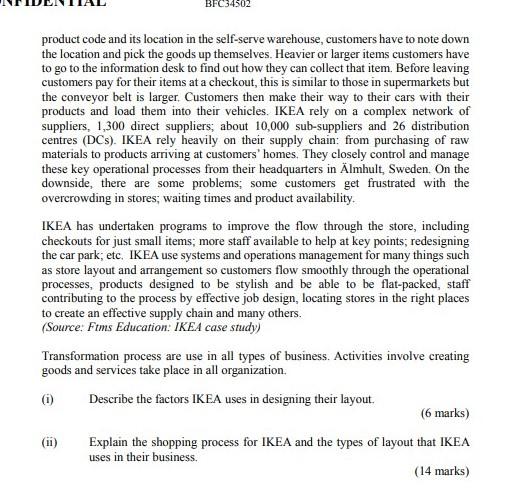
(b) IKEA CASE STUDY Love it or hate it, IKEA is the most successful furniture retailer, with 276 stores in 36 countries. Ingvar Kamprad set up the business is the 1950s in Sweden, he went for an out of town location so it would be bigger and cheaper. He came up with special selling techniques which include the design of the store layout - the stores have the furniture organized as if it is in a home. The result is that customers are encouraged to spend a long time in the store and want to recreate the look. IKEA started out selling suppliers' products, but soon moved on to design and sell its own products with suppliers manufacturing them and packing them into their flat-packs. The flat-pack design and the layout of the store meant that IKEA could dramatically cut costs. The flat pack design removed the cost of assembly and delivery, as the customers do that themselves. The store became a combination of showroom and warehouse where the customer would pick the items out themselves. The store design had to ensure smooth flow from parking, moving around the store, ordering and picking up goods and finally paying for their goods. Many facilities have been added to encourage customers to stay, including: supervised children's play area; small cinema; baby and parent room, restaurant and cafe. Customers largely serve themselves and there are few sales people in the showroom, There are information points for customers to ask staff questions, Smaller items customers pick up as they walk around. Medium-sized items are labelled with the 2 CONFIDENTIAL BFC34502 product code and its location in the self-serve warehouse, customers have to note down the location and pick the goods up themselves. Heavier or larger items customers have to go to the information desk to find out how they can collect that item. Before leaving customers pay for their items at a checkout, this is similar to those in supermarkets but the conveyor belt is larger. Customers then make their way to their cars with their products and load them into their vehicles. IKEA rely on a complex network of suppliers, 1,300 direct suppliers, about 10,000 sub-suppliers and 26 distribution centres (DCs). IKEA rely heavily on their supply chain: from purchasing of raw materials to products arriving at customers' homes. They closely control and manage these key operational processes from their headquarters in lmhult, Sweden. On the downside, there are some problems; some customers get frustrated with the overcrowding in stores, waiting times and product availability. IKEA has undertaken programs to improve the flow through the store, including checkouts for just small items; more staff available to help at key points; redesigning the car park; etc. IKEA use systems and operations management for many things such as store layout and arrangement so customers flow smoothly through the operational processes, products designed to be stylish and be able to be flat-packed, staff contributing to the process by effective job design, locating stores in the right places to create an effective supply chain and many others. (Source: Fts Education: IKEA case study) Transformation process are use in all types of business. Activities involve creating goods and services take place in all organization (i) Describe the factors IKEA uses in designing their layout. (6 marks) Explain the shopping process for IKEA and the types of layout that IKEA uses in their business. (14 marks)









 Study Help