







Question: (b) More than one (a) Zero (c) Between one and three, inclusive (d) Two or fewer oles (e) Five 4.3.4 The same survey database cited
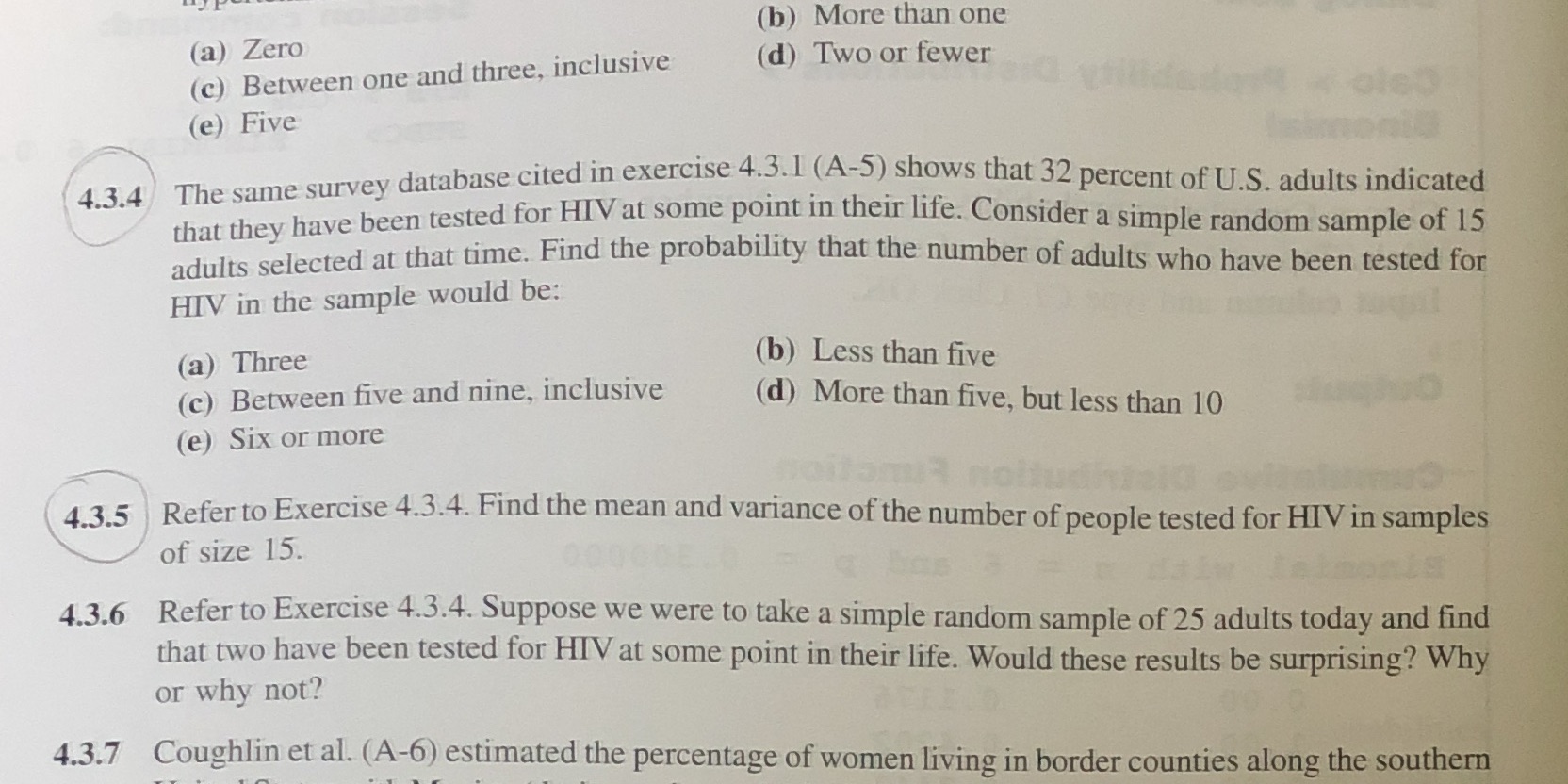
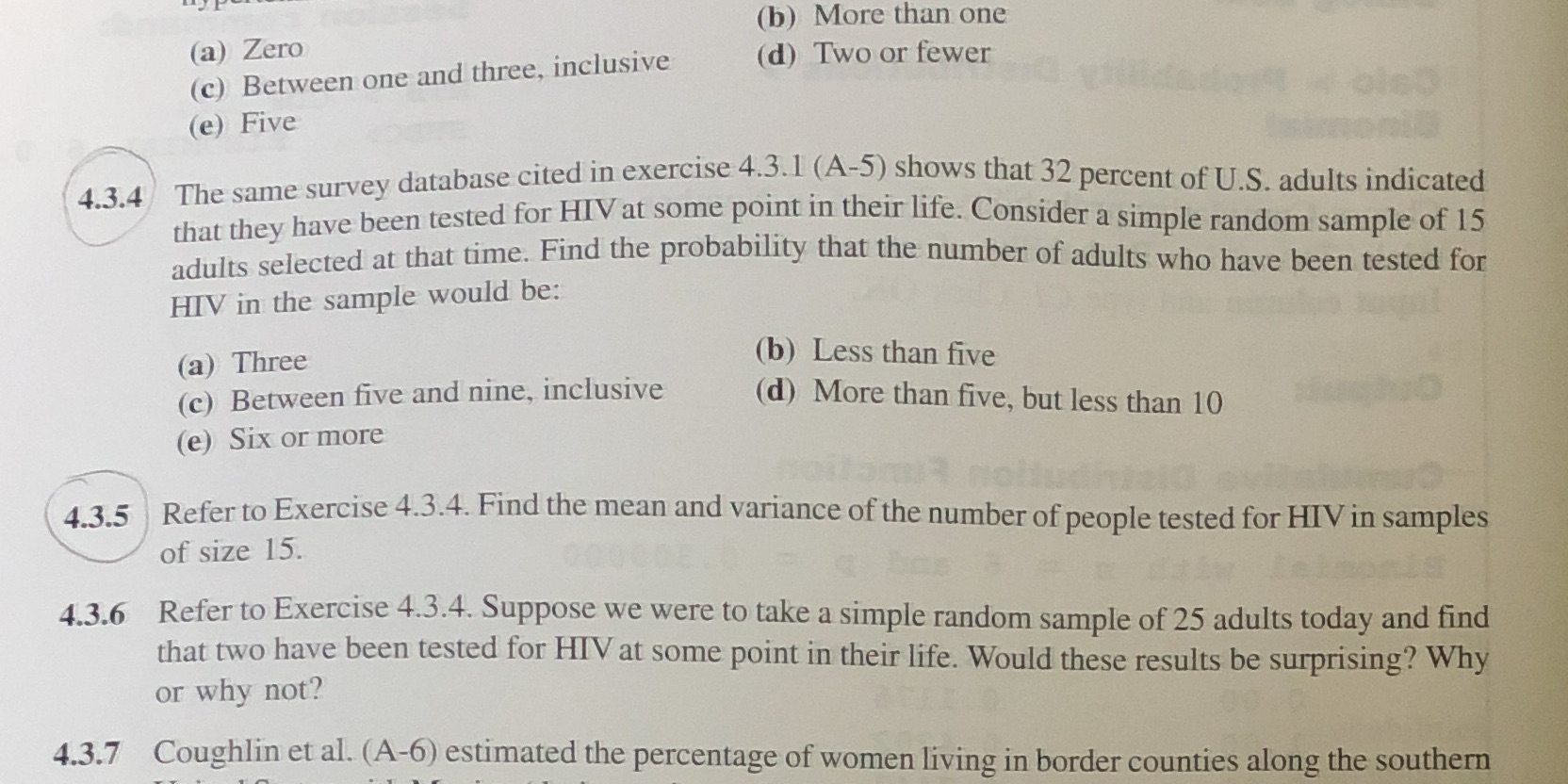
(b) More than one (a) Zero (c) Between one and three, inclusive (d) Two or fewer oles (e) Five 4.3.4 The same survey database cited in exercise 4.3.1 (A-5) shows that 32 percent of U.S. adults indicated that they have been tested for HIV at some point in their life. Consider a simple random sample of 15 adults selected at that time. Find the probability that the number of adults who have been tested for HIV in the sample would be: (a) Three (b) Less than five (c) Between five and nine, inclusive (d) More than five, but less than 10 (e) Six or more 4.3.5 Refer to Exercise 4.3.4. Find the mean and variance of the number of people tested for HIV in samples of size 15. 4.3.6 Refer to Exercise 4.3.4. Suppose we were to take a simple random sample of 25 adults today and find that two have been tested for HIV at some point in their life. Would these results be surprising? Why or why not? 4.3.7 Coughlin et al. (A-6) estimated the percentage of women living in border counties along the southern
Step by Step Solution
There are 3 Steps involved in it

Get step-by-step solutions from verified subject matter experts
 Study Help