



Question: b. should or should not f. part 1: increases or decreases part 2:increases or decreases part 3: increase or decrease part 4: less or more
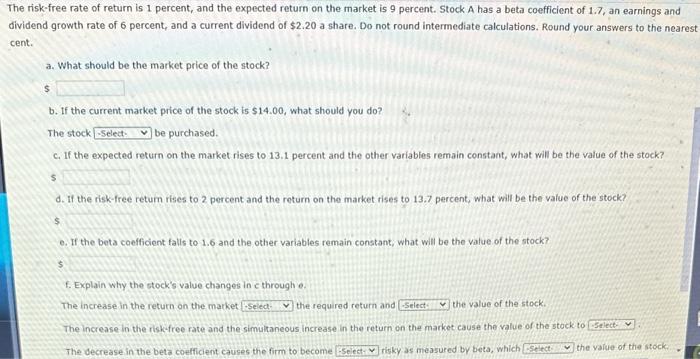
le risk-free rate of return is 1 percent, and the expected return on the market is 9 percent. Stock A has a beta coefficient of 1.7 , an earnings and vidend growth rate of 6 percent, and a current dividend of $2.20 a share. Do not round intermediate calculations. Round your answers to the neare: a. What should be the market price of the stock? 5 b. If the current market price of the stock is $14.00, what should you do? The stock be purchased. c. If the expected return on the market rises to 13.1 percent and the other variables remain constant, what will be the value of the stock? 5 d. If the risk-free retum rises to 2 percent and the return on the market rises to 13.7 percent, what will be the value of the stock? $ e. If the beta coefficient falis to 1.6 and the other variables remain constant, what will be the value of the stock? 5 5. Explain why the stock's value changes in c through e. The increase in the return on the market. the required ceturn and the value of the stack. The increase in the rish free rate and the simultaneous increase in the return on the market cause the value of the stock to The decrease in the beta coefficient causes the firm to become risky as measured by beta, which the value of the stock
Step by Step Solution
There are 3 Steps involved in it

Get step-by-step solutions from verified subject matter experts