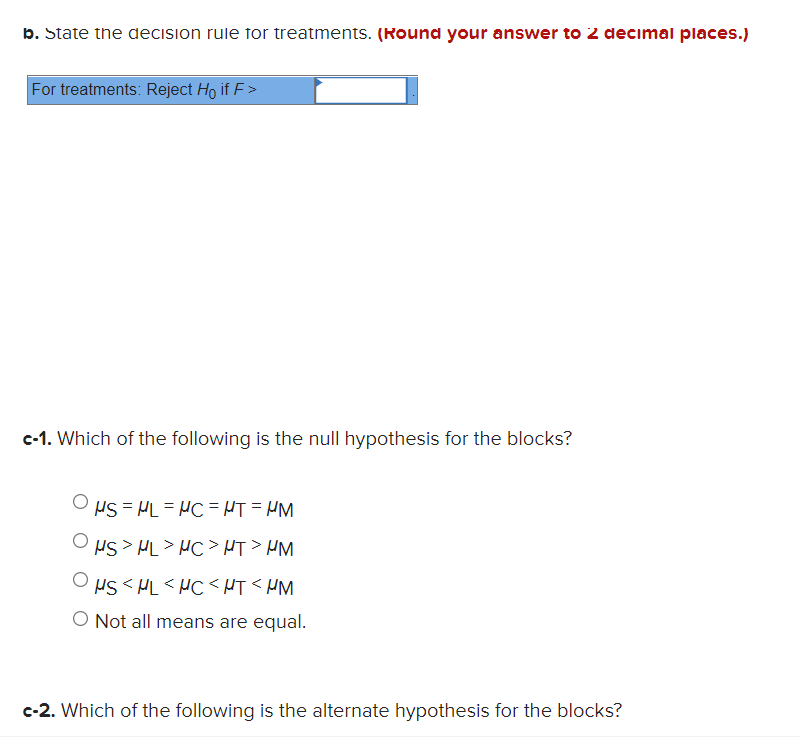
Question: b. State the decision rule for treatments. (Round your answer to Z decimal places.) For treatments: Reject Ho if F > c-1. Which of the
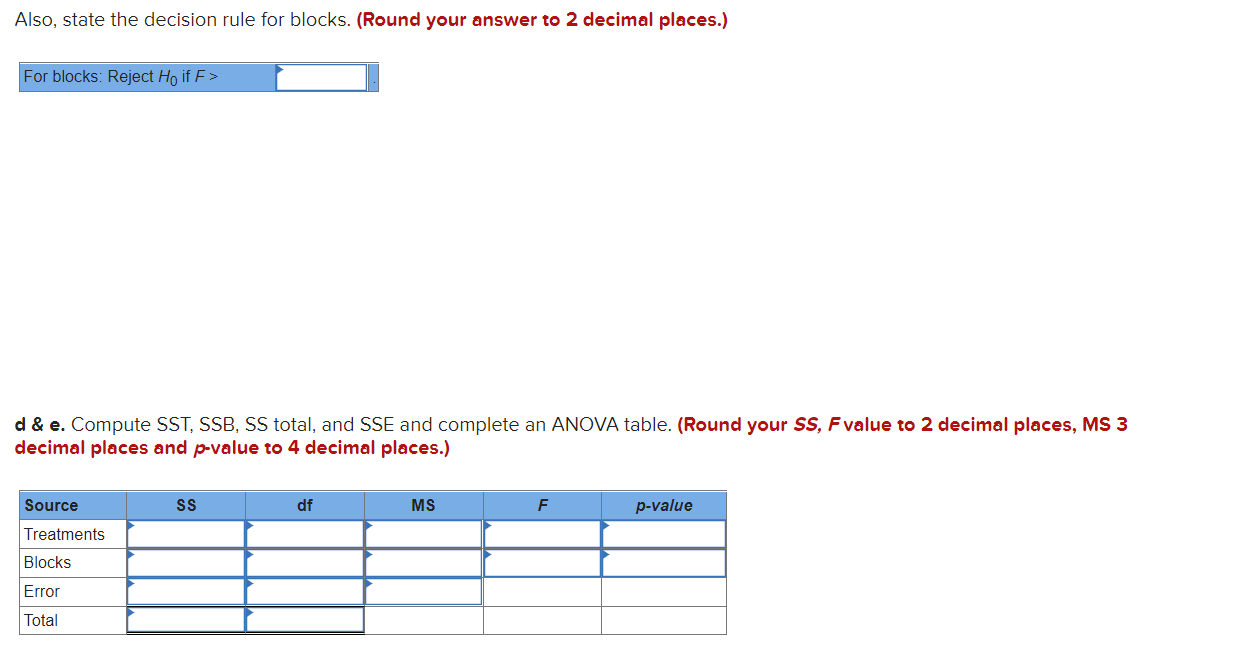
 b. State the decision rule for treatments. (Round your answer toZ decimal places.) For treatments: Reject Ho if F > c-1. Whichof the following is the null hypothesis for the blocks? OHS =

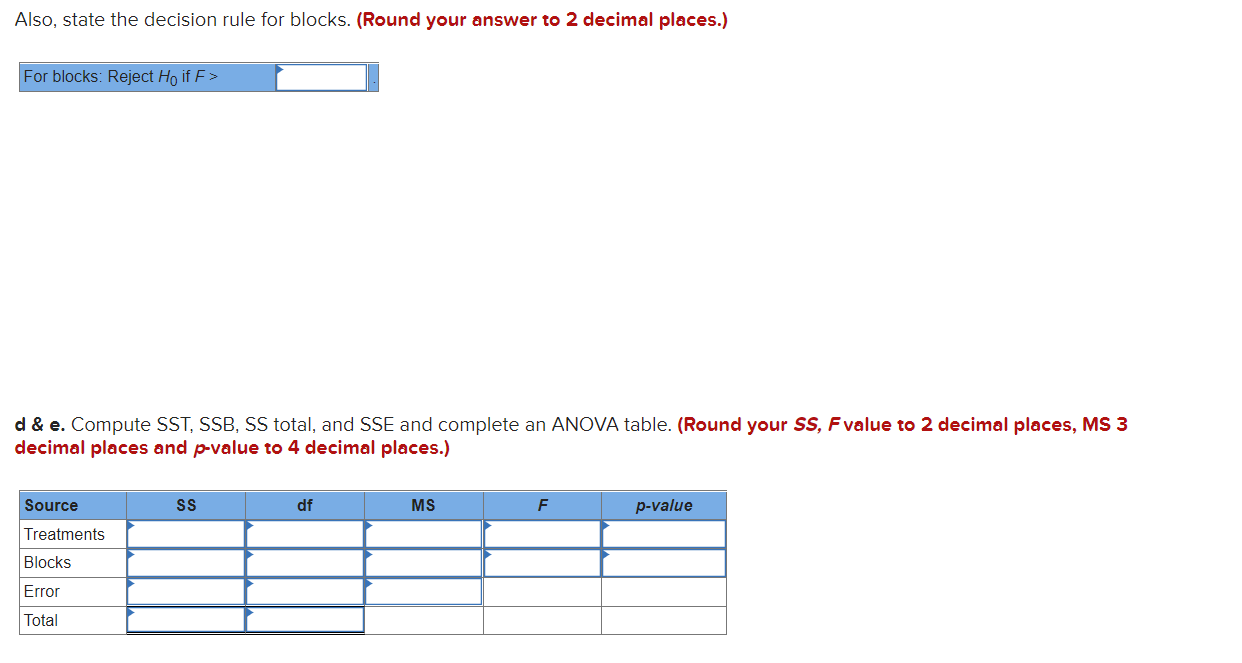
HL = HC= HT= HM OHS > HL > HC > HT> HM OHS SHL d & e. Compute SST, SSB, SS total,and SSE and complete an ANOVA table. (Round your SS, Fvalue to2 decimal places, MS 3 decimal places and p-value to 4 decimal

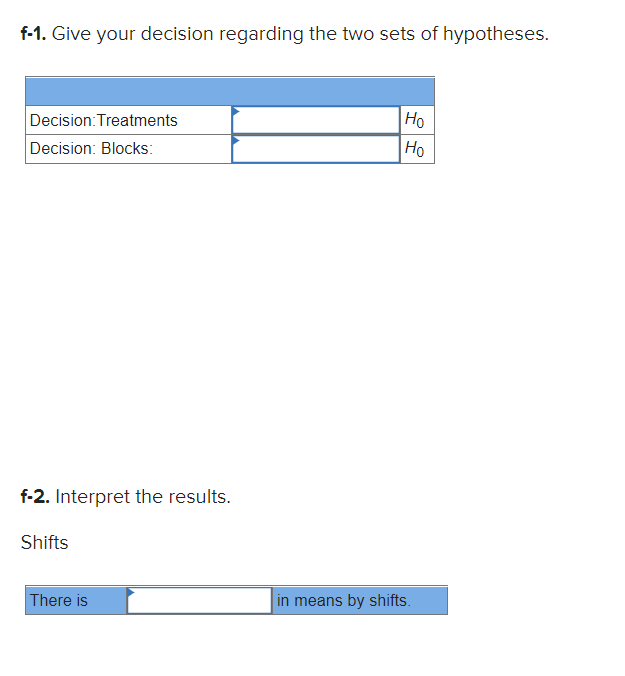
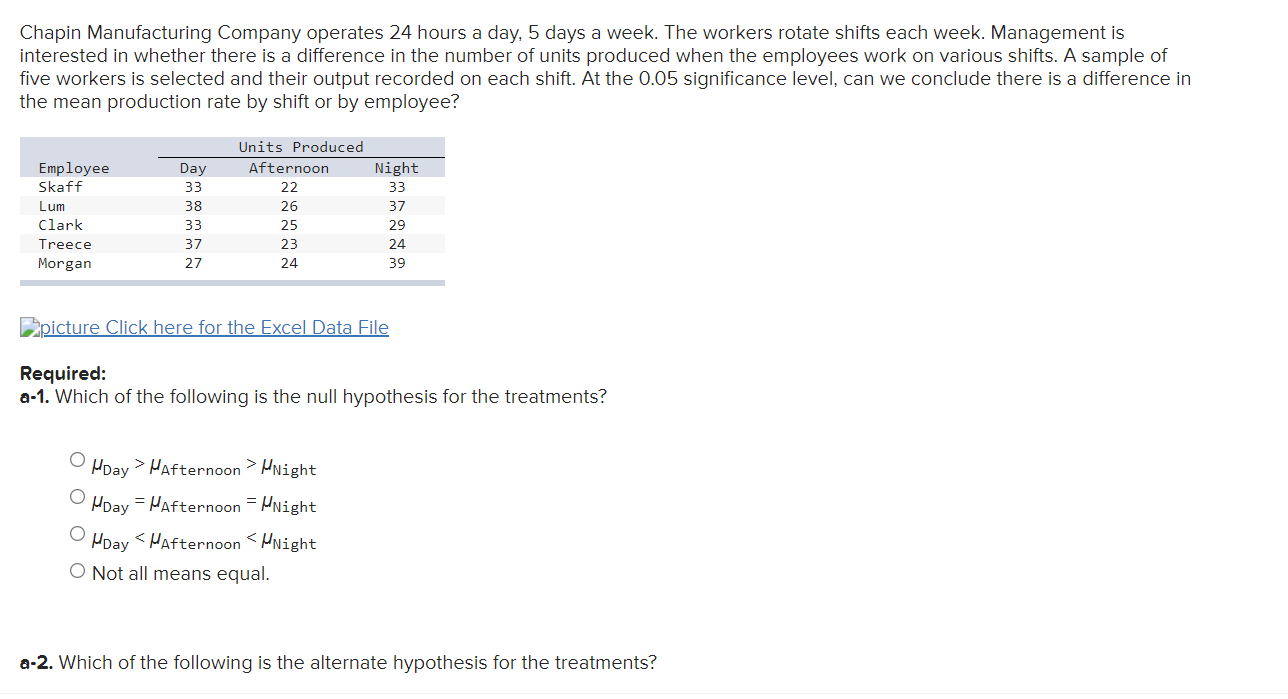
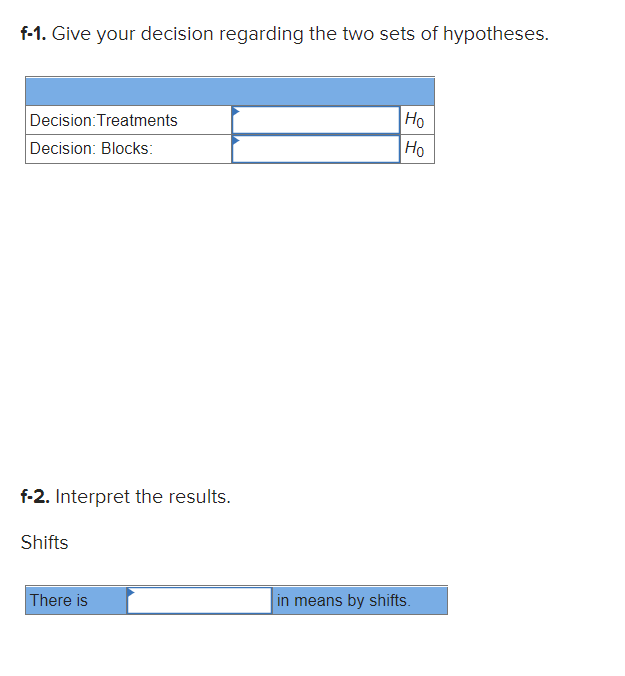
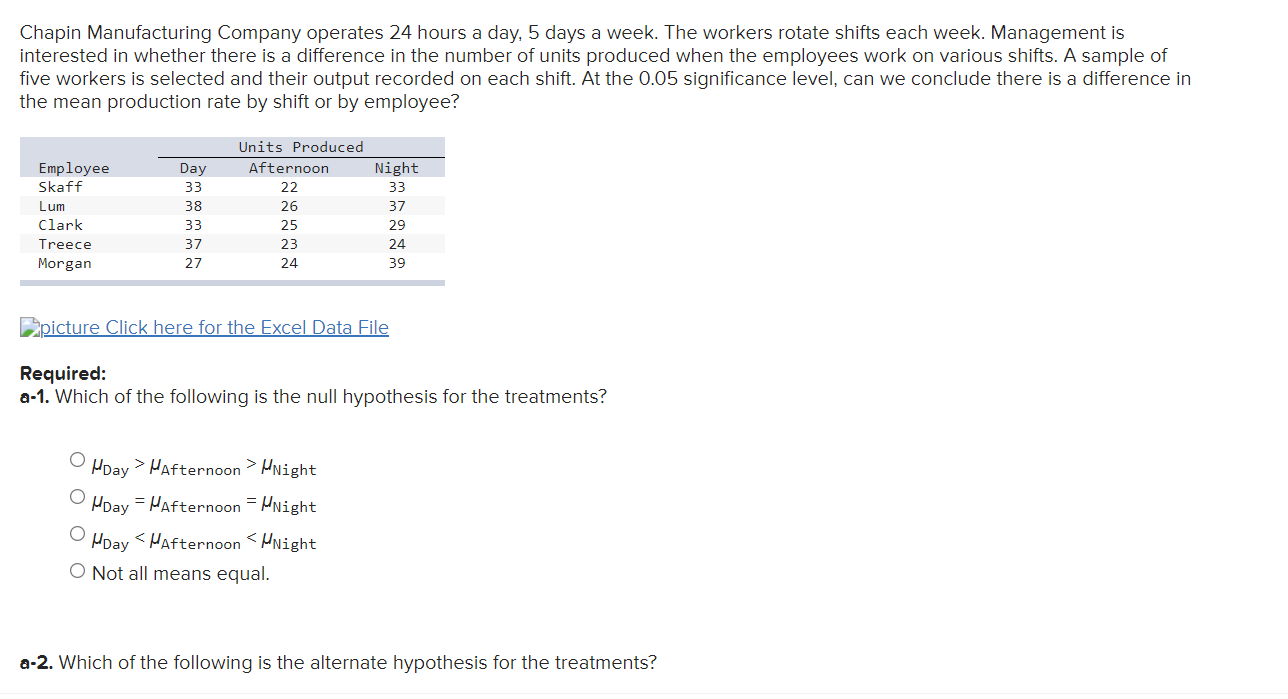
b. State the decision rule for treatments. (Round your answer to Z decimal places.) For treatments: Reject Ho if F > c-1. Which of the following is the null hypothesis for the blocks? OHS = HL = HC= HT= HM OHS > HL > HC > HT > HM OHS SHL d & e. Compute SST, SSB, SS total, and SSE and complete an ANOVA table. (Round your SS, Fvalue to 2 decimal places, MS 3 decimal places and p-value to 4 decimal places.) Source SS df MS F p-value Treatments Blocks Error Totalf-1. Give your decision regarding the two sets of hypotheses. Decision: Treatments Ho Decision: Blocks: Ho f-2. Interpret the results. Shifts There is in means by shifts.Chapin Manufacturing Company operates 24 hours a day, 5 days a week. The workers rotate shifts each week. Management is interested in whether there is a difference in the number of units produced when the employees work on various shifts. A sample of five workers is selected and their output recorded on each shift. At the 0.05 significance level, can we conclude there is a difference in the mean production rate by shift or by employee? Units Produced Employee Day Afternoon Night Skaff 33 22 33 Lum 38 26 37 Clark 33 25 29 Treece 37 23 24 Morgan 27 24 39 Expicture Click here for the Excel Data File Required: a-1. Which of the following is the null hypothesis for the treatments? OHDay > HAfternoon > HNight OHDay = HAfternoon = HNight OHDay
Step by Step Solution

There are 3 Steps involved in it

1 Expert Approved Answer
Step: 1 Unlock blur-text-image
Question Has Been Solved by an Expert!

Get step-by-step solutions from verified subject matter experts

Step: 2 Unlock
Step: 3 Unlock

Students Have Also Explored These Related Mathematics Questions!