



Question: Back to Assignment Attempts 0.8 Average 0.8/2 2. Asset classification and valuation What you own can be broken down into asset categories. In the following
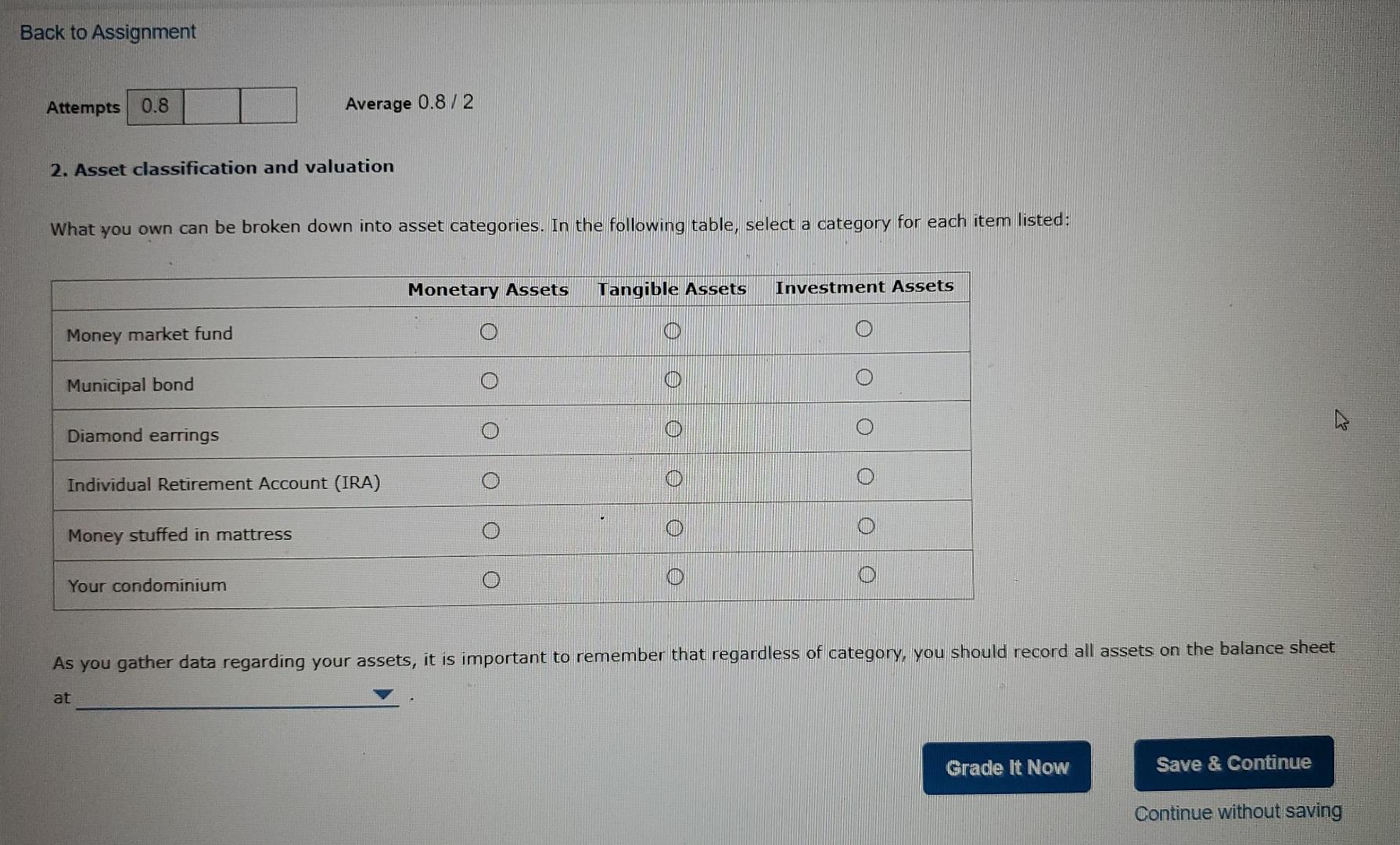
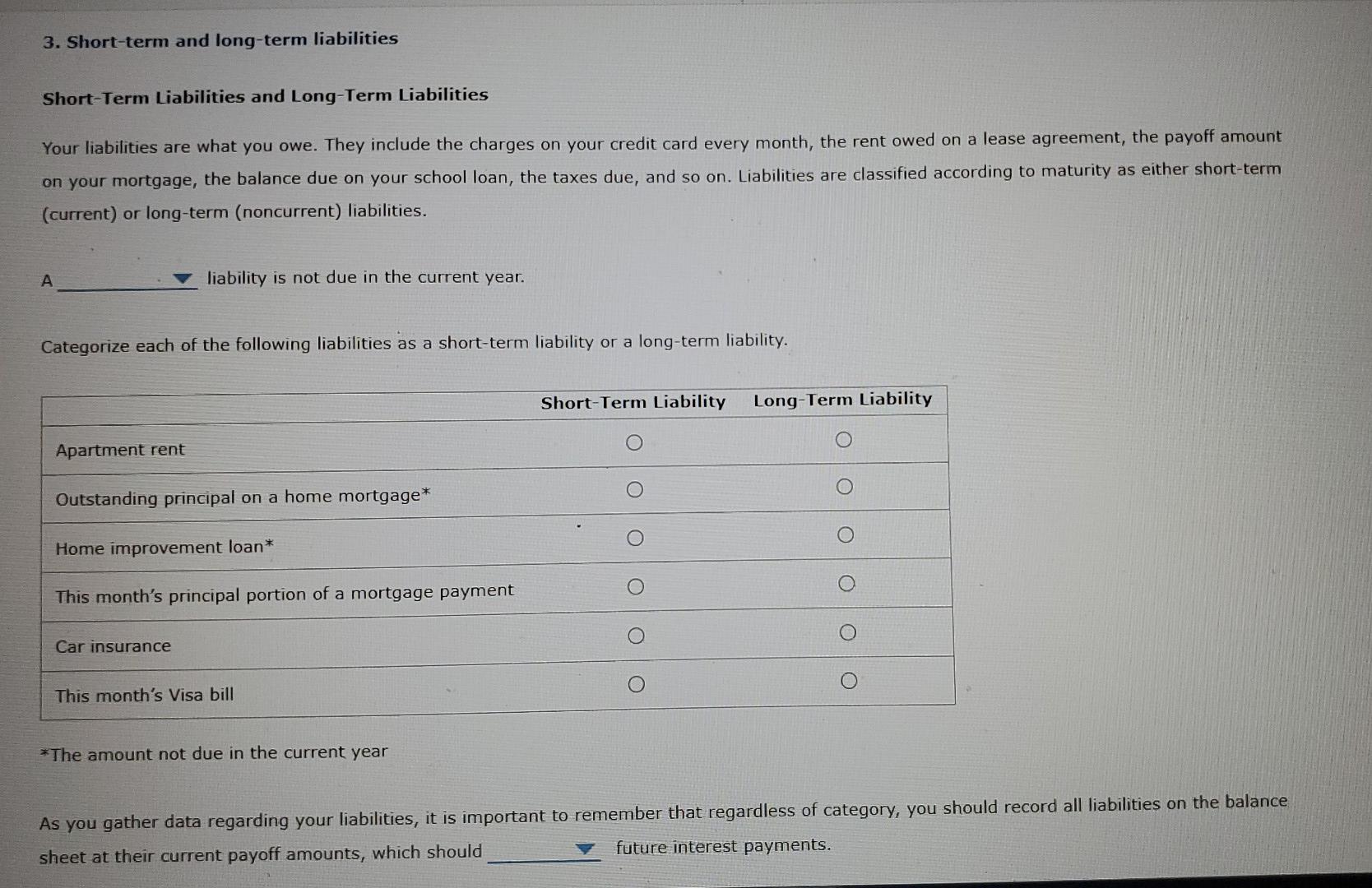
Back to Assignment Attempts 0.8 Average 0.8/2 2. Asset classification and valuation What you own can be broken down into asset categories. In the following table, select a category for each item listed: Monetary Assets Tangible Assets Investment Assets Money market fund Municipal bond Diamond earrings Individual Retirement Account (IRA) Money stuffed in mattress Your condominium As you gather data regarding your assets, it is important to remember that regardless of category, you should record all assets on the balance sheet at Grade It Now Save & Continue Continue without saving 3. Short-term and long-term liabilities Short-Term Liabilities and Long-Term Liabilities Your liabilities are what you owe. They include the charges on your credit card every month, the rent owed on a lease agreement, the payoff amount on your mortgage, the balance due on your school loan, the taxes due, and so on. Liabilities are classified according to maturity as either short-term (current) or long-term (noncurrent) liabilities. A liability is not due in the current year. Categorize each of the following liabilities as a short-term liability or a long-term liability. Short-Term Liability Long-Term Liability Apartment rent Outstanding principal on a home mortgage* Home improvement loan* This month's principal portion of a mortgage payment Car insurance This month's Visa bill *The amount not due in the current year As you gather data regarding your liabilities, it is important to remember that regardless of category, you should record all liabilities on the balance sheet at their current payoff amounts, which should future interest payments
Step by Step Solution
There are 3 Steps involved in it

Get step-by-step solutions from verified subject matter experts