







Question: Back to Assignment Attempts: Keep the Highest: /13 7. Problem 11.07 (Capital Budgeting Criteria) eBook A firm with a 13% WACC is evaluating two
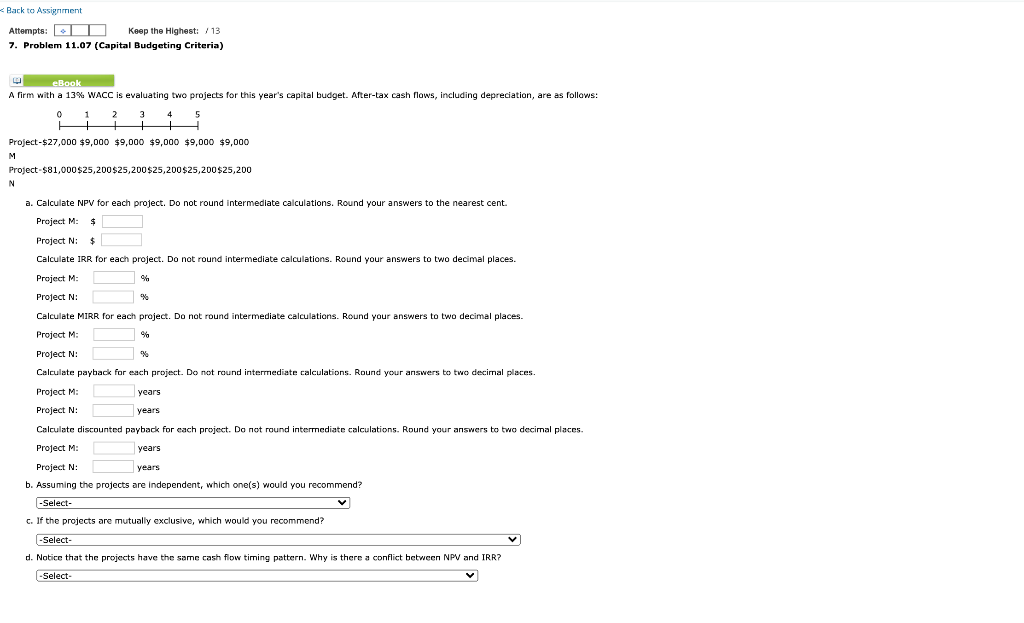
Back to Assignment Attempts: Keep the Highest: /13 7. Problem 11.07 (Capital Budgeting Criteria) eBook A firm with a 13% WACC is evaluating two projects for this year's capital budget. After-tax cash flows, including depreciation, are as follows: 0 1 2 3 4 5 + + Project-$27,000 $9,000 $9,000 $9,000 $9,000 $9,000 M Project-$81,000 $25,200 $25,200 $25,200 $25,200 $25,200 N a. Calculate NPV for each project. Do not round intermediate calculations. Round your answers to the nearest cent. Project M: Project N: $ $ Calculate IRR for each project. Do not round intermediate calculations. Round your answers to two decimal places. Project M: Project N: % % Calculate MIRR for each project. Do not round intermediate calculations. Round your answers to two decimal places. Project M: % Project N: % Calculate payback for each project. Do not round intermediate calculations. Round your answers to two decimal places. Project M: Project N: years years Calculate discounted payback for each project. Do not round intermediate calculations. Round your answers to two decimal places. Project M: Project N: years years b. Assuming the projects are independent, which one(s) would you recommend? -Select- c. If the projects are mutually exclusive, which would you recommend? -Select- d. Notice that the projects have the same cash flow timing pattern. Why is there a conflict between NPV and IRR? -Select-
Step by Step Solution
There are 3 Steps involved in it

Get step-by-step solutions from verified subject matter experts
 Study Help