







Question: Background A local safety buffer can be easily wasted, since: employees may procrastinate once they realize that they do not need the safety time employees
Background
- A local safety buffer can be easily wasted, since:
- employees may procrastinate once they realize that they do not need the safety time
- employees may not report early finishes to avoid receiving less time for tasks in the future
- Instead, convert local safety buffers into global project (and feeding buffers)
- Take the safety time out of 'local' task duration estimates and aggregate these buffers into a global buffer
- When doing this, use 50% estimates for task lengths
Apply Critical Chain Scheduling to the Echelon Release Project (do not worry about resource constraints)
- Create a new schedule using 50% estimates
- Using 80% duration for safety, identify how much buffer time to use for
- the Project Buffer
- each Feeding Buffer
The original Echelon project network diagram:
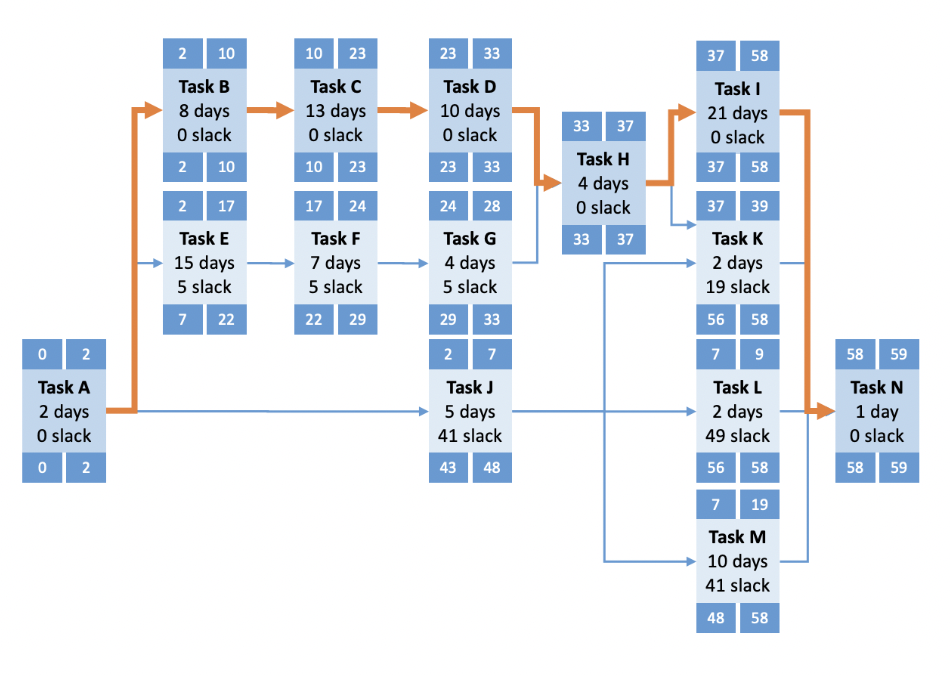
2 10 10 23 23 33 37 58 Task B Task C Task D Task I 8 days 13 days 10 days 21 days 0 slack 0 slack 0 slack 33 37 0 slack 2 10 10 23 23 33 Task H 37 58 4 days 2 17 17 24 24 28 0 slack 37 39 Task E Task F Task G 33 37 Task K 15 days 7 days 4 days 2 days 5 slack 5 slack 5 slack 19 slack 7 22 22 29 29 33 56 58 0 2 2 7 7 9 58 59 Task A Task J Task L Task N 2 days 5 days 2 days 1 day 0 slack 41 slack 49 slack 0 slack 0 2 43 48 56 58 58 59 7 19 Task M 10 days 41 slack 48 58
Step by Step Solution
There are 3 Steps involved in it

Get step-by-step solutions from verified subject matter experts
 Study Help