







Question: BACKGROUND INFORMATION Several elements must be addressed for an organization to perform properly and accomplish its mission and targets. Every action and formality of the
BACKGROUND INFORMATION
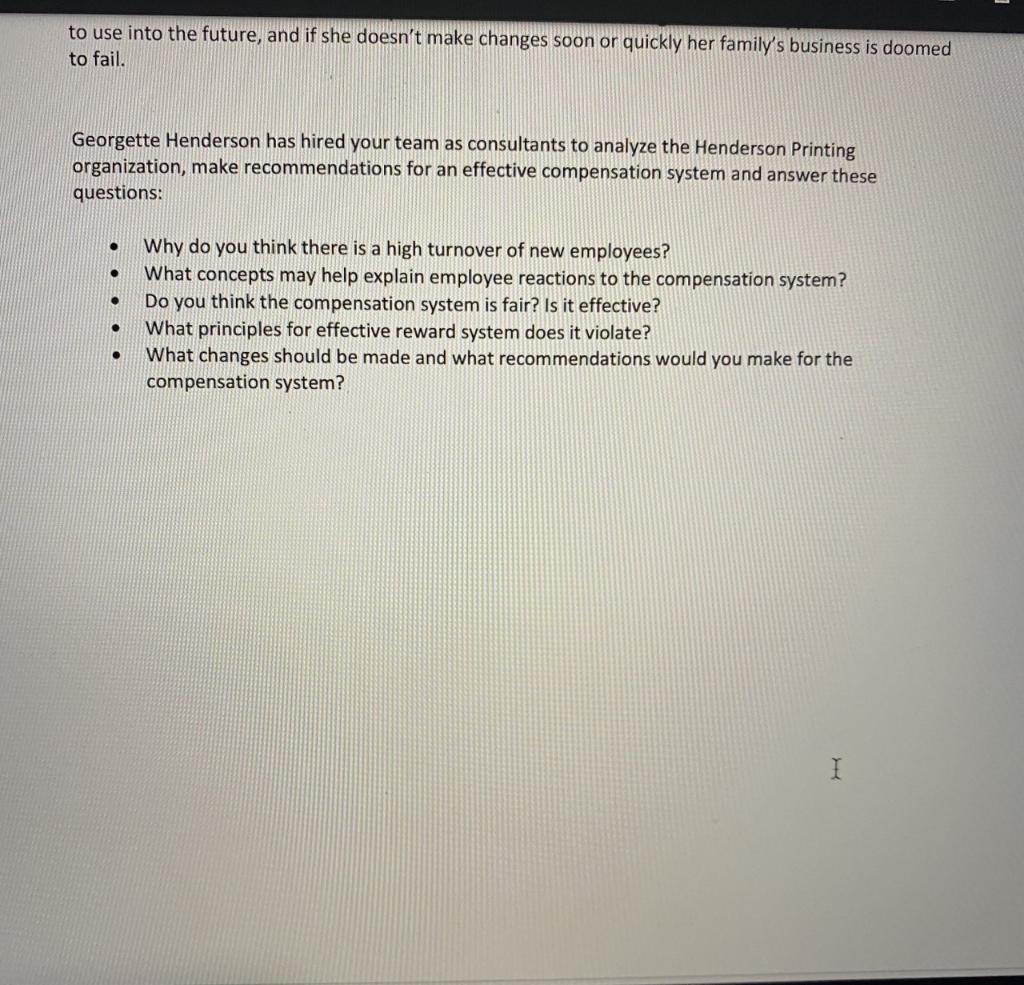
Several elements must be addressed for an organization to perform properly and accomplish its mission and targets. Every action and formality of the organization should be guided by the regulations in place. In addition to that, the organization must address which managerial strategy it should comply with. Management and staff, on the other hand, are prone to neglecting this crucial factor. Whenever this occurs, there is no ambiguity on how to proceed. Such ambiguity can have a negative impact on a company's strategic goals, as well as its public image. When a situation like this arises, the chance of going out of business increases dramatically (Abbasi et al., 2020). In this situation, the organization is in jeopardy since it has no policies in place to govern its operations. There are no defined standards for hiring and selection, identifying the right people to hire, or defining the job description.
INVENTORY OF FACTS
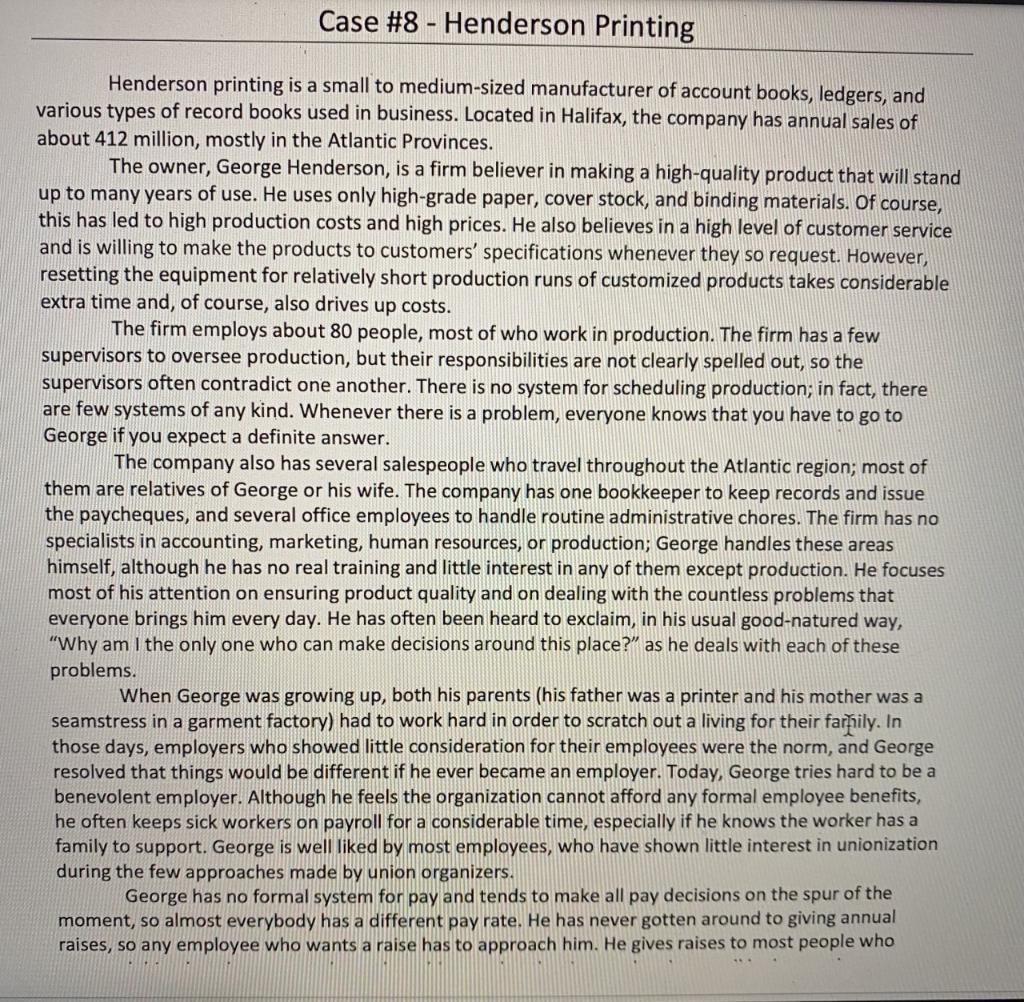
Henderson printing is a small to medium-sized manufacturer of account books, ledgers, and various types of record books used in business. Located in Halifax, the company has annual sales of about 412 million, mostly in the Atlantic Provinces The company has no clear procedure for carrying out tasks. The wage rates, for example, are randomly paid to employees, Goerge makes all the salary choices. Goerge hires, Goerge fires, Goerge imposes roles that serve or do not serve the organization, for instance, he believes that producing a high-quality product is the only way to increase profitability despite the increasing costs of it. He only offers incentives when he is in the finest of spirits. This can also be evident in the employment process, where there is no specific strategy over who to employ and who not to employ. Goerge is completely reliant on his instincts. Since we regard Goerge as the firm's only expert, this has had a significant impact. He is an expert in the field of production. There are no specialists in marketing, accounting, or human resources. It demonstrates that management has paid little attention to the hiring process.
STATEMENT OF PROBLEM(S).
Most of the employees are Goerge's and his wife's relatives. He is the only specialist, indicating that he did not hire them based on competency standards but rather on his familiarity with them. This is unfair because eligible individuals could have filled their positions. Many of the salespeople are also family members. The employee pool is not well-balanced and chosen.
There is no maximum output due to exhaustion. Except for production, Goerge is unqualified in all of the areas in which he is involved. That is, dealing with marketing, product quality, or accounting difficulties would not be handled by a specialist in those fields. According to Alkalha et al. (2016), having the expertise to deal with difficulties from many divisions will help the organization fulfil its targets and objectives significantly. The issue is that when it came to hiring, no regard was given to the qualifications of the personnel.
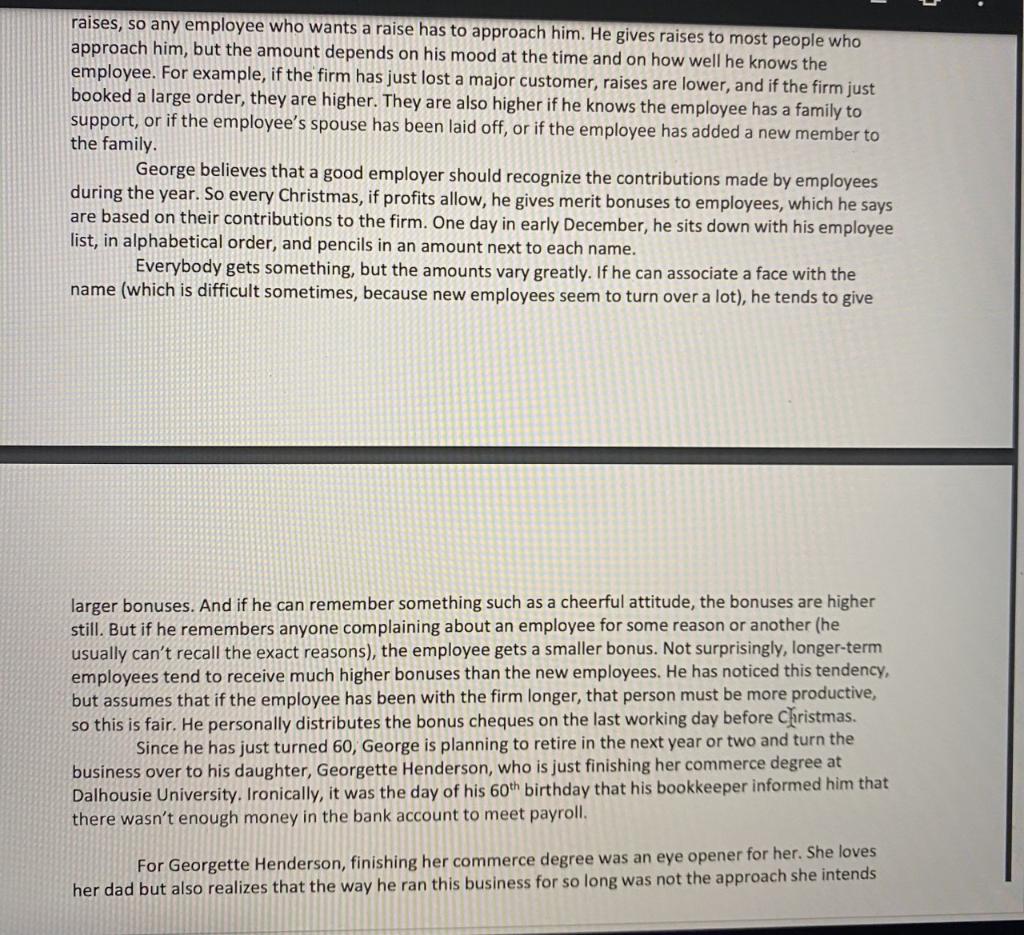
The corporation has also experimented with various forms of payment. Employees who work for a long time and those who work for a short time are paid differently. Furthermore, there is no set percentage or process for selecting who and how rewards are distributed. Despite the fact that several staff have expressed concerns about this, Goerge feels he is doing the right thing. There is also a compensation disparity between male and female employees. Gender inequality has taken a major portion of the Henderson printing organization. There is no established mechanism for awarding incentives for holidays such as Christmas or parenting (Indirect benefits). George only delivers them when he feels it is appropriate or when he is in a positive spirit.
The organizational structure is disorganized. When something bad happens, everybody runs to Goerge. This is since there are no other professionals. A single individual controlling everything in an organization severely restricts the firm's productiveness.
ANALYSIS OF CAUSES
All the issues listed above have an underlying cause. It began as an omission and a habit of doing things, but it quickly devolved. Ignoring the established company norms and policies is the root of all problems. Rather than employing based on qualifications and skills, he chose people who are connected to him or whom he knows. When it comes to skills, there would be no concerns with this.
When a good recruitment and selection system are in place, there is a major differentiation of roles and a defined value-adding structure. When it comes to specific situations, people will know who to contact. Goerge should establish recruiting policies that are not discriminatory based on age, culture, or any other factor. This also targets people who are competent and skilled at the duties at hand. Professionalism in the workplace is maintained in this situation (Abbasi et al., 2020).
Every employee's compensation should be clearly stated, intrinsic and extrinsic rewards should be planned correctly based on qualification. Henderson printing should know which managerial strategy should be implemented and work accordingly. Employees having pay rates that are not similar to the work they are doing demoralize those who are compensated lower. It makes them feel undervalued for their contributions. As a result, Goerge should include standards that specify how much each person should be compensated based on his or her performance. It will lower the number of complaints that arise. In addition, the rates should be documented and legally acceptable. When the rates are clearly established, it is easier to find qualified candidates. It is because they are appropriately compensated and encouraged to work hard (Alkalha et al., 2016).
Policies should not violate factors such as age, race, marital status, gender, religion, racial discrimination should be prohibited against any individuals within the organization. Individuals who exhibit competences should be employed based on their knowledge and experience not on any other factors that are not related to the job itself.
Q1) THEORY APPLICATION 1
Identification of all theories or models from the textbook that might apply to the problems stated in the Statement of Problem(s) and could aid in implementing solutions. List all of the theories from the book that might apply.
Q2) LIST OF POSSIBLE SOLUTIONS
Here you provide an identification of possible solutions to each problem listed in the Statement of Problem(s). What objectives are achieved with each solution?
Q3) JUSTIFICATION OF PREFERRED SOLUTION
From the list of possible solutions, youve listed which solution does your team recommend? Justify your teams choice (explain why it is the best solution for this problem?)
You should not present every possibility; rather you should limit yourself to presenting the most convincing, cohesive solution and be prepared during formal presentation to defend your choice.
Q4) EVALUATION OF PREFERRED SOLUTION
What are the implications or risks (positive and negative consequences or issues that might arise) from your decision?
-
How will we know your solution is working?
-
What are the ways your solution could fail?
-
How will you mitigate (eliminate or minimize) these implications or risks?
Step by Step Solution
There are 3 Steps involved in it

Get step-by-step solutions from verified subject matter experts
 Study Help