







Question: Bad debt expense is based on 1 . 5 % of credit sales. Allowance for doubtful accounts is based on 2 . 5 % of
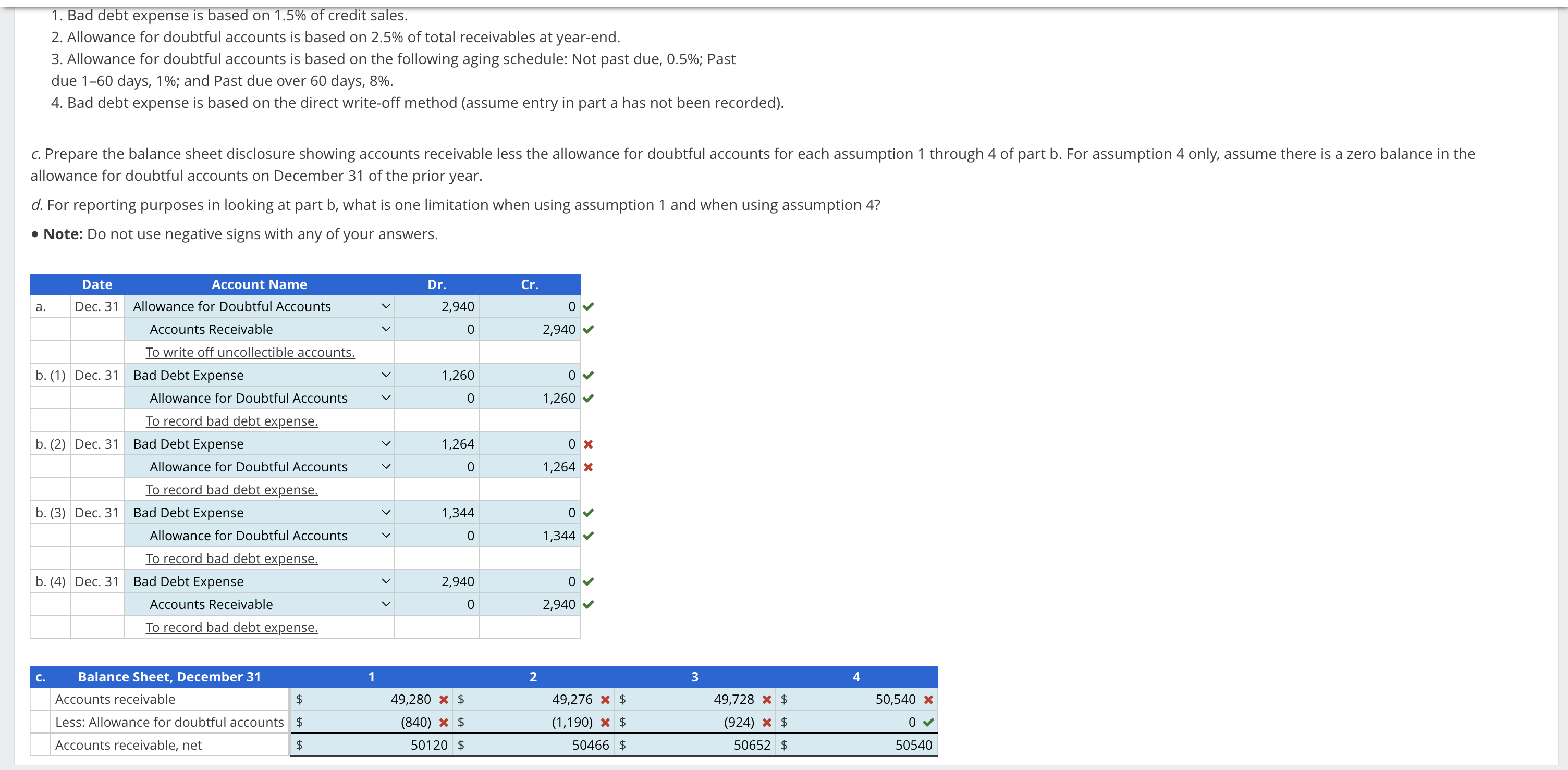
Bad debt expense is based on of credit sales.
Allowance for doubtful accounts is based on of total receivables at yearend.
Allowance for doubtful accounts is based on the following aging schedule: Not past due, ; Past
due days, ; and Past due over days,
Bad debt expense is based on the direct writeoff method assume entry in part a has not been recorded
c Prepare the balance sheet disclosure showing accounts receivable less the allowance for doubtful accounts for each assumption through of part b For assumption only, assume there is a zero balance in the
allowance for doubtful accounts on December of the prior year.
d For reporting purposes in looking at part what is one limitation when using assumption and when using assumption
Note: Do not use negative signs with any of your answers.
Step by Step Solution
There are 3 Steps involved in it
1 Expert Approved Answer
Step: 1 Unlock

Question Has Been Solved by an Expert!
Get step-by-step solutions from verified subject matter experts
Step: 2 Unlock
Step: 3 Unlock
 Study Help