Question: Based on the article given, What are the suggestions to improve the study? (if it can, but if it is not possible to doing so
Based on the article given,
What are the suggestions to improve the study? (if it can, but if it is not possible to doing so you have to inform the researchers that they have to terminate the study). 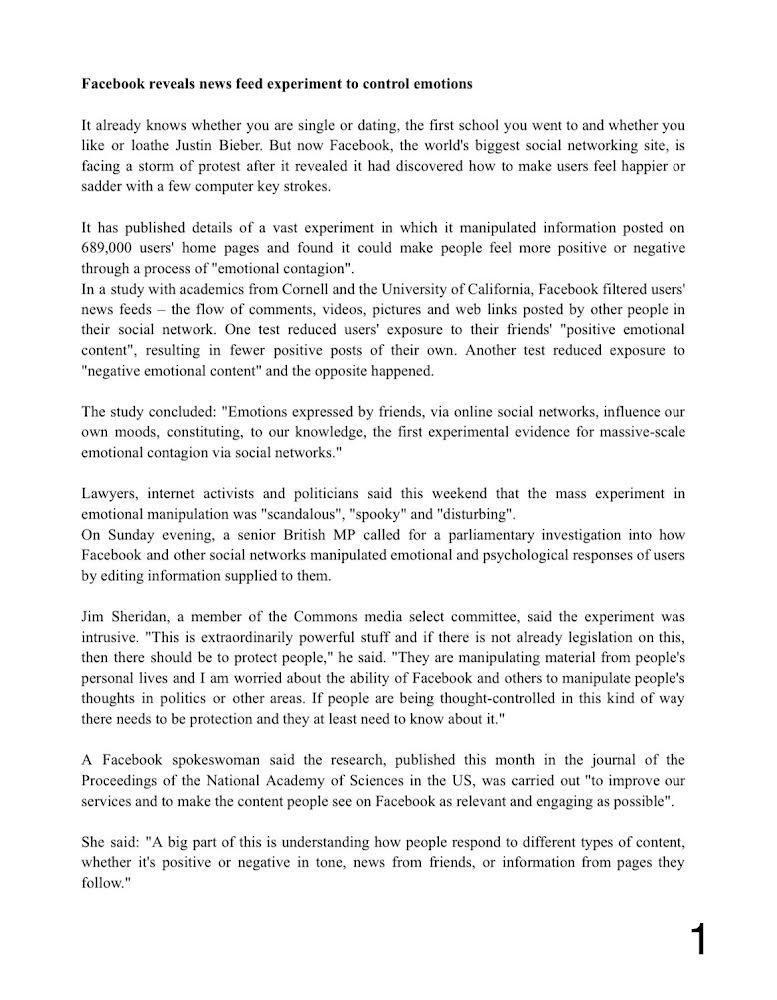
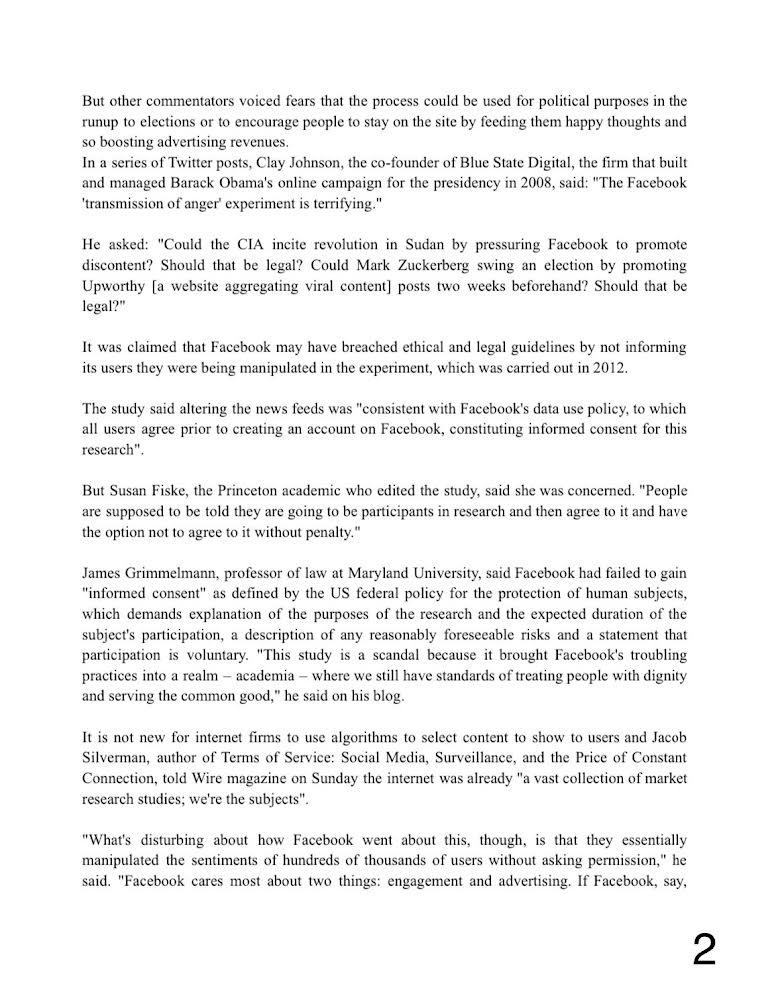
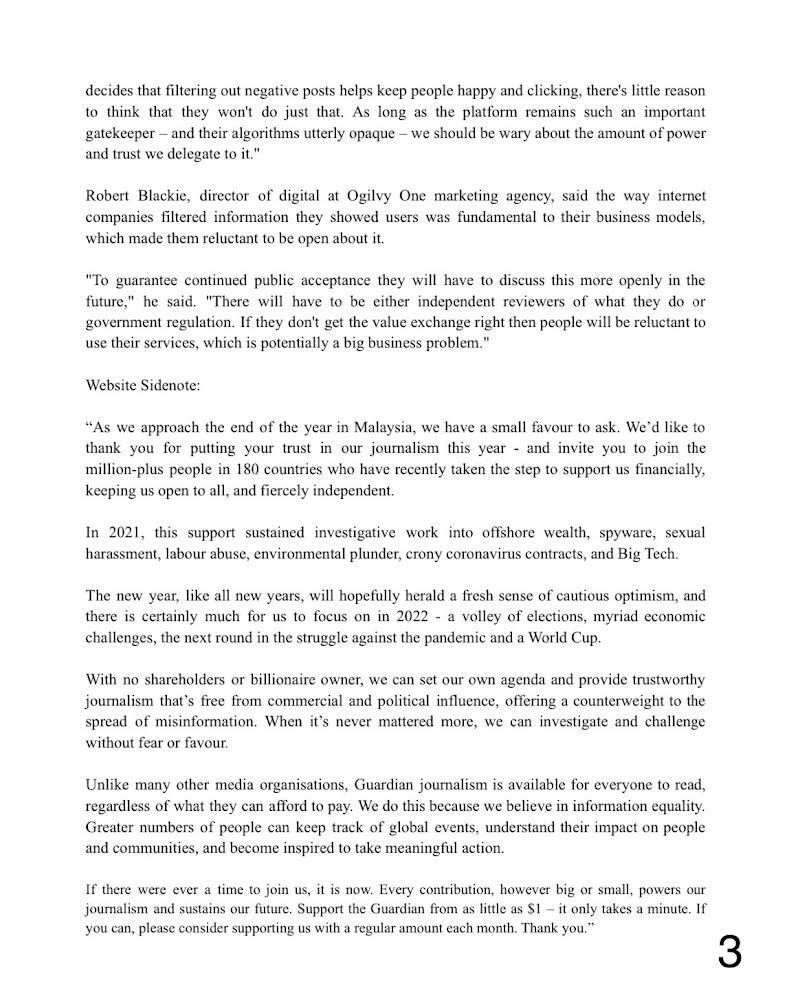
Facebook reveals news feed experiment to control emotions It already knows whether you are single or dating, the first school you went to and whether you like or loathe Justin Bieber. But now Facebook, the world's biggest social networking site, is facing a storm of protest after it revealed it had discovered how to make users feel happier or sadder with a few computer key strokes. It has published details of a vast experiment in which it manipulated information posted on 689,000 users' home pages and found it could make people feel more positive or negative through a process of "emotional contagion". In a study with academics from Cornell and the University of California, Facebook filtered users' news feeds - the flow of comments, videos, pictures and web links posted by other people in their social network. One test reduced users' exposure to their friends' "positive emotional content", resulting in fewer positive posts of their own. Another test reduced exposure to "negative emotional content" and the opposite happened. The study concluded: "Emotions expressed by friends, via online social networks, influence our own moods, constituting, to our knowledge, the first experimental evidence for massive-scale emotional contagion via social networks." Lawyers, internet activists and politicians said this weekend that the mass experiment in emotional manipulation was "scandalous", "spooky" and "disturbing". On Sunday evening, a senior British MP called for a parliamentary investigation into how Facebook and other social networks manipulated emotional and psychological responses of users by editing information supplied to them. Jim Sheridan, a member of the Commons media select committee, said the experiment was intrusive. "This is extraordinarily powerful stuff and if there is not already legislation on this, then there should be to protect people," he said. "They are manipulating material from people's personal lives and I am worried about the ability of Facebook and others to manipulate people's thoughts in politics or other areas. If people are being thought-controlled in this kind of way there needs to be protection and they at least need to know about it." A Facebook spokeswoman said the research, published this month in the journal of the Proceedings of the National Academy of Sciences in the US, was carried out "to improve our services and to make the content people see on Facebook as relevant and engaging as possible". She said: "A big part of this is understanding how people respond to different types of content, whether it's positive or negative in tone, news from friends, or information from pages they follow." 1 But other commentators voiced fears that the process could be used for political purposes in the runup to elections or to encourage people to stay on the site by feeding them happy thoughts and so boosting advertising revenues. In a series of Twitter posts, Clay Johnson, the co-founder of Blue State Digital, the firm that built and managed Barack Obama's online campaign for the presidency in 2008, said: "The Facebook 'transmission of anger' experiment is terrifying." He asked: "Could the CIA incite revolution in Sudan by pressuring Facebook to promote discontent? Should that be legal? Could Mark Zuckerberg swing an election by promoting Upworthy [a website aggregating viral content) posts two weeks beforehand? Should that be legal?" It was claimed that Facebook may have breached ethical and legal guidelines by not informing its users they were being manipulated in the experiment, which was carried out in 2012. The study said altering the news feeds was "consistent with Facebook's data use policy, to which all users agree prior to creating an account on Facebook, constituting informed consent for this research". But Susan Fiske, the Princeton academic who edited the study, said she was concerned. "People are supposed to be told they are going to be participants in research and then agree to it and have the option not to agree to it without penalty." James Grimmelmann, professor of law at Maryland University, said Facebook had failed to gain "informed consent" as defined by the US federal policy for the protection of human subjects, which demands explanation of the purposes of the research and the expected duration of the subject's participation, a description of any reasonably foreseeable risks and a statement that participation is voluntary. "This study is a scandal because it brought Facebook's troubling practices into a realm - academia - where we still have standards of treating people with dignity and serving the common good," he said on his blog. It is not new for internet firms to use algorithms to select content to show to users and Jacob Silverman, author of Terms of Service: Social Media, Surveillance, and the Price of Constant Connection, told Wire magazine on Sunday the internet was already "a vast collection of market research studies; we're the subjects". "What's disturbing about how Facebook went about this, though, is that they essentially manipulated the sentiments of hundreds of thousands of users without asking permission," he said. "Facebook cares most about two things: engagement and advertising. If Facebook, say, N decides that filtering out negative posts helps keep people happy and clicking, there's little reason to think that they won't do just that. As long as the platform remains such an important gatekeeper - and their algorithms utterly opaque - we should be wary about the amount of power and trust we delegate to it." Robert Blackie, director of digital at Ogilvy One marketing agency, said the way internet companies filtered information they showed users was fundamental to their business models, which made them reluctant to be open about it. "To guarantee continued public acceptance they will have to discuss this more openly in the future," he said. "There will have to be either independent reviewers of what they do or government regulation. If they don't get the value exchange right then people will be reluctant to use their services, which is potentially a big business problem." Website Sidenote: "As we approach the end of the year in Malaysia, we have a small favour to ask. We'd like to thank you for putting your trust in our journalism this year - and invite you to join the million-plus people in 180 countries who have recently taken the step to support us financially, keeping us open to all, and fiercely independent. In 2021, this support sustained investigative work into offshore wealth, spyware, sexual harassment, labour abuse, environmental plunder, crony coronavirus contracts, and Big Tech. The new year, like all new years, will hopefully herald a fresh sense of cautious optimism, and there is certainly much for us to focus on in 2022 - a volley of elections, myriad economic challenges, the next round in the struggle against the pandemic and a World Cup. With no shareholders or billionaire owner, we can set our own agenda and provide trustworthy journalism that's free from commercial and political influence, offering a counterweight to the spread of misinformation. When it's never mattered more, we can investigate and challenge without fear or favour. Unlike many other media organisations, Guardian journalism is available for everyone to read, regardless of what they can afford to pay. We do this because we believe in information equality. Greater numbers of people can keep track of global events, understand their impact on people and communities, and become inspired to take meaningful action. If there were ever a time to join us, it is now. Every contribution, however big or small, powers our journalism and sustains our future. Support the Guardian from as little as $1 - it only takes a minute. If you can, please consider supporting us with a regular amount each month. Thank you." 3









 Study Help