



Question: Based on the article, Identify and summarize the following. 1. Top Procurement Priorities to 2025 2. Key Forces of Change to 2025 3. The Supply
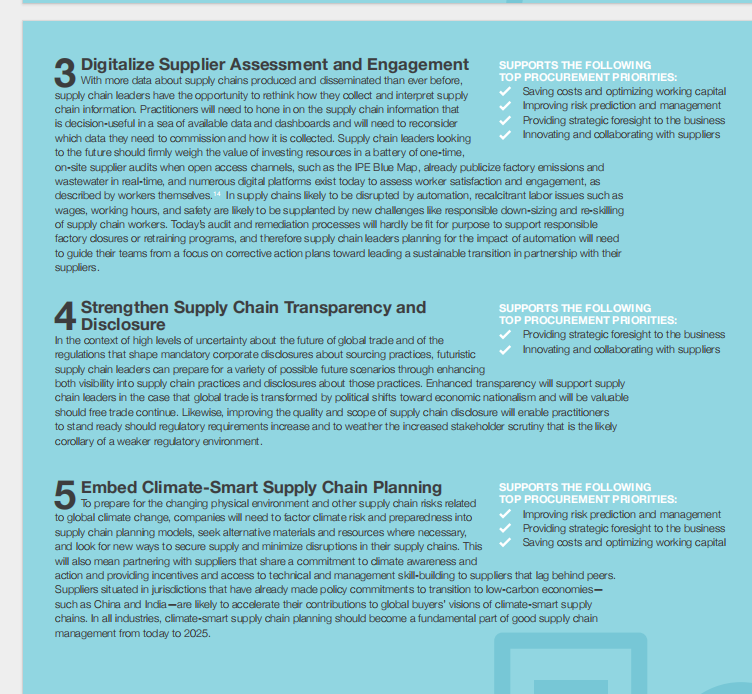
Based on the article, Identify and summarize the following.
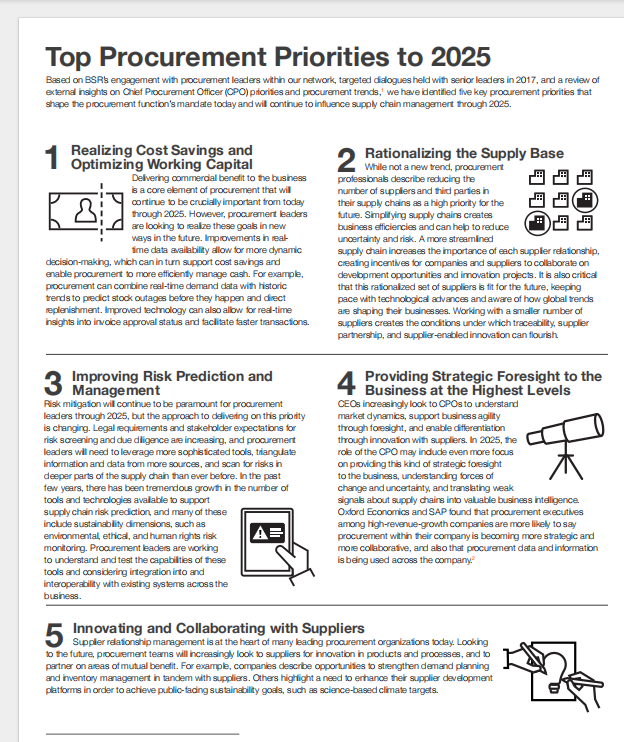
1. Top Procurement Priorities to 2025
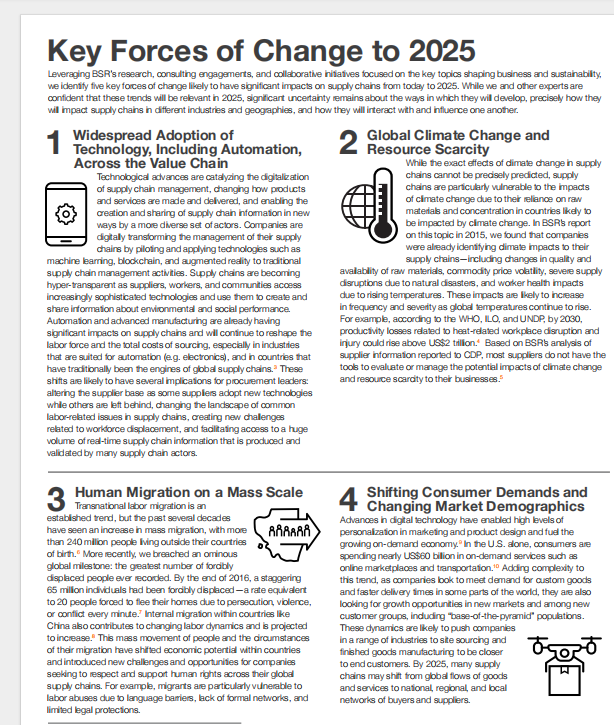
2. Key Forces of Change to 2025
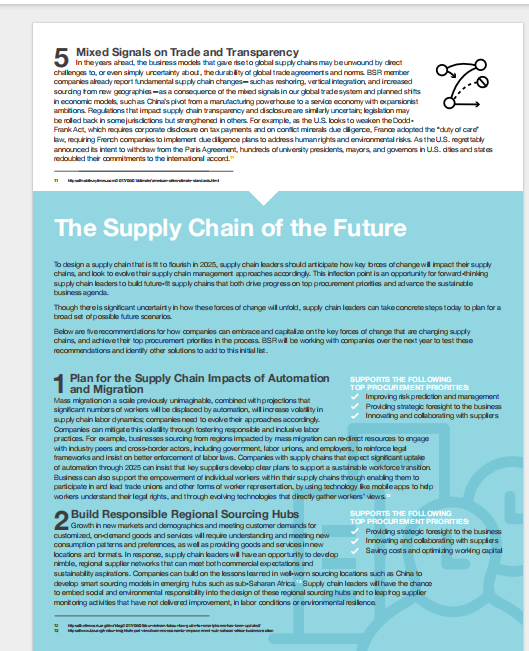
3. The Supply Chain of the Future
(SUPPLY CHAIN SUBJECT)
This primer provides a new way of thinking about the futue of supply chains-bringing logether the top procurement pilorites of leading global bushesses and the key forces of change reshaping the very business modds that have given rise to global supply chains - to enable supply chaih leaders to envision and manage futue-fit supply chains. Deepening our understanding of both sets of drivers and thei potential implications for supply chains creates a powerful lens through which to reimagine the ways that al parties to global supply chains create value and contribute to a moe just and sustainable world. Supply chain leaders, and the organkations with which they work, should seize this momert of significant change to design and implement new supply chain management modals. This primer sets out five specific recommendaions to help supply dhah leaders build future-fit supply dhains that both dive progress on top procurement piorifes and advance the sustainable business agenda. The information here is gathered from a serles of inteviews and leadership dialogues with comparies h our membership on the frort Ines of these changes; review of thought leadership from thirk tanks, acadenics, and practitioner suveys; as wel as BSRs experience helping comparies h all industiles evolve their approaches to supply chain sustainability. h the months ahead, BSR wil convene a serles of targeted dialogues, expetienfial futures workshops, and a collaborative hiliafive that will hcubate and expand on these solutions h real ime, sharing and elaboraing on new models that leading companks are already putting h place. We hwite you to be a part of shaphg the future of supply chains that we would al the to see-one in which supply chains enable human rights, dimate reslienoe, women's empowerment, and inclusive economies on a global scale. Please contact us to leam more and share your thoughts. 2 Digitalize Supplier Assessment and Engagement SUPPORTS THE FOLLOWING With more data about supply chains produced and clisseminated than ever before, TOP PROCUREMENTPPIORITIES: supply chain leaders have the opportunity to rethink how they collect and interpret supply chain information. Practitioners will need to hone in on the supply chain information that is decision-useful in a sea of avalable chata and dashboards and will need to reconsider Which data they need to commission and how it is collected. Supply chain leaders looking Saving costs and optimizing working capital Improving risk prediction and management Providing strategic foresight to the business Innovating and collaborating with suppliers to the future should firmly weigh the value of investing resources in a baltery of one-time, on-site supplier audits when open access chamels, such as the IPE Blue Map, already publicize factory emissions and wastewater in real-time, and numerous digital platforms exist today to assess worker satisfaction and engagement, as described by workers themselves. 14 In supply chains Ilikely to be disrupted by automation, recalcitrant labor issues such as wages, working hours, and safety are likely to be supplanted by new challenges like responsible down-sizing and re-skiling of supply chain workers. Todays audit and remediation processes will hardly be fit for purpose to support responsible factory dosures or retraining programs, and therefore supply chain leaders planning for the impact of automation will need to guide their teams from a focus on comective action plans toward leading a sustainable transition in partnership with their suppliers. 4 Strengthen Supply Chain Transparency and 4 Disclosure SUPPORTS THE FOLLOWING In the context of high levels of uncertainty about the future of global trade and of the regulations that shape mandatory corporate disclosures about sourcing practices, futuristic TOP PROCUREMENT PRIORITIES: Providing strategic foresight to the business supply chain leaders can prepare for a variety of possible future scenarios through enhancing Innovating and collaborating with suppliers both visibility into supply chain practices and disclosures about those practices. Enhanced transparency will support supply chain leaders in the case that global trade is transformed by political shifts toward economic nationalism and will be valuable should free trade continue. Likewise, improving the quality and soope of supply chain clisclosure will enable practitioners to stand ready should regulatory requirements increase and to weather the increased stakeholder scrutiny that is the likely corollary of a weaker regulatory environment. 5 Embed Climate-Smart Supply Chain Planning To prepare for the changing physical environment and other supply chain risks related to global climate change, companies will need to factor climate risk and preparedness into supply chain planning models, seek alternative materials and resources where necessary, and look for new ways to secure supply and minimize clisruptions in their supply chains. This will also mean partnering with suppliers that share a commitment to climate awareness and action and providing incentives and access to techrical and management skill-building to suppliers that lag behind peers. Suppliers situated in jurisclictions that have already made policy commitments to transition to low-carbon economiessuch as China and India - are likely to accelerate their contributions to global buyers' visions of climate-smart supply chains. In all industries, climate-smart supply chain planning should become a funclamental part of good supply chain management from today to 2025 . SUPPORTS THE FOLLOWING TOP PROCUREMENT PRIORITIES: Improving risk preciction and management Providing strategic foresight to the business Saving costs and optimizing working capital Key Forces of Change to 2025 1 Widespread Adoption Widespread Adoption of Technology, Including Automation, Across the Value Chain 3 Human Migration on a Mass Scale 4 Shiting Consumer Demands and Top Procurement Priorities to 2025 Based on BSRs engagement with procurement leaders with our network, targeted dialogues held with serior leaders in 2017 , and a review of external higights on Chlef Procurement Officer (CPO) pitorites and procurement trends,' we have identifed five key procurement prorities that shape the procuement function's mandate today and wil continue to influence supply chain managemert through 2025. 1 Realizing Cost Savings and Optimizing Working Capital Delvering commerdal benefit to the business is a core element of procurement that wil cortinue to be crucially important from today through 2025. However, proaremert leaders are looking to realze these goals in new ways in the future. Improvements in reat ime data avalability allow for more dynamic decision-making, which can in tum support cost savings and enable procuremert to more efficiently manage cash. For example, procurement can combine real-time demand data with historic trends to predict stock outages before they happen and diect replenishment. Improved techology can also allow for real-time haights into involce approval status and faclitate faster transactions. 2 Rationalizing the Supply Base 2 While not a new trend, procuremert professionals describe reducing the number of supplers and third partes in their supply chains as a high priority for the future. Simplifying supply chains creates business efficlencles and can help to reduce unoertainty and risk. A more streamined supply chain increases the importance of each suppler relationship, creaing incentives for companles and suppliers to collaborate on development opportunities and imovation profects. It is also crifical that this rationalzed set of suppliers is fit for the future, keeping pace with technological actvances and aware of how global trends are sheping their businesses. Working with a smaller number of suppliers creates the conditions under which traceability, supplier partnership, and supplier-enabled innovation can flourish. 3 Improving Risk Prediction and Management Pisk miligation wil conthue to be paramount for procurement leaders through 2025, but the approech to deliveing on this proity is changing. Legal requirements and stakeholder expectations for risk screening and due dligence are increasing, and procuremert leaders will need to leverage more sophls icated tools, tilangulate information and data from more sources, and scan for risks in deeper parts of the supply chan than ever before. In the past few years, there has been tremendous growth h the number of tools and techrologies avalable to support supply chain risk prediction, and many of these include sustainablity dimensions, such as environmental, ethical, and human rights risk. monitoring. Procurement leaders are working to understand and test the capabilities of these tools and considering irtegration irto and interoperability with existing systems across the bushess. 4 Providing Strategic Foresight to the 4 Business at the Highest Levels CEO increasingly look to CPOs to understand market dynamics, support business agility through foresight, and enable differentiation through innovation with suppliers. In 2025, the role of the CPO may indude even more focus on providing this kind of strategic foresight to the business, understanding forces of change and uncertainty, and translating weak. signals about supply chains into valuable business intelligence. Oxdord Economics and SAP found that procurement executives among high-revenue-growh companies are more likely to say procurement with their company is becoming more strategic and more collaboraive, and also that procurement data and information is being used across the company. Innovating and Collaborating with Suppliers Suppler relationship management is at the heart of many leading procurement organizaions today. Looking to the fulure, procurement teams will horeasingly look to suppliers for innovation in products and processes, and to partner on areas of mutual benefit. For example, compankes descrbe opportunilies to strengthen demand planning and inventory managemert in tandem with suppliers. Others highlight a need to erhance their supplier development platiorms in order to achieve public-fading sustainability goals, such as science-based climate targats. Mixed Signals on Trade and Transparency In theyours aread, the buiress modets that gave itse to global supply chahs may be unwound by droct challenges to, or even simply urcertainty wout, the dur thily of global trade agroemerts and noma. BSR mamber comparics aheady report fundamental supply chah chenges- suchas reshoring, vatical intognation, and ircreased be roled hadk in somejutadictors but strangthend h others. For example, as the US boks to vesken the Dodd. rodouliod thet commitments to the internationd accond" n The Supply Chain of the Future burines agends. broad set ofposible future scenarios. Plan for the Supply Chain Impacts of Automation and Migration Masa migntionon a scike previoudy unimaghatik, combined wehprojoctors that signincart numbers of vorkers will be disphiced by automation, will inorase volatlity in supply chah bhor dyramks companisa neod to evolve thet approud hes accondinglypractios For oxample, buarresses sourcing from rogions impacted by mass migntion can rodinct resouros to angage Buaness can also support the empowement of indvidual workers weHin thdi supply chains through enaling them to 2 Build Responsible Regional Sourcing Hubs 2 Growth in new markets and demognaphics and meethy cuetomer demands for cueformised, ond amand goods and servios will reque undersanding and meethg now conamption pat tores and preferences, as wel as providing goods and sorves innew beations and trmats In resporese, supply chah baders wit havean opporturity to devidop rimble, rejiond sepplier networks that can most bothcommercial eqpectators and
Step by Step Solution
There are 3 Steps involved in it

Get step-by-step solutions from verified subject matter experts