Question: Based on the attached case: Create a projected income statement and statement of financial position for the year ending April 30, 2013 if the company
Based on the attached case:
Create a projected income statement and statement of financial position for the year ending April 30, 2013 if the company focuses on growing internally and does not sell at the Calgary Farmer's Market.
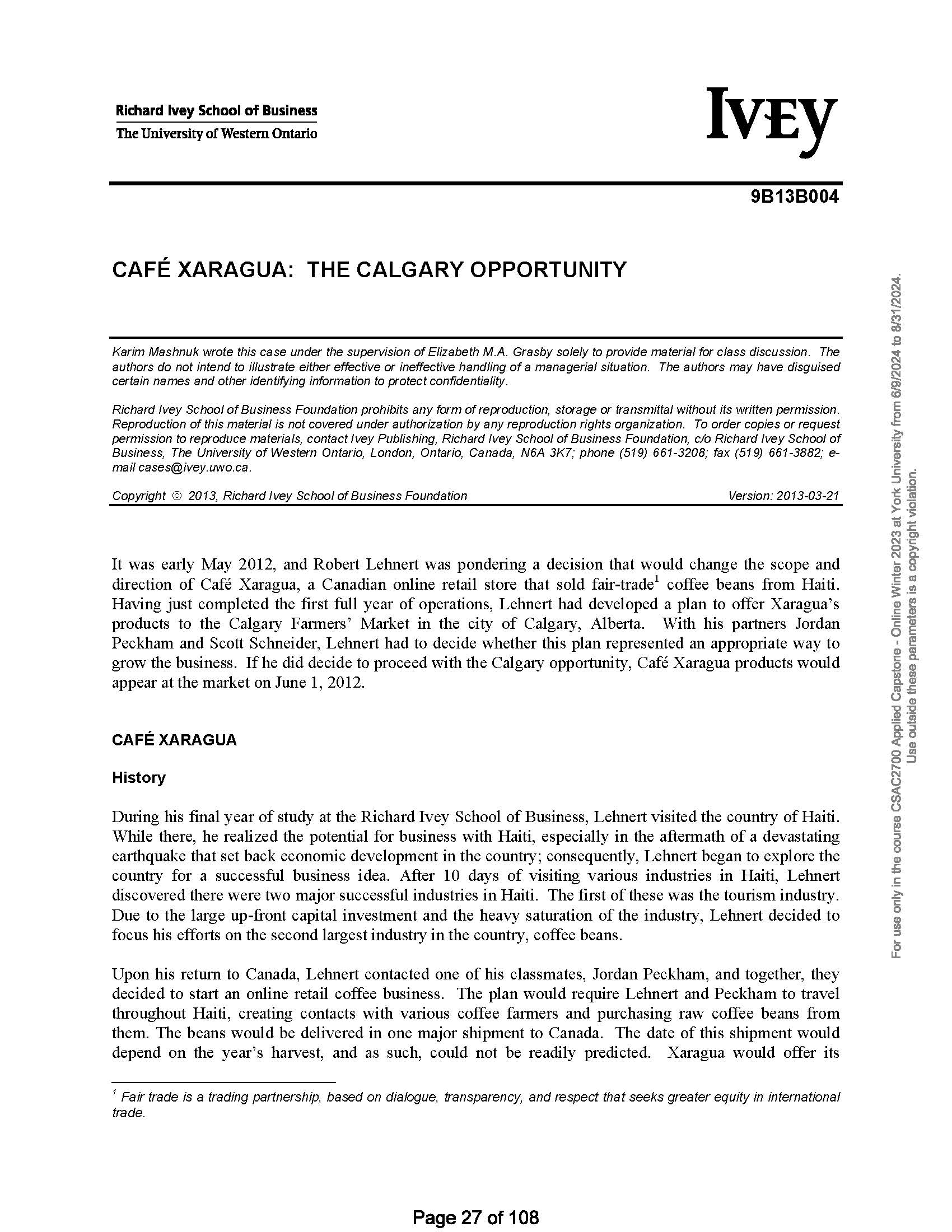
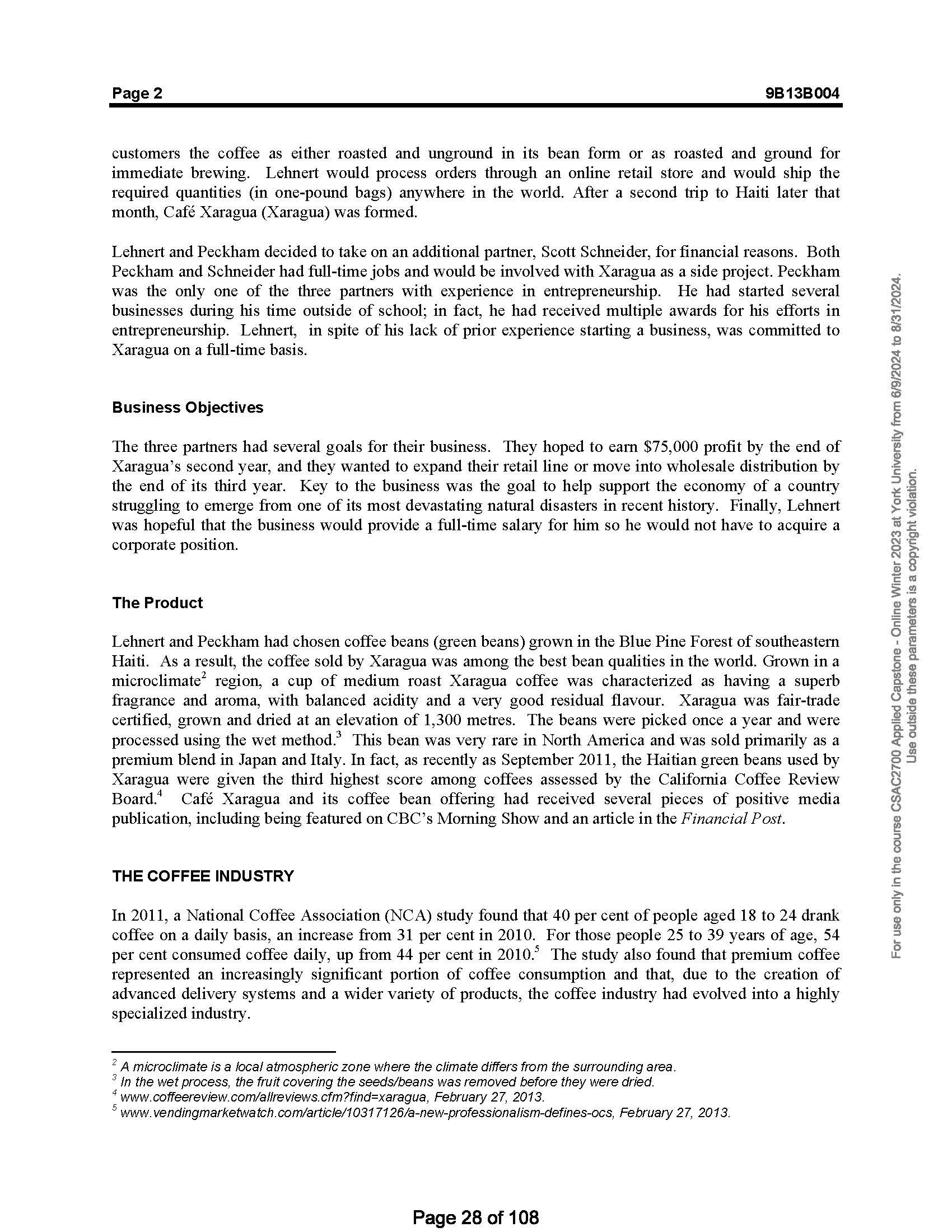
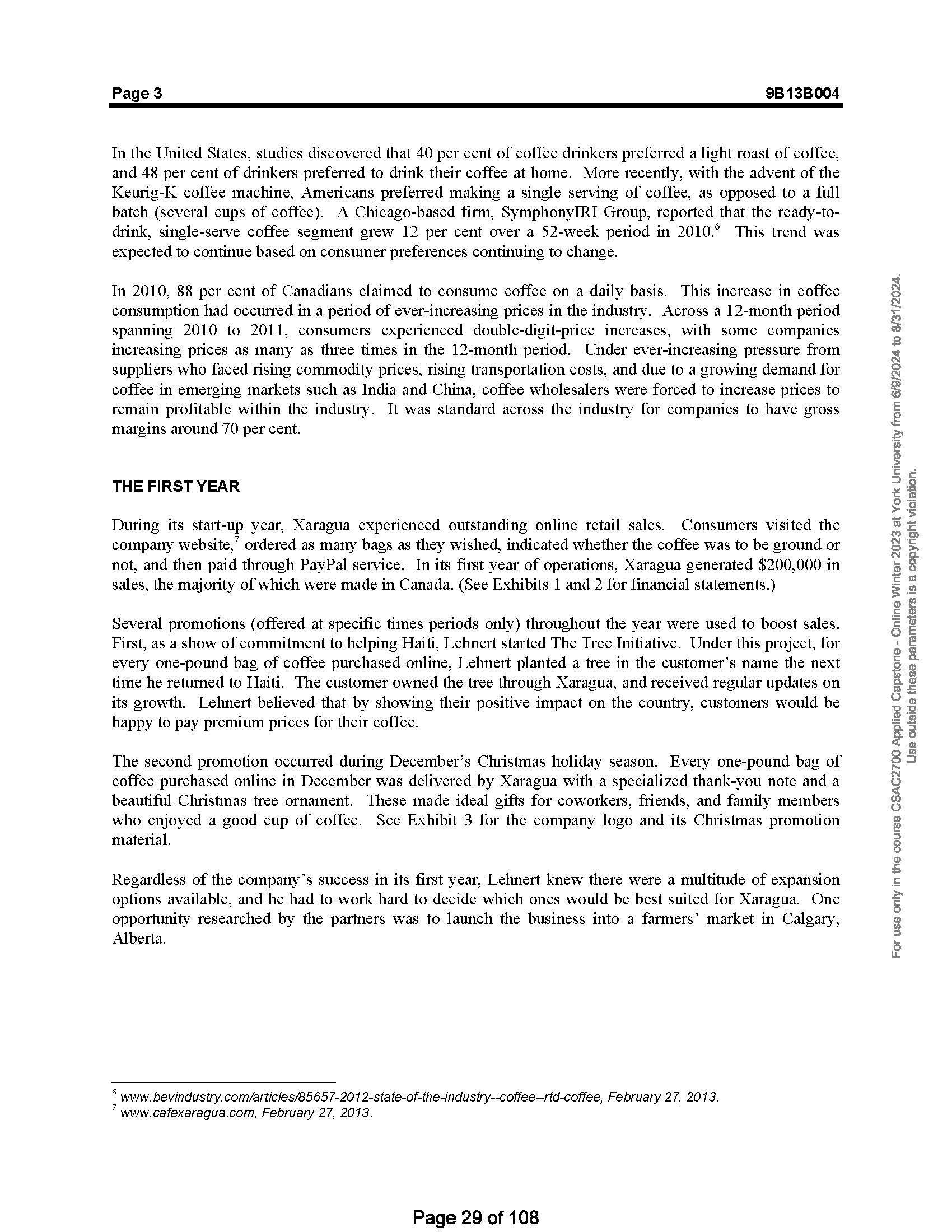
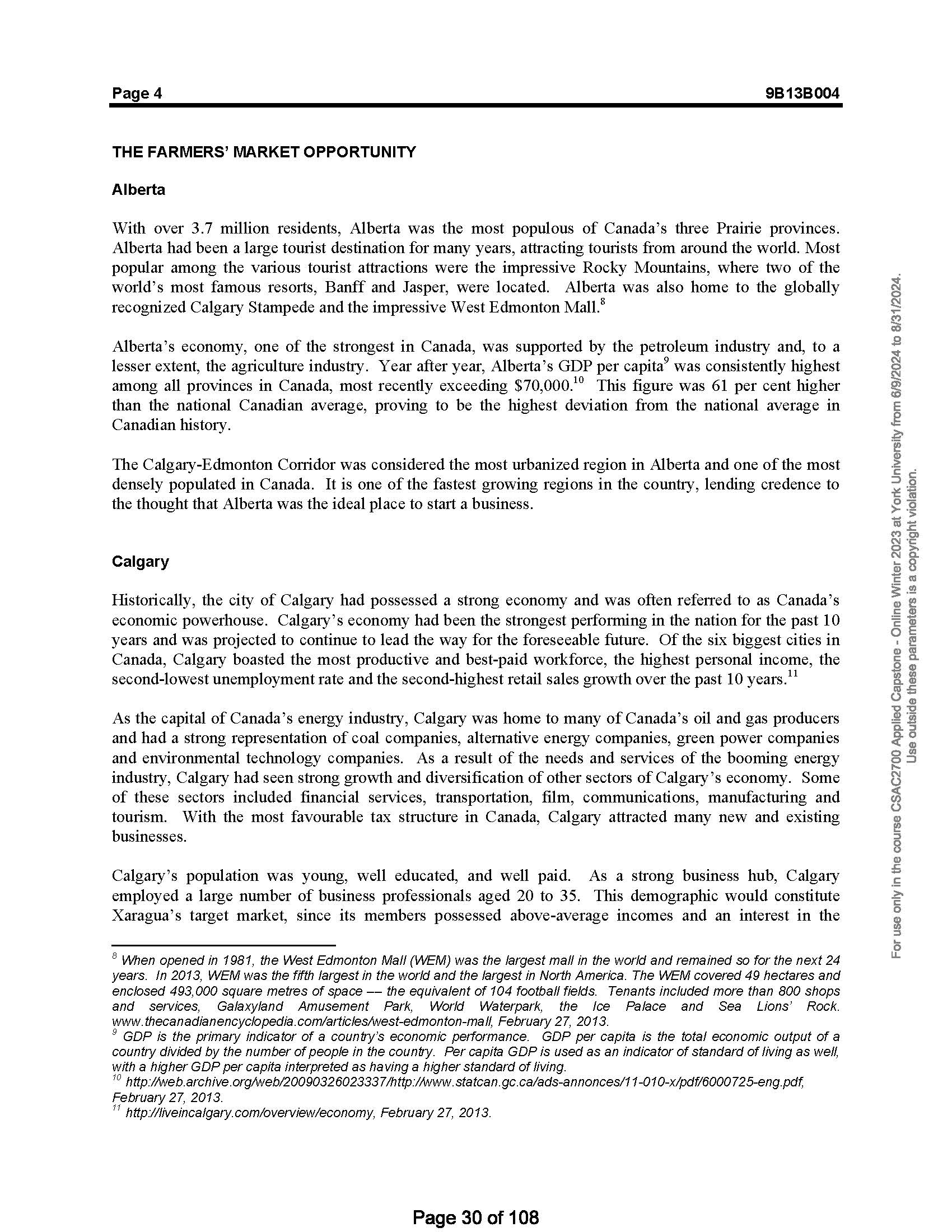
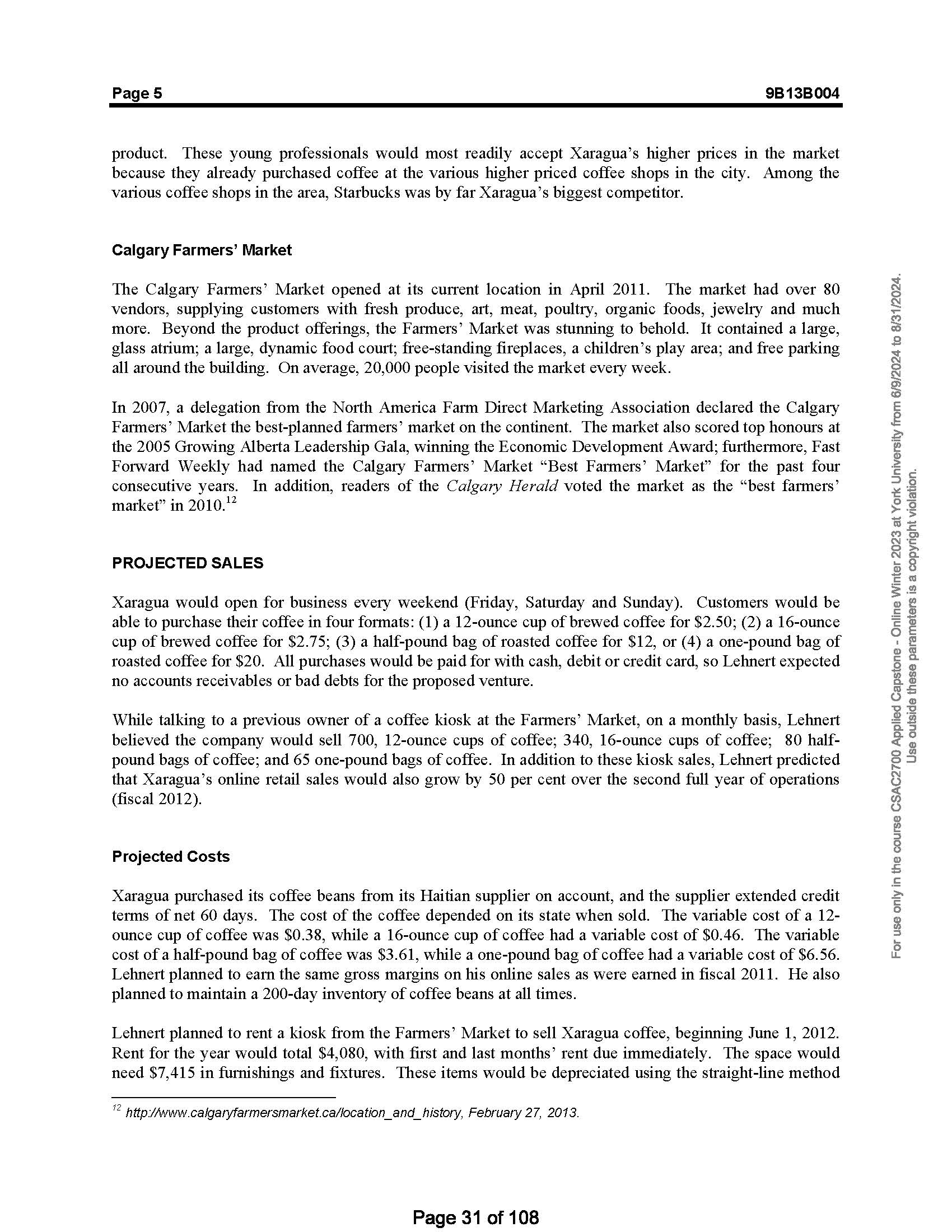
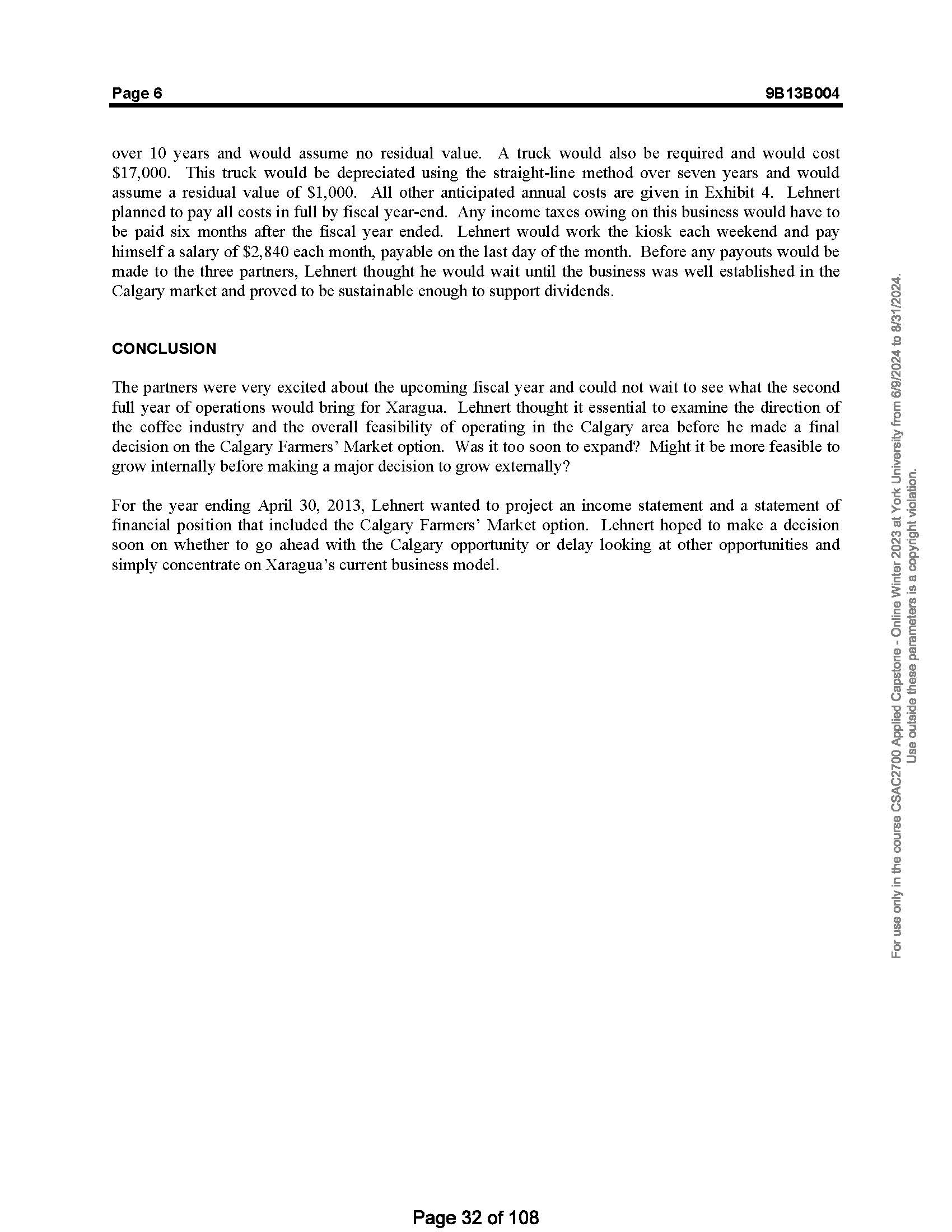
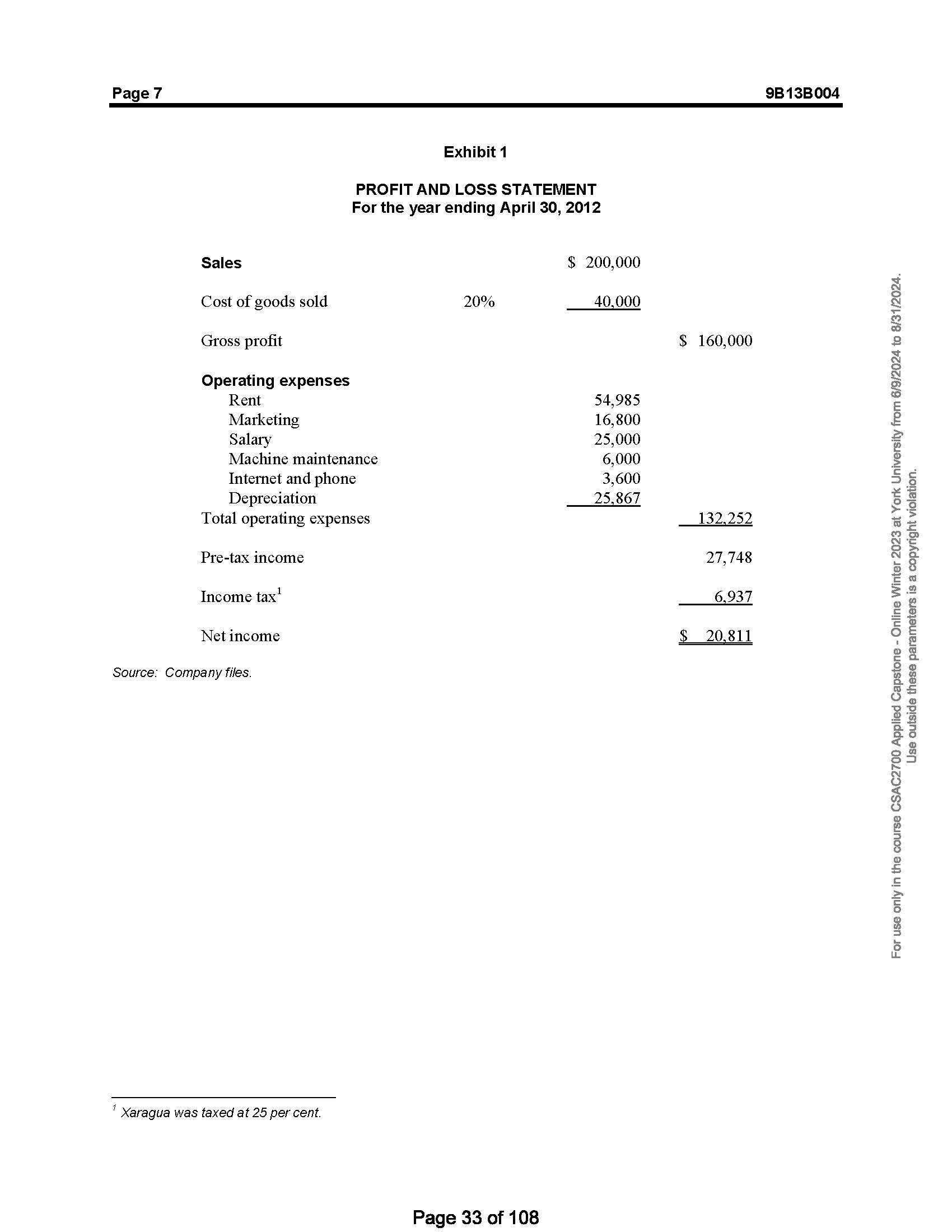
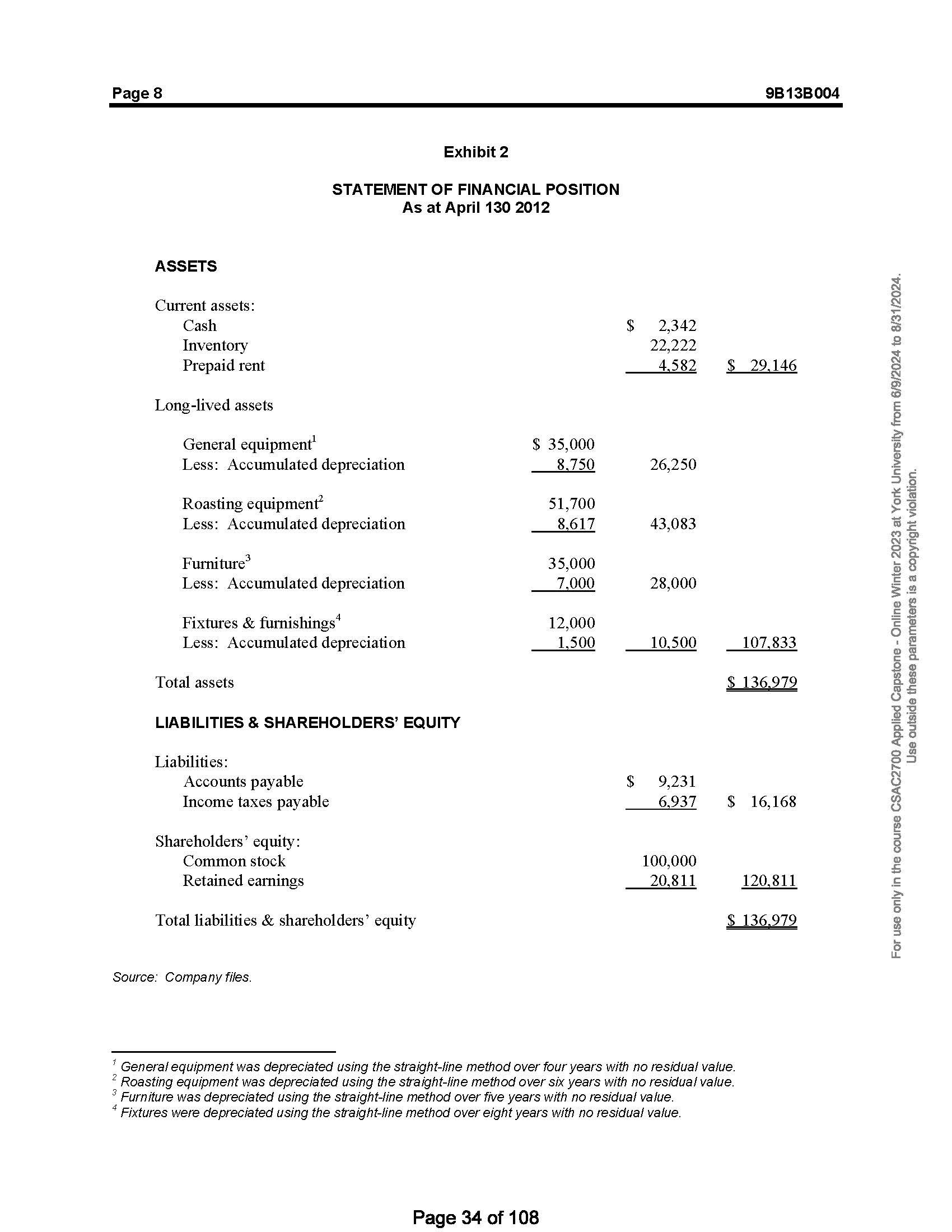
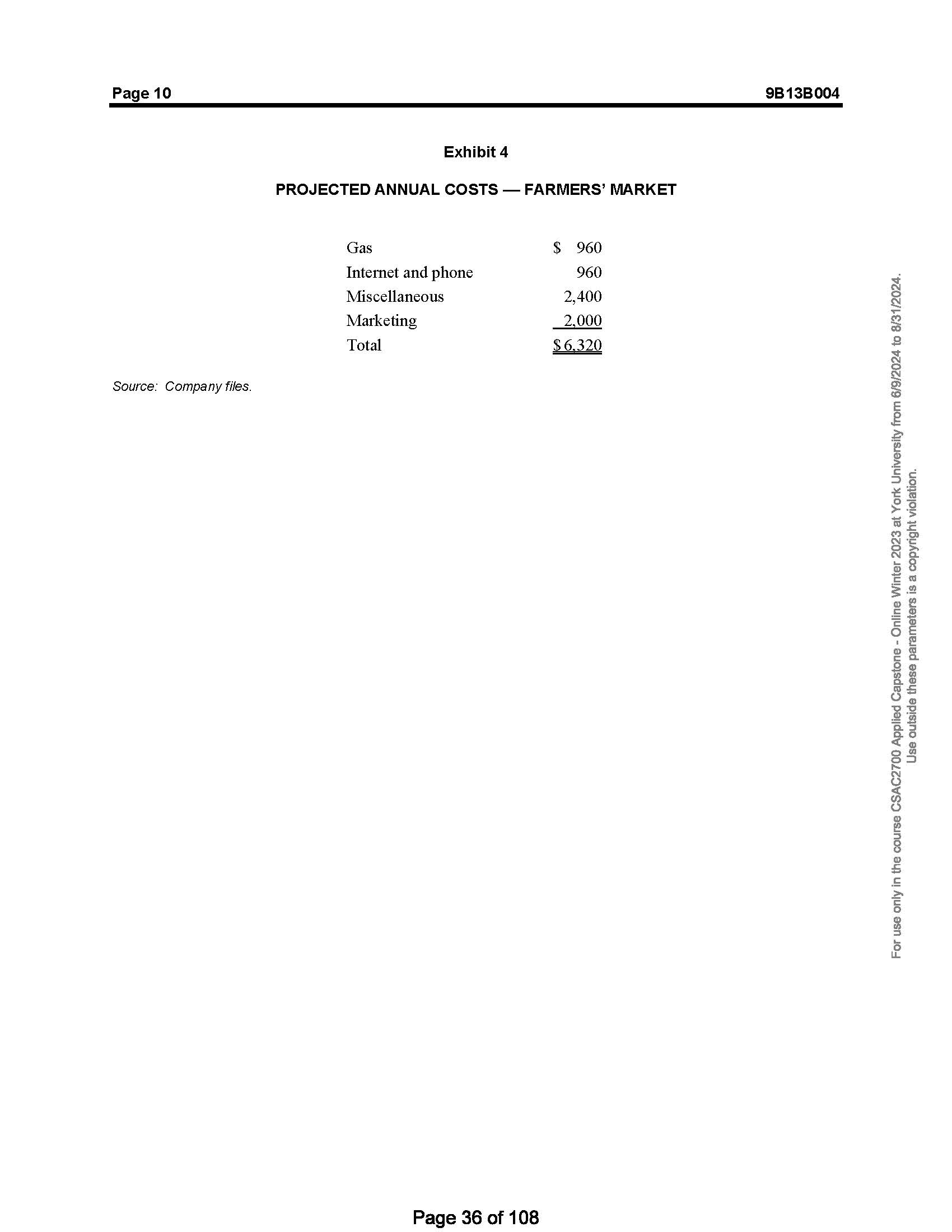
Richard Ivey School of Business The University of Western Ontario IVEY 9B 13B004 CAFE XARAGUA: THE CALGARY OPPORTUNITY Karim Mashnuk wrote this case under the supervision of Elizabeth M.A. Grasby solely to provide material for class discussion. The authors do not intend to illustrate either effective or ineffective handling of a managerial situation. The authors may have disguised certain names and other identifying information to protect confidentiality. Richard Ivey School of Business Foundation prohibits any form of reproduction, storage or transmittal without its written permission. Reproduction of this material is not covered under authorization by any reproduction rights organization. To order copies or request permission to reproduce materials, contact Ivey Publishing, Richard Ivey School of Business Foundation, clo Richard Ivey School of Business, The University of Western Ontario, London, Ontario, Canada, N6A 3K7; phone (519) 661-3208; fax (519) 661-3882; e- mail cases@ivey.uwo.ca Copyright @ 2013, Richard Ivey School of Business Foundation Version: 2013-03-21 It was early May 2012, and Robert Lehnert was pondering a decision that would change the scope and direction of Cafe Xaragua, a Canadian online retail store that sold fair-trade' coffee beans from Haiti. Having just completed the first full year of operations, Lehnert had developed a plan to offer Xaragua's For use only in the course CSAC2700 Applied Capstone - Online Winter 2023 at York University from 6/9/2024 to 8/31/2024. Use outside these parameters is a copyright violation. products to the Calgary Farmers' Market in the city of Calgary, Alberta. With his partners Jordan Peckham and Scott Schneider, Lehnert had to decide whether this plan represented an appropriate way to grow the business. If he did decide to proceed with the Calgary opportunity, Cafe Xaragua products would appear at the market on June 1, 2012. CAFE XARAGUA History During his final year of study at the Richard Ivey School of Business, Lehnert visited the country of Haiti. While there, he realized the potential for business with Haiti, especially in the aftermath of a devastating earthquake that set back economic development in the country; consequently, Lehnert began to explore the country for a successful business idea. After 10 days of visiting various industries in Haiti, Lehnert discovered there were two major successful industries in Haiti. The first of these was the tourism industry. Due to the large up-front capital investment and the heavy saturation of the industry, Lehnert decided to focus his efforts on the second largest industry in the country, coffee beans. Upon his return to Canada, Lehnert contacted one of his classmates, Jordan Peckham, and together, they decided to start an online retail coffee business. The plan would require Lehnert and Peckham to travel throughout Haiti, creating contacts with various coffee farmers and purchasing raw coffee beans from them. The beans would be delivered in one major shipment to Canada. The date of this shipment would depend on the year's harvest, and as such, could not be readily predicted. Xaragua would offer its Fair trade is a trading partnership, based on dialogue, transparency, and respect that seeks greater equity in international trade. Page 27 of 108Page 2 9B13B004 customers the coffee as either roasted and unground in its bean form or as roasted and ground for immediate brewing. ILehnert would process orders through an online retail store and would ship the required quantities (in one-pound bags) anywhere in the world. Afier a second trip to Haiti later that month, Caf Xaragua (Xaragua) was formed. Lehnert and Peckham decided to take on an additional partner, Scott Schneider, for financial reasons. Both Peckham and Schneider had full-time jobs and would be involved with Xaragua as a side project. Peckham was the only one of the three partners with experience in entreprencurship. He had started several businesses during his time outside of school; in fact, he had received multiple awards for his efforts in entrepreneurship. Lehnert, in spite of his lack of prior experience starting a business, was committed to Xaragua on a full-time basis. Business Objectives The three partners had several goals for their business. They hoped to earn $75,000 profit by the end of Xaragua's second year, and they wanted to expand their retail line or move into wholesale distribution by the end of its third year. Key to the business was the goal to help support the economy of a country struggling to emerge from one of its most devastating natural disasters in recent history. Finally, Lehnert was hopeful that the business would provide a full-time salary for him so he would not have to acquire a corporate position. The Product Lehnert and Peckham had chosen coffee beans (green beans) grown in the Blue Pine Forest of southeastern Haiti. As a result, the coffee sold by Xaragua was among the best bean qualities in the world. Grown in a microclimate region, a cup of medium roast Xaragua coffee was characterized as having a superb fragrance and aroma, with balanced acidity and a very good residual flavour. Xaragua was fair-trade certified, grown and dried at an elevation of 1,300 metres. The beans were picked once a year and were processed using the wet method.\" This bean was very rare in North America and was sold primarily as a premium blend in Japan and Italy. In fact, as recently as September 2011, the Haitian green beans used by Xaragua were given the third highest score among coffees assessed by the California Coffee Review Board." Caf Xaragua and its coffee bean offering had received several pieces of positive media publication, including being featured on CBC's Morning Show and an article in the Financial Post. THE COFFEE INDUSTRY In 2011, a National Coffee Association (NCA) study found that 40 per cent of people aged 18 to 24 drank coffee on a daily basis, an increase from 31 per cent in 2010. For those people 25 to 39 vears of age, 54 per cent consumed coffee daily, up from 44 per cent in 2010 The study also found that premium coffee represented an increasingly significant portion of coffee consumption and that, due to the creation of advanced delivery systems and a wider variety of products, the coffee industry had evolved into a highly specialized industry. Z A microclimate is a local atmospheric zone where the climate differs from the surrounding area. % In the wet process, the fruit covering the seeds/beans was removed before they were dried. * www.coffesreview.com/alireviews. cfm?find=xaragua, February 27, 2013. o www.vendingmarketwalch.com/article/10317126/a-new-professionalism-defines-ocs, February 27, 2013. Page 28 of 108 apstone - Online Winter 2023 at York University from 6/9/2024 to 8/31/2024. o W se only in the course CSAC2700 Applied For Use outside these parameters is a copyright violation. Page 3 9B13B004 In the United States, studies discovered that 40 per cent of coffee drinkers preferred a light roast of coffee, and 48 per cent of drinkers preferred to drink their coffee at home. More recently, with the advent of the Keurig-K coffee machine, Americans preferred making a single serving of coffee, as opposed to a full batch (several cups of coffee). A Chicago-based firm, SymphonyIRI Group, reported that the ready-to- drink, single-serve coffee segment grew 12 per cent over a 52-week period in 2010. This trend was expected to continue based on consumer preferences continuing to change. In 2010, 88 per cent of Canadians claimed to consume coffee on a daily basis. This increase in coffee consumption had occurred in a period of ever-increasing prices in the industry. Across a 12-month period spanning 2010 to 2011, consumers experienced double-digit-price increases, with some companies increasing prices as many as three times in the 12-month period. Under ever-increasing pressure from suppliers who faced rising commodity prices, rising transportation costs, and due to a growing demand for coffee in emerging markets such as India and China, coffee wholesalers were forced to increase prices to remain profitable within the industry. It was standard across the industry for companies to have gross margins around 70 per cent. THE FIRST YEAR During its start-up vear, Xaragua experienced outstanding online retail sales. Consumers visited the company website,\" ordered as many bags as they wished, indicated whether the coffee was to be ground or not, and then paid through PayPal service. Inits first year of operations, Xaragua generated $200,000 in sales, the majority of which were made in Canada. (See Exhibits 1 and 2 for financial statements.) Several promotions (offered at specific times periods only) throughout the year were used to boost sales. First, as a show of commitment to helping Haiti, Iehnert started The Tree Initiative. Under this project, for every one-pound bag of coffee purchased online, Lehnert planted a tree in the customer's name the next time he returned to Haiti. The customer owned the tree through Xaragua, and received regular updates on its growth. Lehnert believed that by showing their positive impact on the country, customers would be happy to pay premium prices for their coffee. The second promotion occurred during December's Christmas holiday season. Every one-pound bag of coffee purchased online in December was delivered by Xaragua with a specialized thank-you note and a beautiful Christmas tree ornament. These made ideal gifts for coworkers, friends, and family members who enjoved a good cup of coffee. See Exhibit 3 for the company logo and its Christmas promotion material. Regardless of the company's success in its first year, Lehnert knew there were a multitude of expansion options available, and he had to work hard to decide which ones would be best suited for Xaragua. One opportunity researched by the partners was to launch the business into a farmers' market in Calgary, Alberta. www.bevindustry. com/articles/35657-2012-state-of-the-industry--coffeertd-coffee, February 27, 2013. 7 www.cafexaragua.com, February 27, 2013. Page 29 of 108 apstone - Online Winter 2023 at York University from 6/9/2024 to 8/31/2024. o W se only in the course CSAC2700 Applied For Use outside these parameters is a copyright violation. Page 4 9B 13B 004 THE FARMERS' MARKET OPPORTUNITY Alberta With over 3.7 million residents, Alberta was the most populous of Canada's three Prairie provinces. Alberta had been a large tourist destination for many years, attracting tourists from around the world. Most popular among the various tourist attractions were the impressive Rocky Mountains, where two of the world's most famous resorts, Banff and Jasper, were located. Alberta was also home to the globally recognized Calgary Stampede and the impressive West Edmonton Mall. Alberta's economy, one of the strongest in Canada, was supported by the petroleum industry and, to a lesser extent, the agriculture industry. Year after year, Alberta's GDP per capita was consistently highest among all provinces in Canada, most recently exceeding $70,000." This figure was 61 per cent higher than the national Canadian average, proving to be the highest deviation from the national average in Canadian history. The Calgary-Edmonton Corridor was considered the most urbanized region in Alberta and one of the most densely populated in Canada. It is one of the fastest growing regions in the country, lending credence to the thought that Alberta was the ideal place to start a business. Calgary Historically, the city of Calgary had possessed a strong economy and was often referred to as Canada's economic powerhouse. Calgary's economy had been the strongest performing in the nation for the past 10 For use only in the course CSAC2700 Applied Capstone - Online Winter 2023 at York University from 6/9/2024 to 8/31/2024. Use outside these parameters is a copyright violation. years and was projected to continue to lead the way for the foreseeable future. Of the six biggest cities in Canada, Calgary boasted the most productive and best-paid workforce, the highest personal income, the second-lowest unemployment rate and the second-highest retail sales growth over the past 10 years." As the capital of Canada's energy industry, Calgary was home to many of Canada's oil and gas producers and had a strong representation of coal companies, alternative energy companies, green power companies and environmental technology companies. As a result of the needs and services of the booming energy industry, Calgary had seen strong growth and diversification of other sectors of Calgary's economy. Some of these sectors included financial services, transportation, film, communications, manufacturing and tourism. With the most favourable tax structure in Canada, Calgary attracted many new and existing businesses. Calgary's population was young, well educated, and well paid. As a strong business hub, Calgary employed a large number of business professionals aged 20 to 35. This demographic would constitute Xaragua's target market, since its members possessed above-average incomes and an interest in the When opened in 1981, the West Edmonton Mall (WEM) was the largest mall in the world and remained so for the next 24 years. In 2013, WEM was the fifth largest in the world and the largest in North America. The WEM covered 49 hectares and enclosed 493,000 square metres of space -- the equivalent of 104 football fields. Tenants included more than 800 shops and services, Galaxyland Amusement Park, World Waterpark, the Ice Palace and Sea Lions' Rock. www. thecanadianencyclopedia.com/articles/west-edmonton-mall, February 27, 2013. GDP is the primary indicator of a country's economic performance. GDP per capita is the total economic output of a country divided by the number of people in the country. Per capita GDP is used as an indicator of standard of living as well, with a higher GDP per capita interpreted as having a higher standard of living. http://web.archive.org/web/20090326023337/http://www.statcan.gc.ca/ads-annonces/11-010-x/pdf/6000725-eng.pdf, February 27, 2013. http://liveincalgary.com/overview/economy, February 27, 2013. Page 30 of 108Page 5 9B13B004 product. These young professionals would most readily accept Xaragua's higher prices in the market because they already purchased coffee at the various higher priced coffee shops in the city. Among the various coffee shops in the area, Starbucks was by far Xaragua's biggest competitor. Calgary Farmers' Market The Calgary Farmers Market opened at its current location in April 2011. The market had over 80 vendors, supplying customers with fresh produce, art, meat, poultry, organic foods, jewelry and much more. Beyond the product offerings, the Farmers' Market was stunning to behold. It contained a large, glass atrium; a large, dynamic food court; free-standing fireplaces, a children's play area; and free parking all around the building. On average, 20,000 people visited the market every week. In 2007, a delegation from the North America Farm Direct Marketing Association declared the Calgary Farmers' Market the best-planned farmers' market on the continent. The market also scored top honours at the 2005 Growing Alberta Leadership Gala, winning the Economic Development Award, furthermore, Fast Forward Weekly had named the Calgary Farmers Market \"Best Farmers Market\" for the past four consecutive years. In addition, readers of the Calgary Herald voted the market as the \"best farmers' market\" in 2010." PROJECTED SALES Xaragua would open for business every weekend (Friday, Saturday and Sunday). Customers would be able to purchase their coffee in four formats: (1) a 12-ounce cup of brewed coffee for $2.50; (2) a 16-ounce cup of brewed coffee for $2.75; (3) a half-pound bag of roasted coffee for $12, or (4) a one-pound bag of roasted coffee for $20. All purchases would be paid for with cash, debit or credit card, so I.ehnert expected no accounts receivables or bad debts for the proposed venture. While talking to a previous owner of a coffee kiosk at the Farmers Market, on a monthly basis, Lehnert believed the company would sell 700, 12-ounce cups of coffee; 340, 16-ounce cups of coffee; 80 half- pound bags of coffee; and 65 one-pound bags of coffee. In addition to these kiosk sales, Lehnert predicted that Xaragua's online retail sales would also grow by 50 per cent over the second full year of operations (fiscal 2012). Projected Costs Xaragua purchased its coffee beans from its Haitian supplier on account, and the supplier extended credit terms of net 60 days. The cost of the coffee depended on its state when sold. The variable cost of a 12- ounce cup of coffee was $0.38, while a 16-ounce cup of coffee had a variable cost of $0.46. The variable cost of a half-pound bag of coffee was $3.61, while a one-pound bag of coffee had a variable cost of $6.56. Lehnert planned to earn the same gross margins on his online sales as were eamned in fiscal 2011. He also planned to maintain a 200-day inventory of coffec beans at all times. Lehnert planned to rent a kiosk from the Farmers' Market to sell Xaragua coffee, beginning June 1, 2012. Rent for the year would total $4,080, with first and last months' rent due immediately. The space would need $7.415 in furnishings and fixtures. These items would be depreciated using the straight-line method 7 http.riwww.calgaryfarmersmarket.caslocation_and_history, February 27, 2013. Page 31 of 108 apstone - Online Winter 2023 at York University from 6/9/2024 to 8/31/2024. o W se only in the course CSAC2700 Applied For Use outside these parameters is a copyright violation. Page 6 9B13B004 over 10 years and would assume no residual value. A truck would also be required and would cost $17,000. This truck would be depreciated using the straight-line method over seven years and would assume a residual value of $1,000. All other anticipated annual costs are given in Exhibit 4. Lehnert planned to pay all costs in full by fiscal year-end. Any income taxes owing on this business would have to be paid six months after the fiscal year ended. Ichnert would work the kiosk each weekend and pay himself a salary of $2,840 each month, payable on the last day of the month. Before any payouts would be made to the three partners, Lehnert thought he would wait until the business was well established in the Calgary market and proved to be sustainable enough to support dividends. CONCLUSION The partners were very excited about the upcoming fiscal vear and could not wait to see what the second full year of operations would bring for Xaragua. Lechnert thought it essential to examine the direction of the coffee industry and the overall feasibility of operating in the Calgary area before he made a final decision on the Calgary Farmers' Market option. Was it too soon to expand? Might it be more feasible to grow internally before making a major decision to grow externally? For the year ending April 30, 2013, Lehnert wanted to project an income statement and a statement of financial position that included the Calgary Farmers' Market option. Lehnert hoped to make a decision soon on whether to go ahead with the Calgary opportunity or delay looking at other opportunities and simply concentrate on Xaragua's current business model. Page 32 of 108 For use only in the course CSAC2700 Applied Capstone - Online Winter 2023 at York University from 6/9/2024 to 8/31/2024. Use outside these parameters is a copyright violation. Page 7 Exhibit 1 PROFIT AND LOSS STATEMENT For the year ending April 30, 2012 Sales Cost of goods sold Gross profit Operating expenses Rent Marketing Salary Machine maintenance Internet and phone Depreciation Total operating expenses Pre-tax income Income tax' Net income Source: Company files. ! Xaragua was taxed at 25 per cent. 20% Page 33 of 108 $ 200,000 40.000 54,985 16,800 25,000 6,000 3,600 25,867 i $ 160,000 132,252 27,748 6.937 _ i $ 20811 9B13B004 For use only in the course CSAC2700 Applied Capstone - Online Winter 2023 at York University from 6/9/2024 to 8/31/2024. Use outside these parameters is a copyright violation. Page 8 9B13B004 Exhibit 2 STATEMENT OF FINANCIAL POSITION As at April 130 2012 ASSETS Current assets: Cash $ 2342 Inventory 22222 Prepaid rent 4,582 $ 29.146 Long-lived assets General equipment' $ 35,000 Less: Accumulated depreciation 8.750 26,250 Roasting equipment' 51,700 Less: Accumulated depreciation 8.617 43,083 Furniture 35,000 Less: Accumulated depreciation 7.000 28,000 Fixtures & furnishings 12,000 Less: Accumulated depreciation 1.500 10,500 107.833 Total assets $ 136,979 LIABILITIES & SHAREHOLDERS' EQUITY Liabilities: Accounts payable $ 9231 Income taxes payable 6,937 $ 106,168 Shareholders' equity: Commeon stock 100,000 Retained carnings 20,811 120,811 Total liabilities & sharcholders' equity $ 136,979 Source: Company files. ! General equipment was depreciated using the straight-line method over four years with no residual value. ? Roasting equipment was depreciated using the straight-line method over six years with no residual value. * Furniture was depreciated using the straight-line method over five years with no residual value. * Fixtures were depreciated using the straight-line method over eight years with no residual value. Page 34 of 108 For use only in the course CSAC2700 Applied Capstone - Online Winter 2023 at York University from 6/9/2024 to 8/31/2024. Use outside these parameters is a copyright violation. Page 9 9B13B004 Exhibit 3 COMPANY GRAPHICS CAFE XARAGUA Company logo For use only In the course CSAC2700 Applied Capstone - Online Winter 2023 at York Univerally from 8/9/2024 to 8/31/2024. Use outside these parameters is a copyright violation. XARAGUA Christmas 2011 promotion Source: Company files. Page 35 of 108Page 10 Source: Company files. Exhibit 4 PROJECTED ANNUAL COSTS FARMERS' MARKET Gas $ 960 Internet and phone 960 Miscellaneous 2,400 Marketing 2,000 Total $6.320 Page 36 of 108 9B13B004 For use only in the course CSAC2700 Applied Capstone - Online Winter 2023 at York University from 6/9/2024 to 8/31/2024. Use outside these parameters is a copyright violation
Step by Step Solution
There are 3 Steps involved in it
1 Expert Approved Answer
Step: 1 Unlock
Question Has Been Solved by an Expert!
Get step-by-step solutions from verified subject matter experts
Step: 2 Unlock
Step: 3 Unlock
Students Have Also Explored These Related Accounting Questions!









 Study Help